|
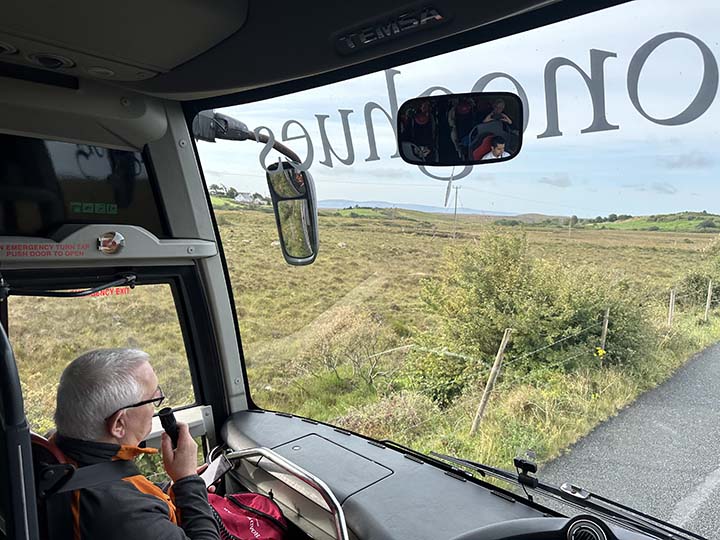
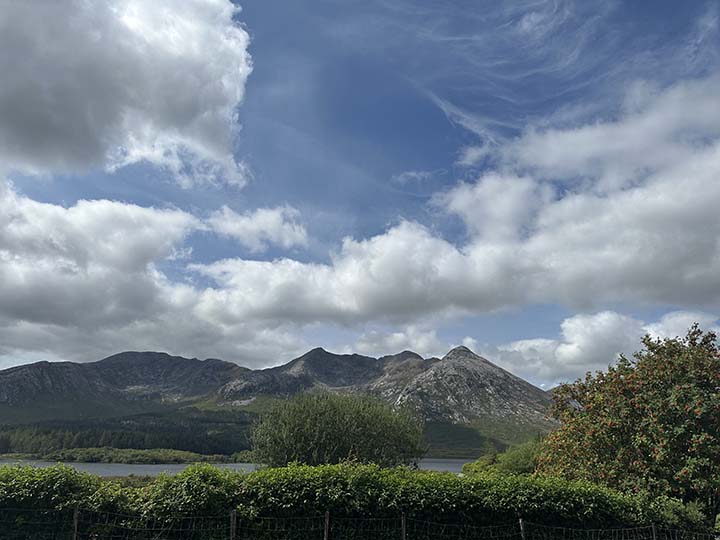
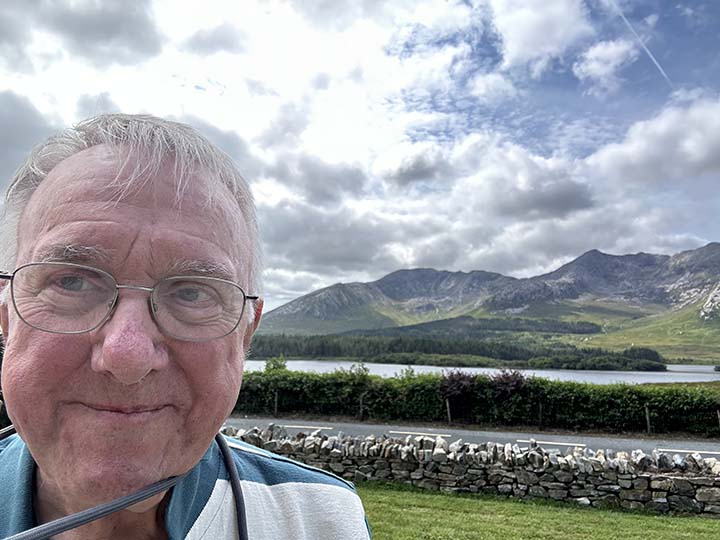
Blue sky and sunshine! Really! Right here in Ireland!
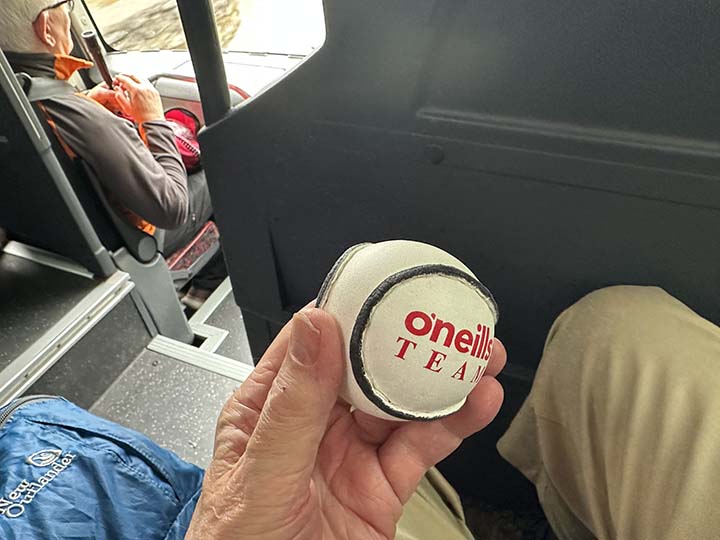
Brendan passed this ball around the bus. It's a sliotar, the ball used in the strictly Irish game of hurling. Apparently it is a very popular sport in these parts. I plan to watch some matches if I can find them when I get home.
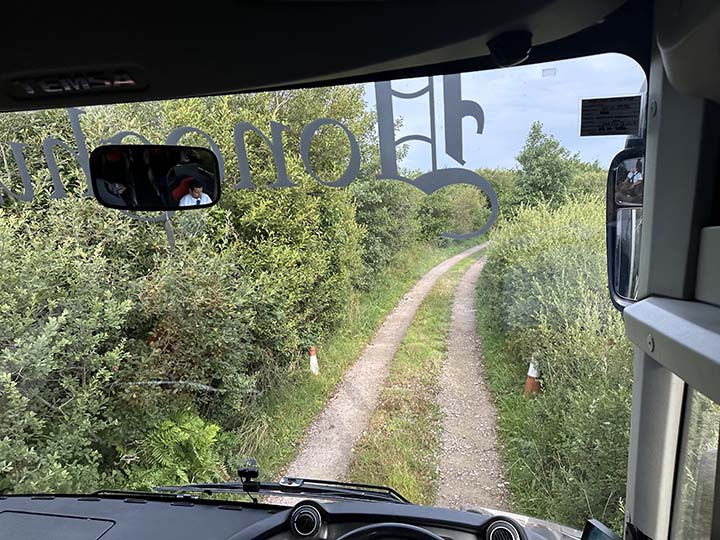
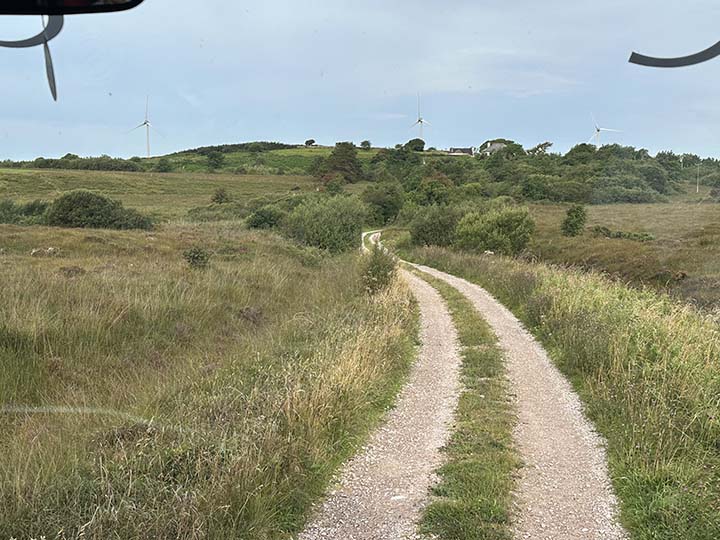
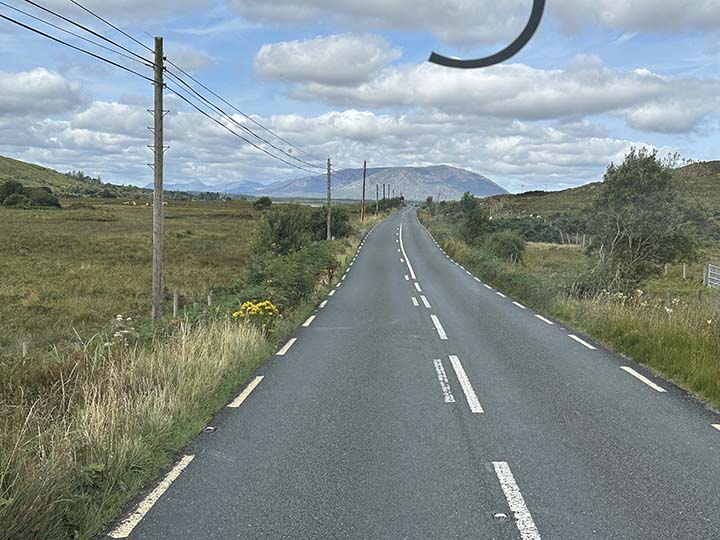
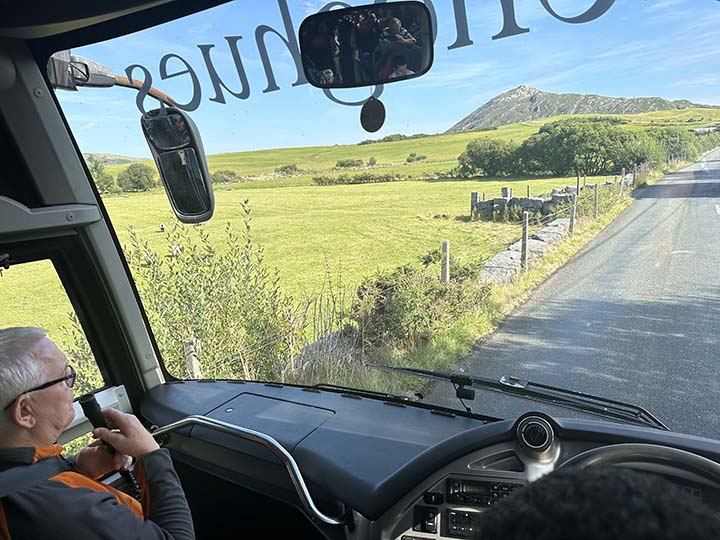
We are driving out into the back country to visit the Cnoc Suain Heritage Centre.
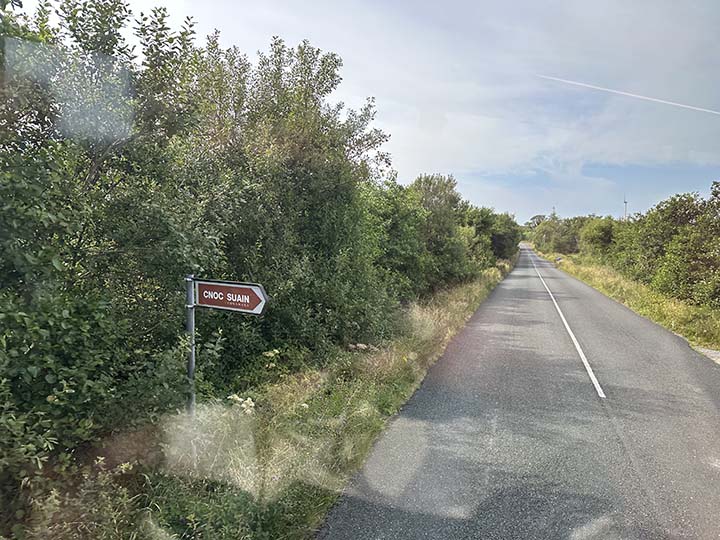
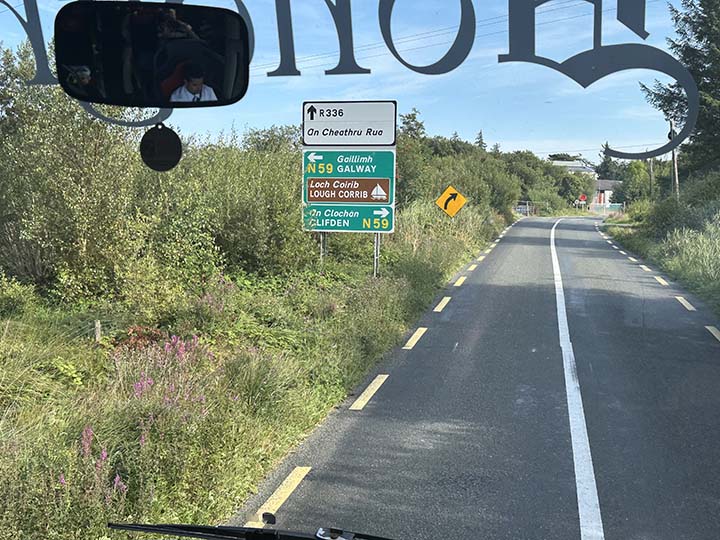
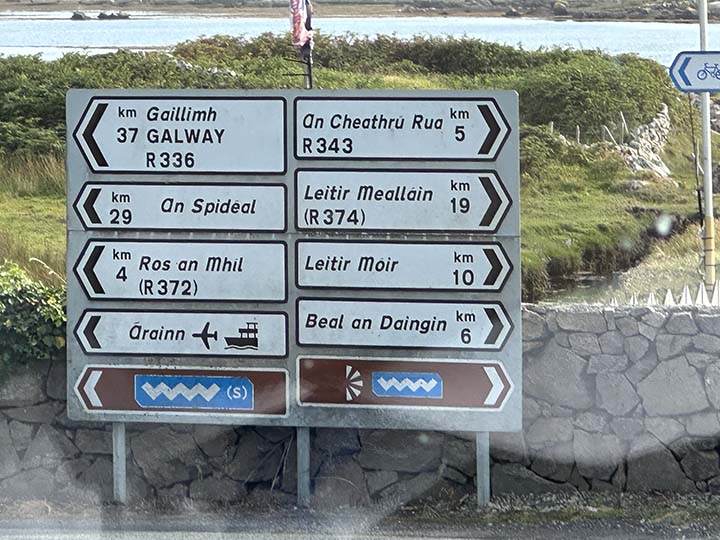
The sign says to go this way.
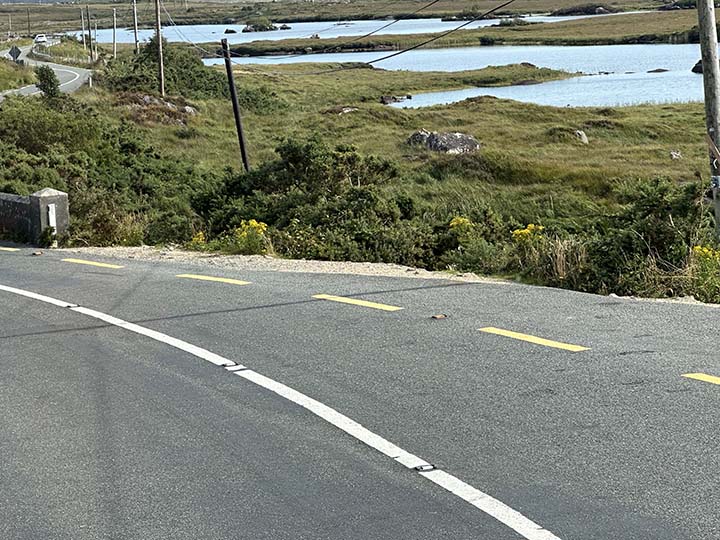
But I'm not so sure. Brendan says we're not lost.
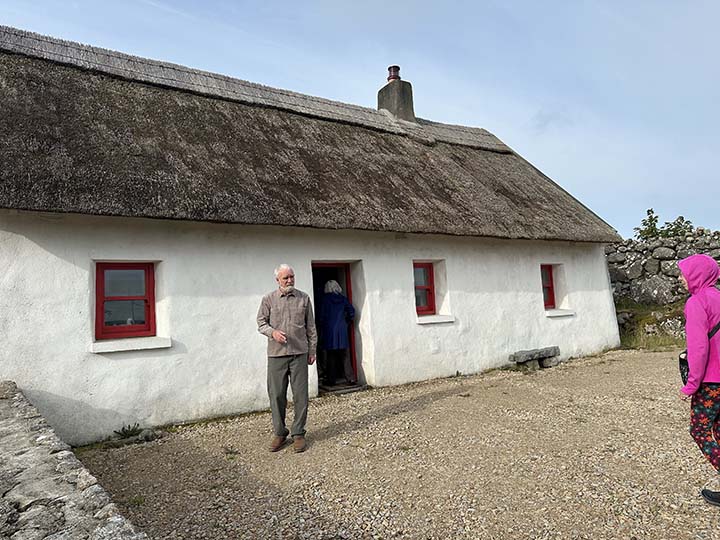
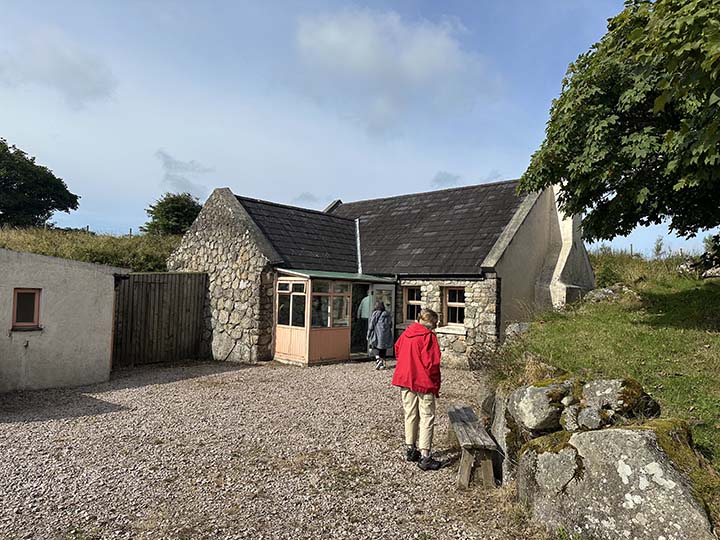
Cnoc Suain is an enchanting
family-owned hillside settlement of restored and reimagined
traditional thatched and slate-roofed cottages, vernacular styled
buildings, dry stone walls, biodiverse habitats and traces of an
ancient past. It is situated on 200 acres of pristine bogland in the
Connemara Gaeltacht, overlooking river, lake and Ireland’s wild
Atlantic coast.
That's Charlie...
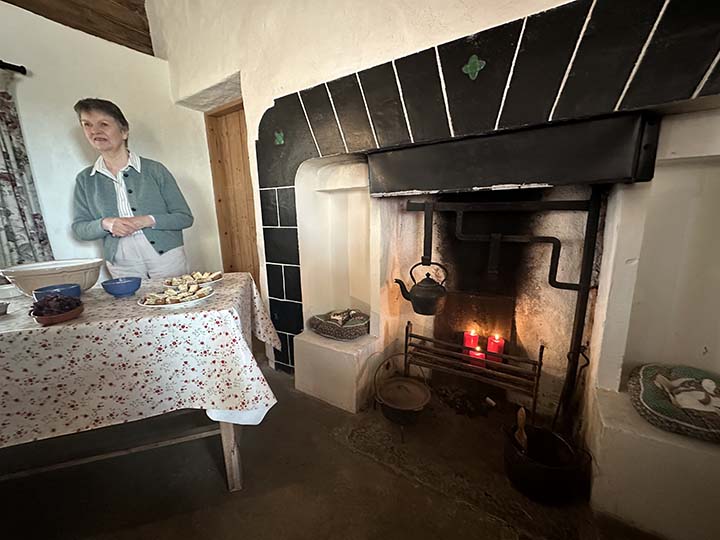
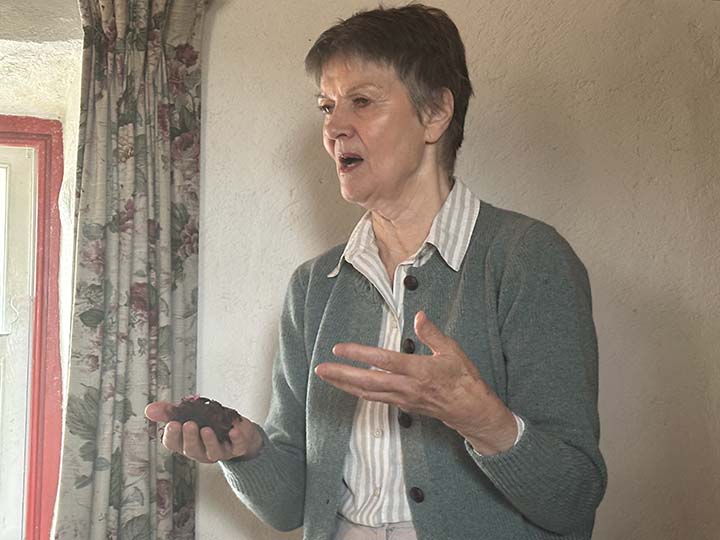
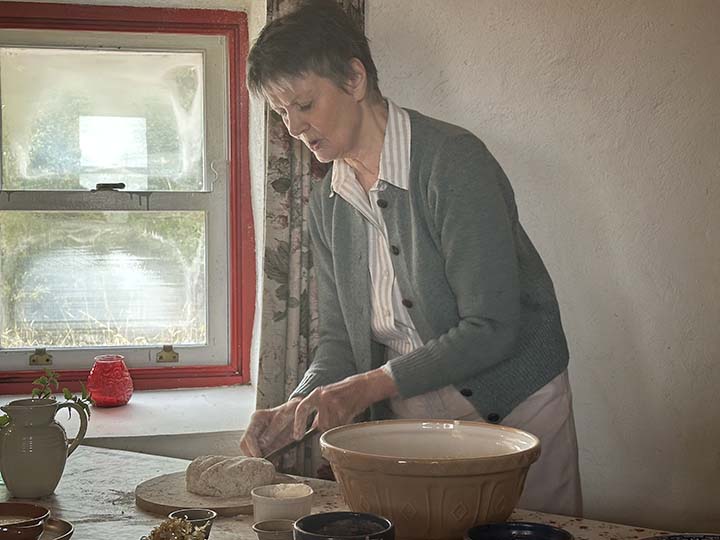
...and that's Dearbhaill. They were delightful and full of fascinating information about life in rural Ireland.
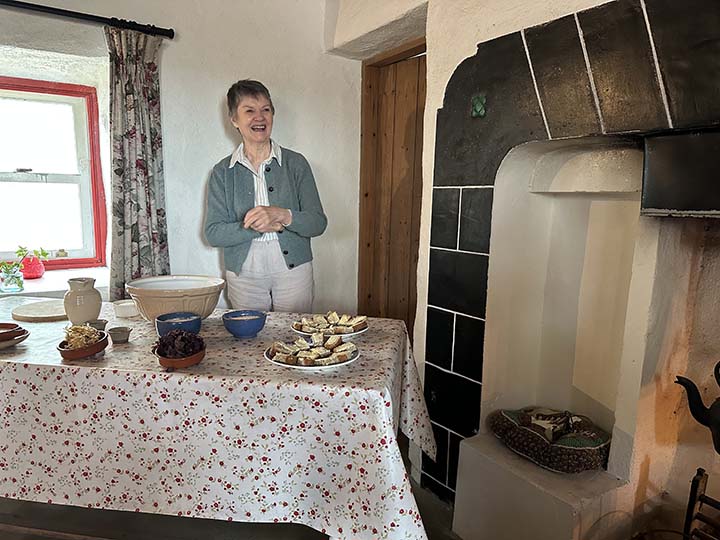
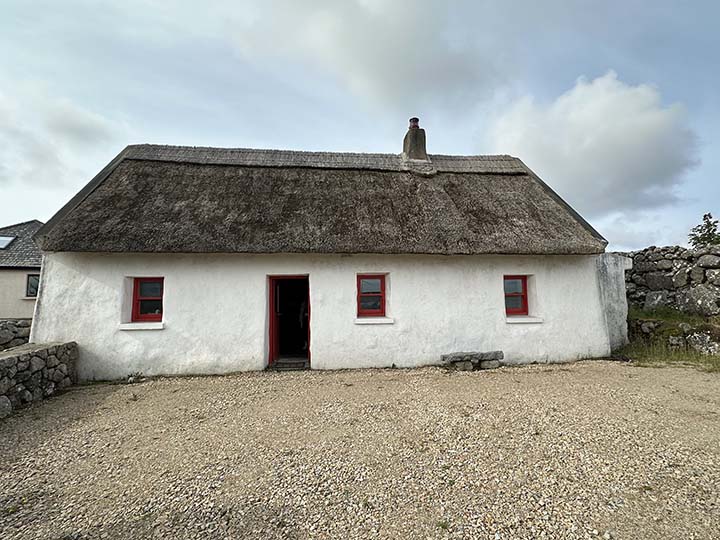
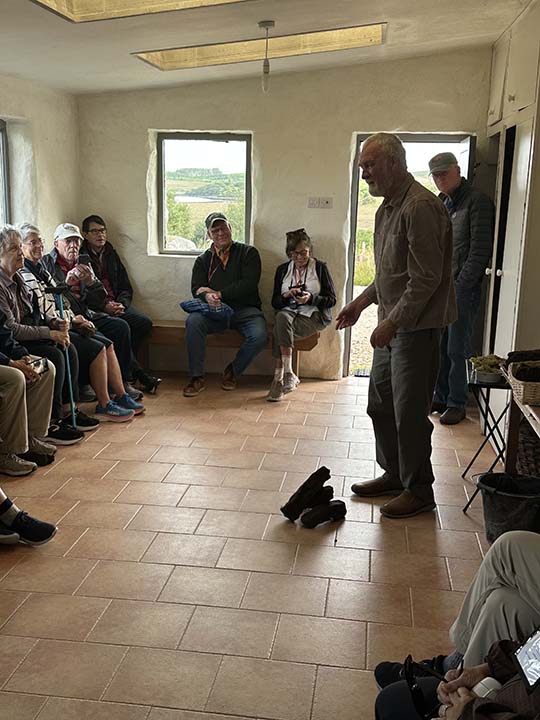
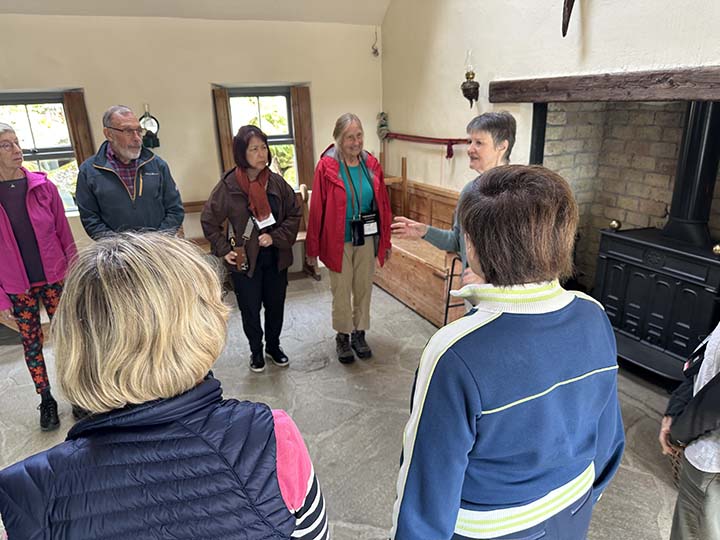
She told us about growing up in this area and living as a child in a house, just like this.
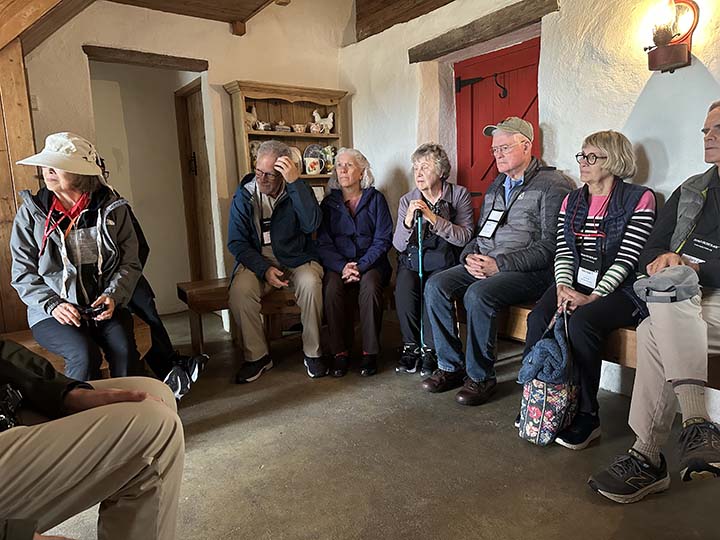
The Road Scholars listened intently.
The room had only one window because, believe it or not, windows were taxed. If the tax inspector came around and found you had several windows, things could get expensive. She has laid out some plates of soda bread, and she gave us a demonstration of how to make it.
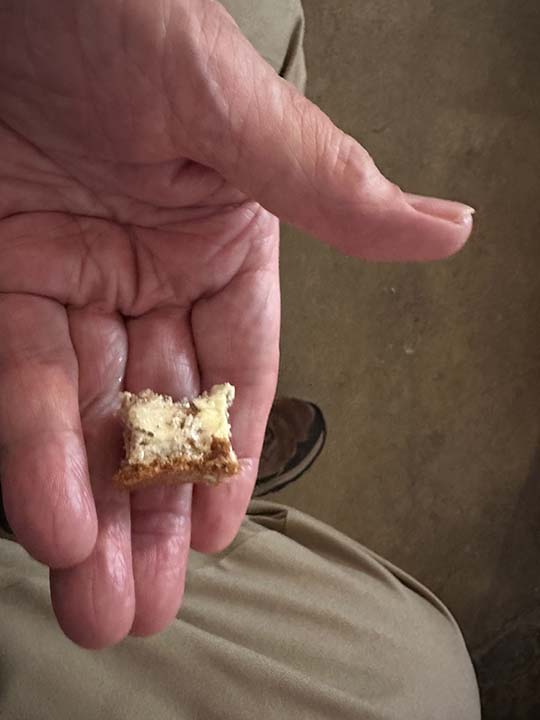
I had eaten most of my piece of soda, bread and butter before I remembered I wanted to take a picture of it.
She has more food to share with us.
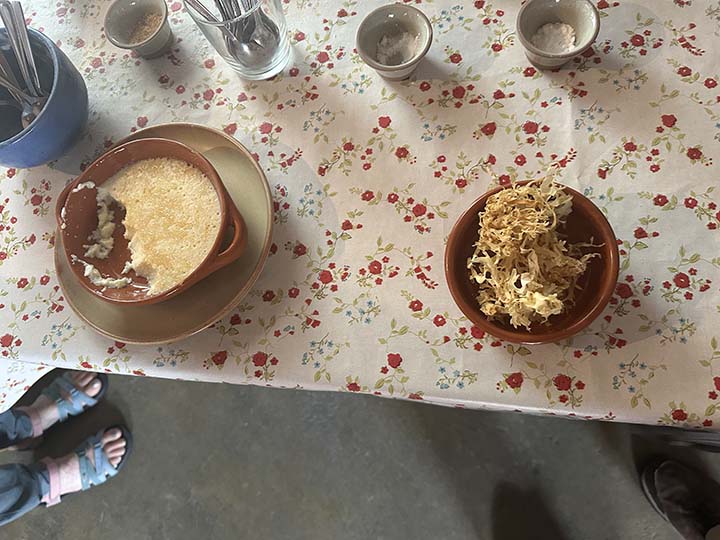
The bowl at the right holds carrageenan seaweed. In the old days, they used it to make the pudding that you see in the other bowl. I tasted it, and it wasn’t bad. It wasn’t great, but I guess if all you have to eat is seaweed it would work just fine.
Nice place. Sorta plain, but nice.
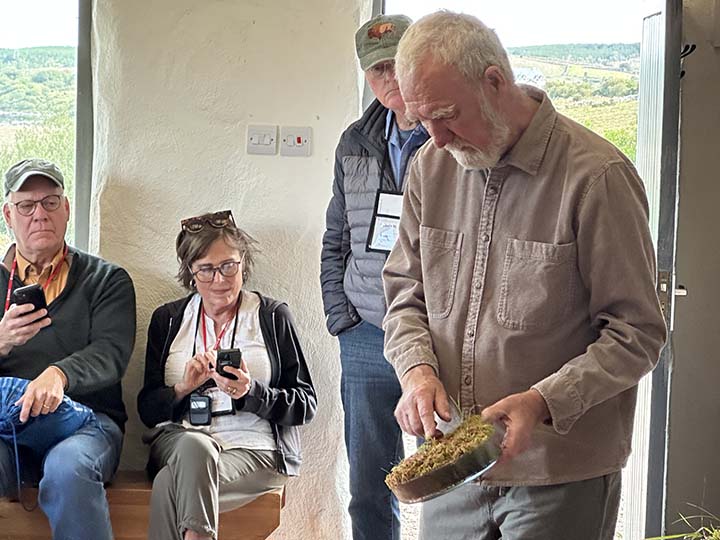
Now Charlie is going to show us how peat can be used for fuel.
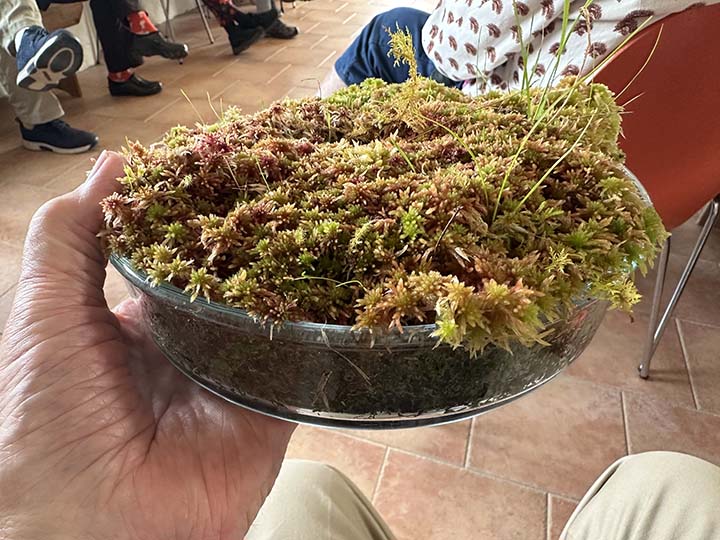
That's a bowl of peat moss.
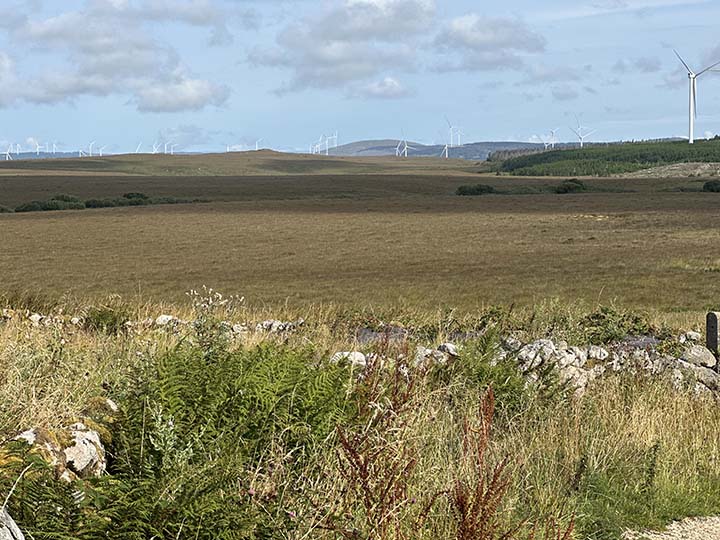
It grows in a bog like that, just outside the door.
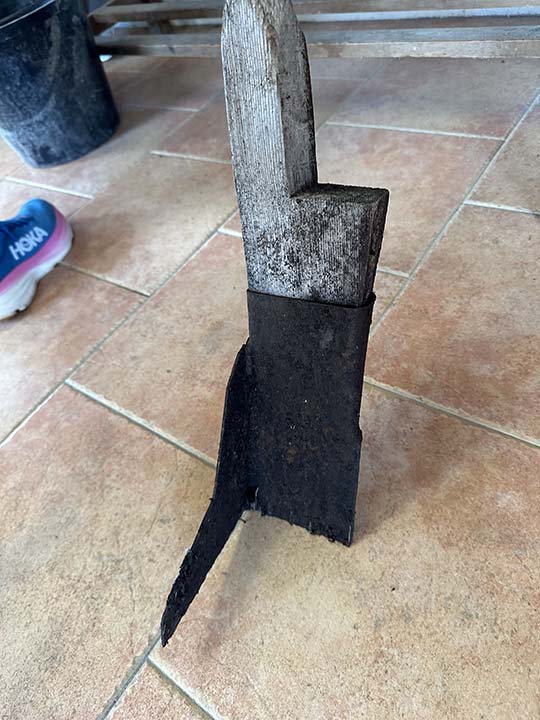
If you dig it up with a shovel like this.
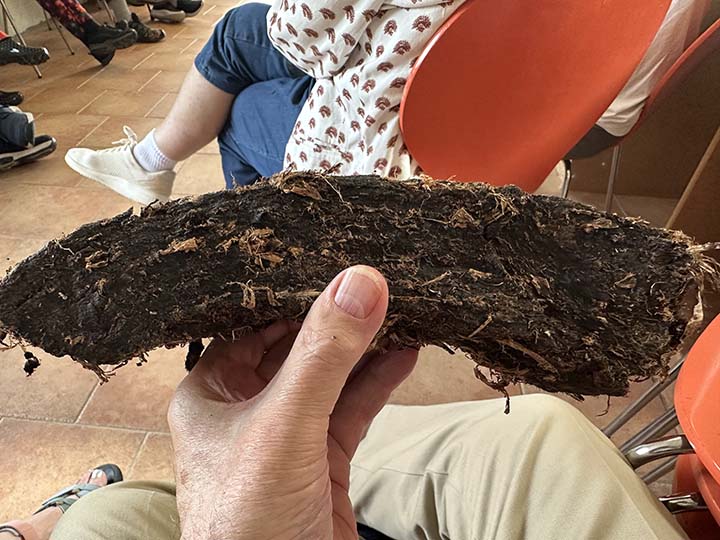
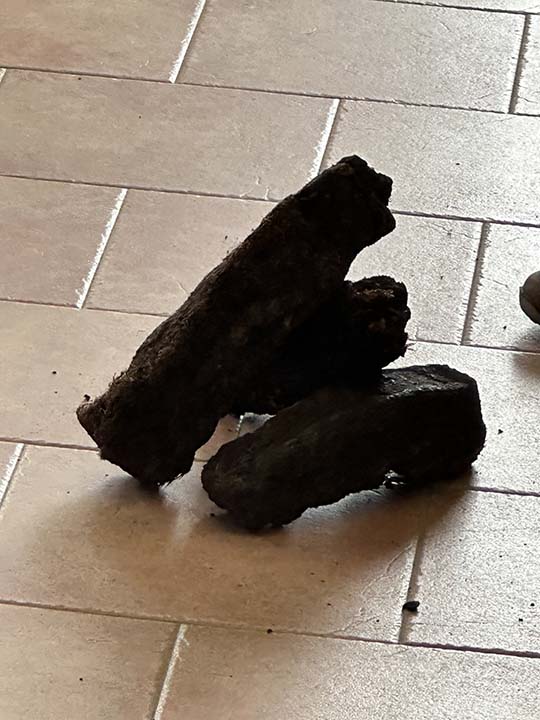
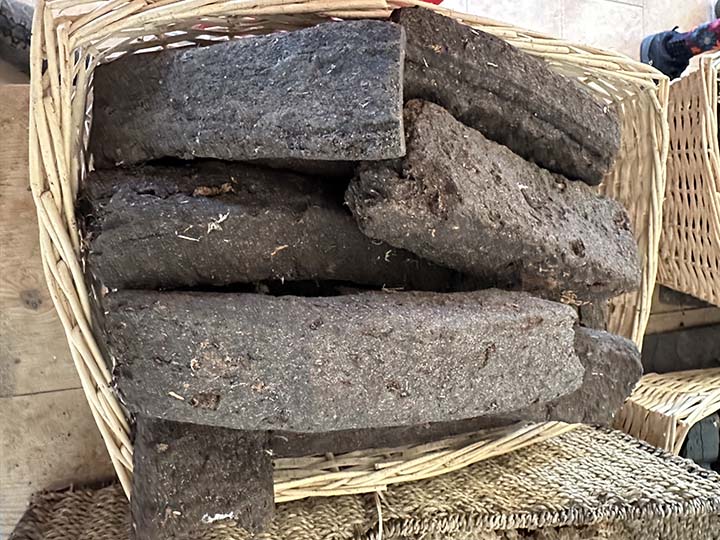
You get logs of peat which are left out in the summer weather to dry into little chunks of peat like this.
You can stack them up in a fireplace and they'll burn.
Charlie said each log burns for about 15 minutes.
So you need a lot of them by the fireplace.
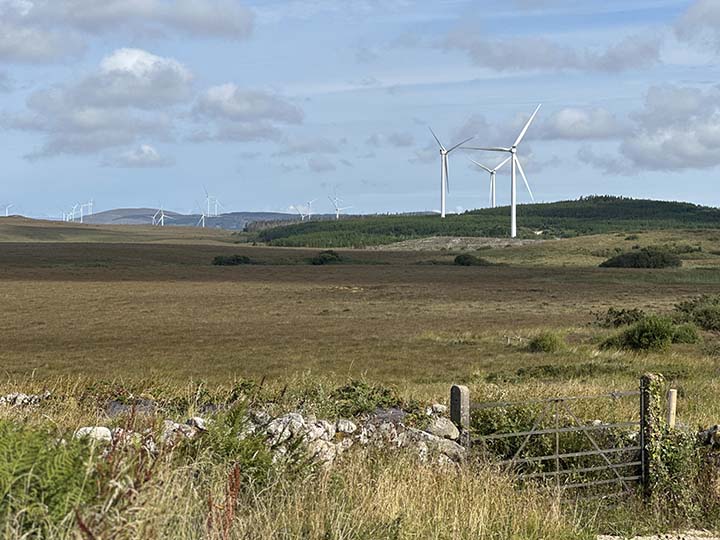
The old peat bog is looking modern these days.
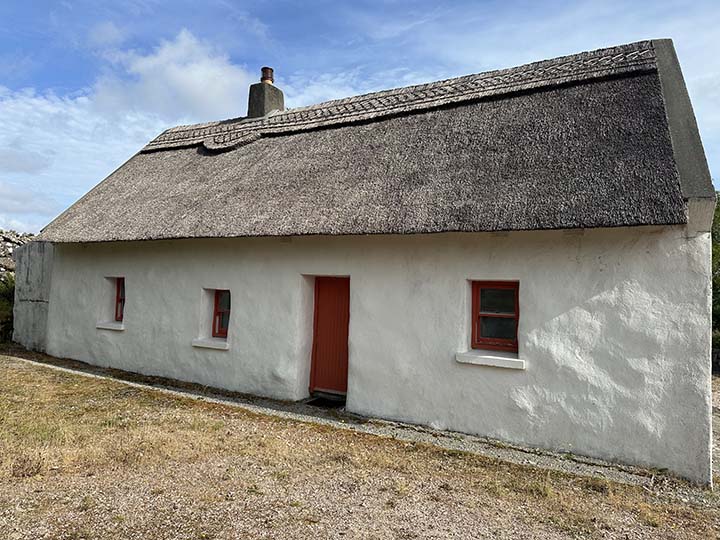
How about that thatched roof? Pretty fancy.
Now let's have some entertainment.
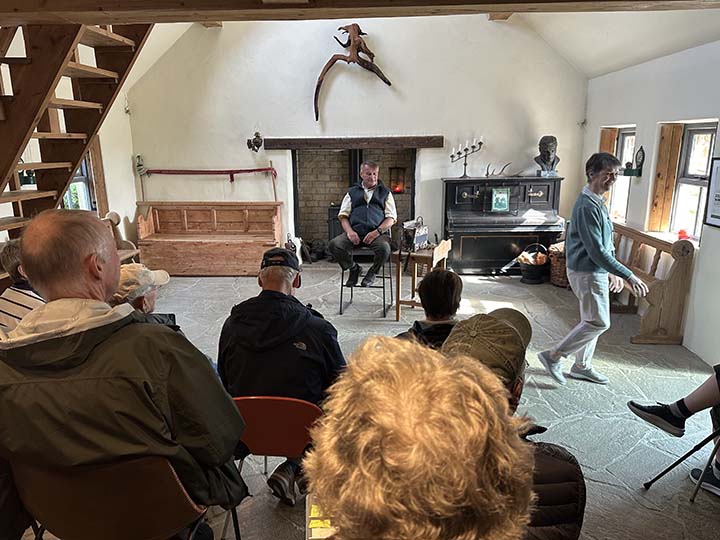
This building is designed for music and dancing.
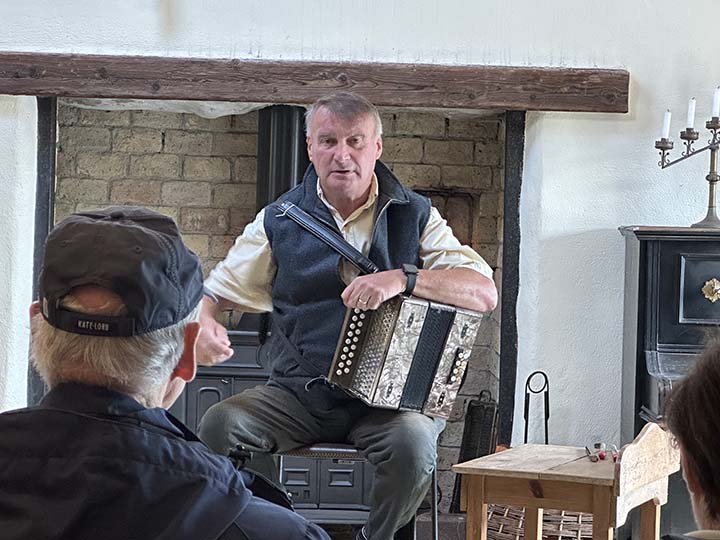
Road Scholar arranged for this fellow to demonstrate different types of traditional Irish music. I wish I'd gotten his name because he was just a terrific entertainer.
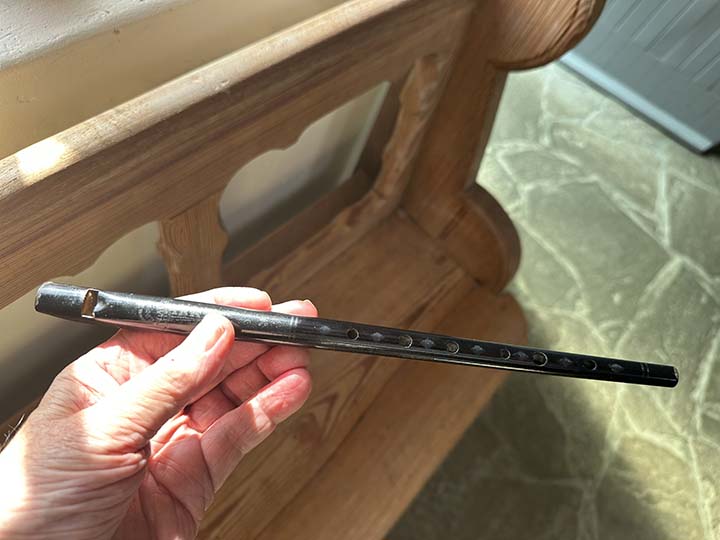
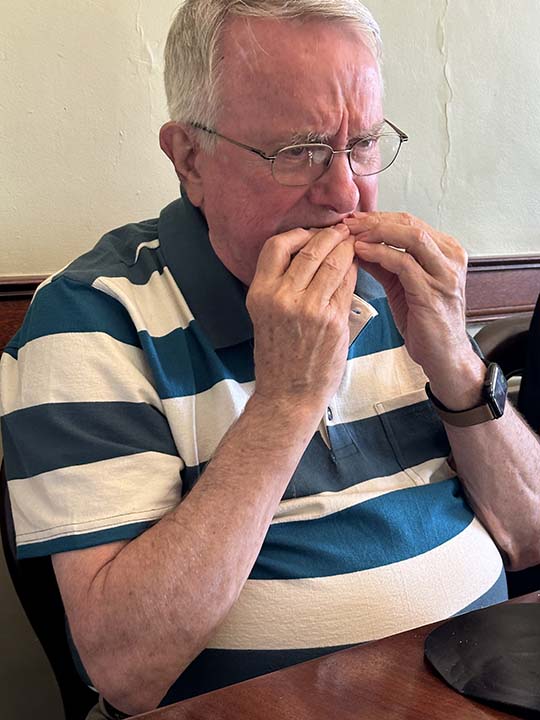
Along with his squeezebox he showed us pennywhistles and played some tunes. He even demonstrated how the Irish can make music by "trilling" without any instruments at all..
Here are come clips of his presentation. You can hear yours truly join in the trilling there near the end. I think he wasn't serious about hiring me.
But even more fun, Dearbhaill led some Road Scholar volunteers in a traditional Irish dance.
I thought my fellow Road Scholars did a great job with just a minimum of instruction. They should try out for America's Got Talent!
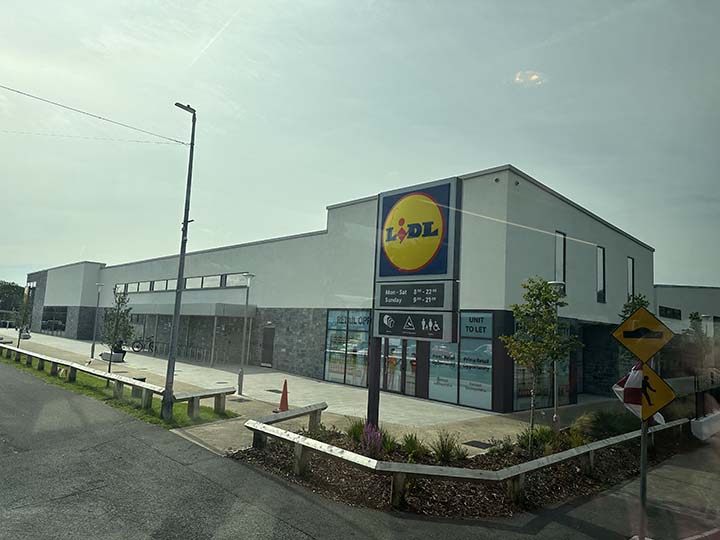
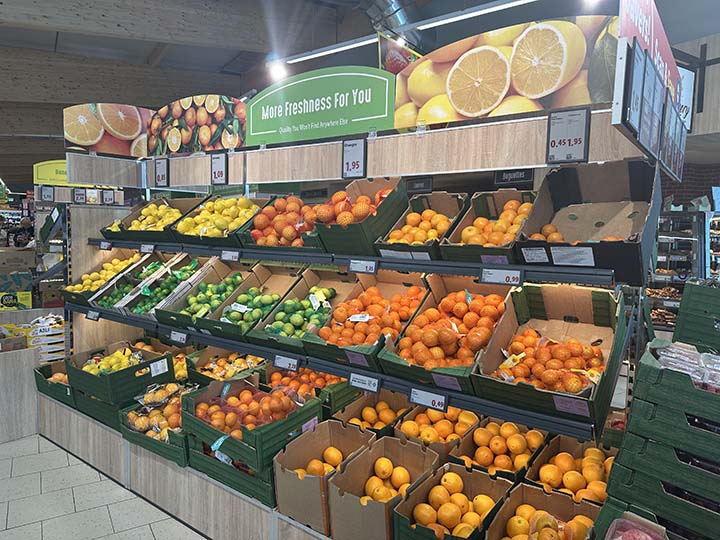
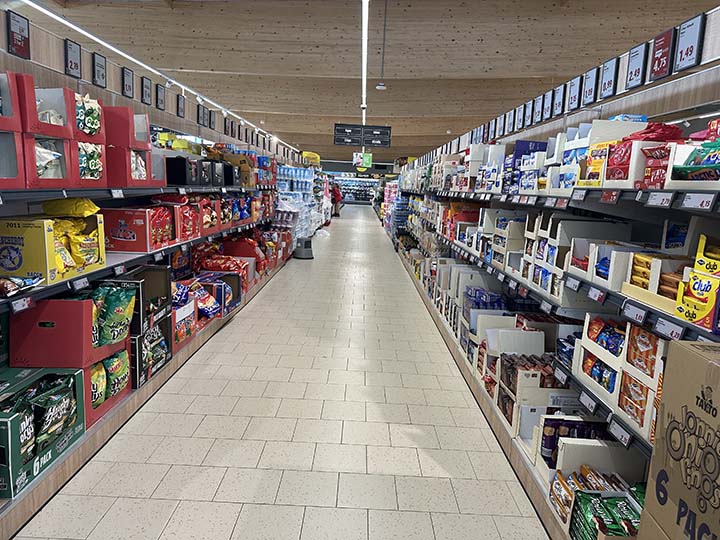
Now back on the road. Some on the bus just had to have a look when they learned that this place was like an Aldi.
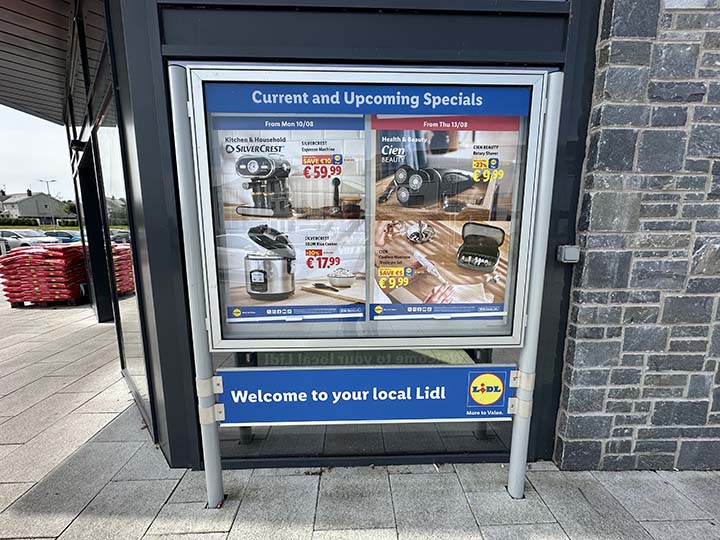
They sell more than groceries.
Yep, pretty much an Aldi.
Everything's still in boxes.
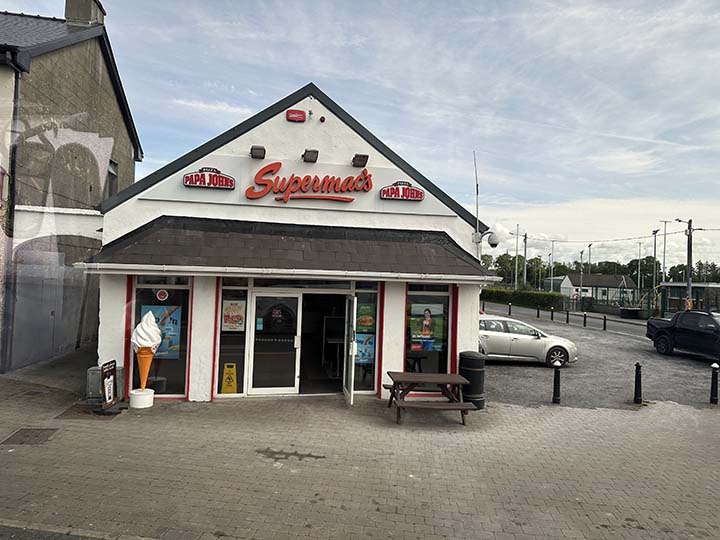
It's a Papa John's with ice cream.
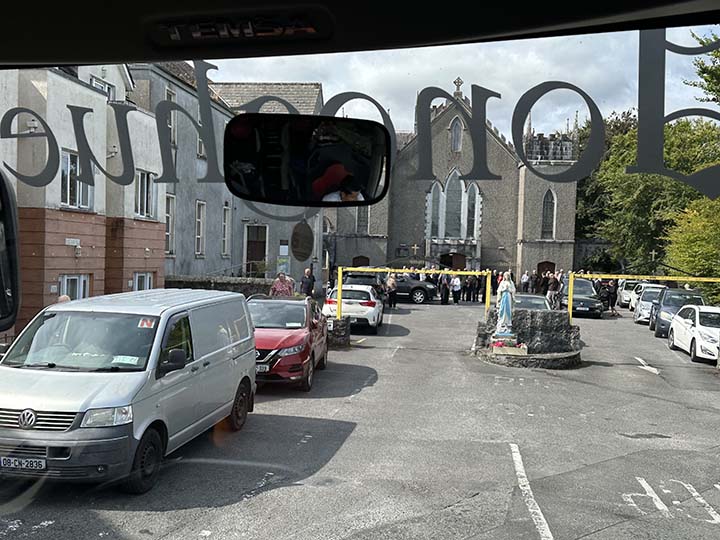
I think that's a wedding over there.
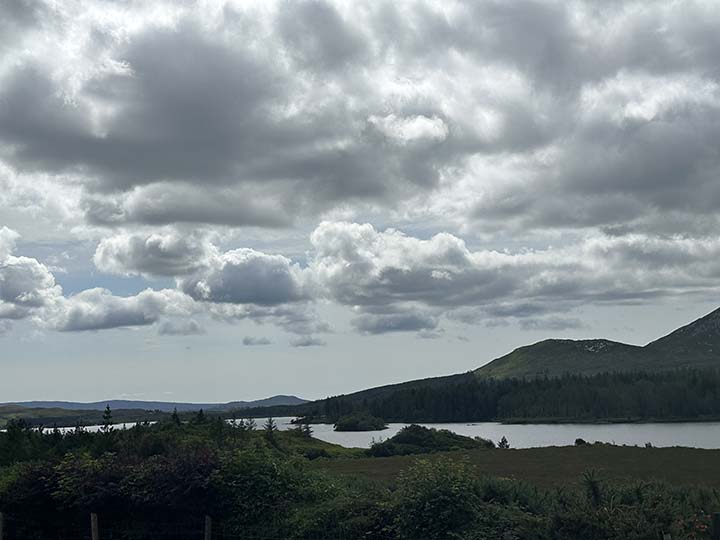
And I also think we finally have a beautiful day.
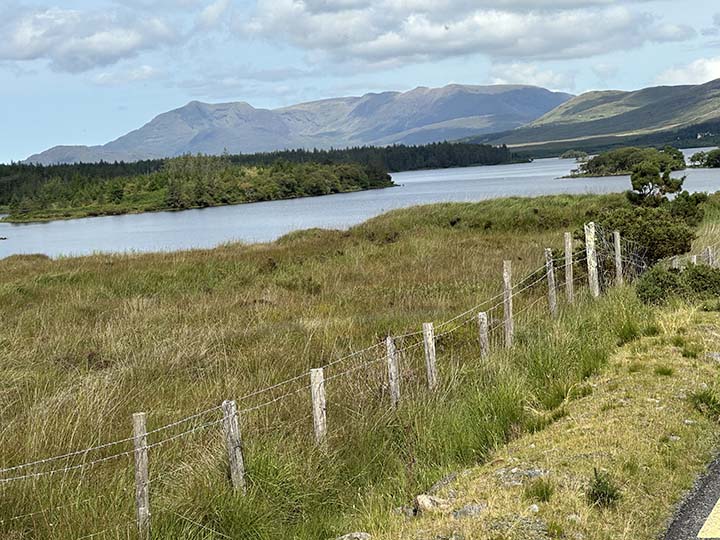
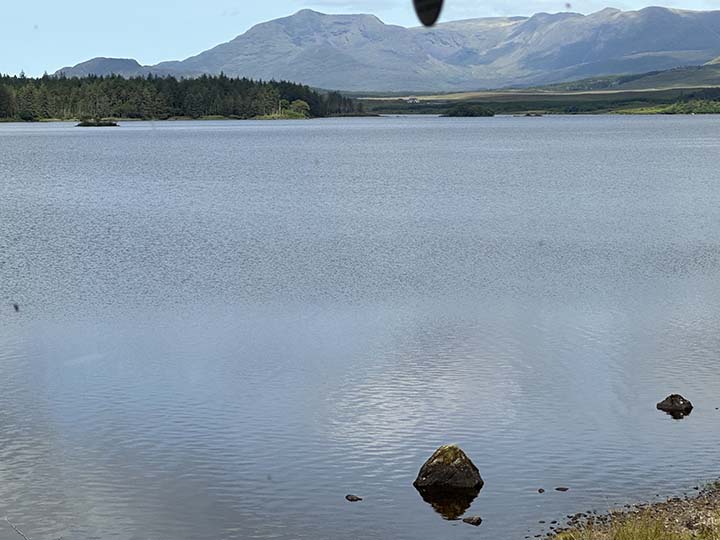
Today's landscape is different from anything we have seen thus far in Ireland.
It is lovely here.
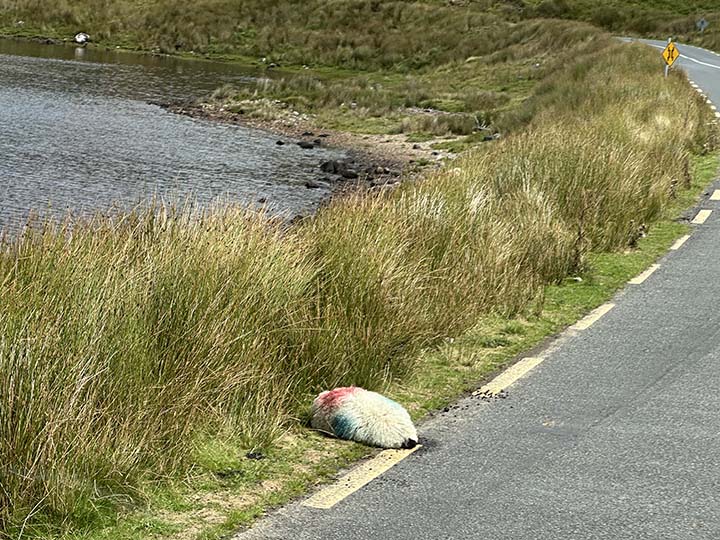
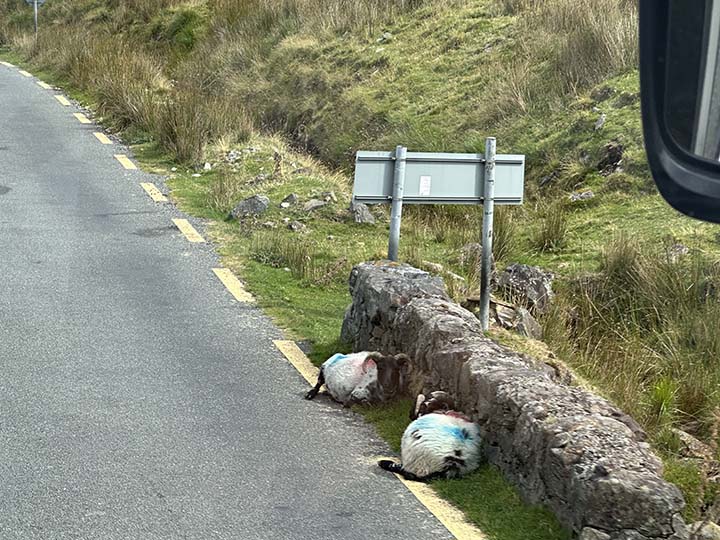
But don’t run over any sheep sleeping in the road. Don't worry: he hasn't been hit by a car. He's just taking a nap.
The colors help the farmers keep track of which sheep belongs where.
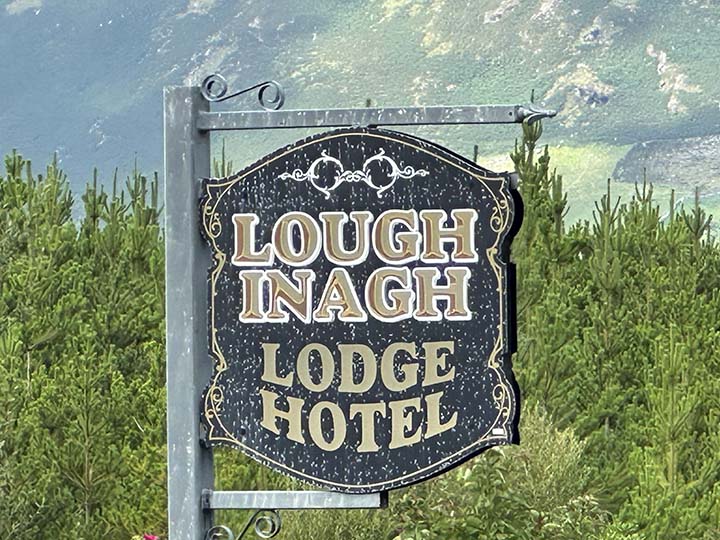
Oh, nice.
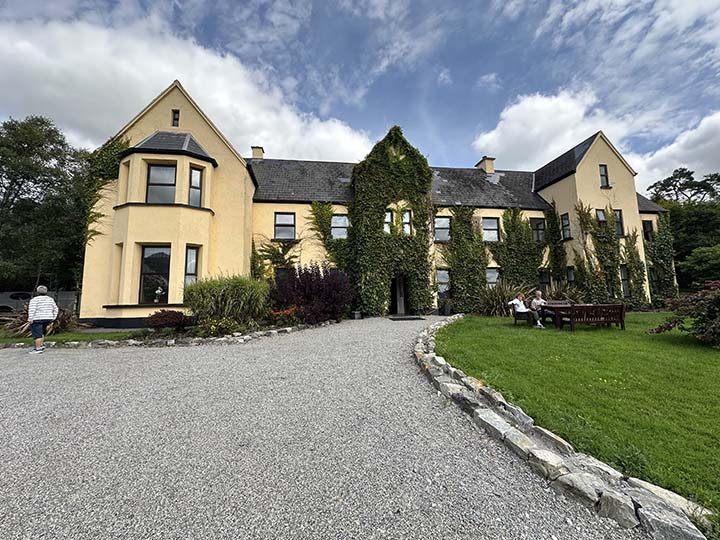
This is where we will have lunch.
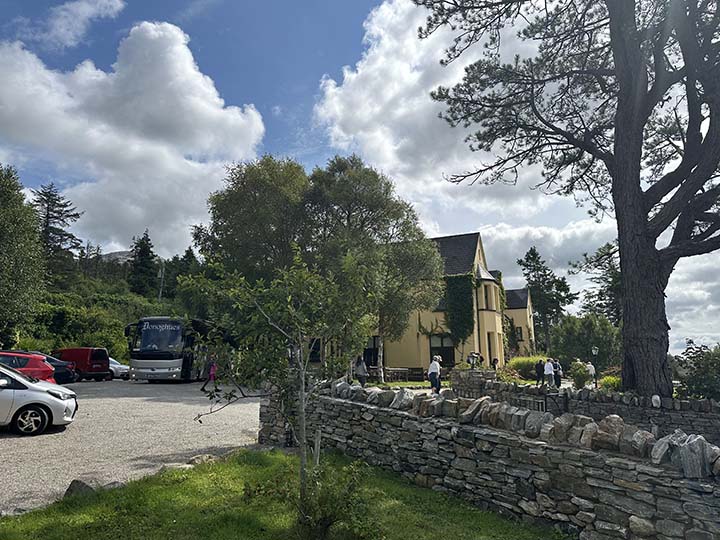
That's it up there.
Nice place.
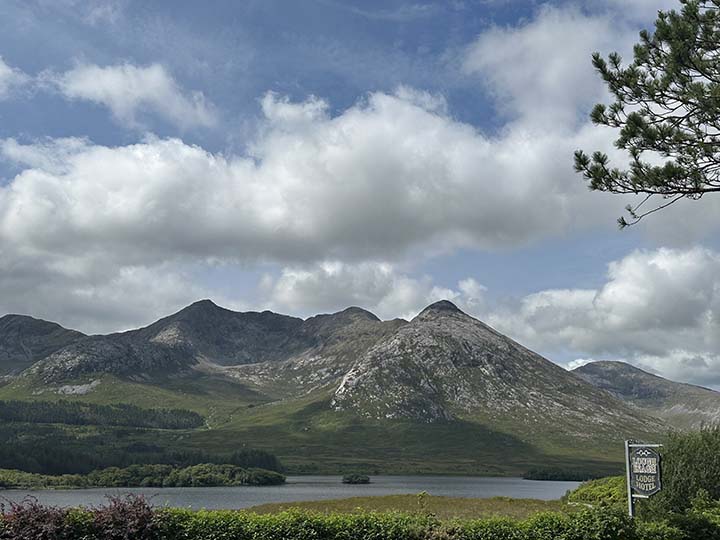
With a nice view.
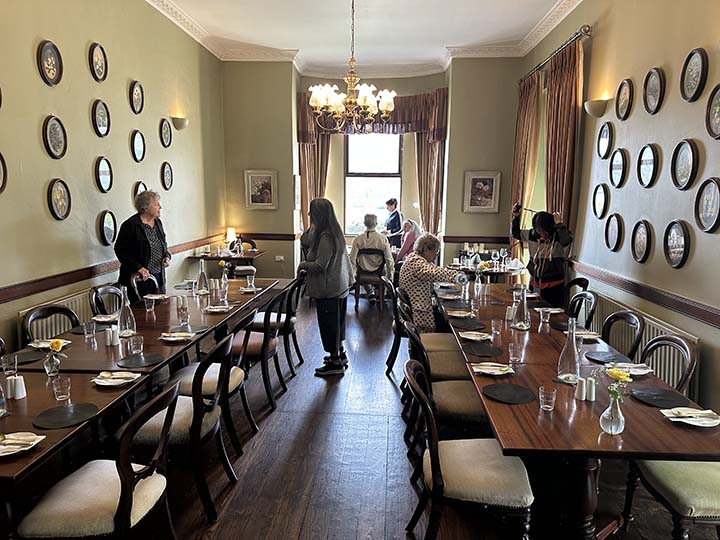
I'm hungry; let's eat.
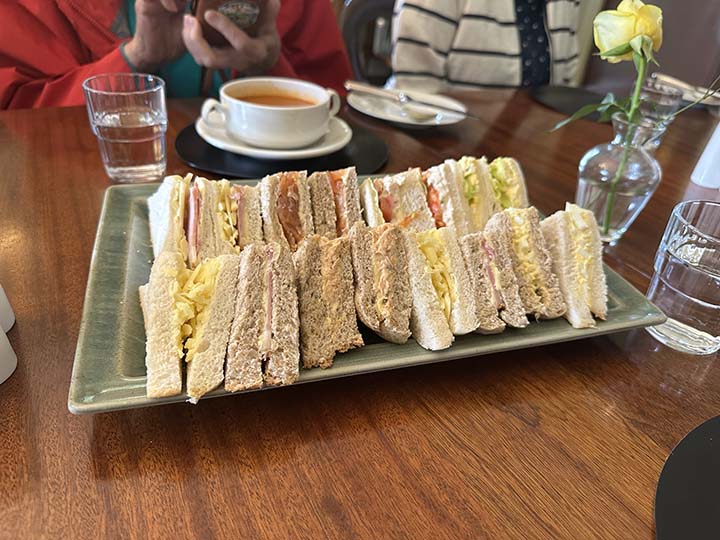
Oh boy, soup and bland sandwiches.
Just delightful.
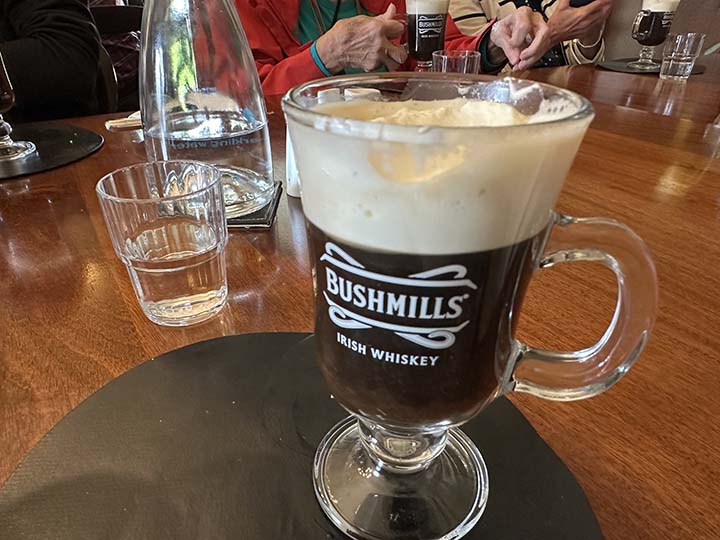
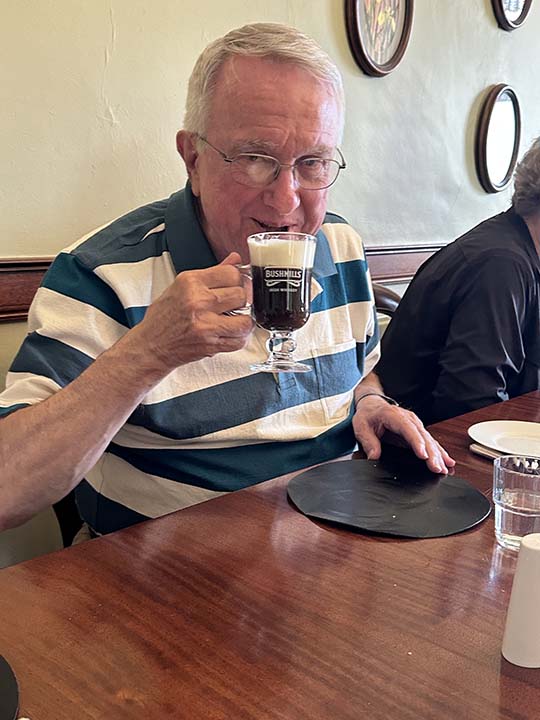
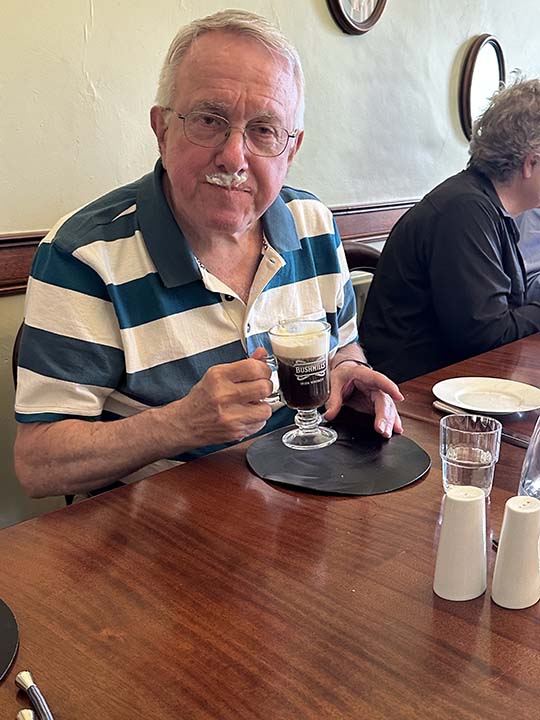
But dessert, on the other hand, was very nice indeed. Irish coffee. And it really looks good.
Now let's see.
Outstanding!
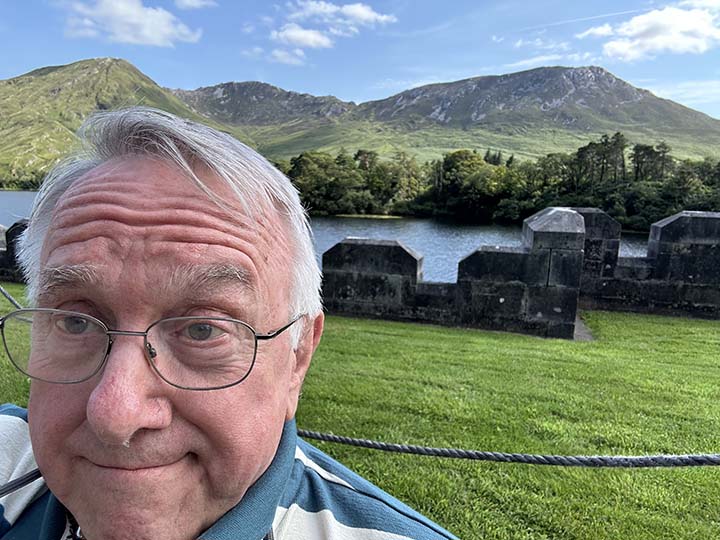
I could stay in a place like this.
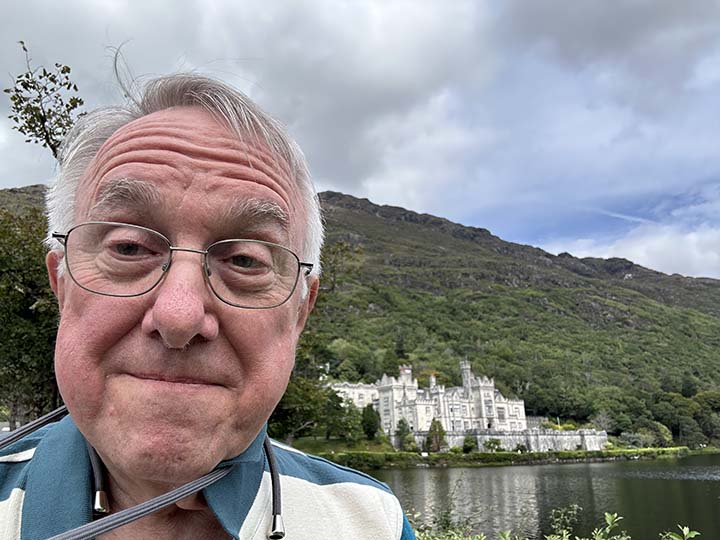
It gets my seal of approval.
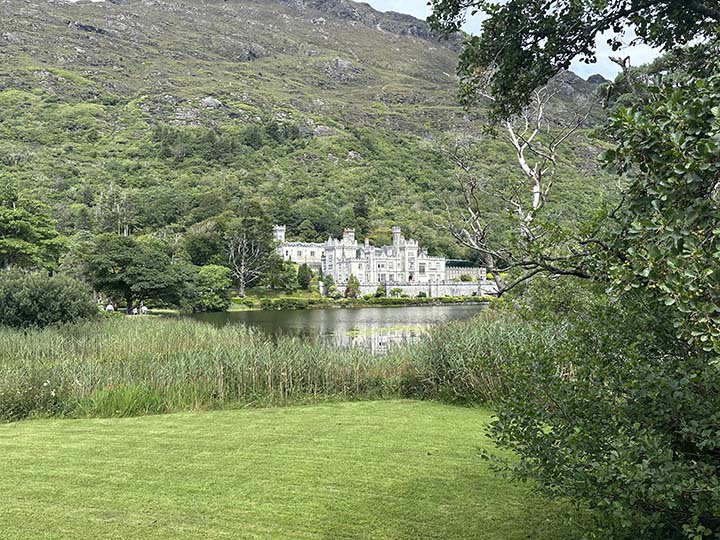
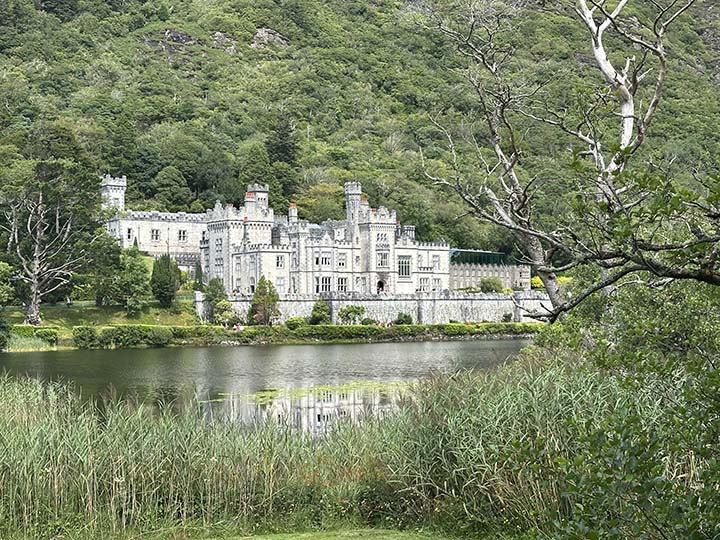
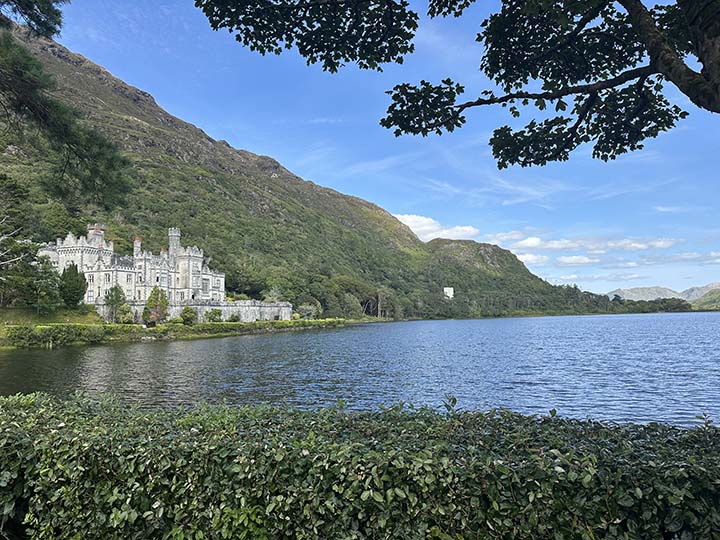
This is
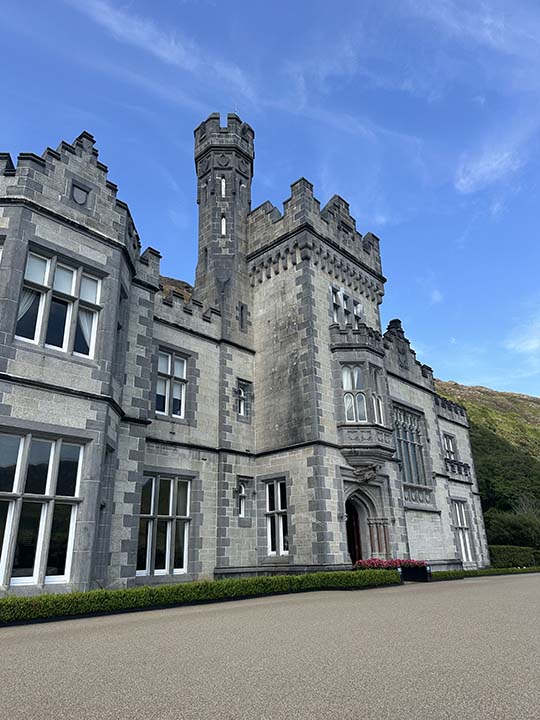
Kylemore Abbey.
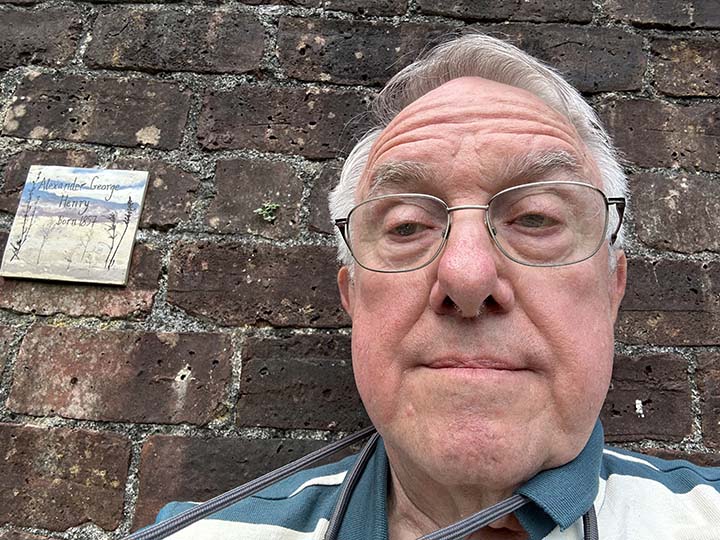
Kylemore Castle was built in 1868 as a private home for the family of Mitchell Henry, a wealthy doctor from London whose family was involved in textile manufacturing in Manchester, England. He moved to Ireland when he and his wife Margaret purchased the land around the Abbey, after having traveled there on their honeymoon in the mid-1840s. He became a politician, becoming an MP for County Galway from 1871 to 1885. Then in 1920 it became known as Kylemore Abbey because it became a sanctuary for Benedictine nuns who fled Belgium in World War 1. It continues its mission as a Benedictine monastery, holding Kylemore and its spiritual mission, natural and built heritage in trust for the Irish nation. Kylemore Abbey also operates as one of Ireland's leading tourist attractions.
And I know just the tourist who'll be attracted.
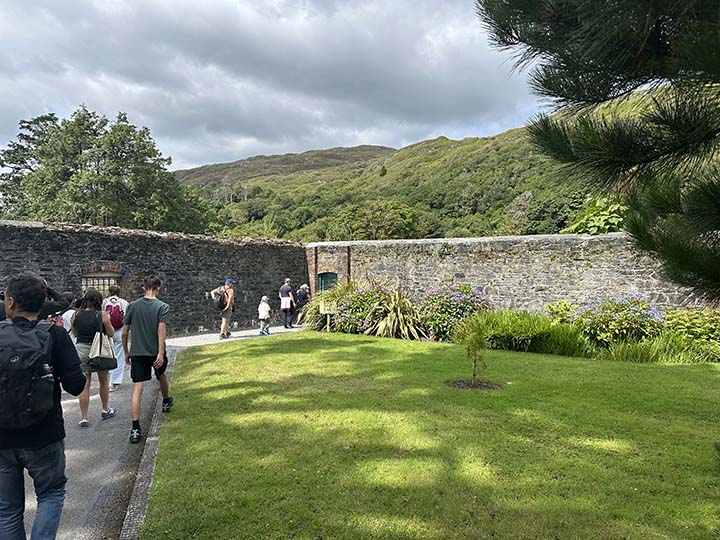
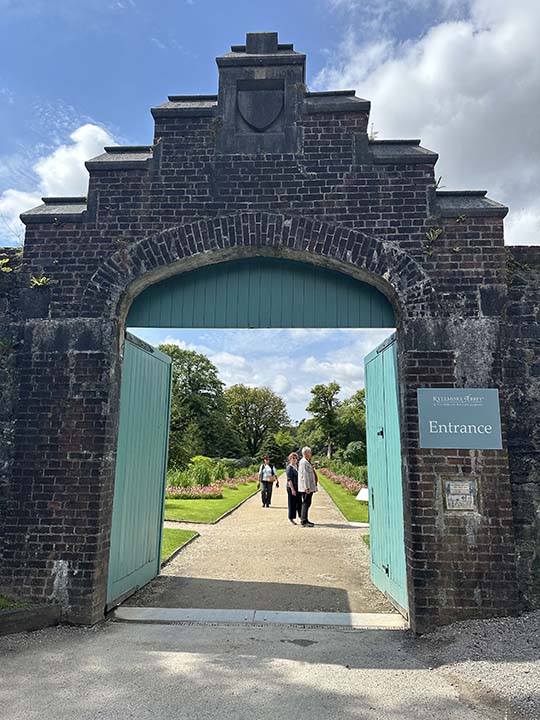
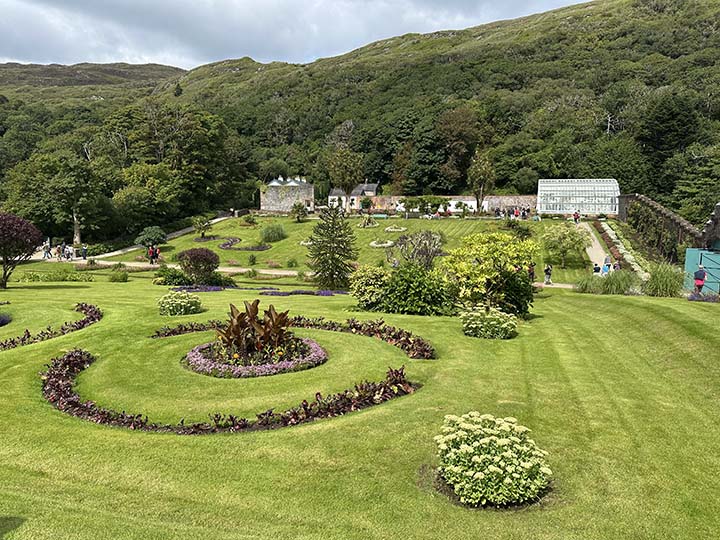
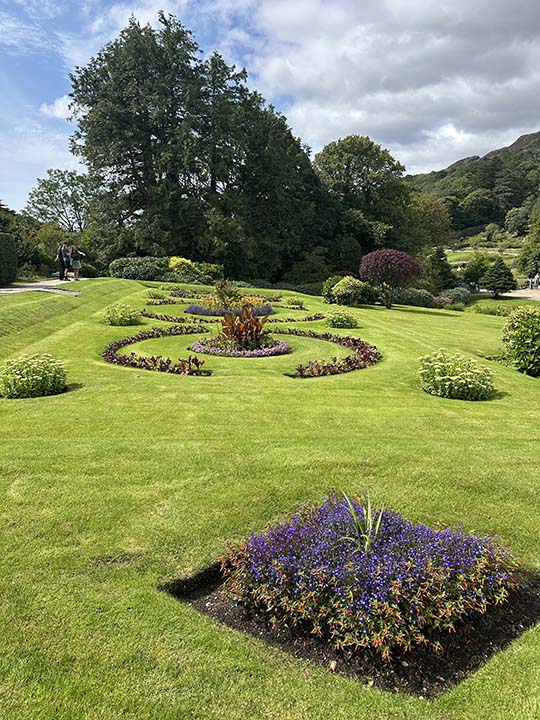
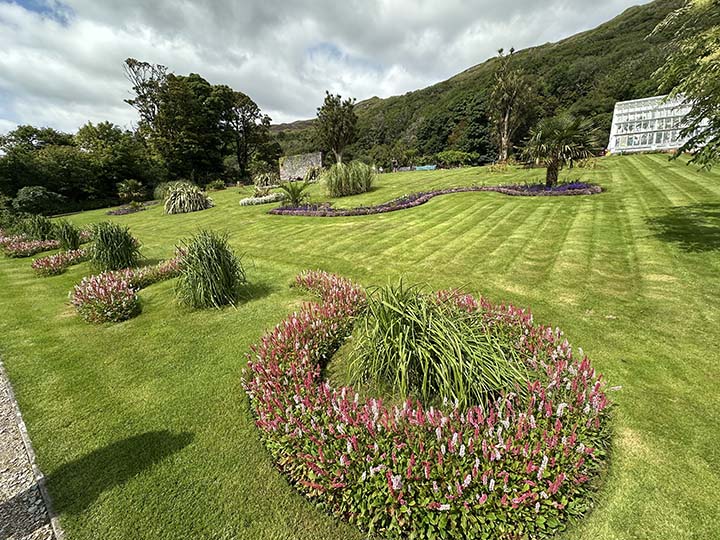
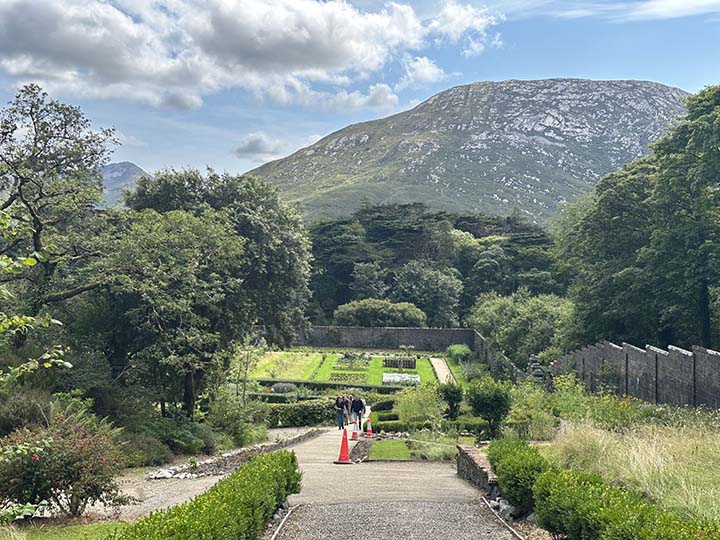
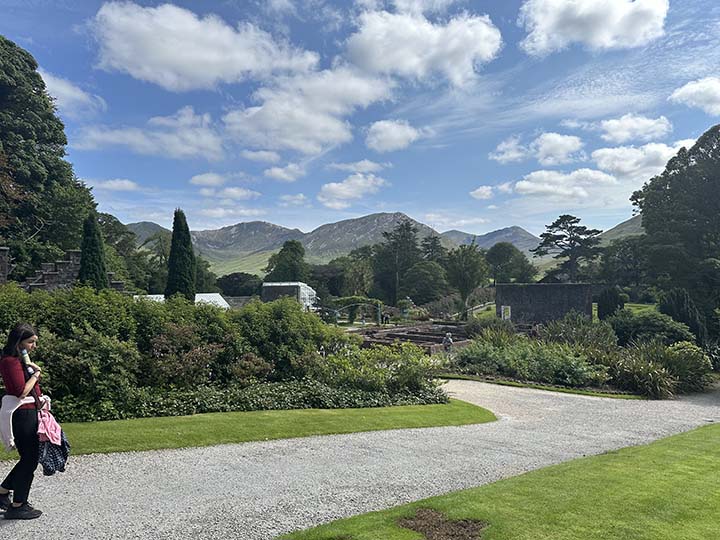
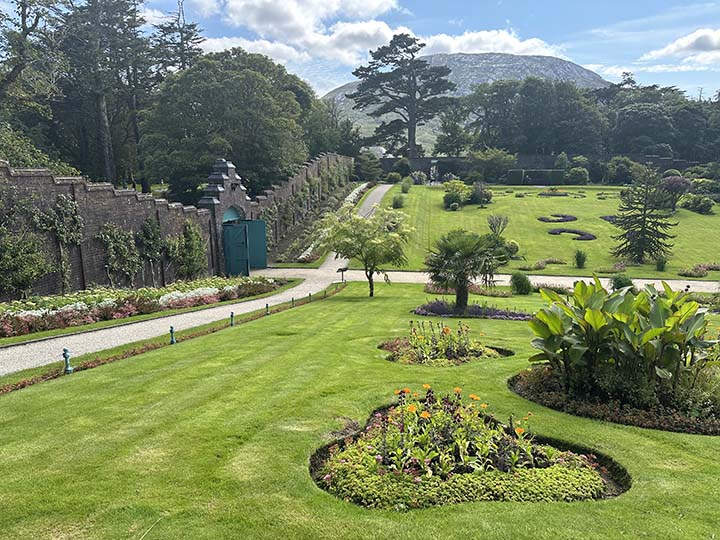
There was a walled Victorian garden.
Let's go in and have a look around.
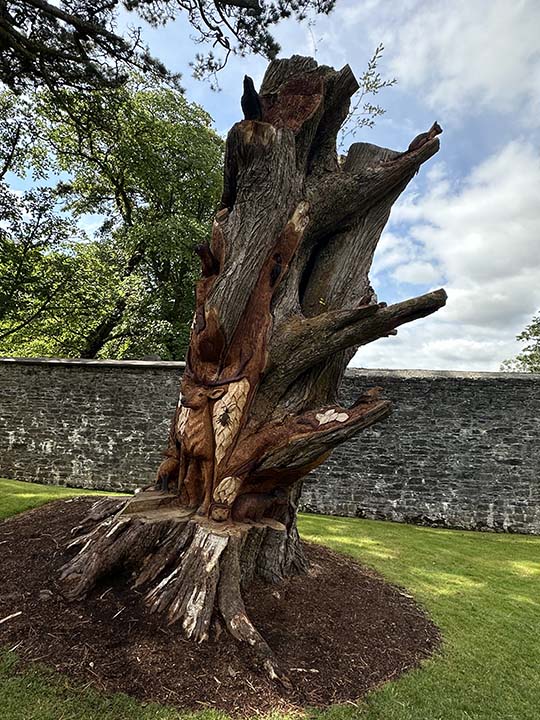
That, I do believe, is a carved-up stump. I'll take beauty wherever I find it.
And there's plenty of beauty here to be found.
Nice place.
Lots of pretty flowers.
I took a rest.
And looked out on the garden. I can rest like this anytime.
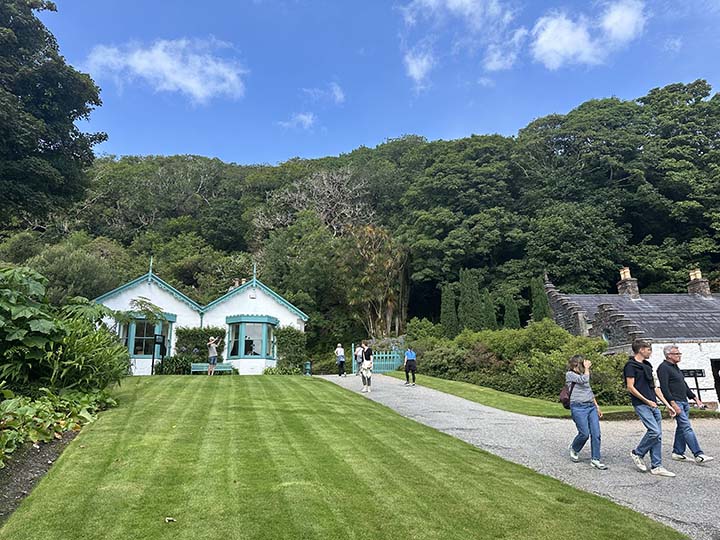
That's the old groundskeeper's house.
He and his family had a nice place.
They may not have lived in the big house, but they did OK.
Still wandering around.
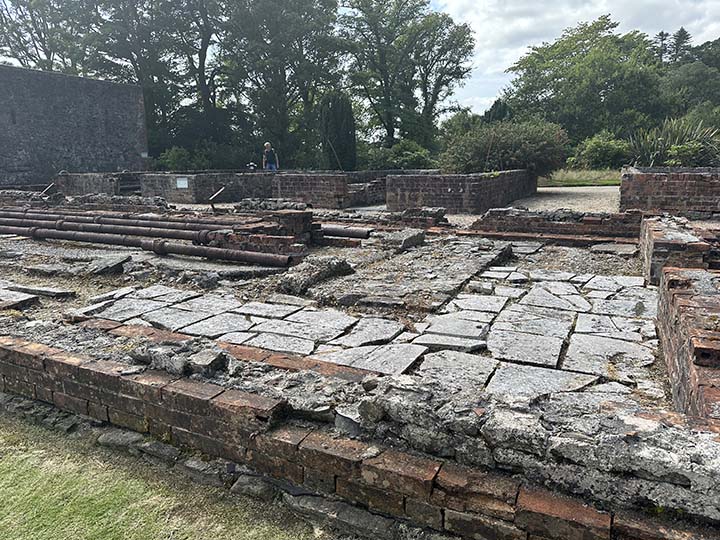
There used to be a large greenhouse here, I think.
Now it's time to head to the big house and see what there is to see.
Well first off you can see it's a big house.
Even he knows that.
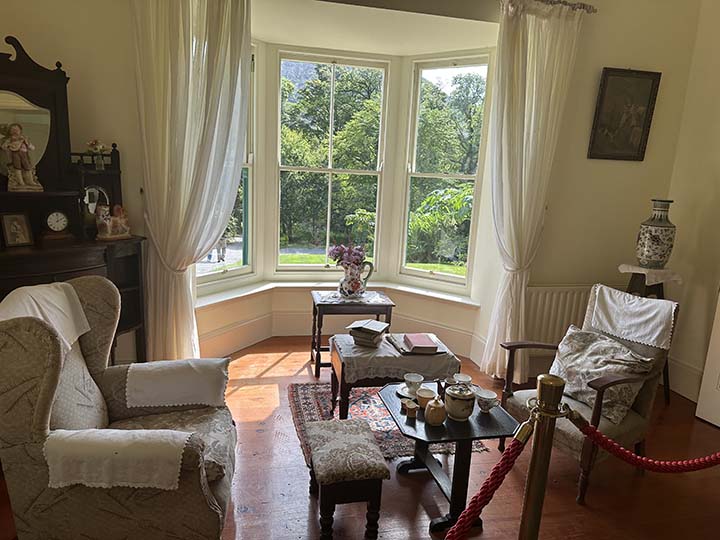
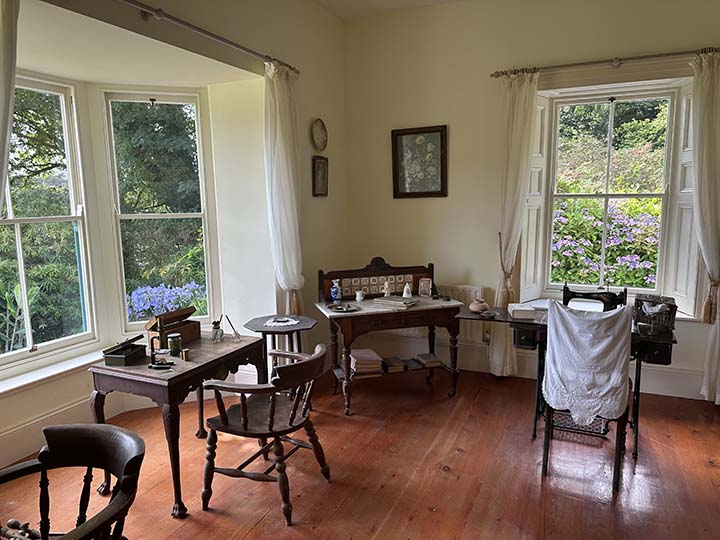
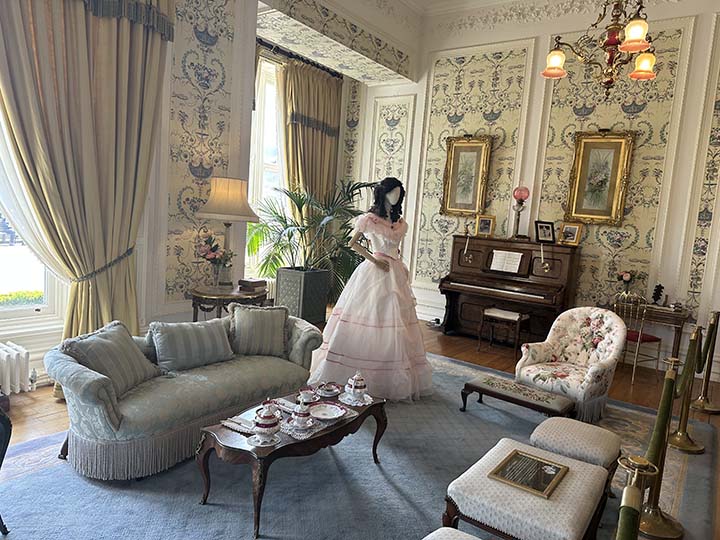
And he was impressed by the beautiful interior.
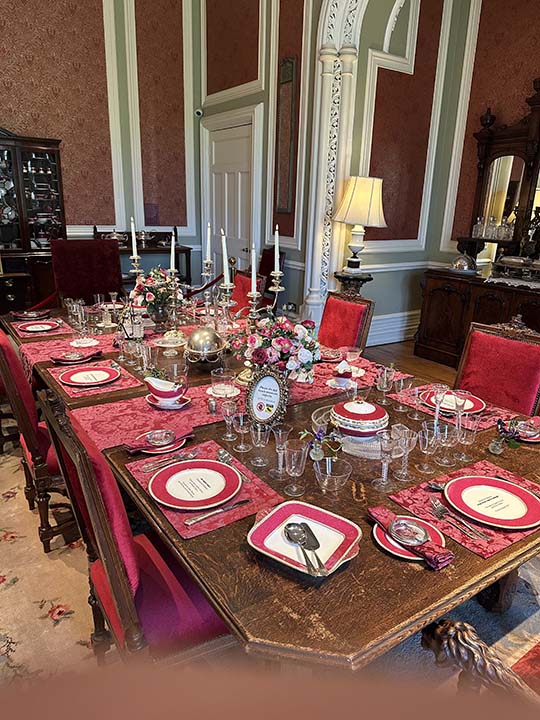
They set dinner for us.
But now we have to say goodbye to Kylemore Abbey.
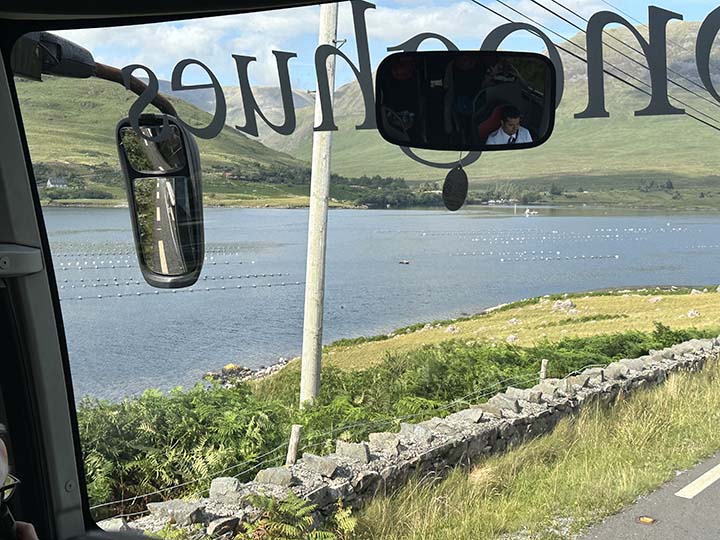
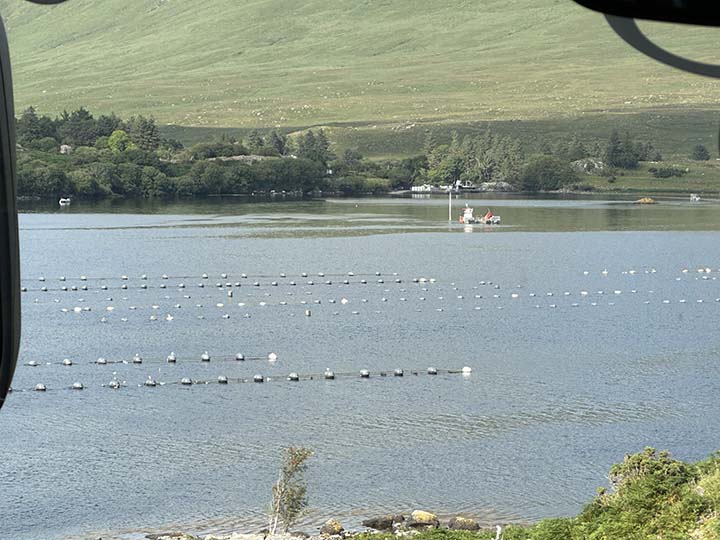
Brendan says that's a mussel farm.
I think it was about here that he mentioned Molly Malone selling "cockles and mussels alive, alive-o." I'm glad he did because he got me started trying to remember the lyrics, which I had learned long ago when I sang with a barbershop chorus. This was to come in handy later.
There's Brendan regaling us with information about the area.
On the road to Galway.
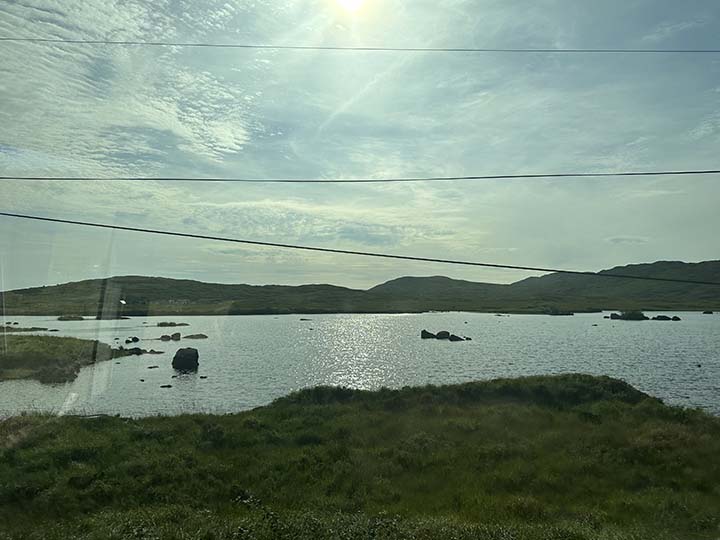
We're seeing tidelands.
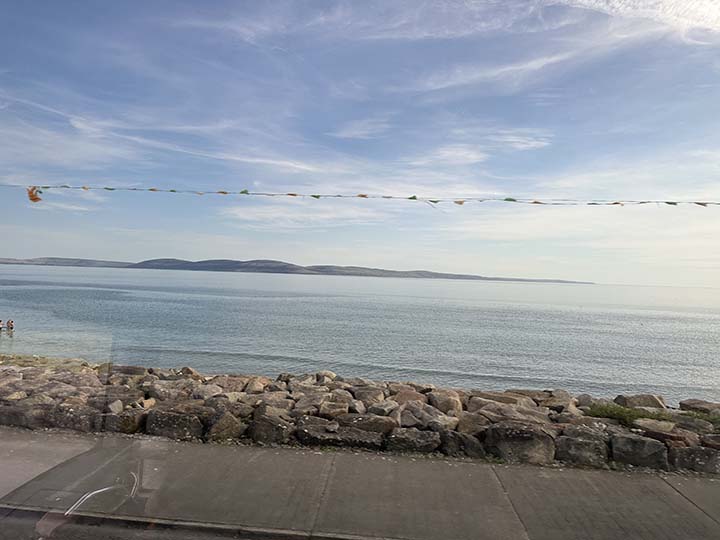
And we're also seeing Galway Bay.
The road signs are in Irish.
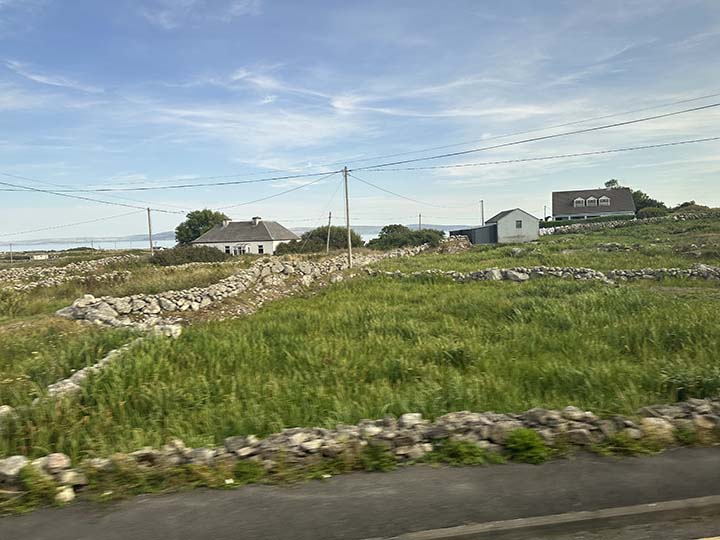
All the rocks in the ground make this area very poor for farming. But they’re great for building rock walls.
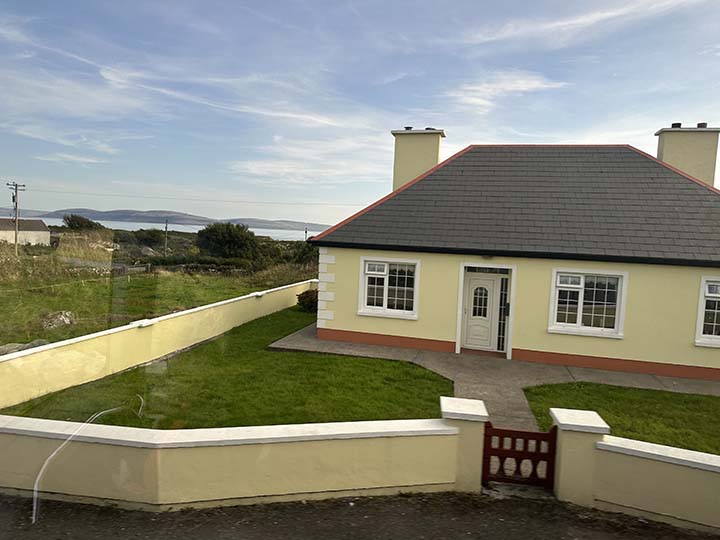
Nice farmhouse.
More Galway Bay.
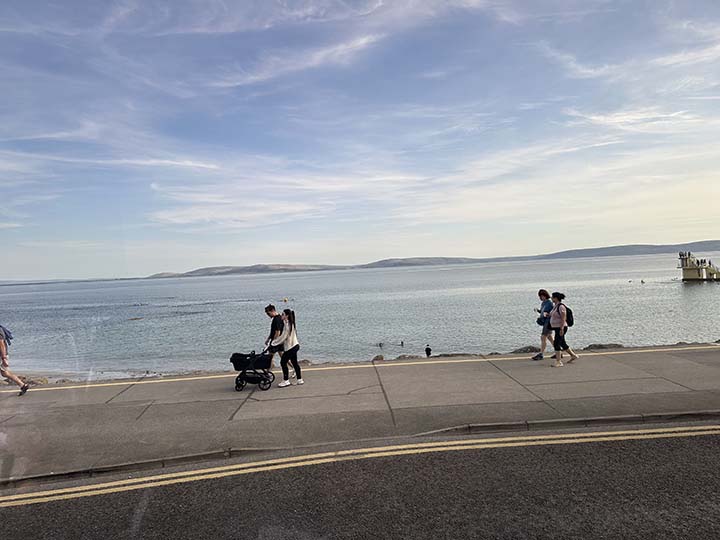
As we came into Galway City we discovered a long promenade.
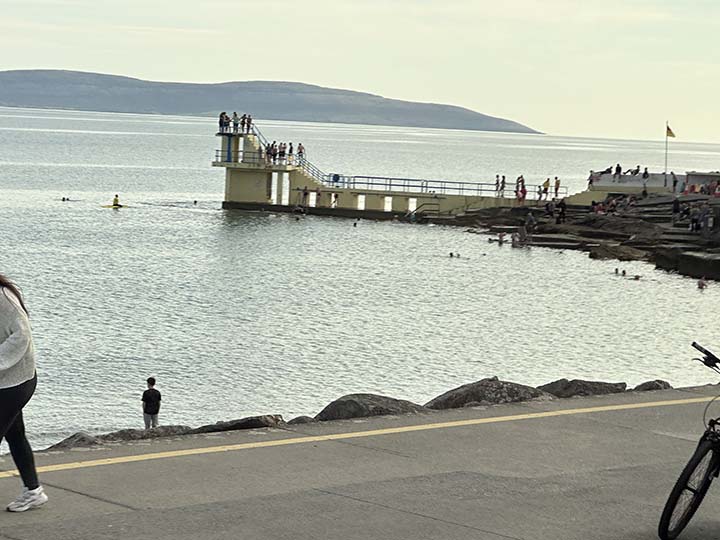
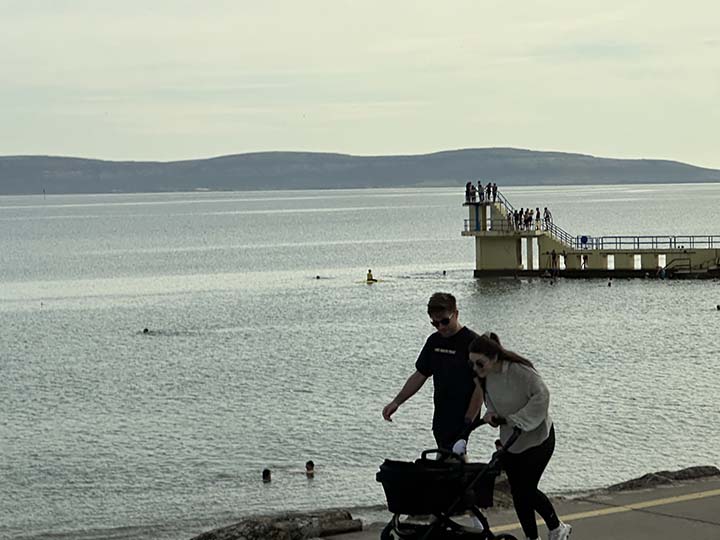
Wait a minute…It’s only 71° outside. Are those people actually swimming in the bay?
Why yes they are.
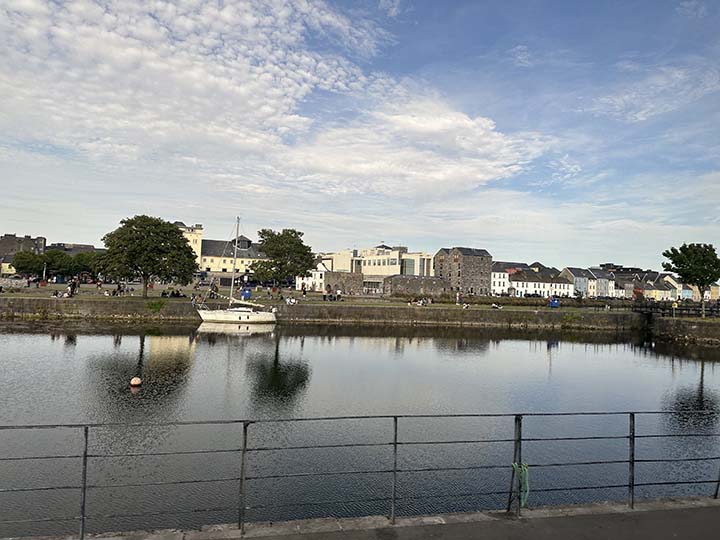
Brendan says that boat over there is known as a Galway hooker.
I suspect we'll find Galway an interesting place in the morning.
|