|
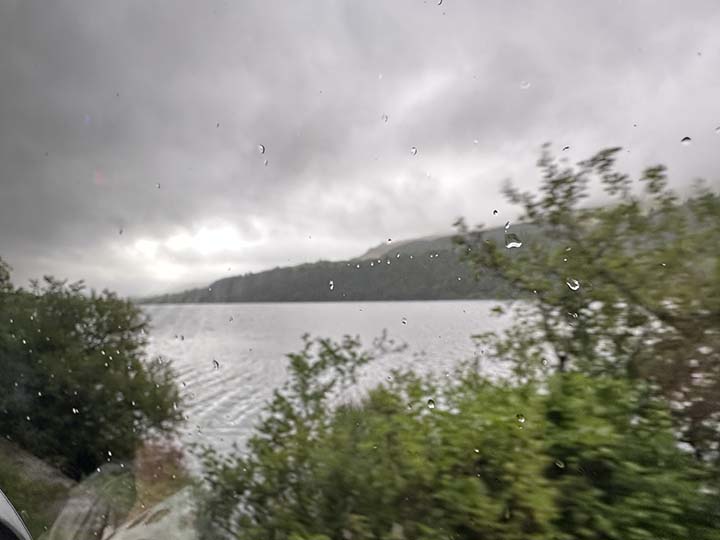
The sun is bound to show its face today, right?
Well, we're not getting off to a sunny start.
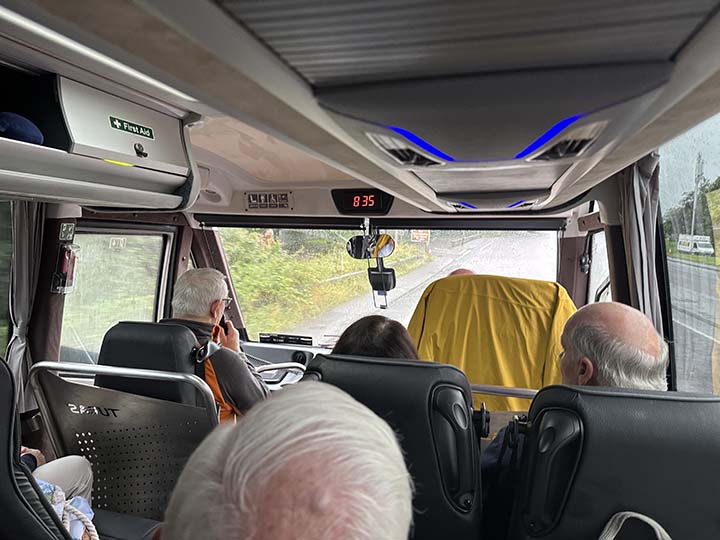
But Brendan will sit up there and keep us entertained and informed as we ride in the rain.
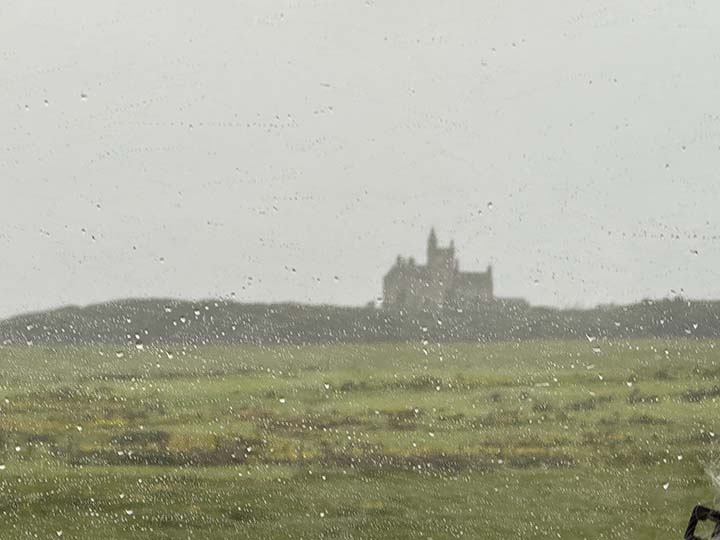
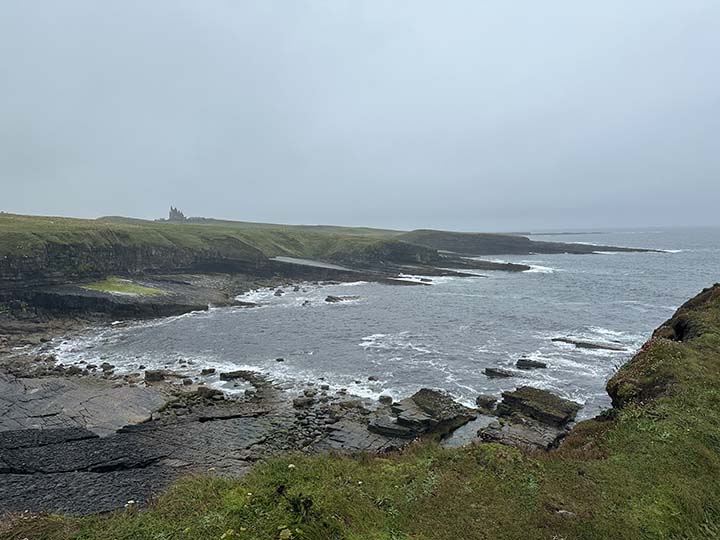
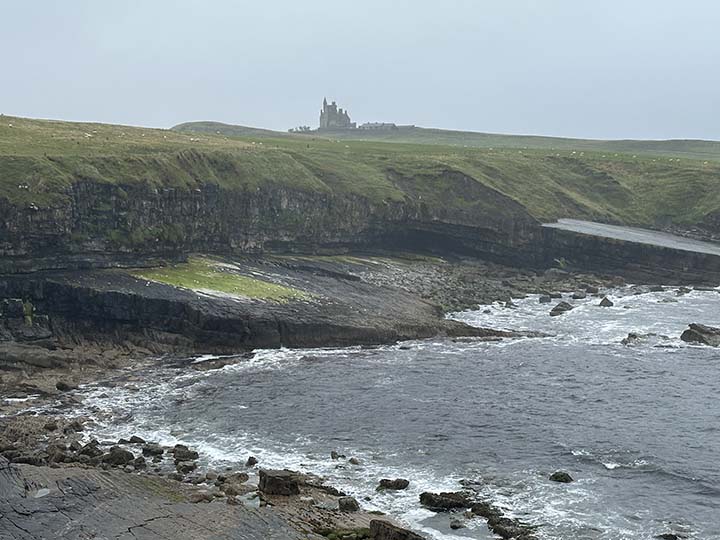
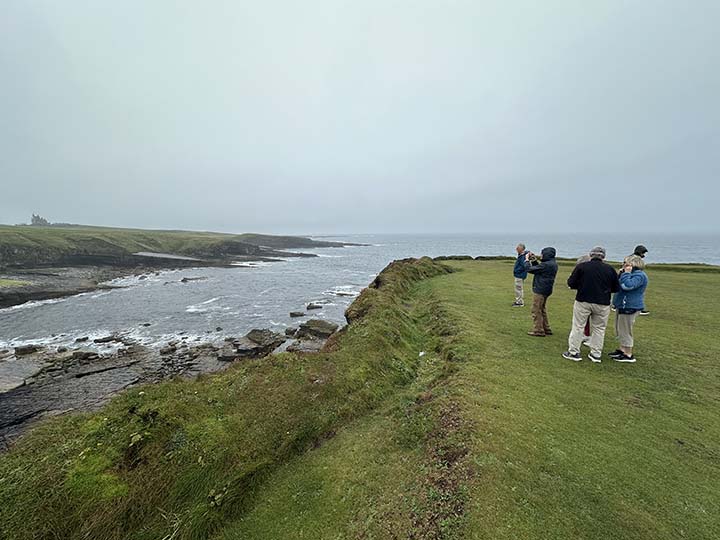
Ooh, that looks impressive.
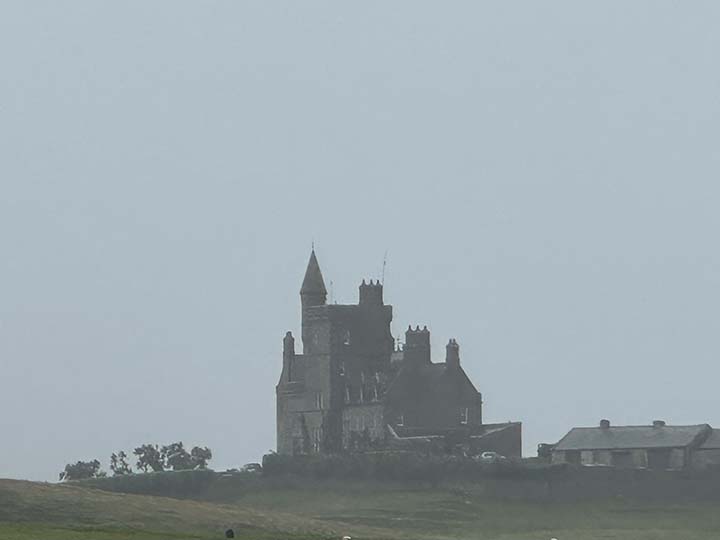
It's way over there all by itself on the hillside.
It's called Classiebawn Castle.
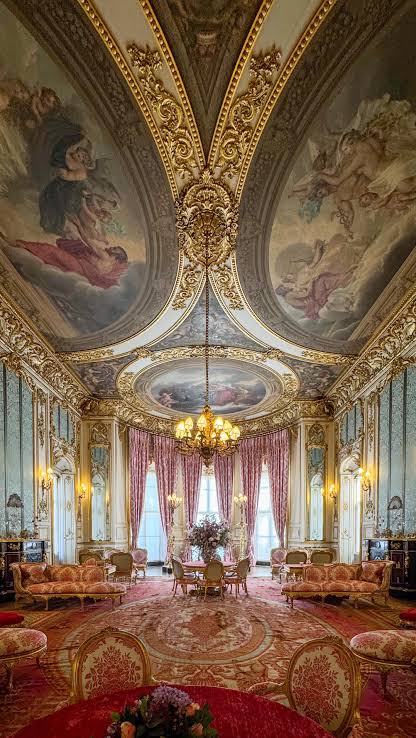
I looked online and found several pictures from inside. I liked this one.
Lord Mountbatten was living there
when the IRA blew up his fishing boat.
I guess he was headed out there in his boat.
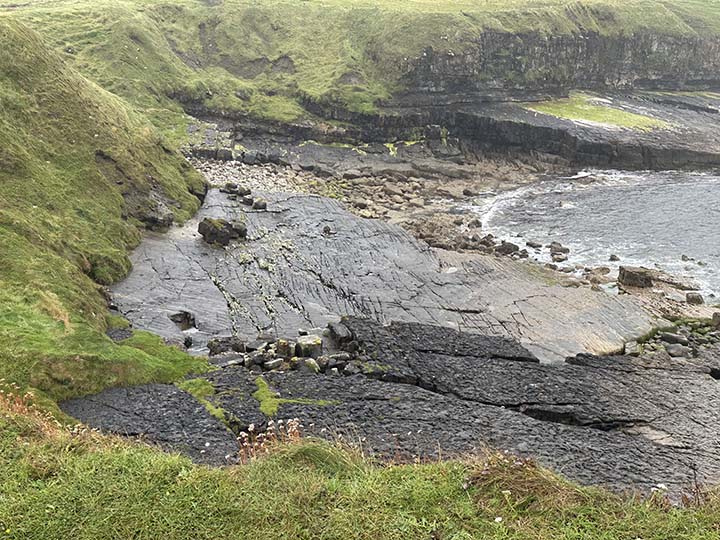
That's not much of a beach.
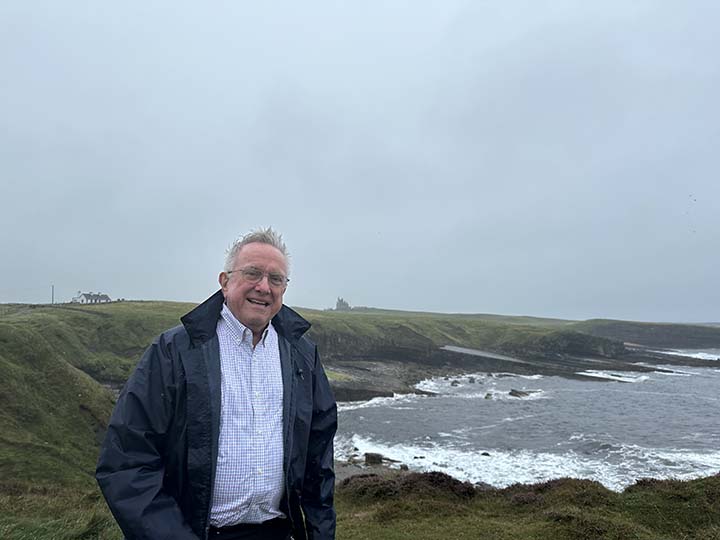
But I'll bet this is a nice place if the sun ever shines.
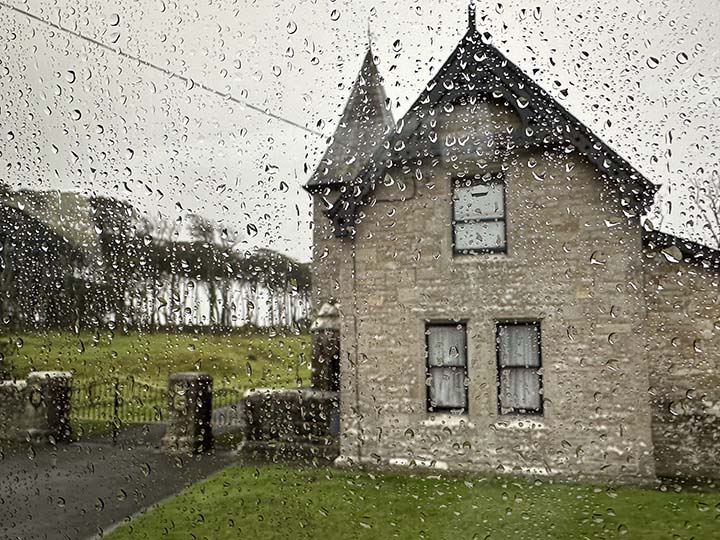
We drove past the castle gatehouse.
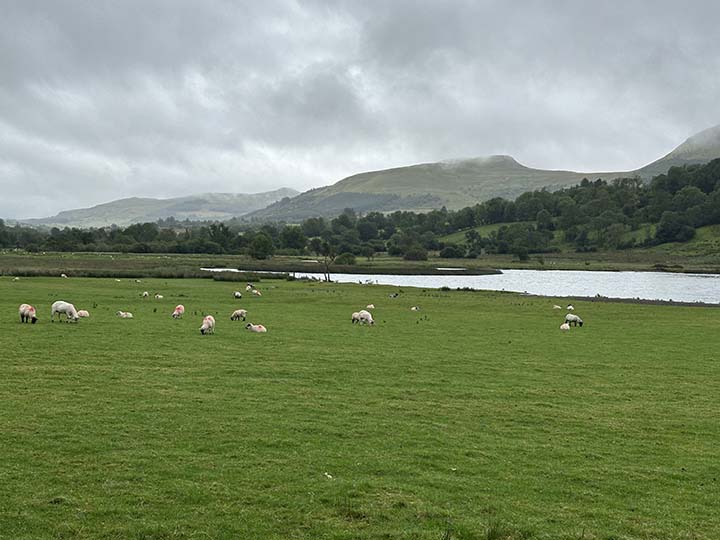
And we kept seeing misty views of lakes and harbors.
And sheep.
This area is called Glencar.
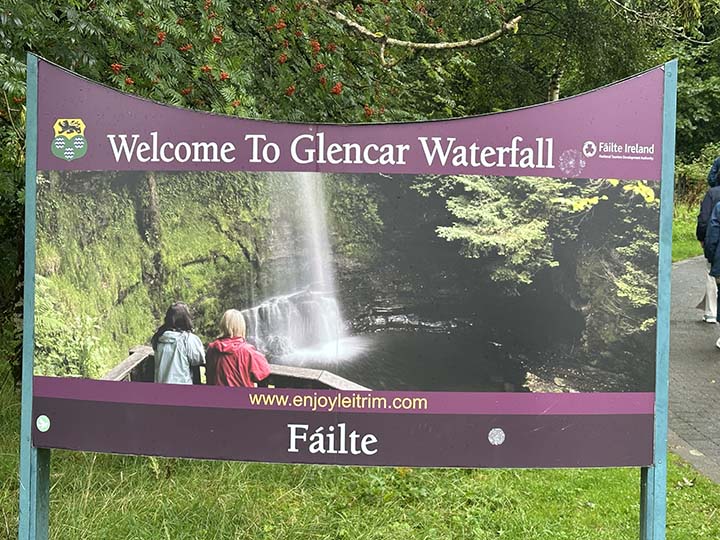
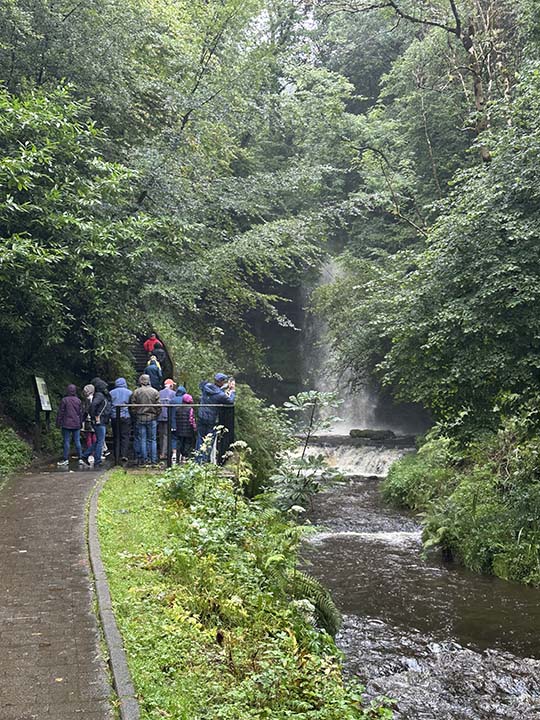
There is a waterfall nearby and we are going to walk up to it.
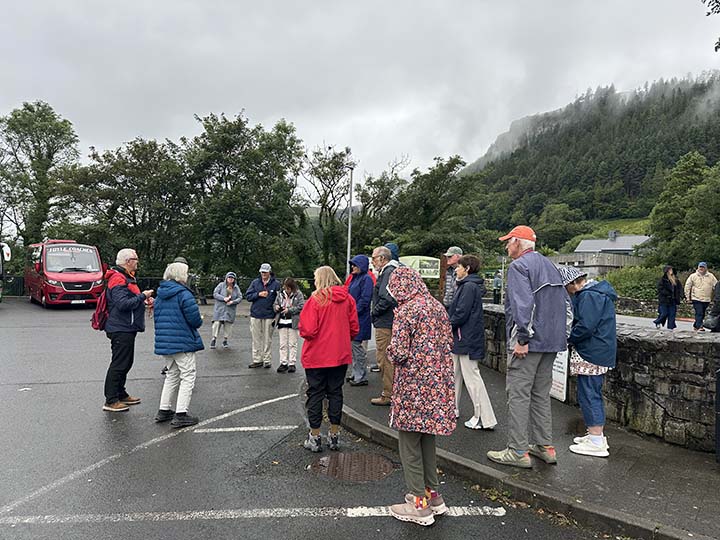
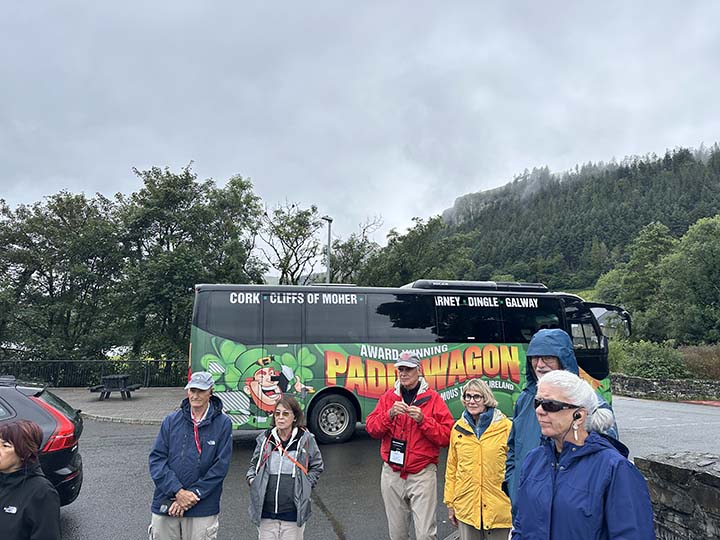
The wet Road Scholars prepare for a hike.
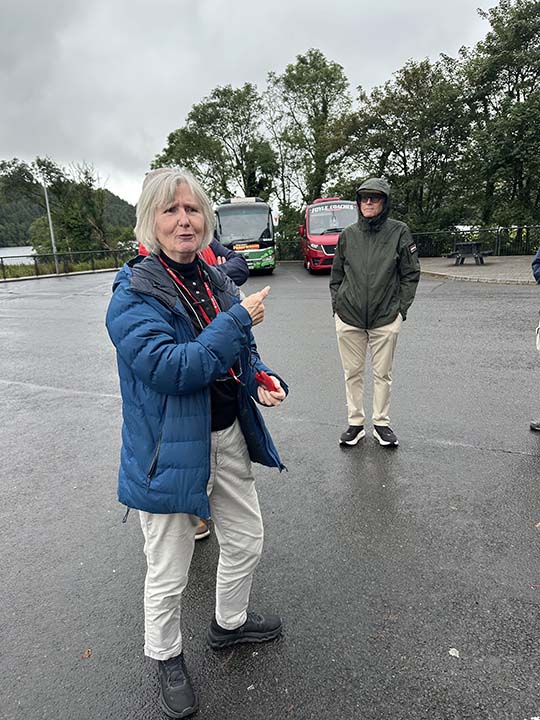
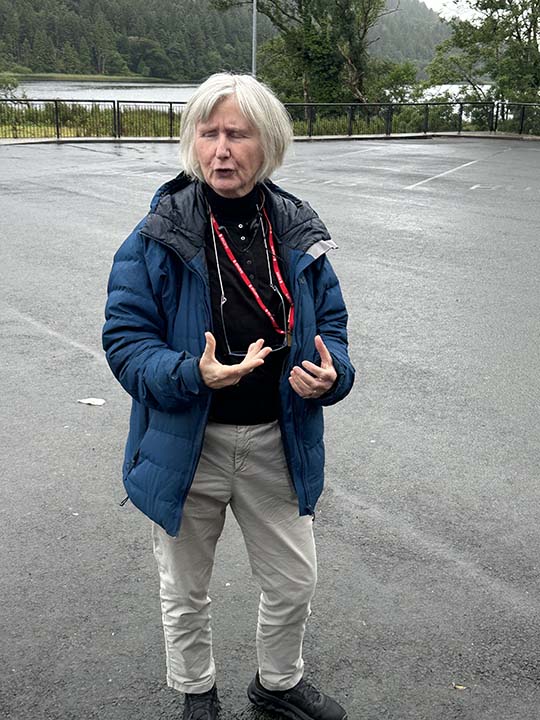
This is a pretty amazing lady. Her name is
Susan O’Keeffe,
and she made her name as an investigative reporter. You can click on
her name there to read her Wikipedia page. She exposed a criminal meatpacking
scheme and when all was said and done, she was the only person
to go to jail because she refused to reveal her sources.
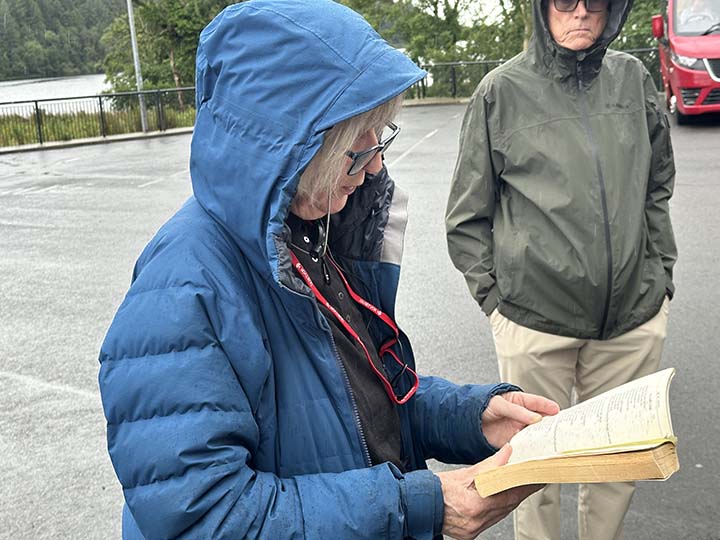
The Road Scholars enjoyed the poetry reading.
Now we're learning all about Yeats himself; maybe not the best husband and father in the world, but he did have a way with words.
Let's go see the waterfall that Yeats loved so.
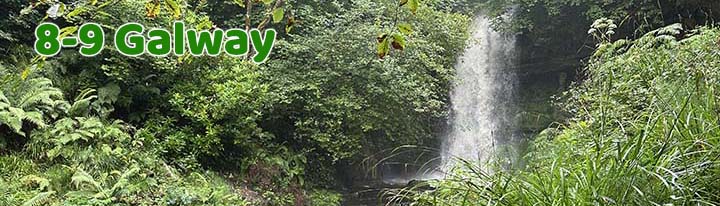
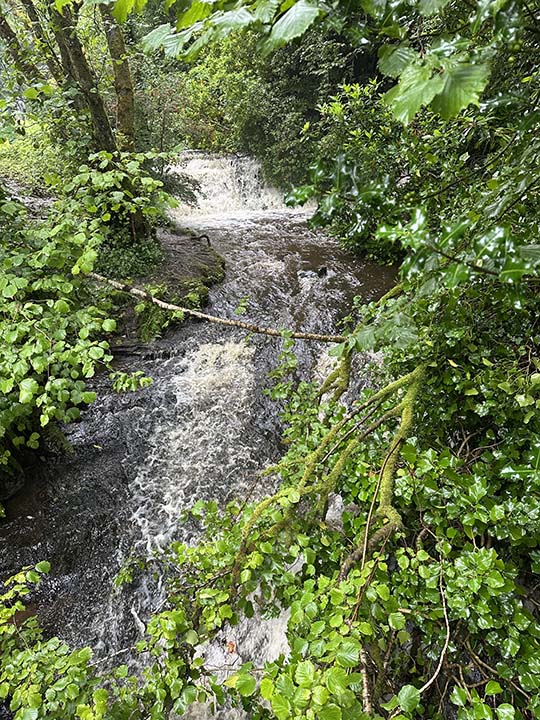
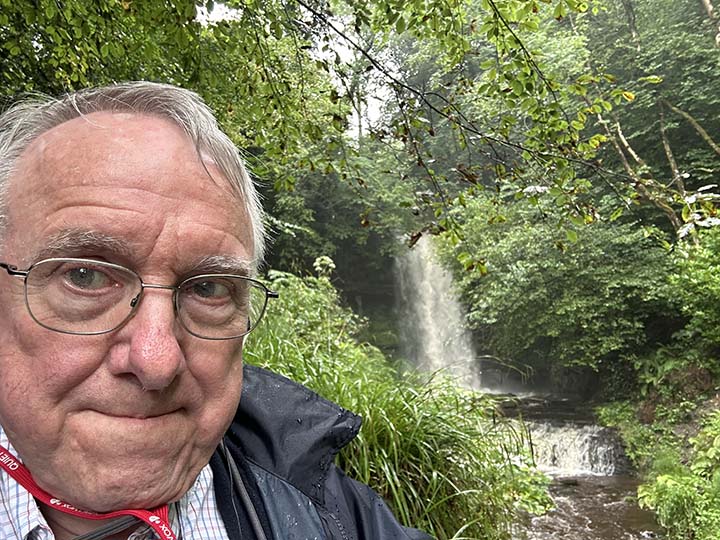
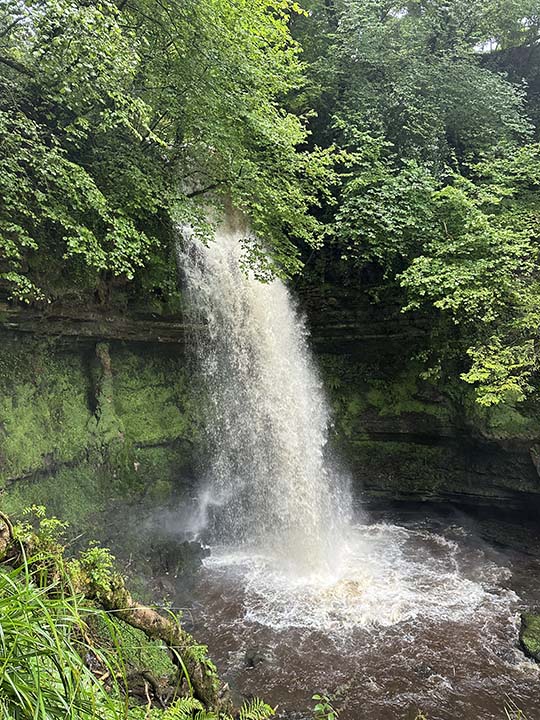
We took a hike in the wet woods to see the waters and the wild. There were no faeries.
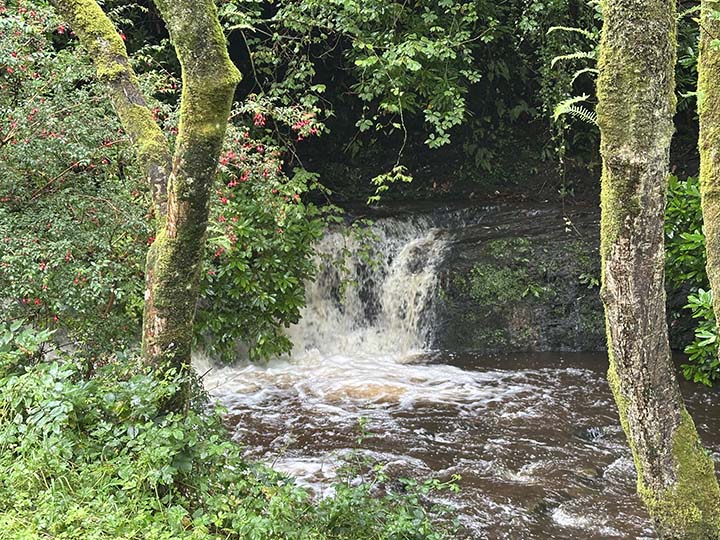
But there was lots of water. There had been so much rain lately that the stream was really roaring that day.
They say it usually is just a lovely little waterfall.
But not today.
Want to see the water actually fall?
Nice.
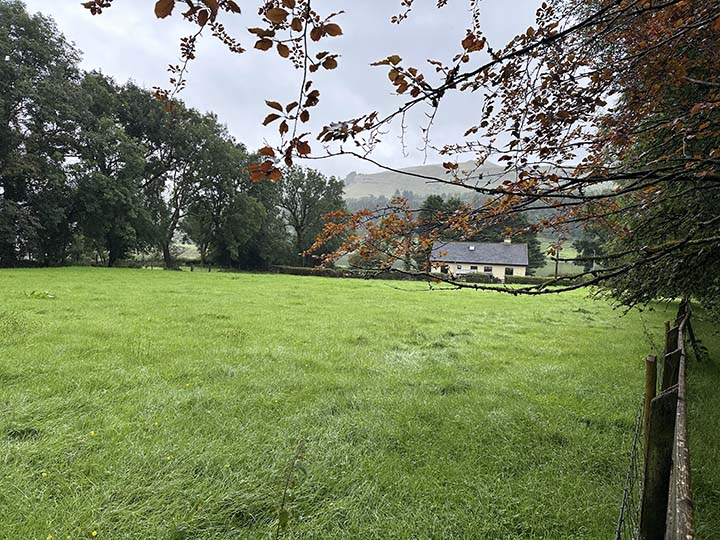
Now there's a pastoral view for you.
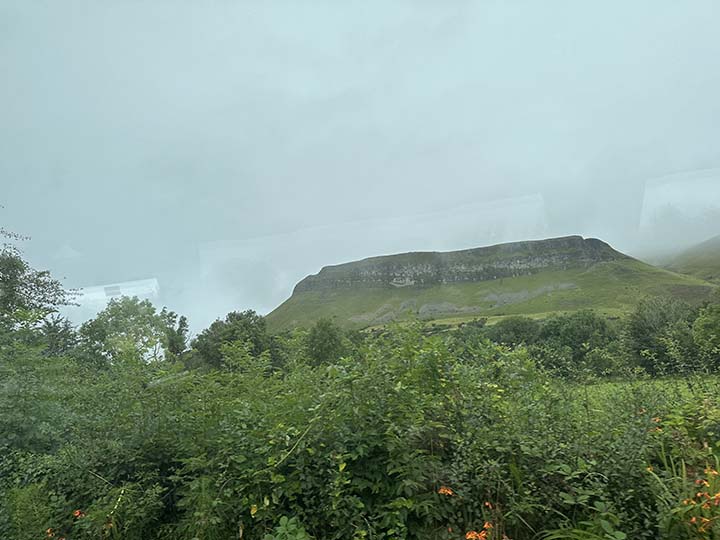
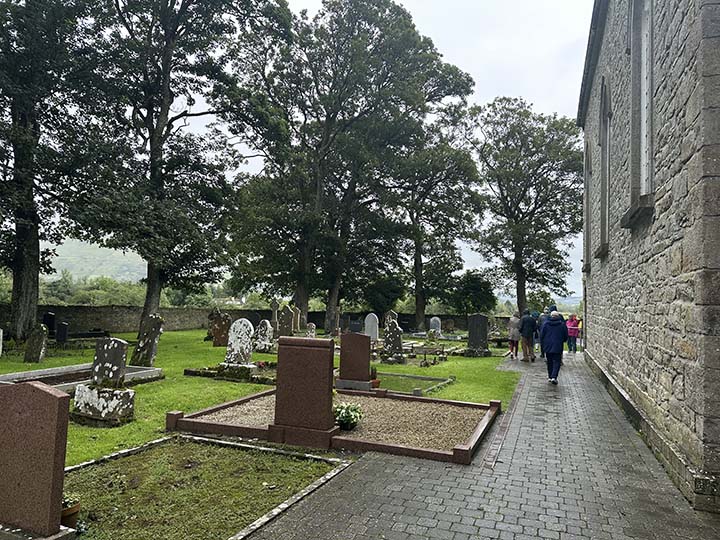
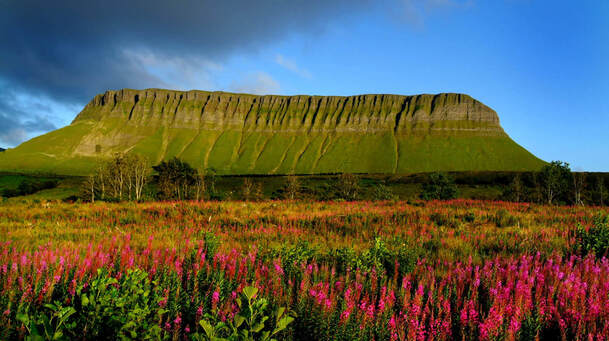
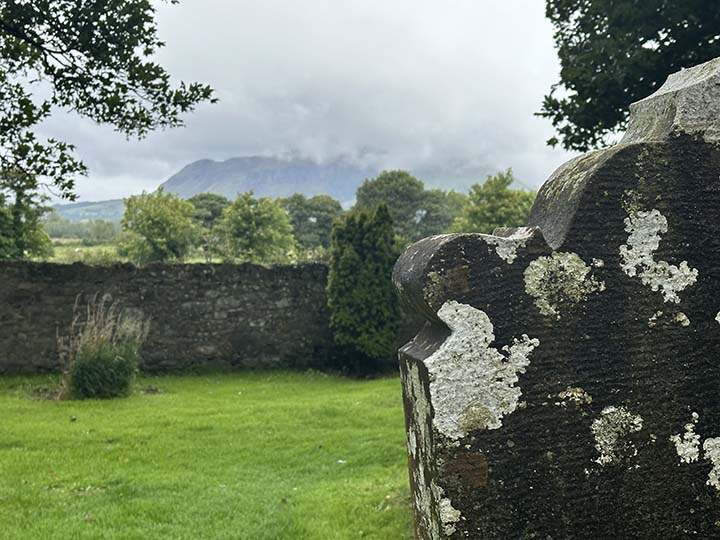
In all the talk about Yeats we'd learned he left very specific instructions about how he wanted to be buried in the shadow of a large flat-topped limestone hill or mountain in County Sligo, Ireland. Well I was just sure I'd snapped a picture of it as we drove along, but apparently that's not the right hill.
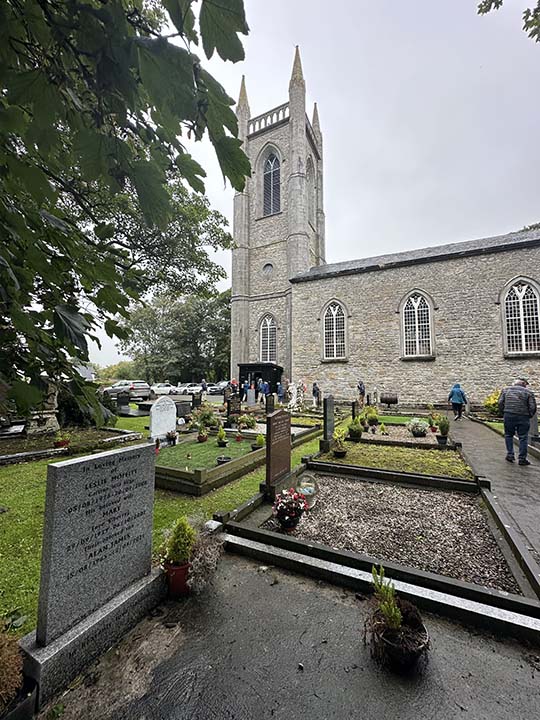
He specified his final resting place in his poem "Under Ben Bulben," writing: "Under bare Ben Bulben's head / In Drumcliff churchyard Yeats is laid." Today, his grave is located in the churchyard of St. Columba's Church in Drumcliff.
And apparently if the world isn't blanketed in fog, you can see Ben Bulben back there behind the trees to the left. But since we couldn't get even a glimpse of it today...
I downloaded a pretty picture of it from the internet. I still think it looks like that pic I took. Susan even said the picture I took was Ben Bulben. But I think she was mistaken.
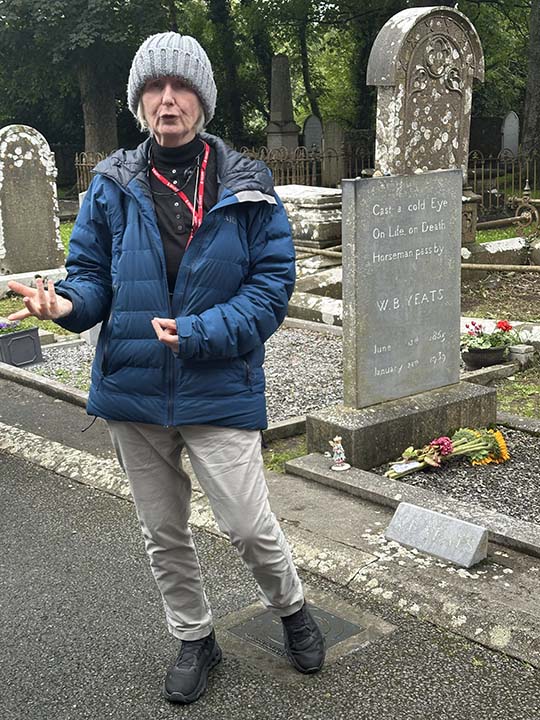
Anyway, since she retired from investigative journalism, Yeats has become her passion and she loves to discuss him with interested tourists.
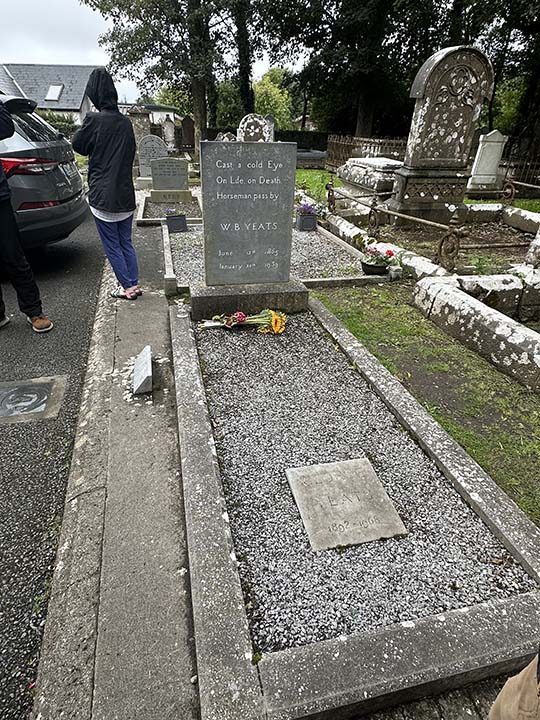
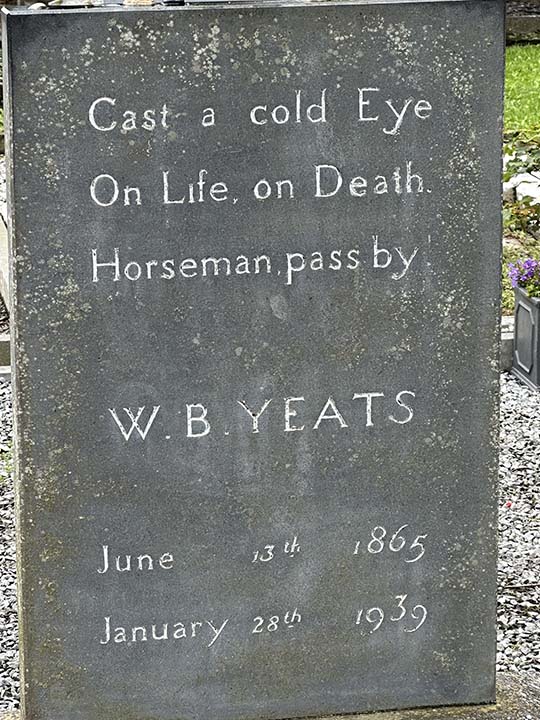
That's where the great man lies. His wife, George, is in there too. That's right, George.
And that's his creepy epitaph.
Here is the excerpt Susan read from
“Under Ben Bulben”
I could probably convince you that's Ben Bulben if I tried, but Ben was over behind us to the left. Or so Susan said. I never did see him.
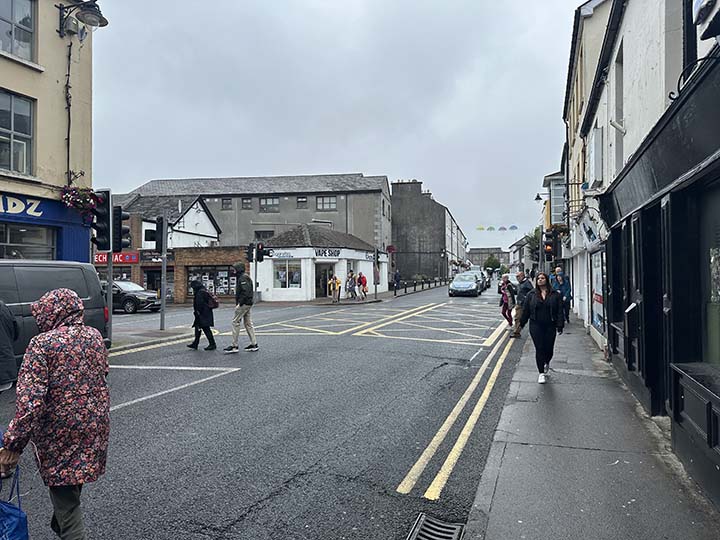
Let's go to town and find a place to have lunch.
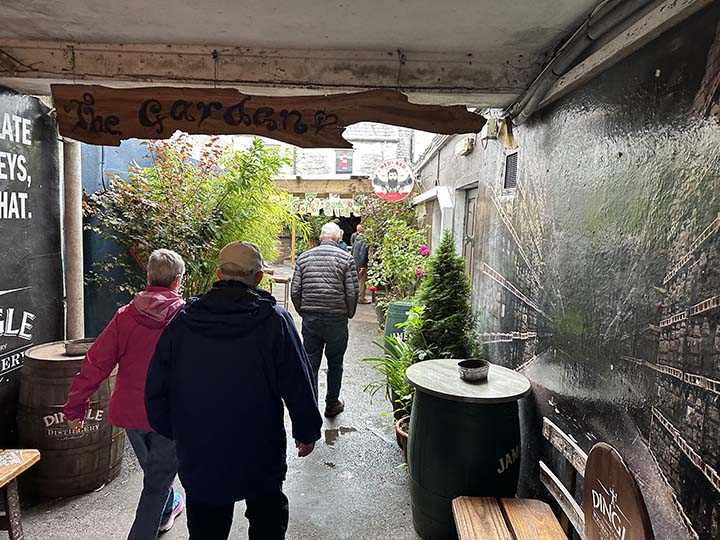
This will work.
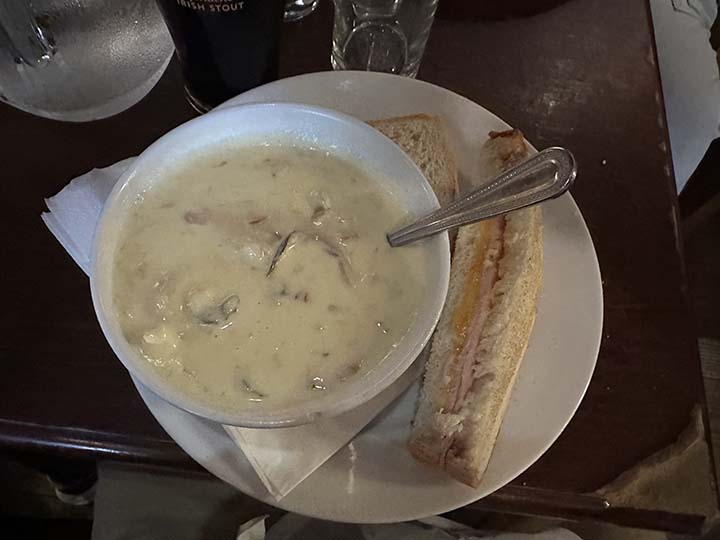
Seafood chowder and ham sandwich. Not bad.
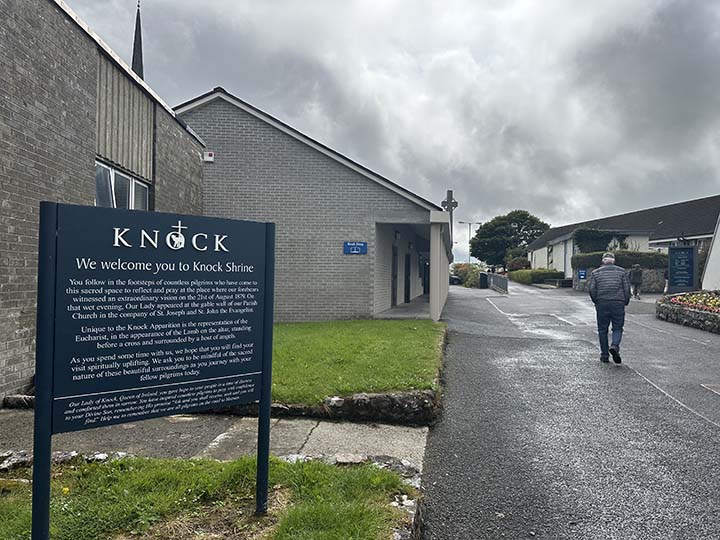
This is a sacred Marian site for Catholics. For us it was a bathroom stop.
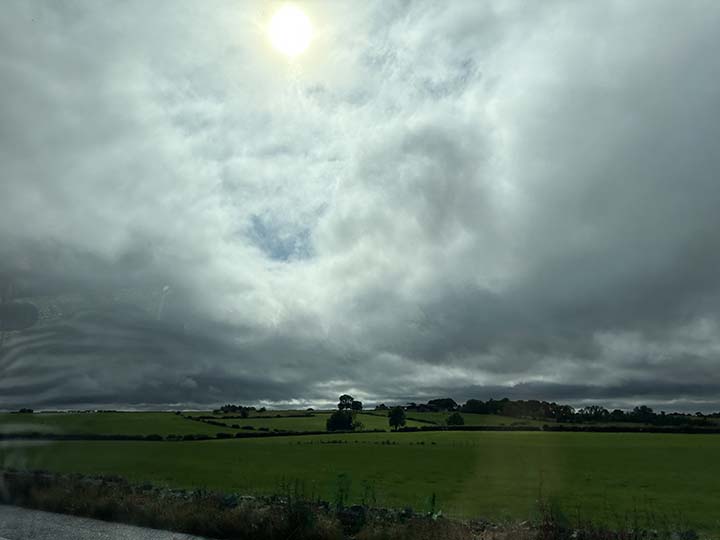
I think I momentarily saw a patch of blue sky.
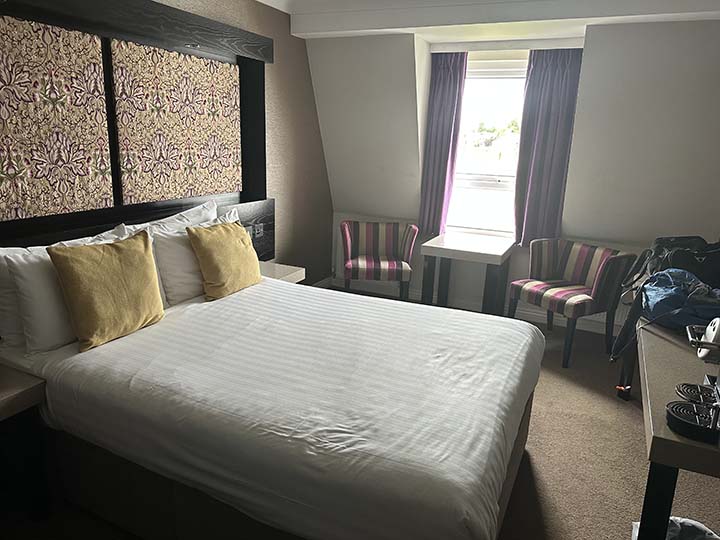
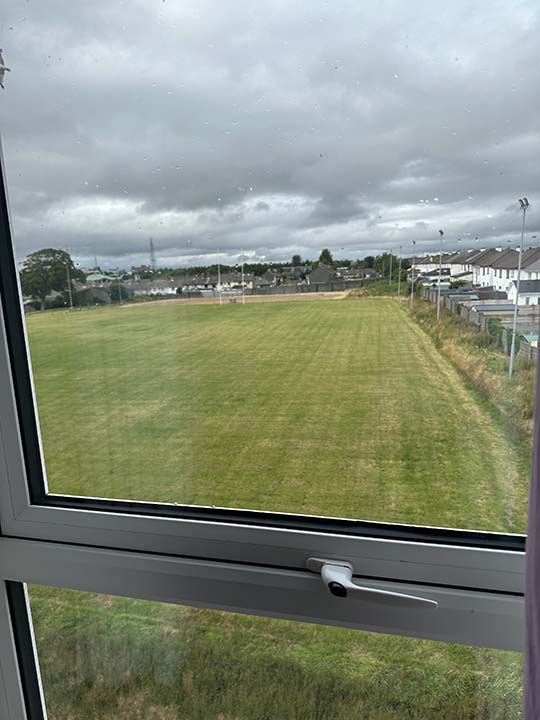
I have a nice room for the next three nights. Sure hope that sky clears up.
Maybe I will even see a rugby match when I look out my window.
|