|
Today will be warm and sunny, I'm nearly absolutely positive. Or maybe not.
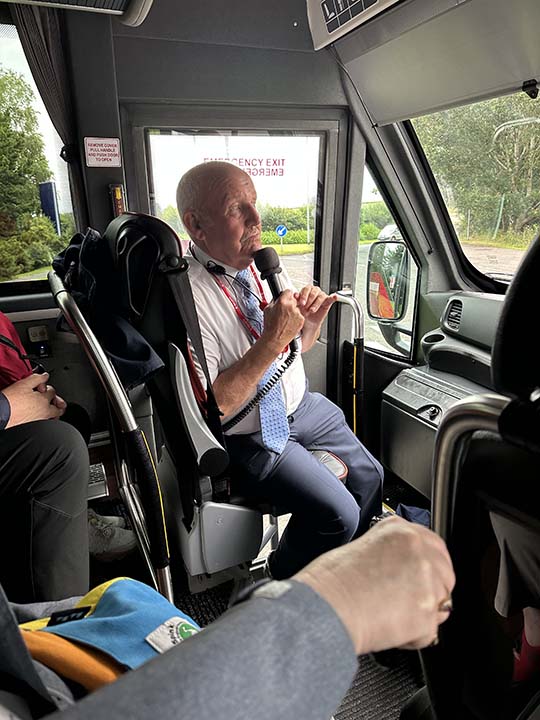
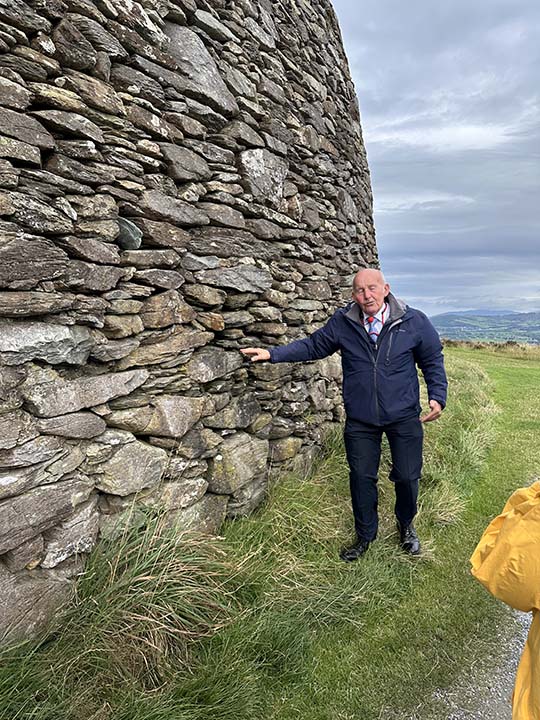
Here’s our local guide for the morning.
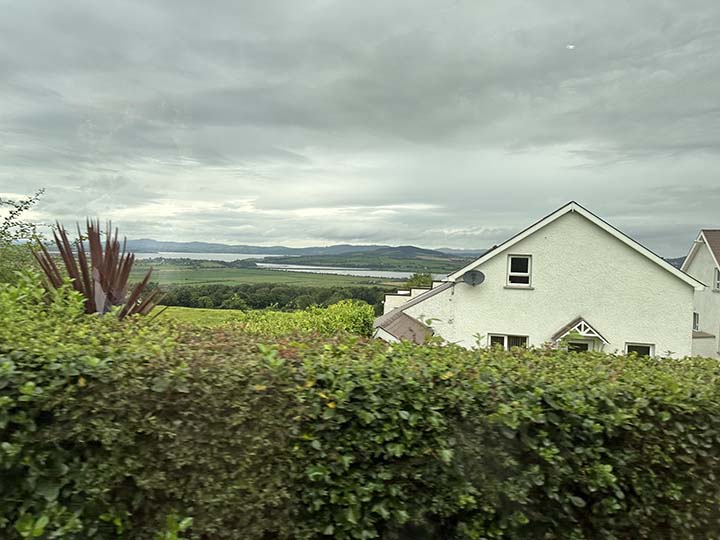
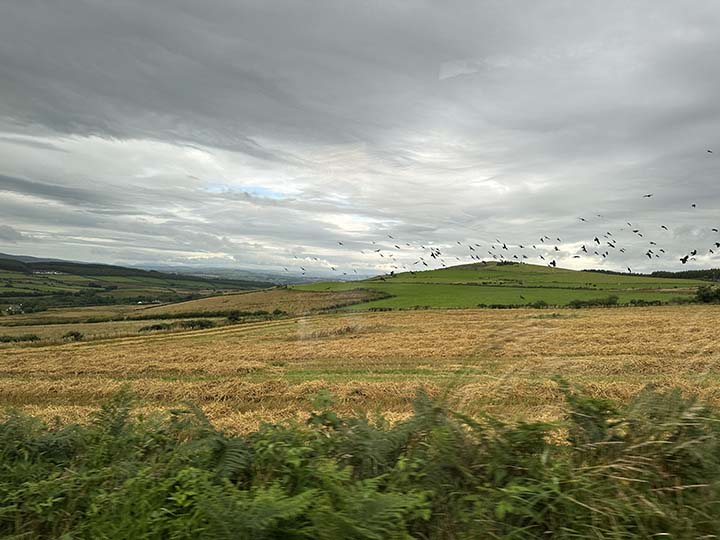
We drove past farm houses.
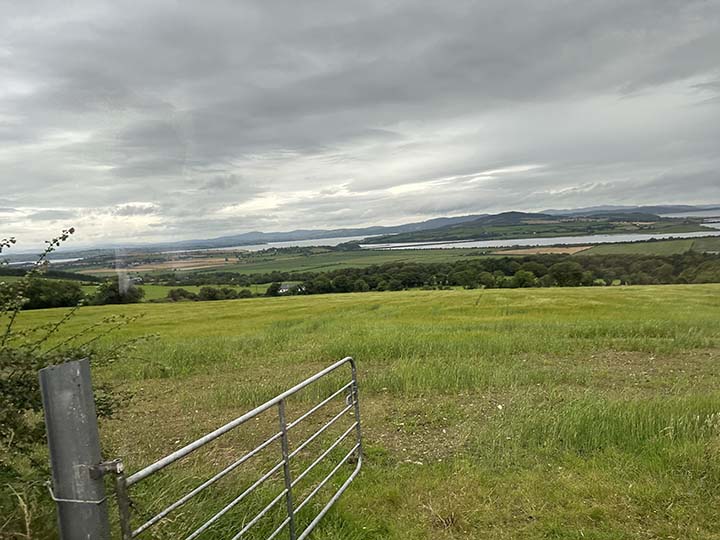
And meadows.
And wheat fields.
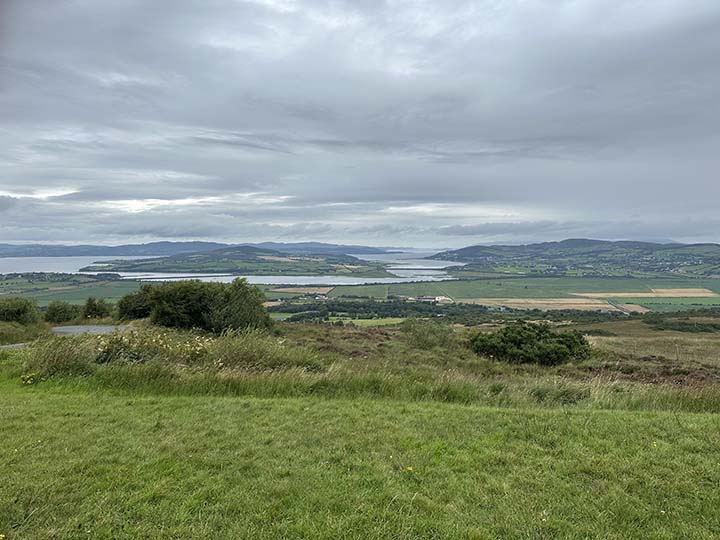
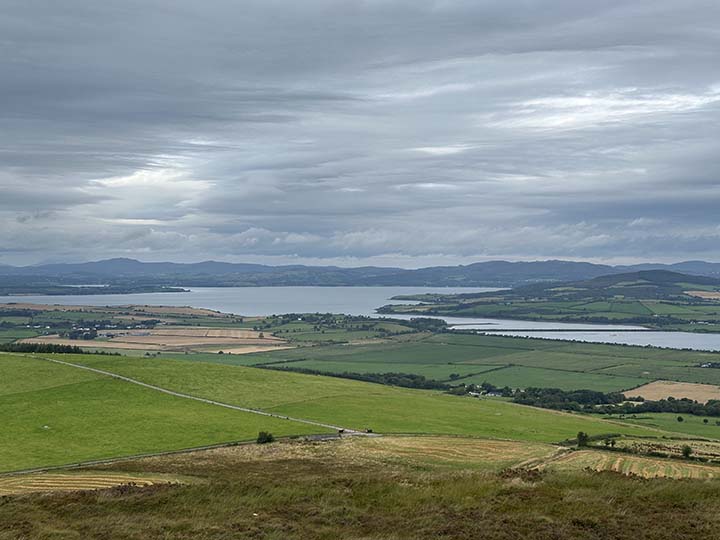
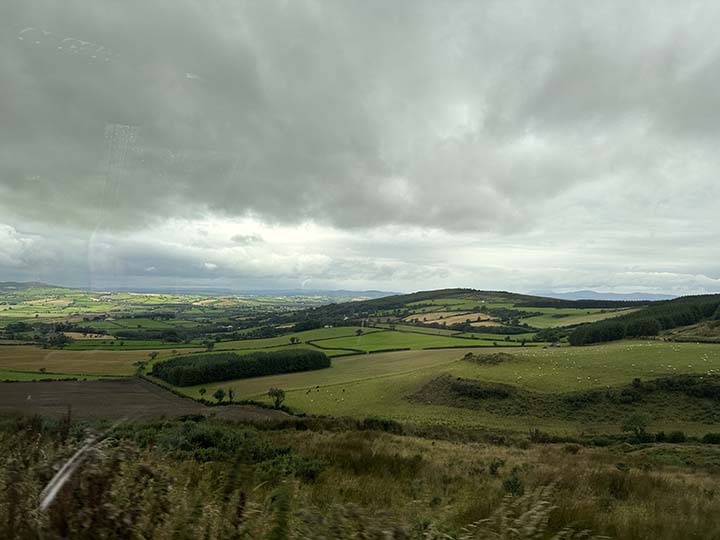
And saw some lovely views.
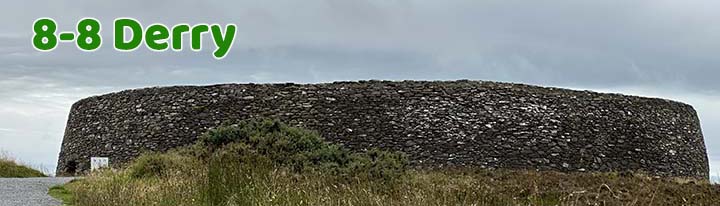
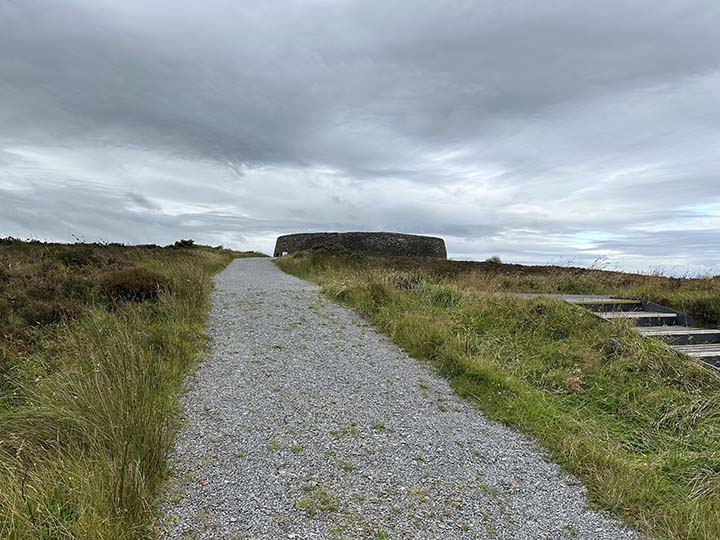
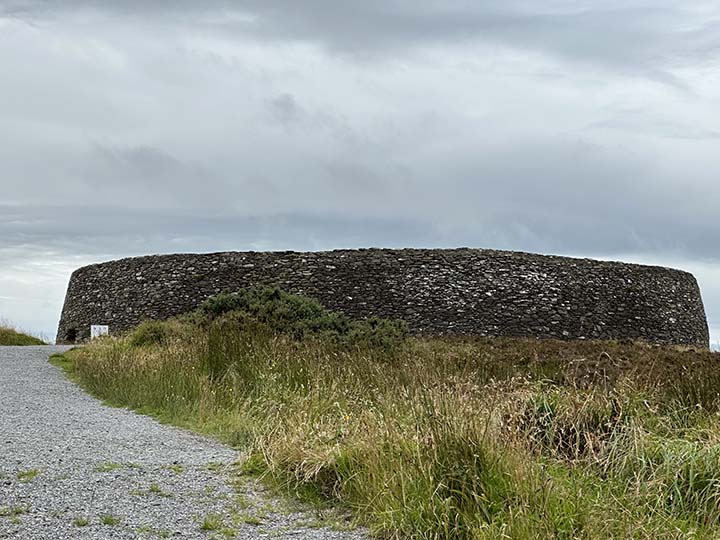
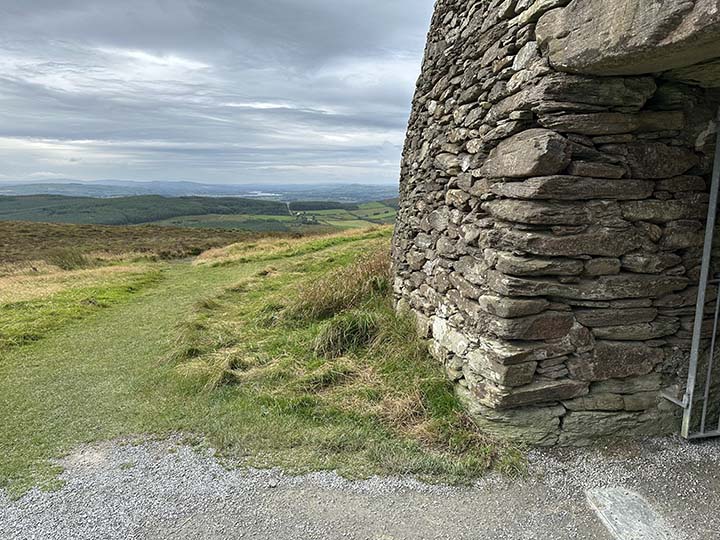
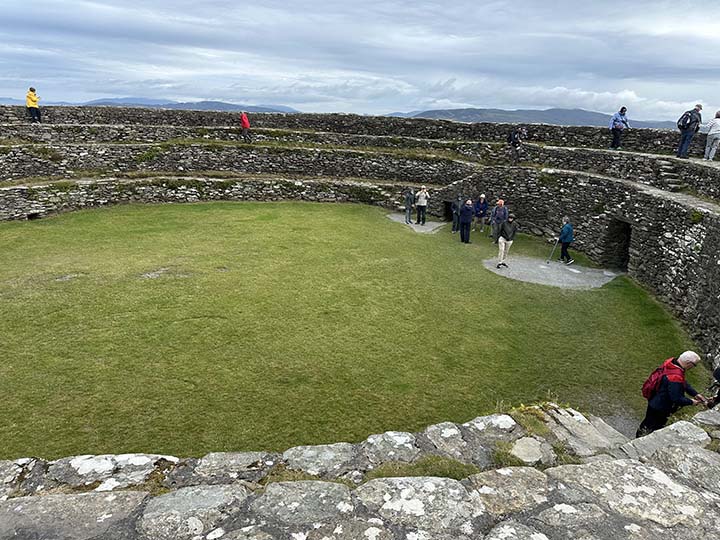
And then we came to an ancient stone fort.
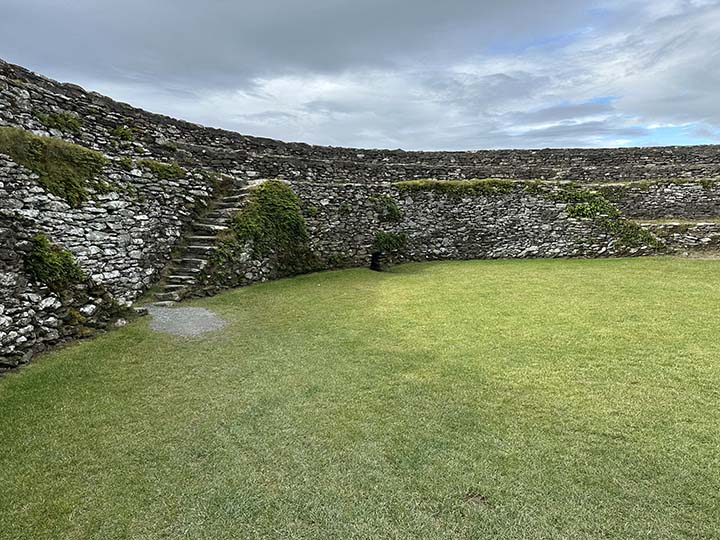
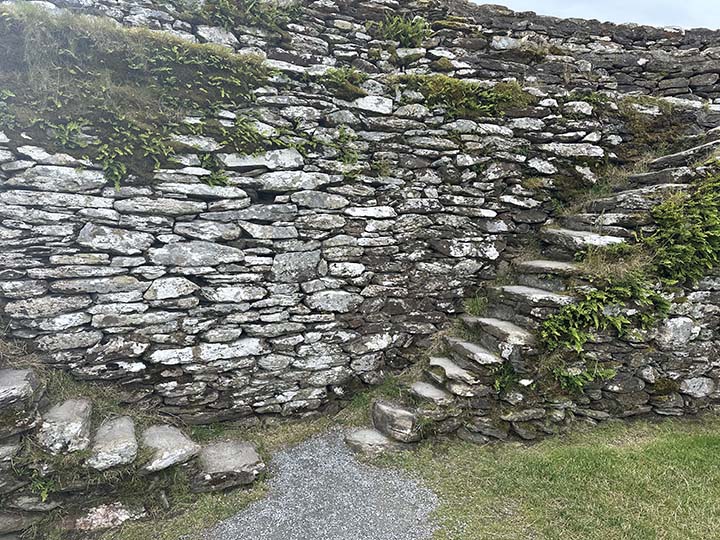
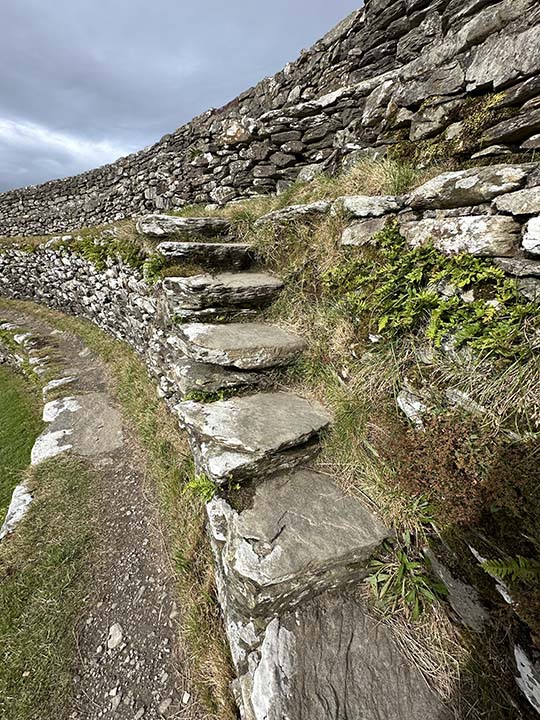
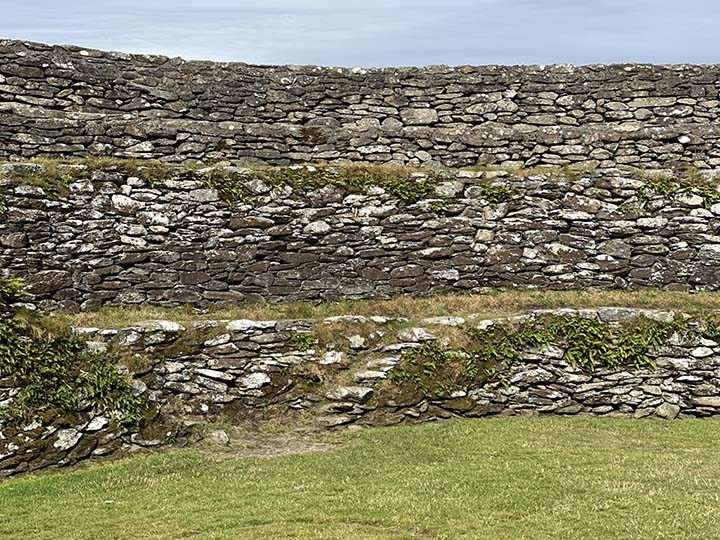
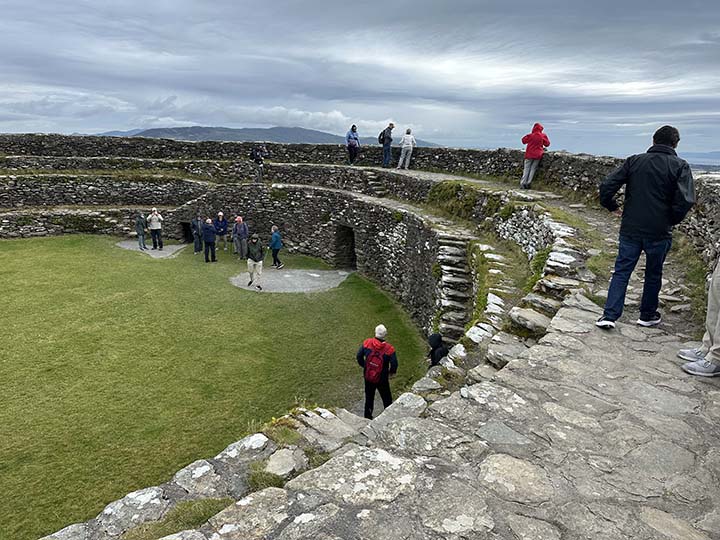
It has been identified as the seat of the Kingdom of Ailech and one of the royal sites of Gaelic Ireland. The wall is about 4.5 meters (15 ft) thick and 5 meters (16 ft) high. Inside it has three terraces, which are linked by steps, and two long passages within it. Originally, there would have been buildings inside the ring fort. Just outside it are the remains of a well and a tumulus.
Here’s a door; let’s go inside
Now this really does look interesting. Apparently, lots of people lived inside these walls.
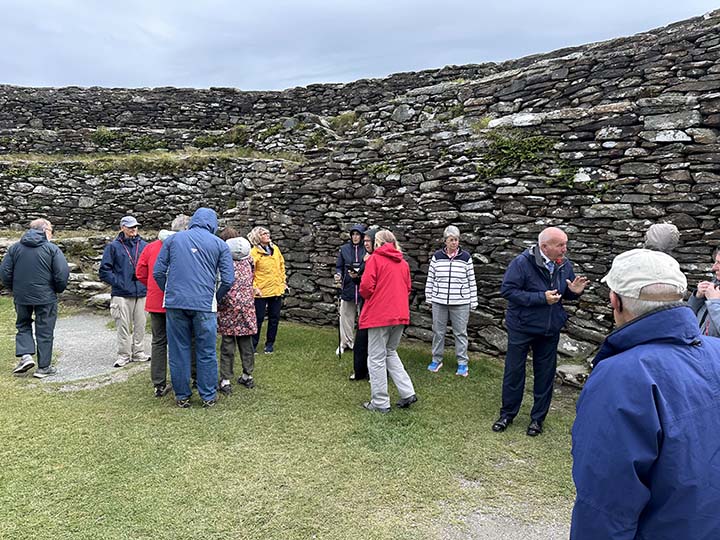
Our local guide regaled the Road Scholars with educated guesses about what this place was used for.
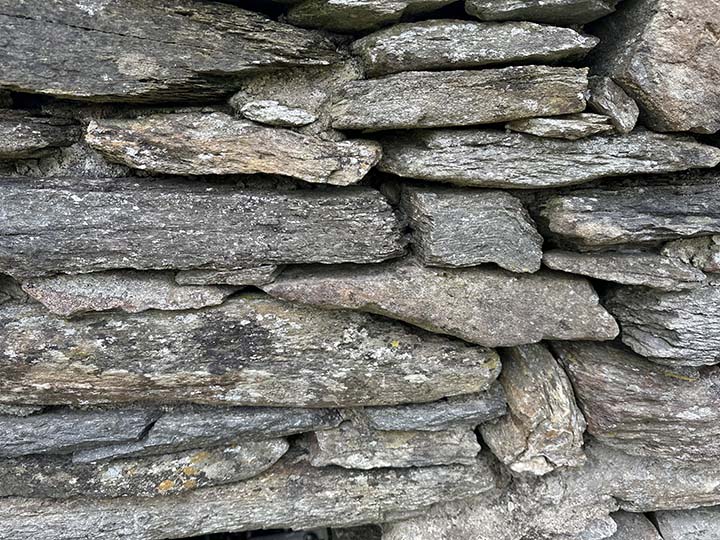
The walls were not held together by mortar. Just careful shaping and stacking.
There were some steps to the upper levels, but they looked awfully uneven, and with my balance problem, I had to consider whether it would be worth taking a chance by climbing up there.
Looks dangerous.
So should I chance it?
The intrepid adventurer won’t let a few crooked rocks stand in his way!
A few of the other Road Scholars felt the same way. But Brendan stayed down there.
Not so bad up here. It's just the getting up and down that's interesting.
No problem.
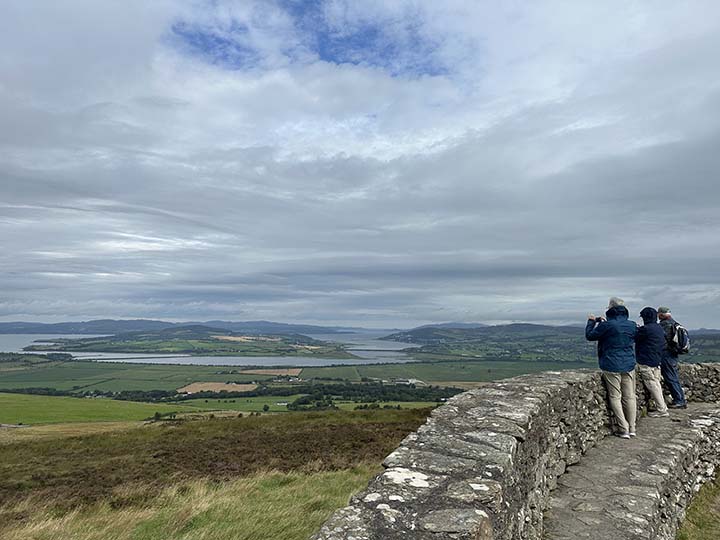
We are taking it all in.
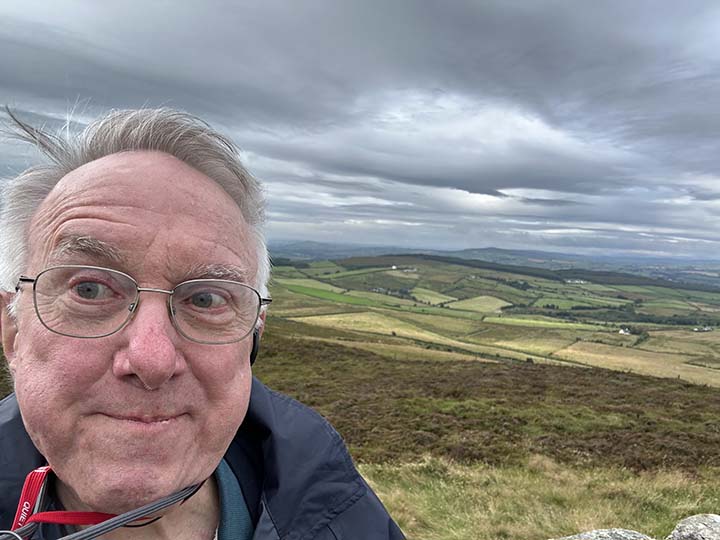
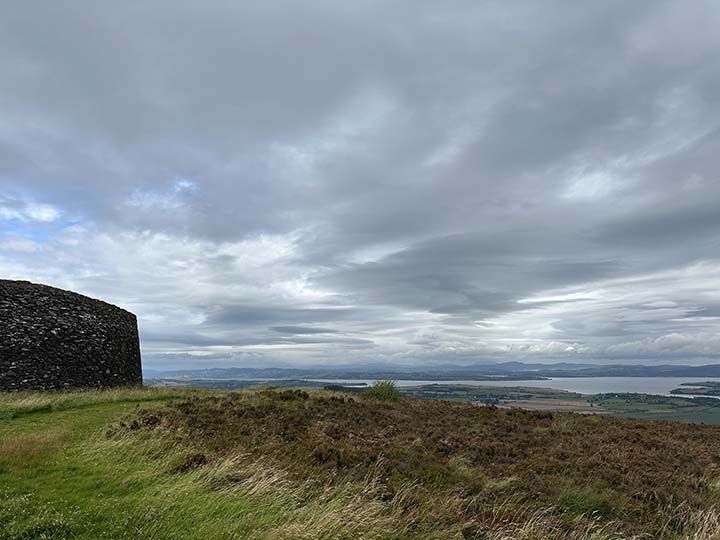
I think the view from up here really was worth it. And I wonder what it would have been like on a beautiful day.
Our guide is pointing out the ancient stone work.
Interesting place.
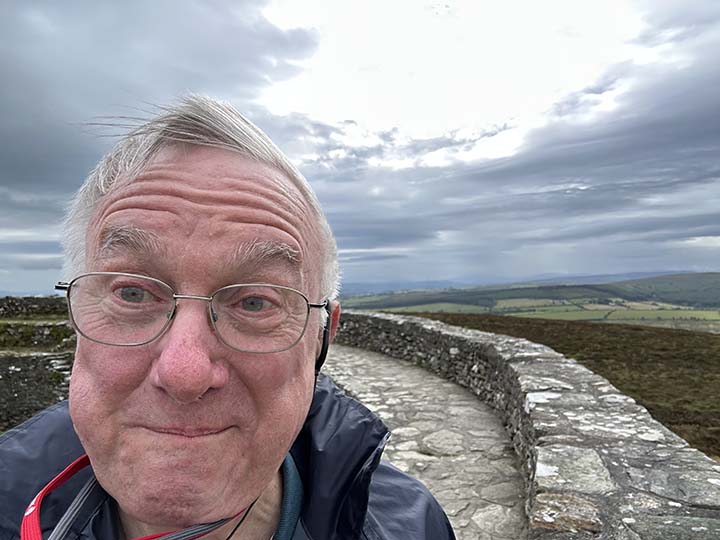
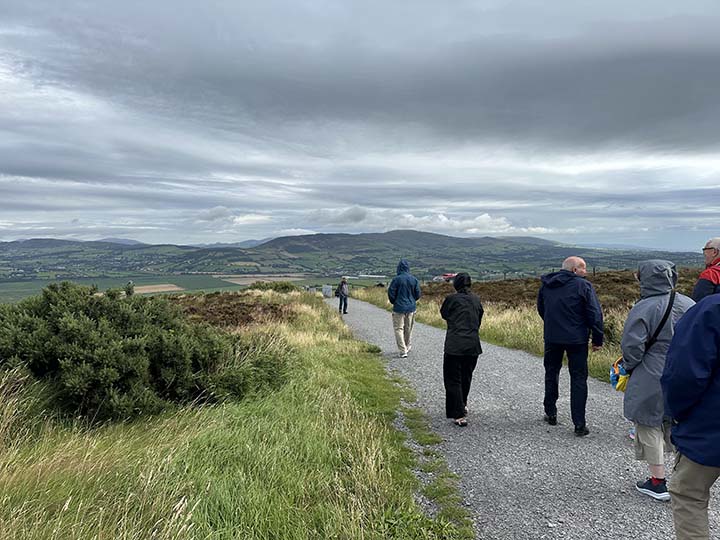
This was great, but it was cold and windy and time to go back to the bus.
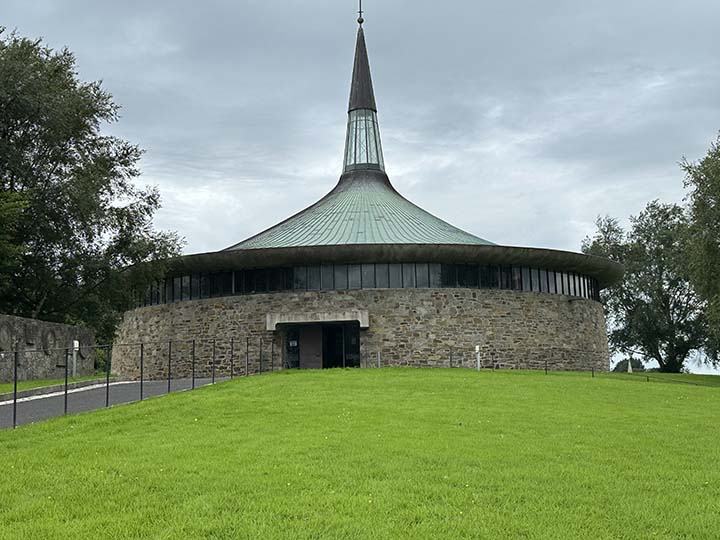
On the way up the hill to the Stone fort our guide mentioned that we would stop at this Catholic Church on the way back and I did not understand why. But now having seen the fort, I understand what the architects of this place we’re going for when they built it back in 1967.
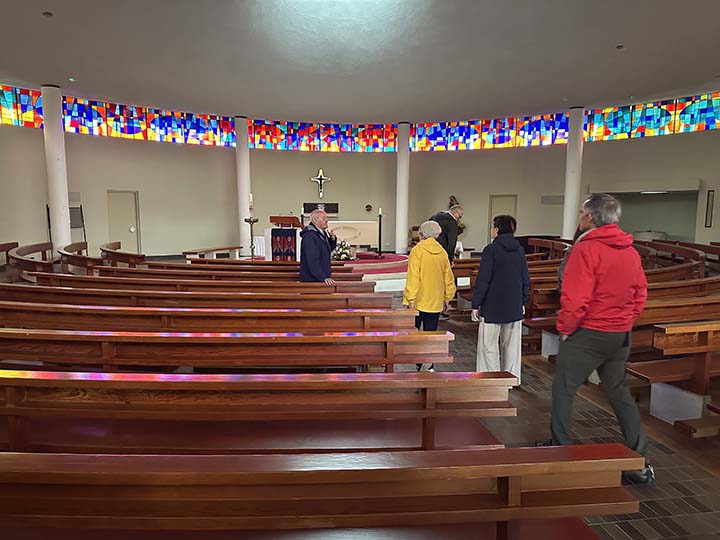
It’s nice inside. Very 60s architecture.
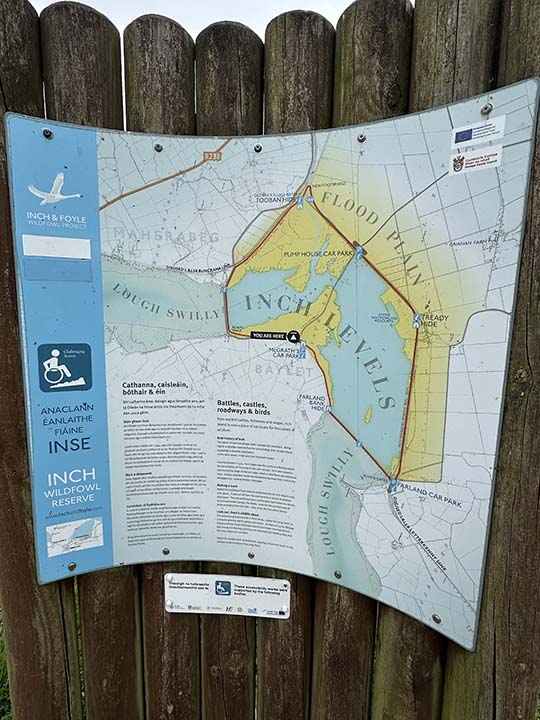
Then we went to a wildlife refuge, where there was a coffee shop for
those uninterested in wildlife, and a walking path for those who
were.
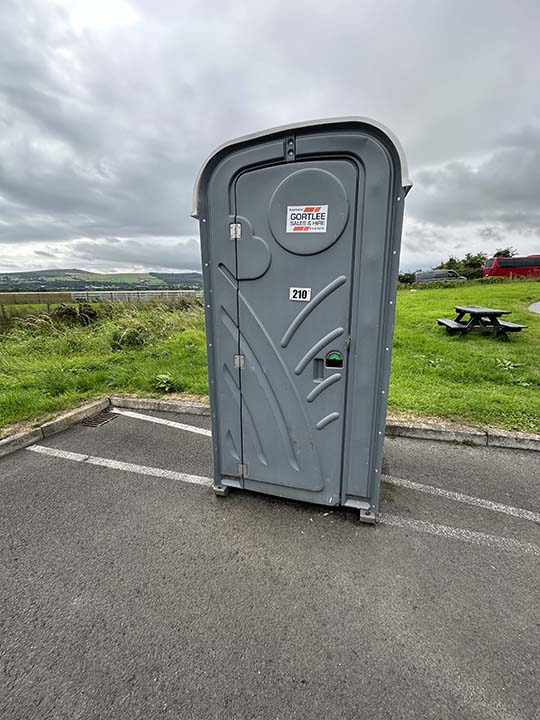
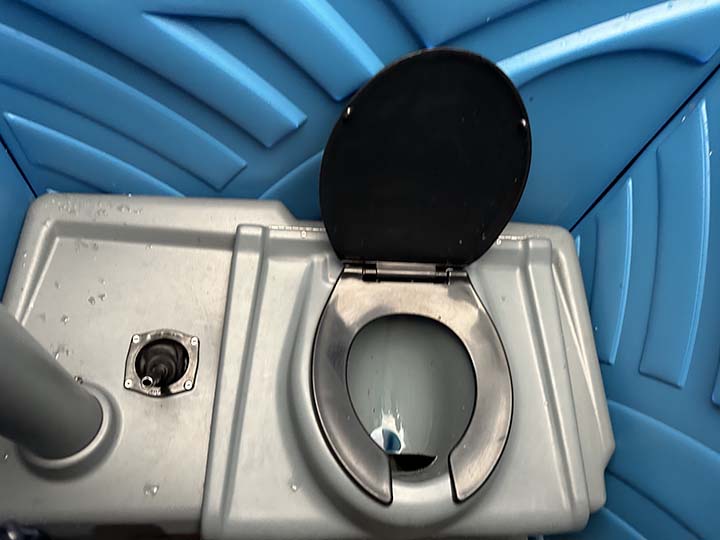
I made a pitstop before the heading down the walking path. Now normally I would not include a picture of a portable potty in my vacation collection, but this thing was special.
A porta potty that you can flush! Amazing! These Irish know how to do things right.
I’m heading out to see what I can see.
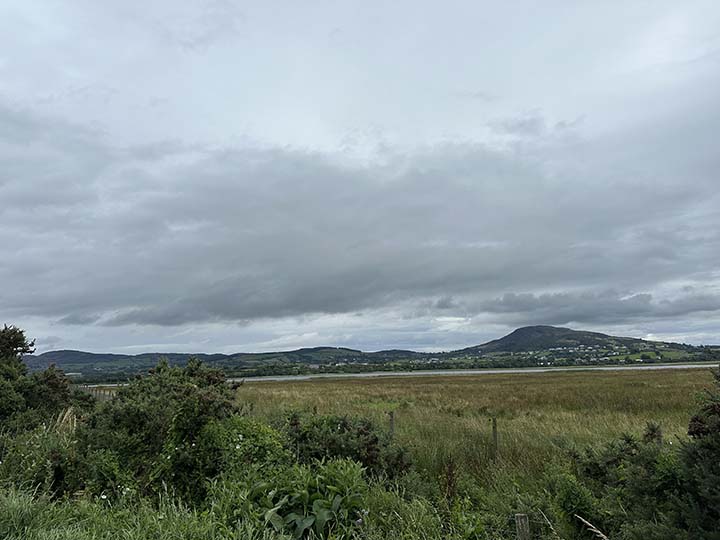
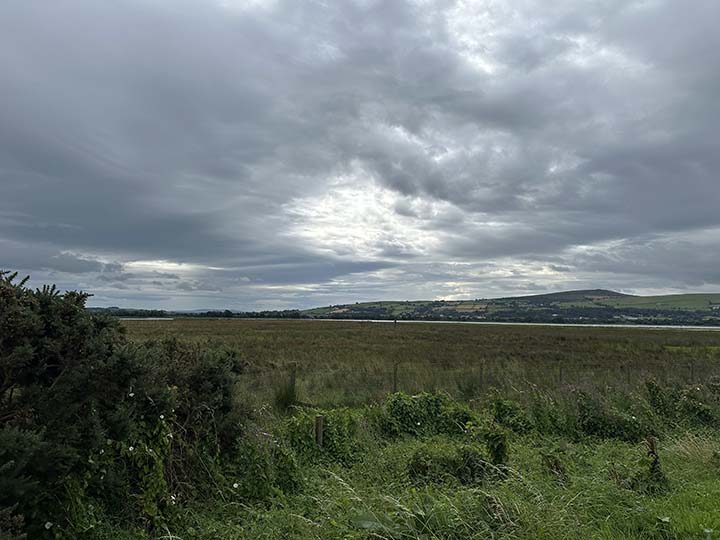
Lots of marshland.
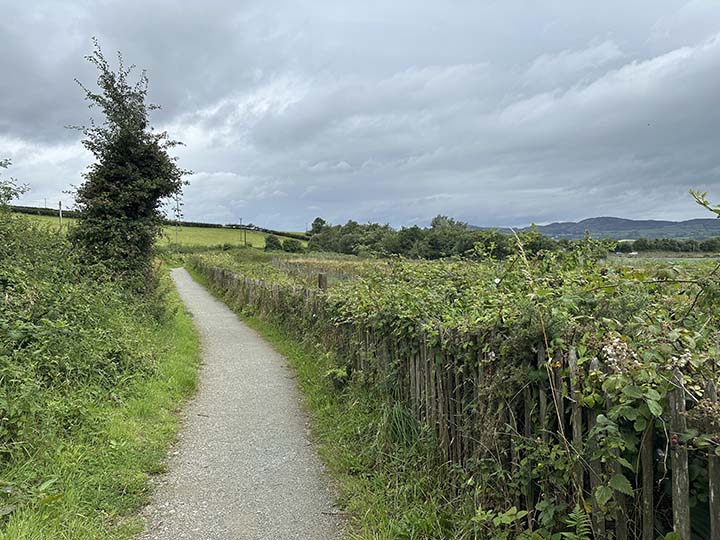
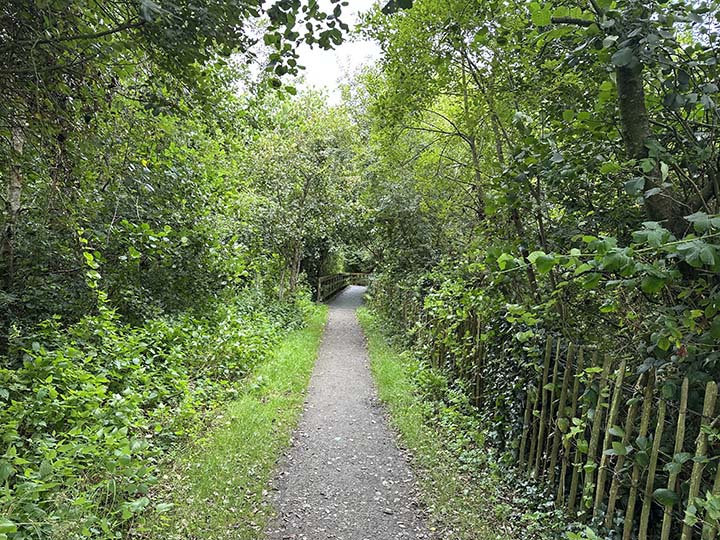
And a long, lonely path.
Through some trees.
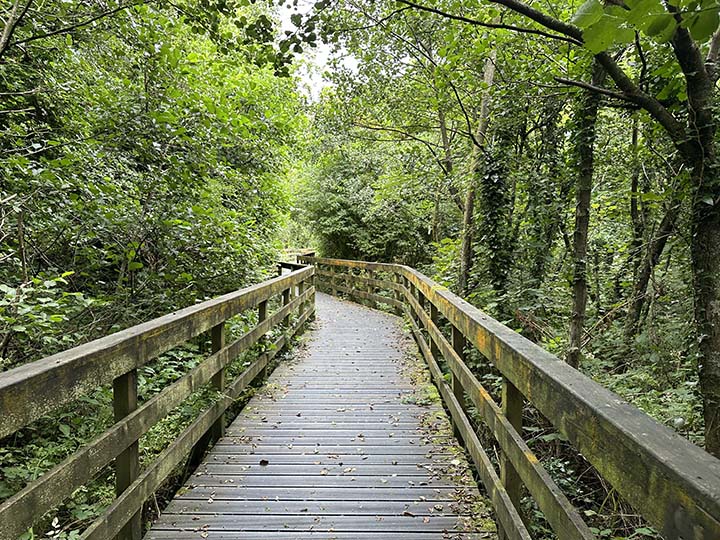
And across a bridge.
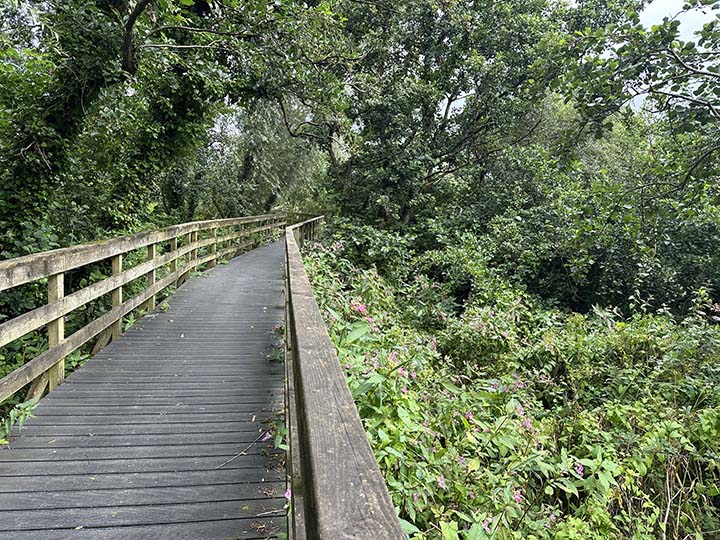
Heading deep into the Irish jungle.
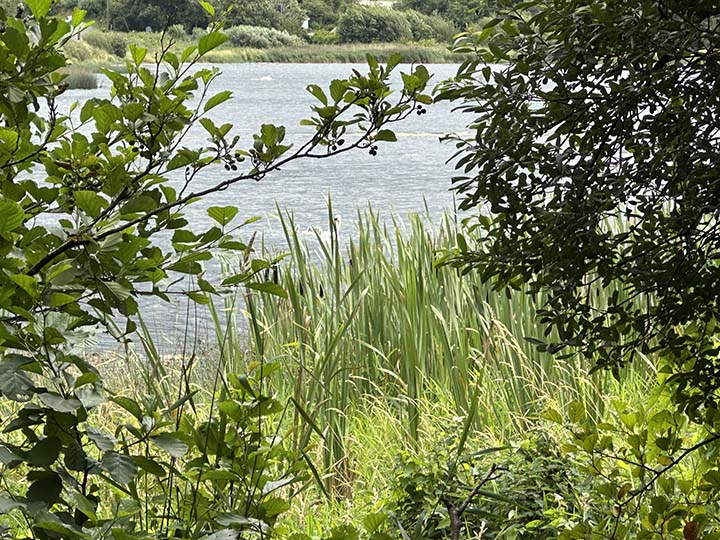
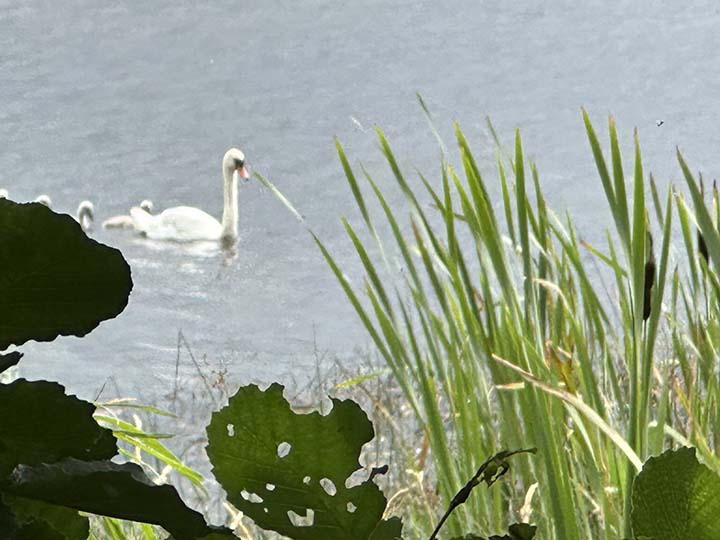
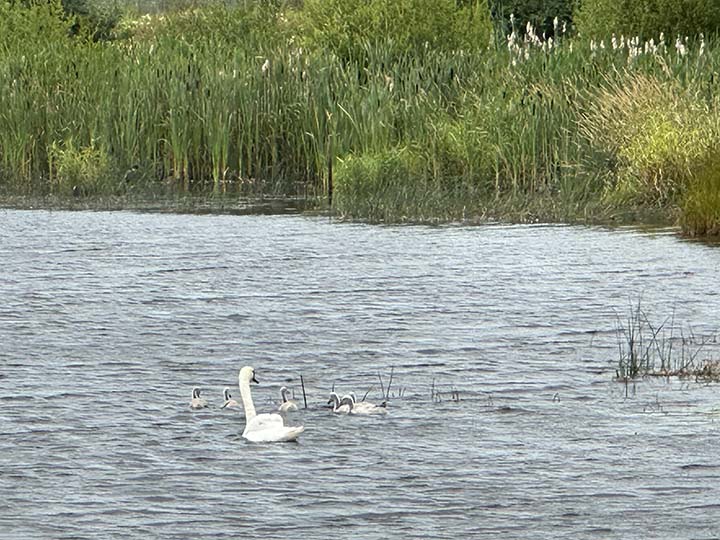
What's that out there in the lake?
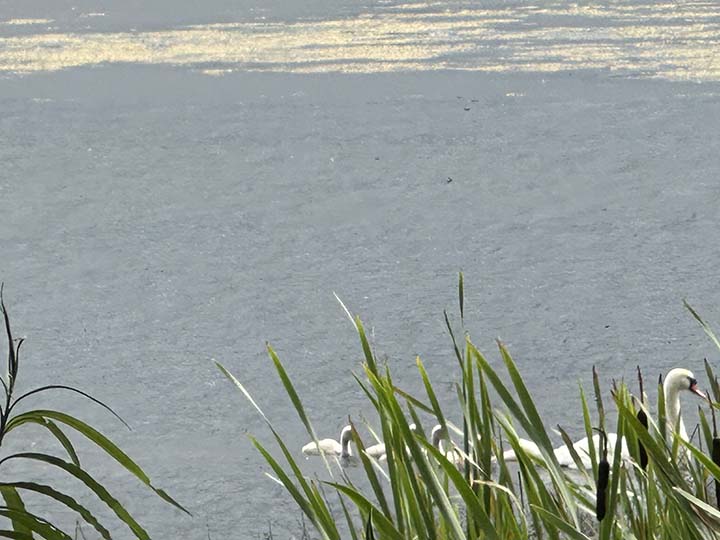
Now we’re talking! Real European wildlife!
Those baby swans don’t look like ugly ducklings to me.
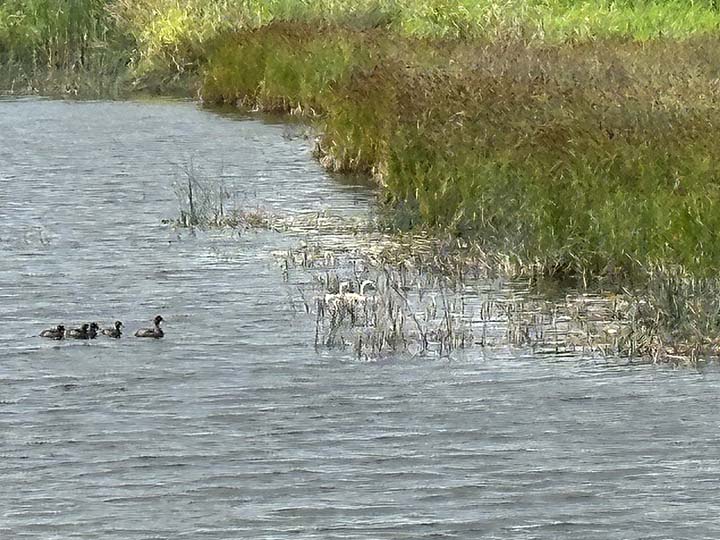
We need these guys in the pond behind my condo.
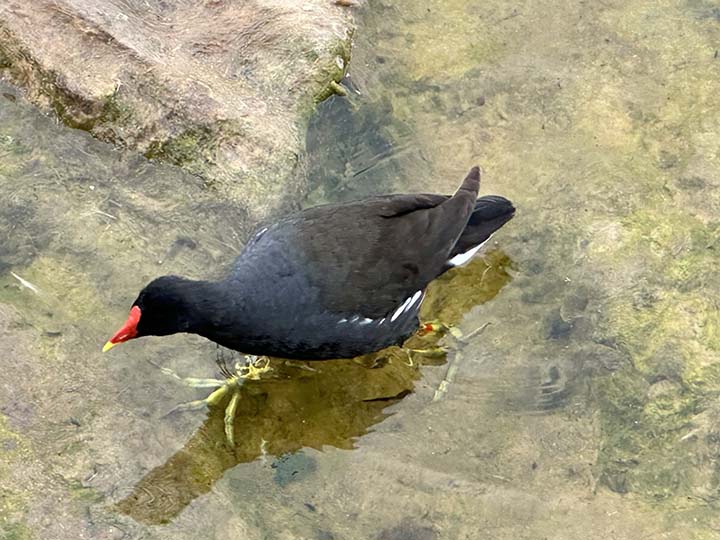
I think those are ducks.
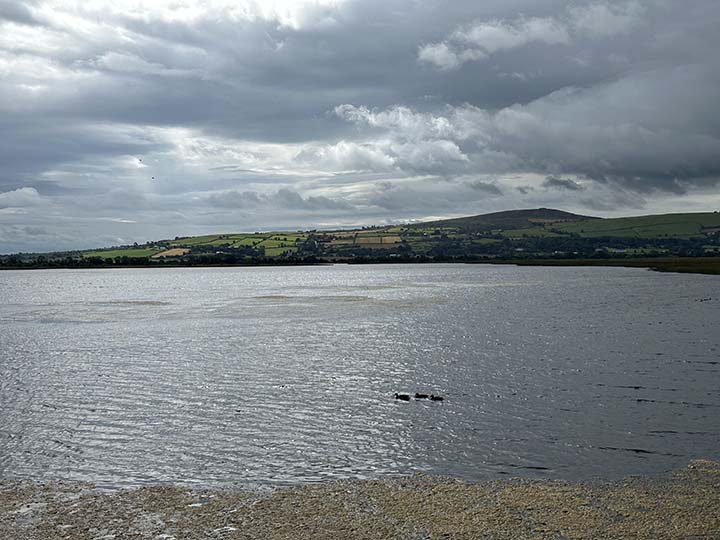
Idyllic.
I wonder what that thing is?
The sun may not be shining but Ireland is looking pretty good anyway.
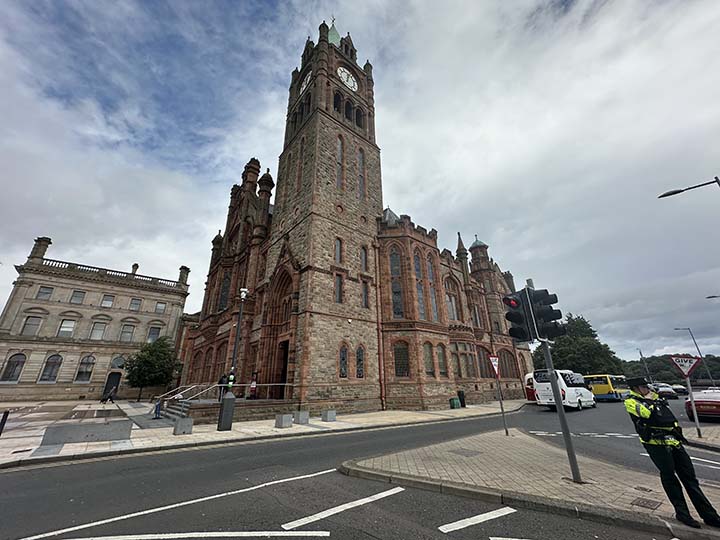
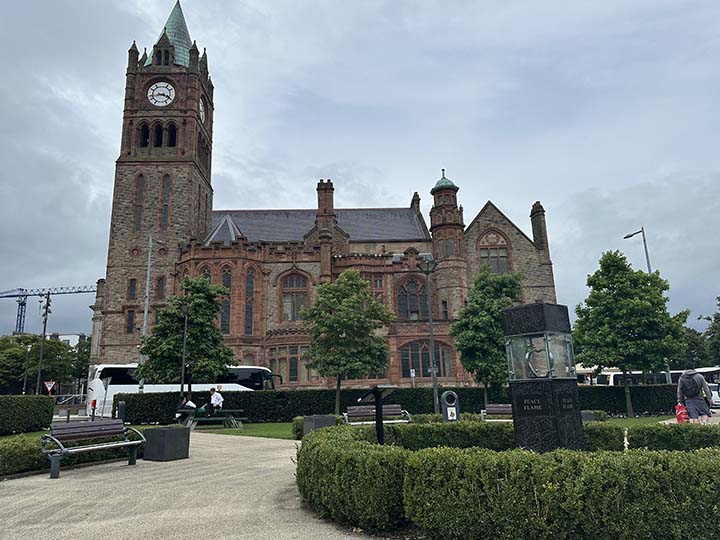
This old Guildhall now serves as the City Hall of Derry/Londonderry.
That’s how the locals often refer to the name of the city complete
with the slash or “stroke“ separating the names. In fact, some
people just call it “stroke city.” Now, why is this, you ask? You
have to be aware that we are in Northern Ireland, where there is
always something to disagree about. If you are a Protestant loyalist
to the British Crown, and many here are, the name of the city to you
is Londonderry. I mean, that’s what the British king named it back
in 1613 or thereabouts, and who are we to change it today?
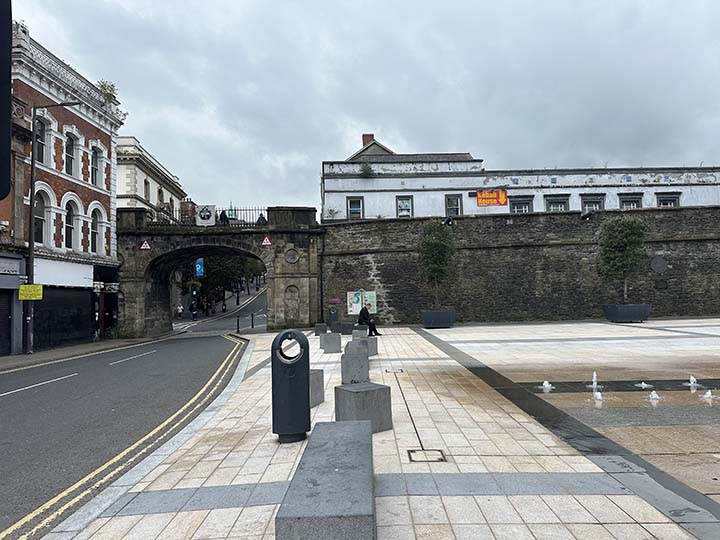
This is a plaza outside the guildhall, right next to the old city wall.
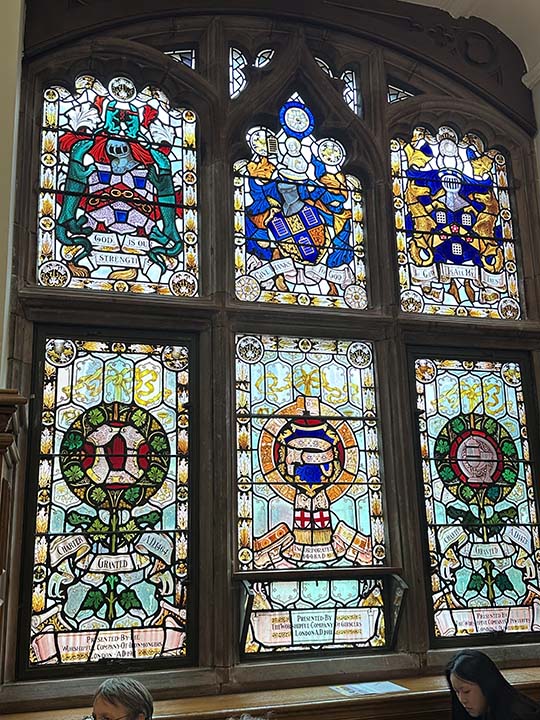
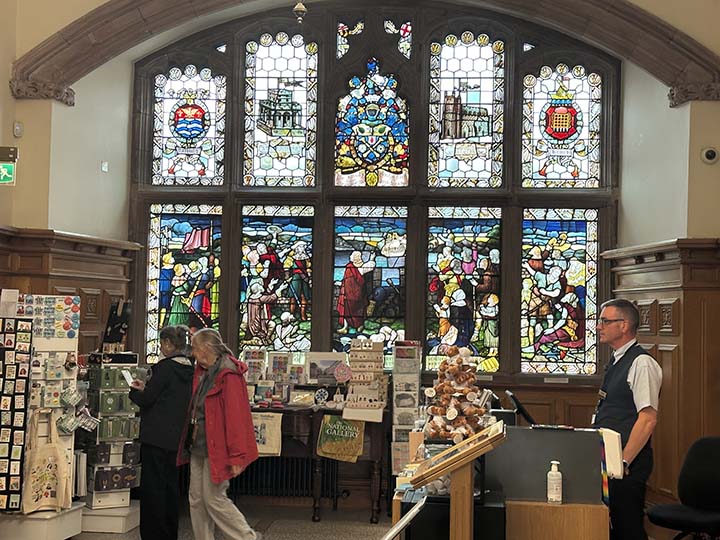
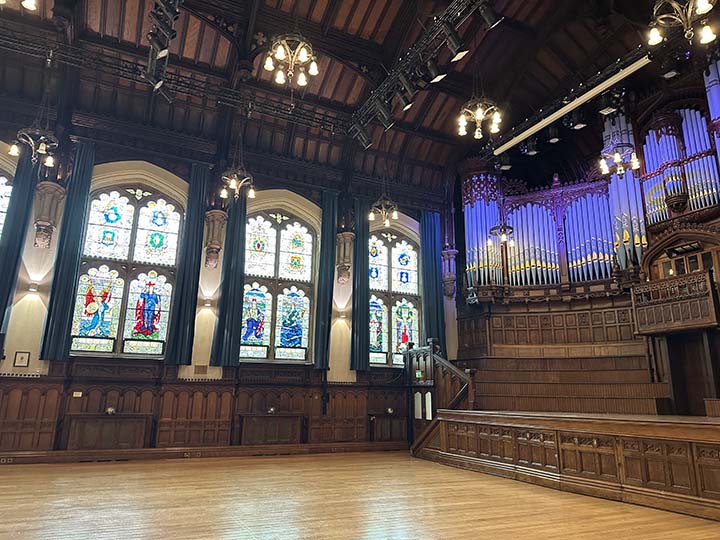
And here are some stained glass windows seen from inside the guildhall.
They overlook the gift shop.
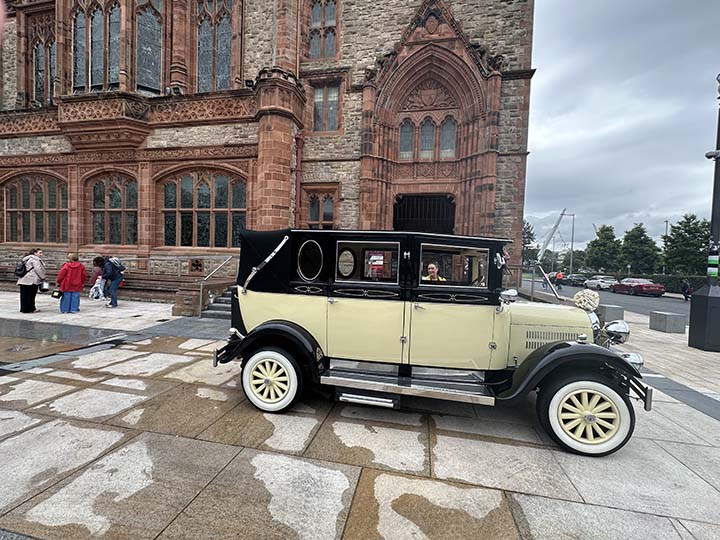
There was a wedding inside today. The bride and groom were traveling in style.
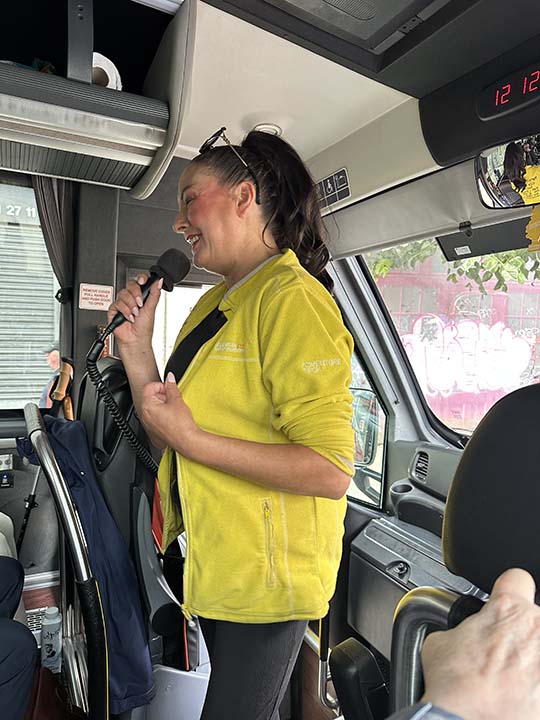
This was our guide for Derry/Londonderry. She was excellent and it was fascinating to listen to her tell about growing up during the Troubles. She said it really wasn’t as bad as it appeared on TV. Well, that’s what she said.
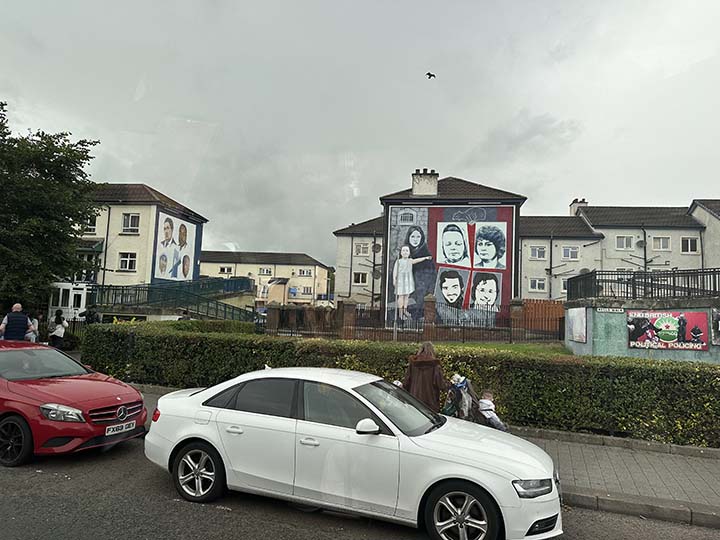
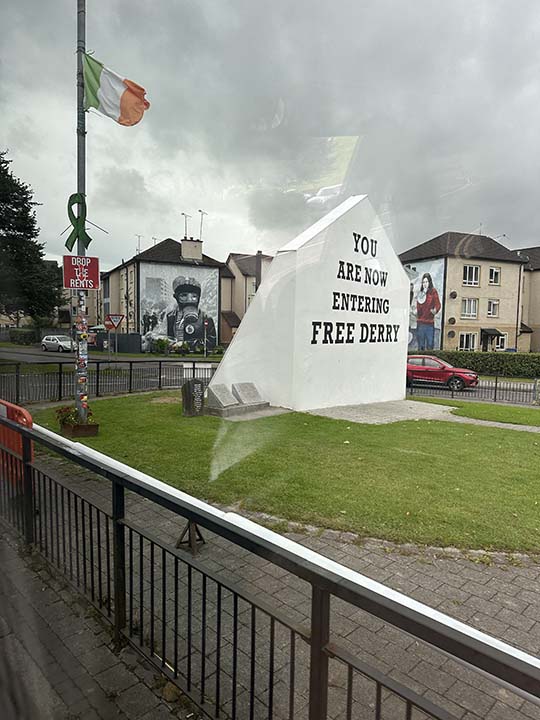
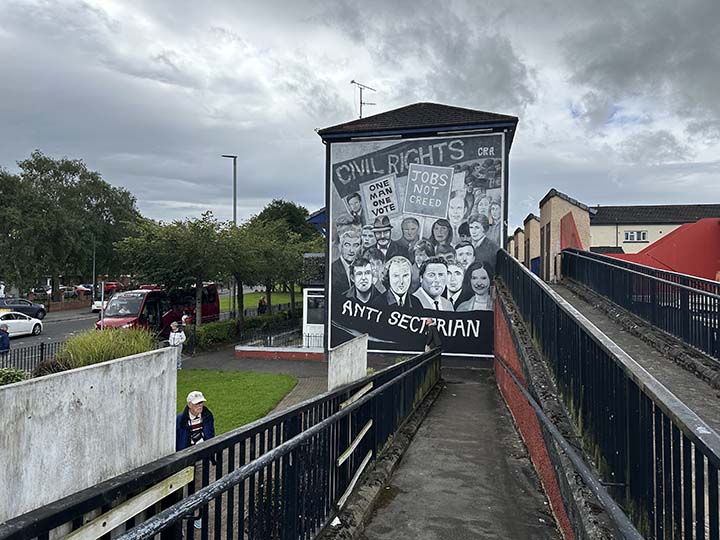
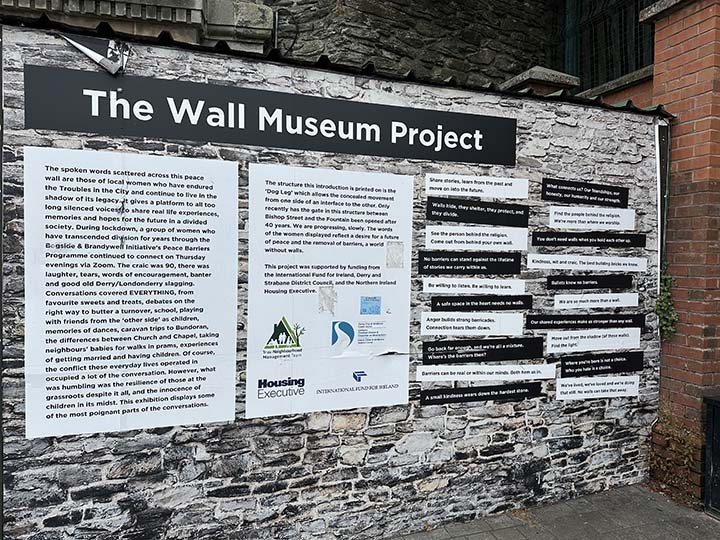
She took us through a housing project neighborhood where just like in Belfast people paint political murals on walls. I have to keep reminding myself how recent the Troubles were. People may not be blowing each other up now, or at least not very often, but there is still a great deal of mistrust between the loyalists and the Republicans.
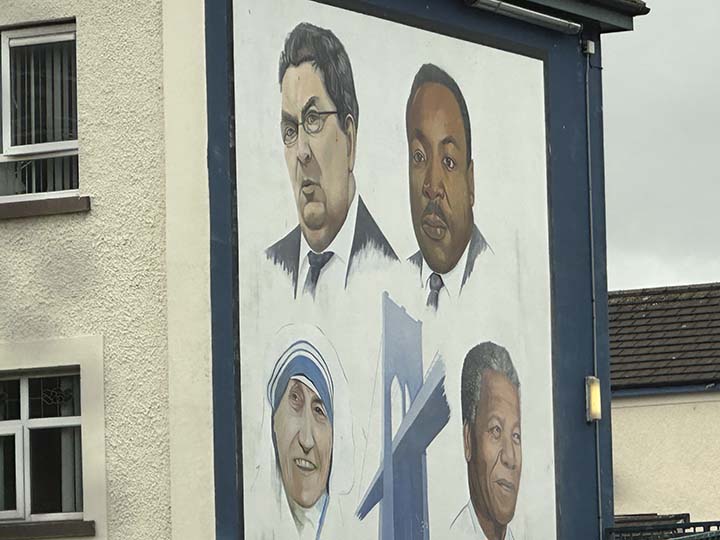
That’s John Hume on the upper left, the leader whose advocacy led to the Good Friday Agreement, and I guess you know who the others are.
People are still marking their territories.
More political murals.
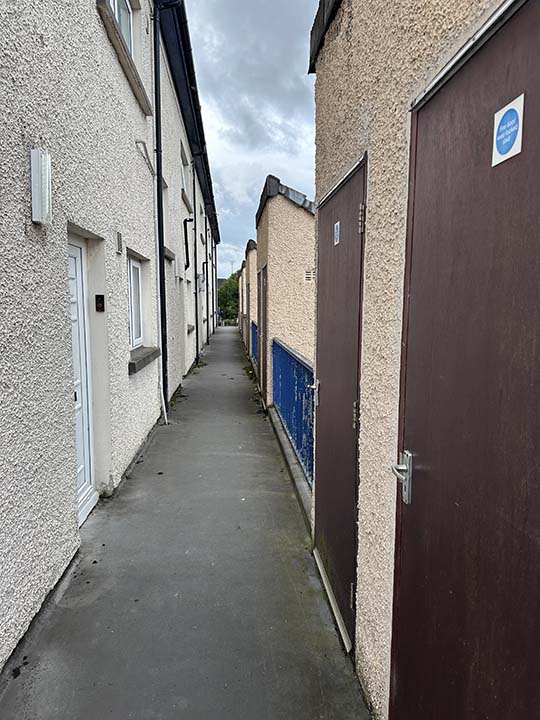
That little blue dot up there says, "Fire Door: Keep Locked and Shut." I'll bet that makes sense to somebody.
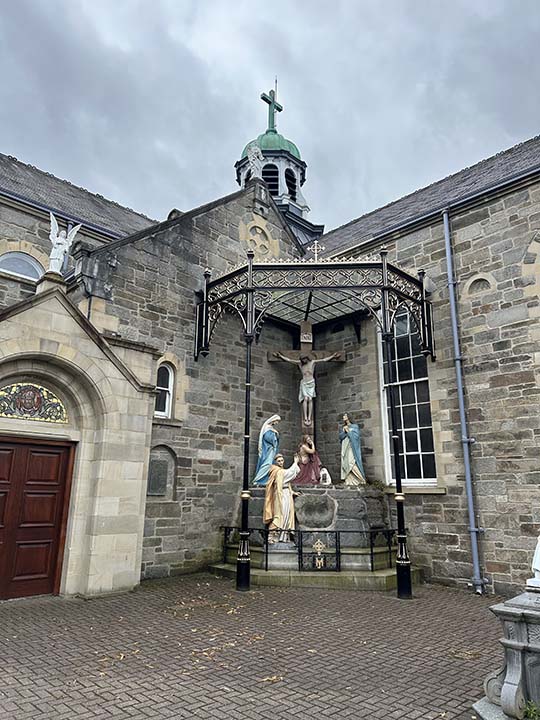
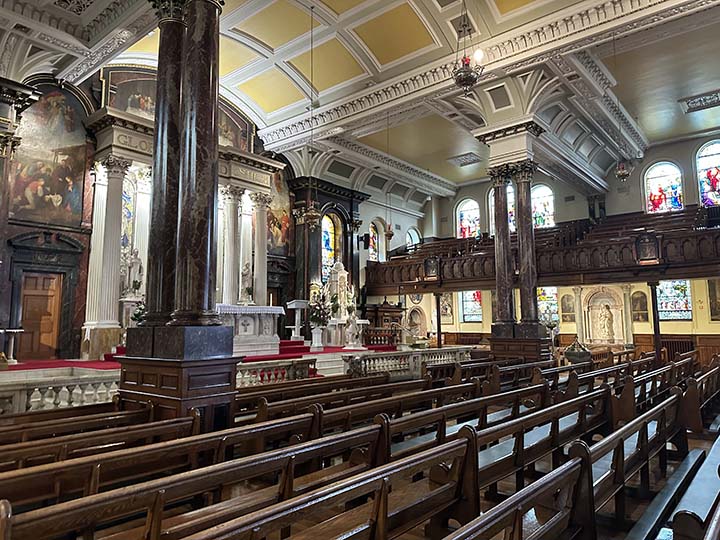
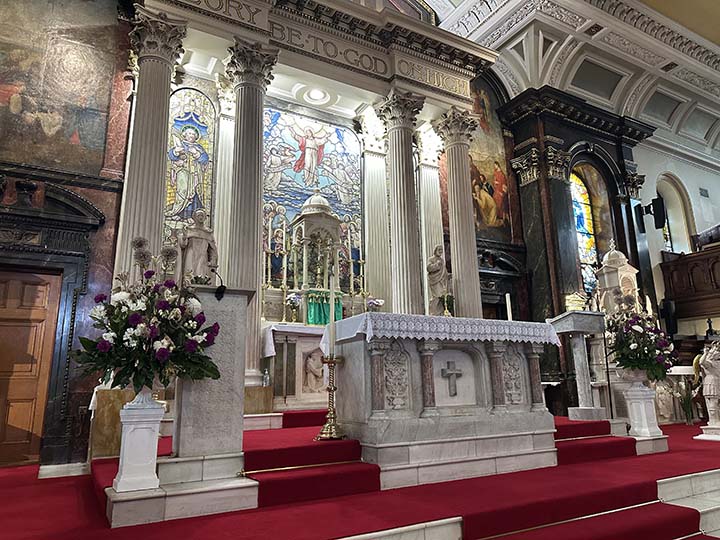
We walked by a nice Catholic Church.
I'm pretty sure it was Catholic, anyway.
Because it sure looked like a Catholic church.
Don't you think?
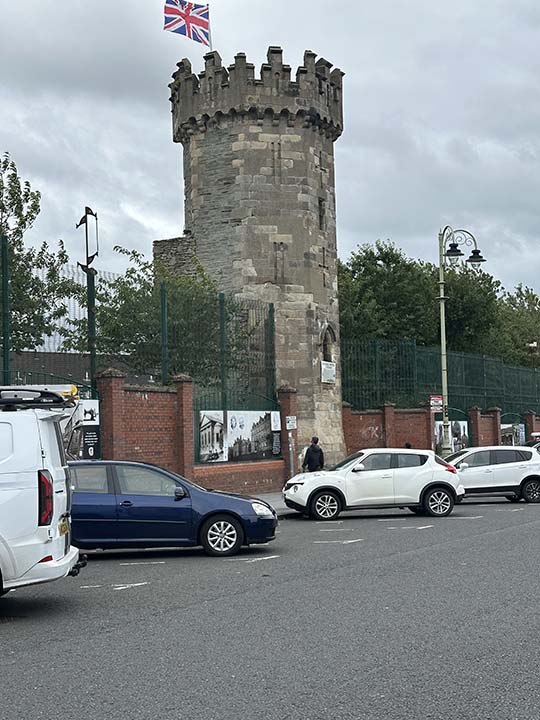
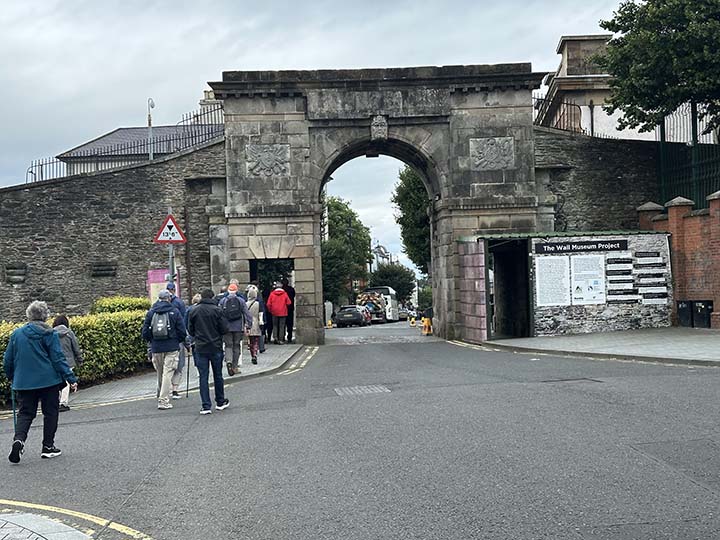
We saw the wall of Derry.
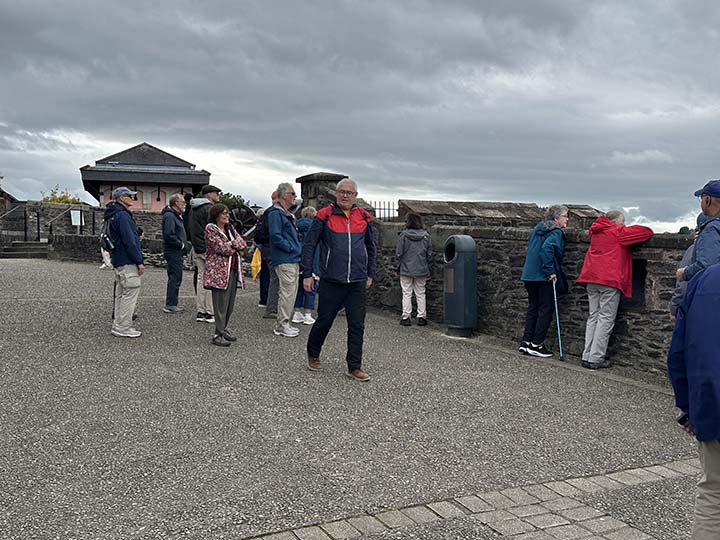
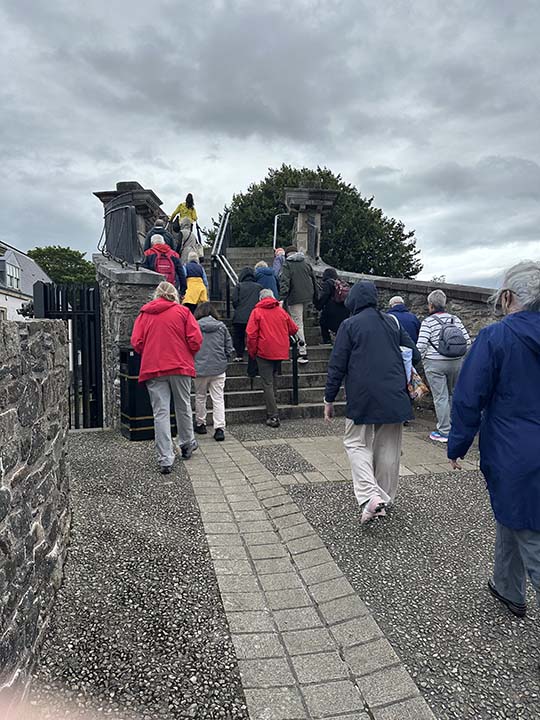
And then we took a walk on the wall of Derry.
They are proud of it and they take good care of it.
It was cold and windy up here.
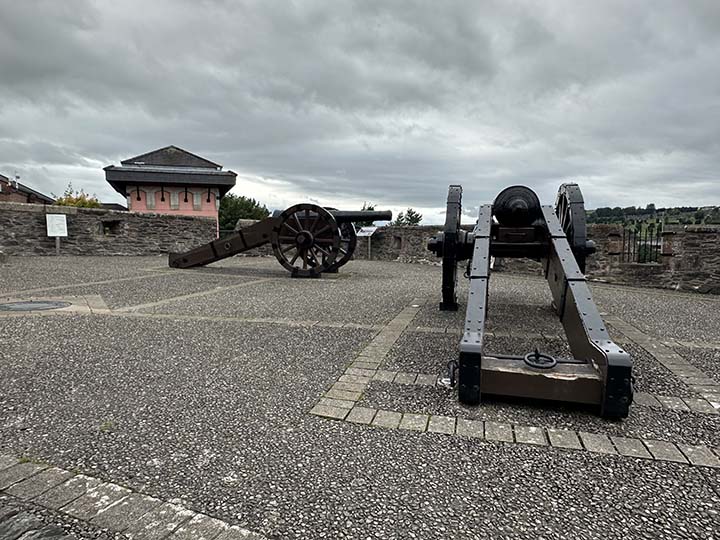
There were old armaments.
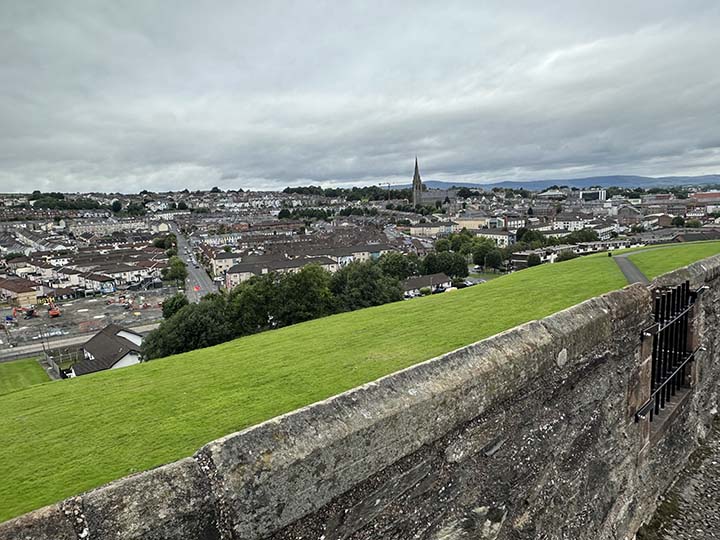
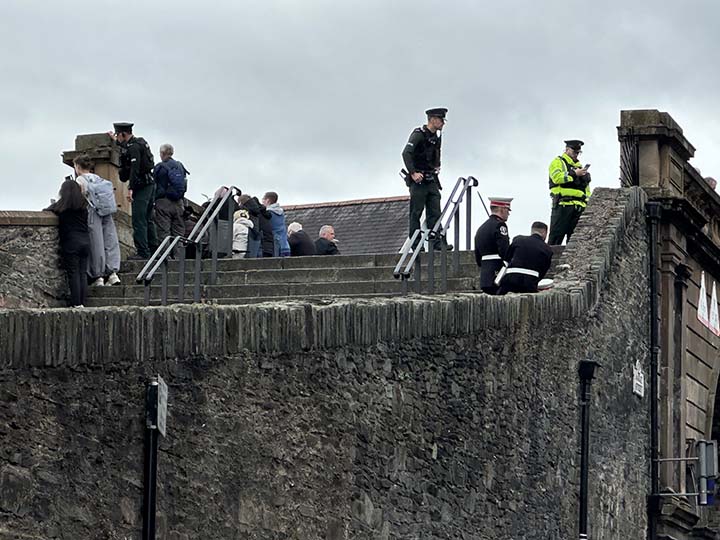
And there was a nice view.
He is cold and windblown.
So are the rest of the Road Scholars.
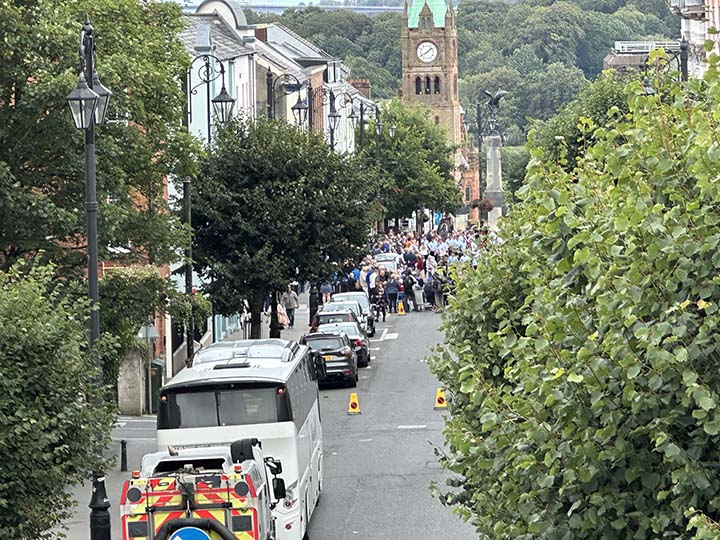
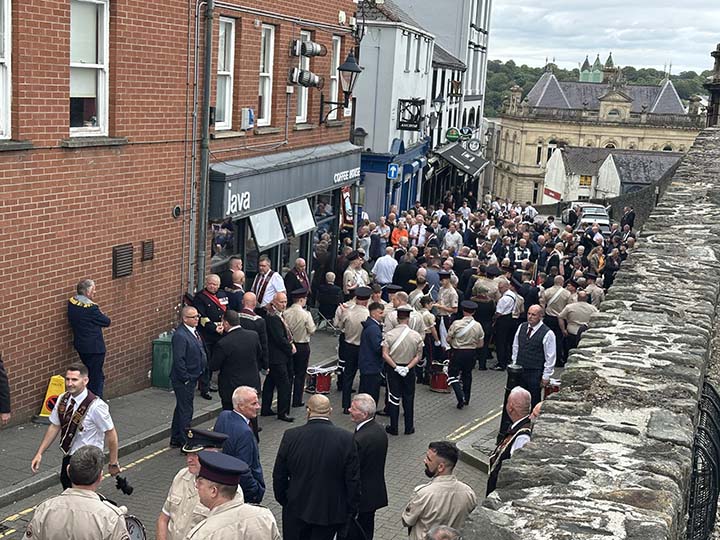
That looks like a parade down there.
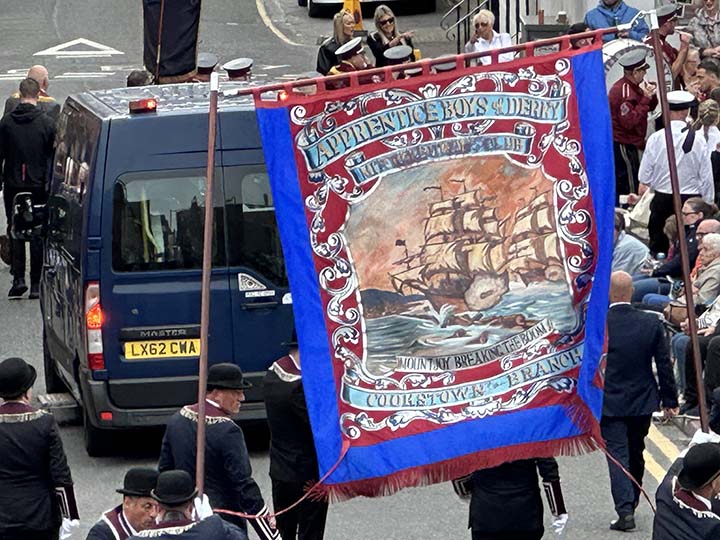
The Apprentice Boys Of Derry is a Protestant fraternal society with
a worldwide membership, founded in 1814. They are based in the city
of Derry, Northern Ireland. However, there are Clubs and branches
across Ireland, Great Britain and further afield. The Society aims
to commemorate the 1689 siege of Derry when Catholic James II of
England and Ireland laid siege to the walled city which harbored
the local Protestant population. What is celebrated is that a group
of young apprentices closed the gates of the city and successfully
outlasted the army outside. Apprentice Boys parades once regularly
led to rioting in the city by Nationalist youths, but recently a
more conciliatory approach has taken place and now the parades are
virtually trouble free.
Here's some video of the parade, taken from different angles.
Remember the Apprentice Boys of Derry!
There's one up there now.
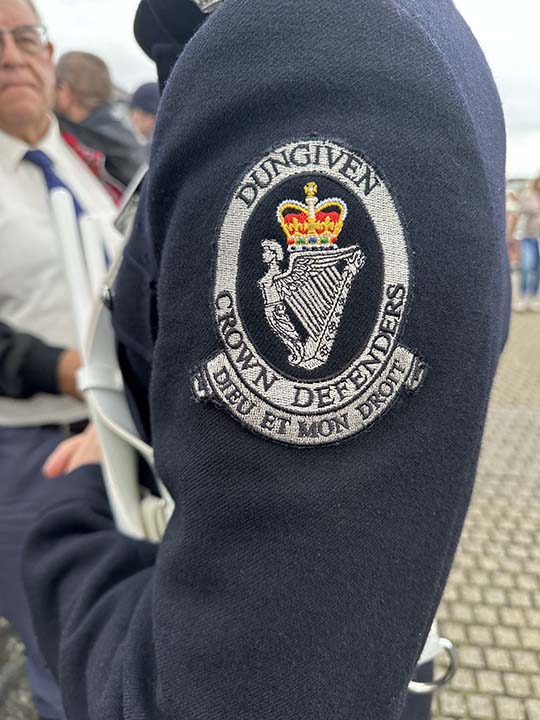
He let me take a picture of his patch.
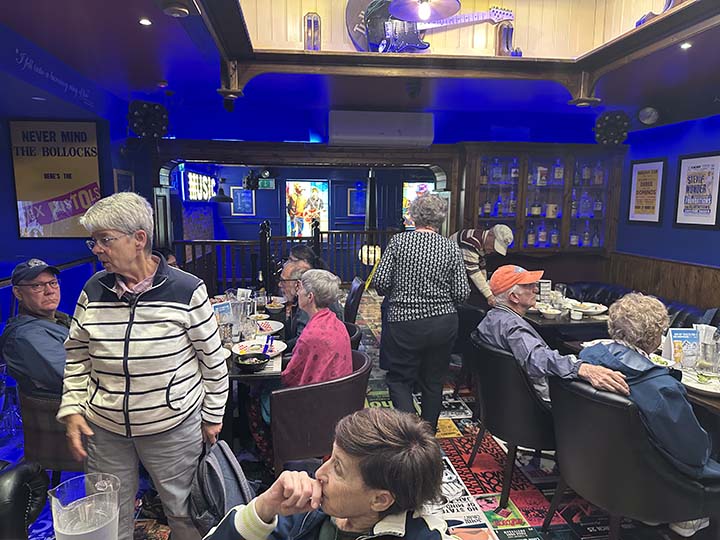
We're going to have lunch down there. Hope we can find a table.
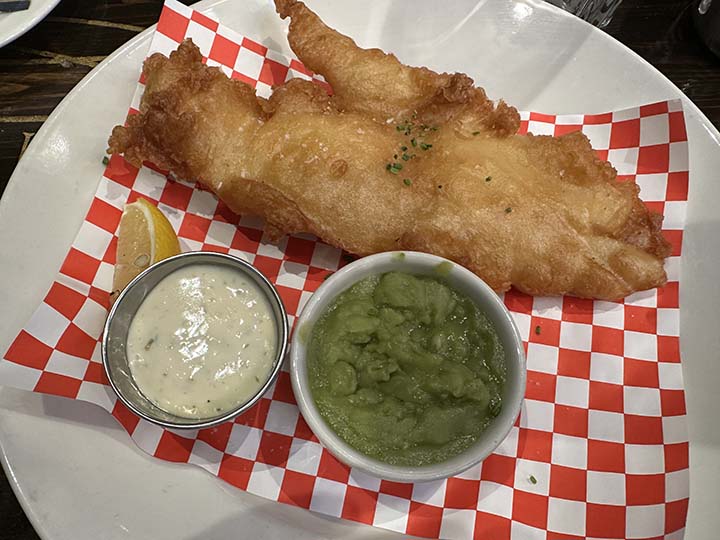
Of course we can. And what's on the menu? The best fish and chips yet on the trip. And it came with mushy peas! Yum.
The Road Scholars are becoming accustomed to the menus.
And after lunch the crowd had gone away.
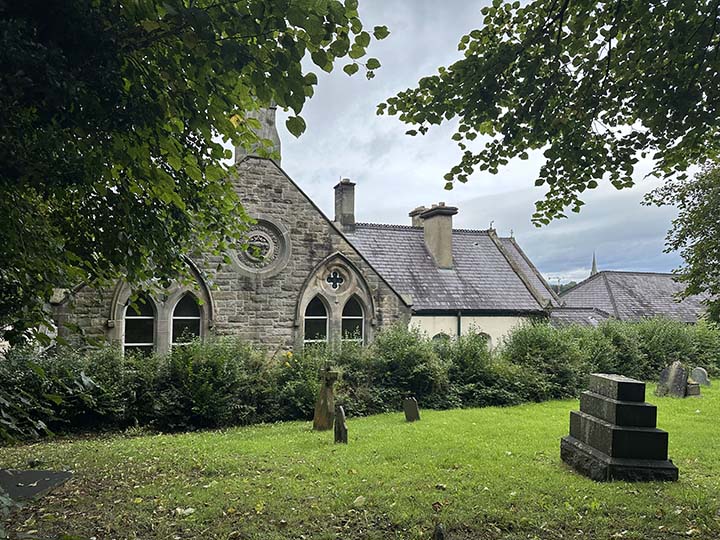
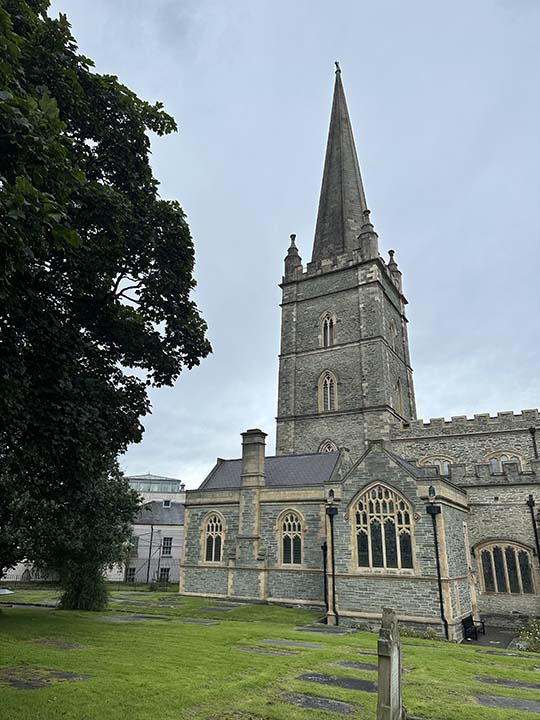
That's an Anglican Church. St. Columb's Cathedral.
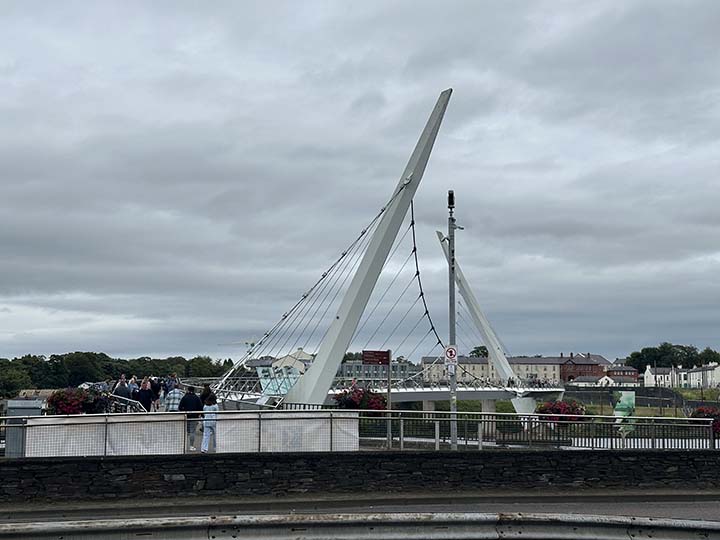
We walked back to the guildhall. Along the way I passed this peace bridge.
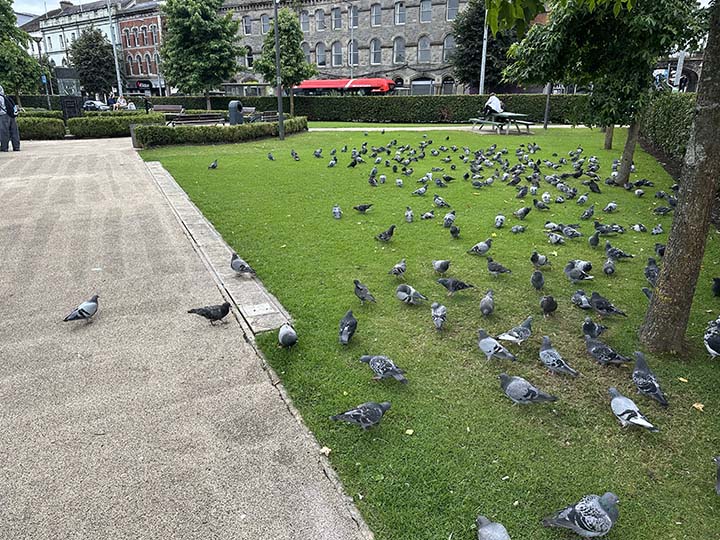
And since I was by myself for a little while I just sat in this park across from the guildhall and admired the pigeons. There were some drunks in the park accosting people who just wanted to be left alone. I was thought better of taking their picture. They looked over at me but I guess I looked so much like a tourist they decided not to bother with me.
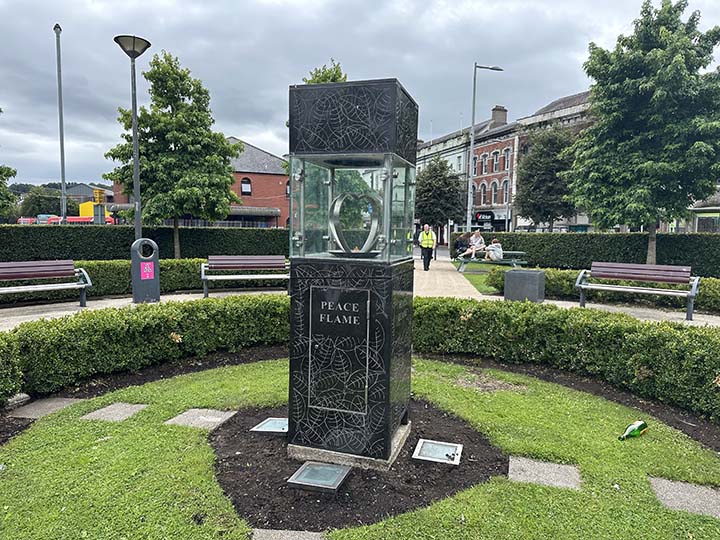
It was a peace park with a peace flame. I was definitely peaceful.
The guildhall was starting to look inviting.
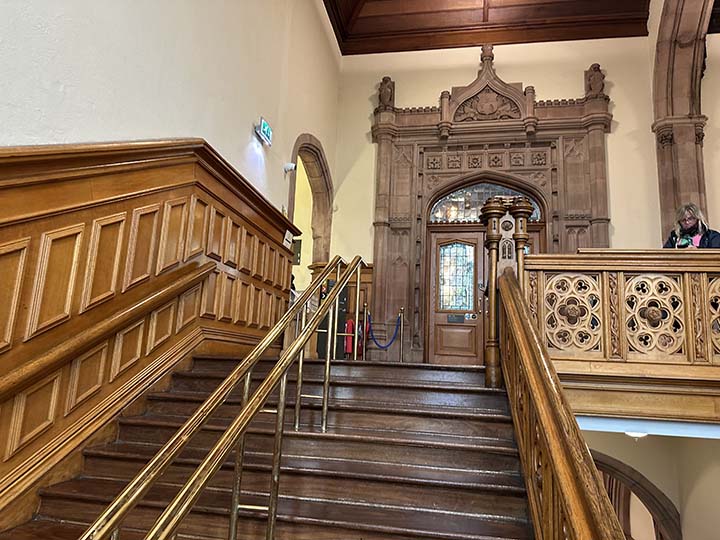
The woodwork inside was elaborate and beautiful.
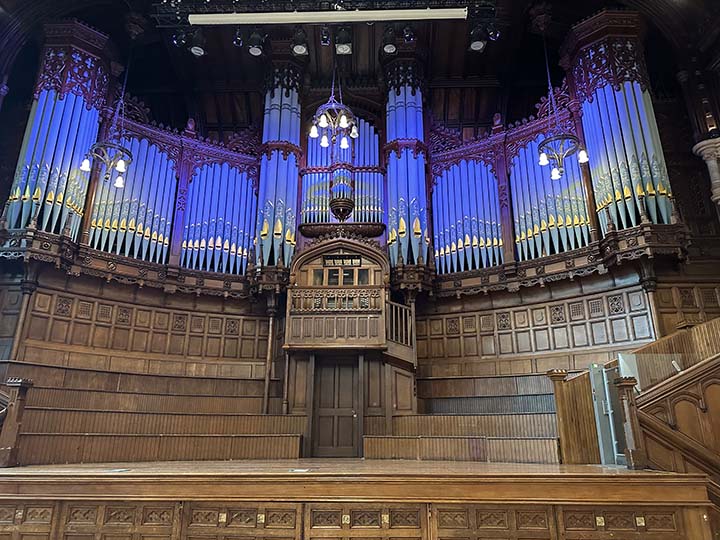
The guildhall big hall had an organ.
A very imposing organ.
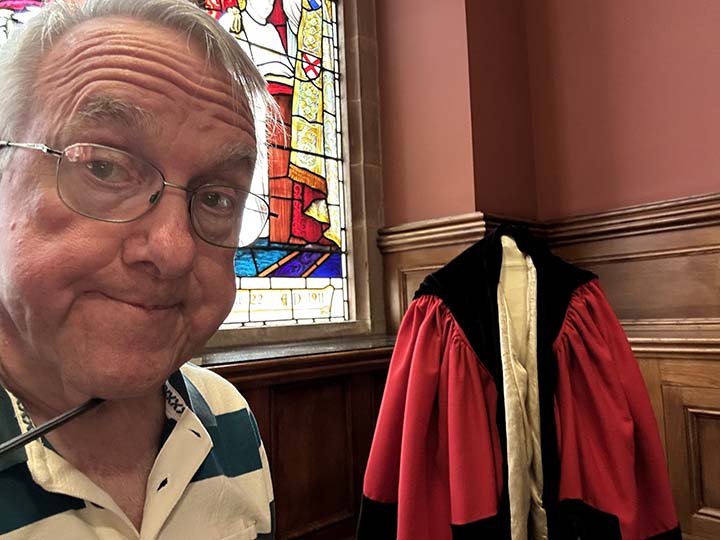
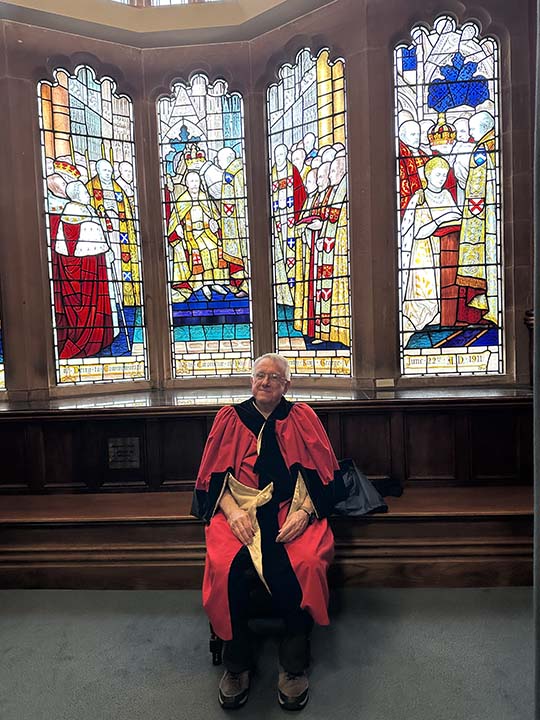
But this looked like more fun than gazing at an imposing organ. I think I was the only one who noticed a little sign that said it would be OK to try on the robes. I think I'll have some fun with this.
The right honorable Lord Anderson at your service.
Wasn't bad, though.
|