|
I think today's weather will be...overcast. By now this is no longer even a disappointment.
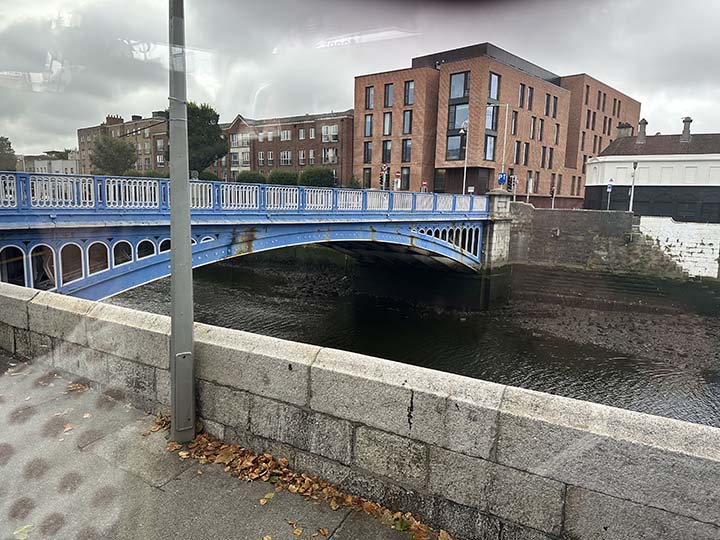
And we're off on our bus for a tour of Dublin. That bridge is the Rory O'More Bridge spanning the River Liffey. It has quite a history. You can read about it if you click on that link.
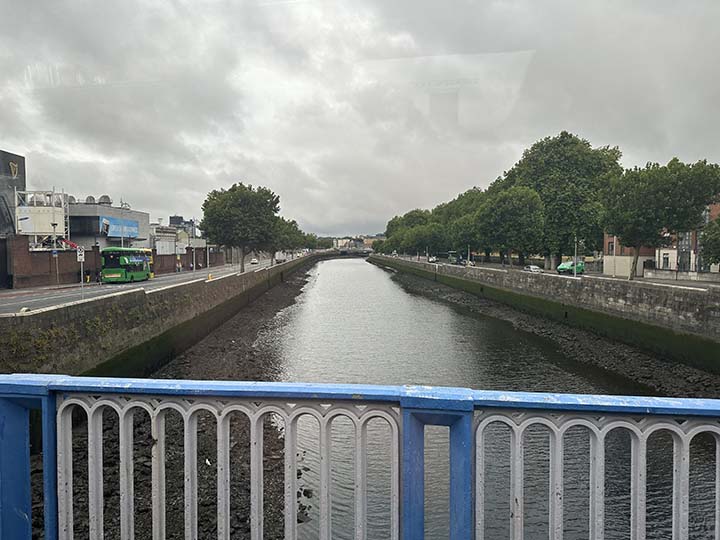
That is the River Liffey. Note how low it is. The Dublin region of Ireland is in the middle of a drought. Can't tell by looking at the sky, though.
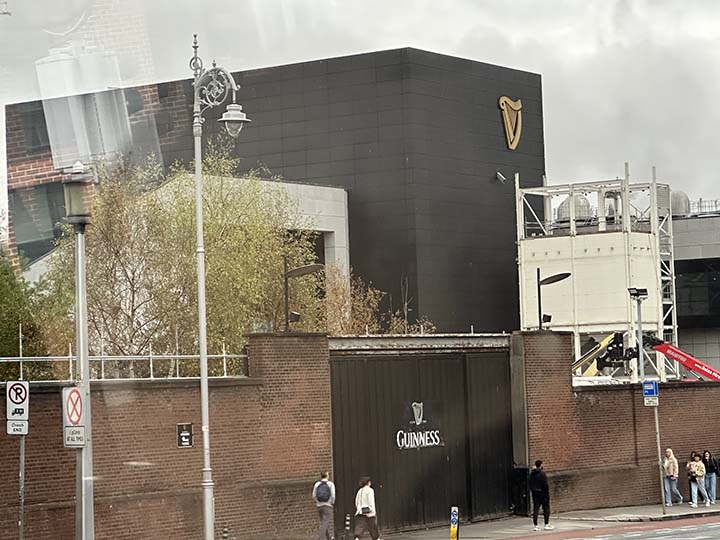
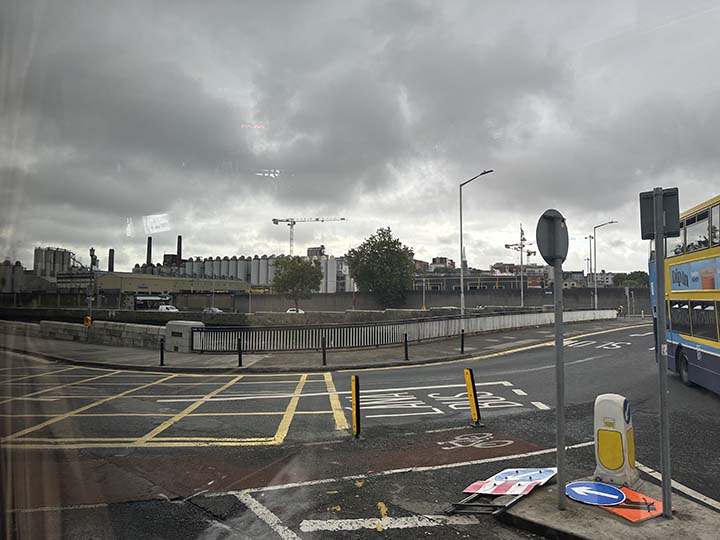
And that is the brewery Guinness. Some of the Road Scholars took the tour here, but I just couldn't work up an interest.
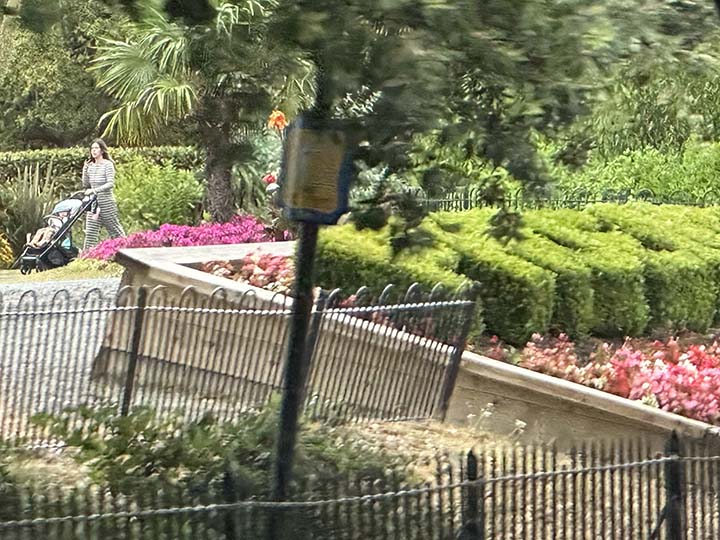
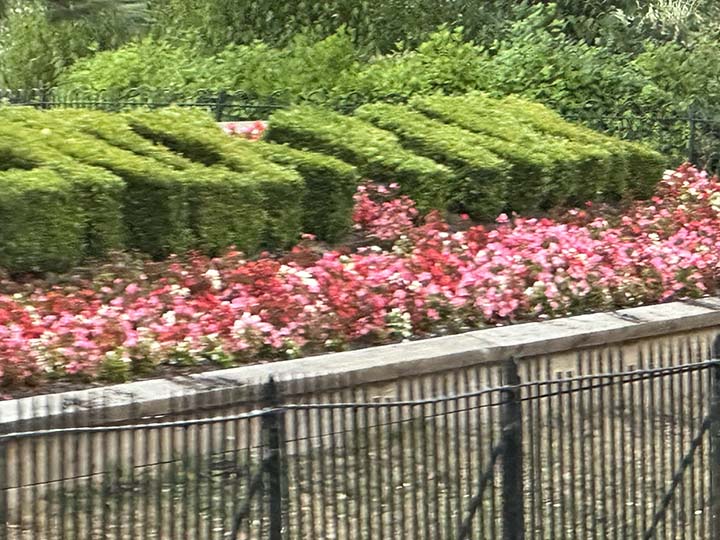
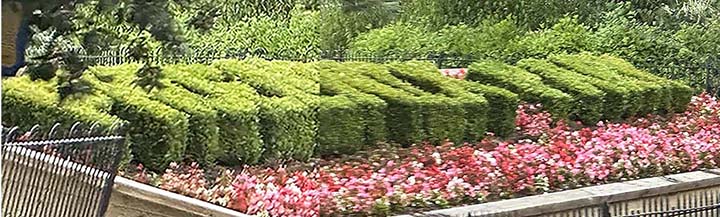
Now we're entering Phoenix Park, a grand preserve just a mile or two west of the heart of Dublin. At the park entrance was an impressive sign made of hedges. I tried to get a picture but I couldn't get it all in the frame.
So I snapped two pictures and figured I could splice them together when I got home.
And so I did. It's almost legible, don't you think?
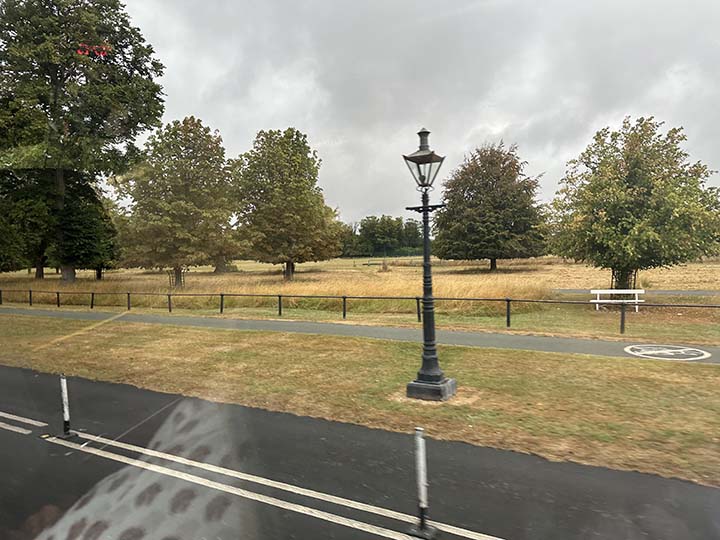
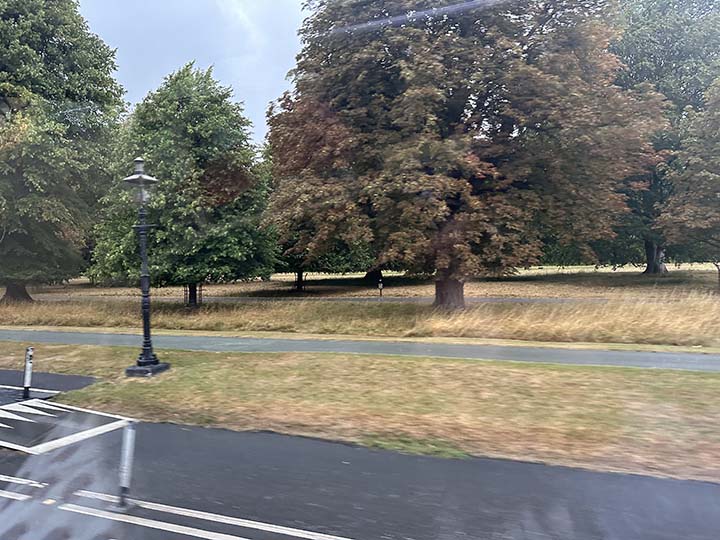
Remember I mentioned drought? Just look at all the brown grass.
Even some of the trees are giving up early.
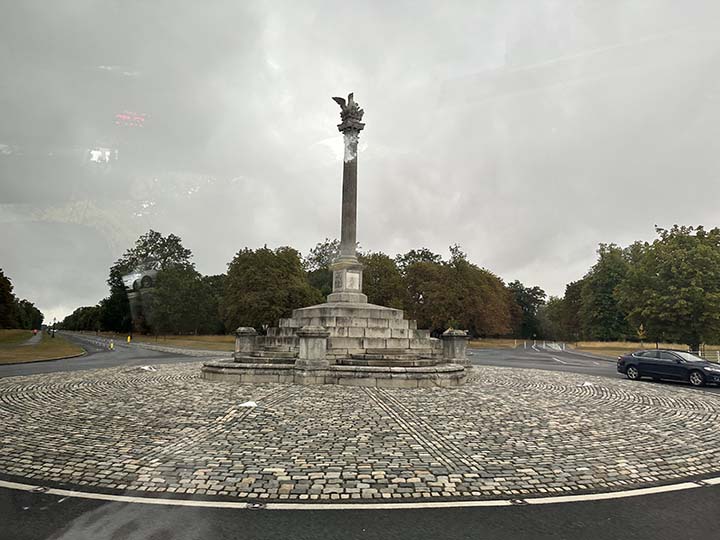
That’s a statue on a post. It's called the Phoenix Monument and it was built in 1747 by the Duke of Chesterfield. It shows a mythical phoenix rising from its ashes. There's a Wellington Monument in the park too, but this isn't it.
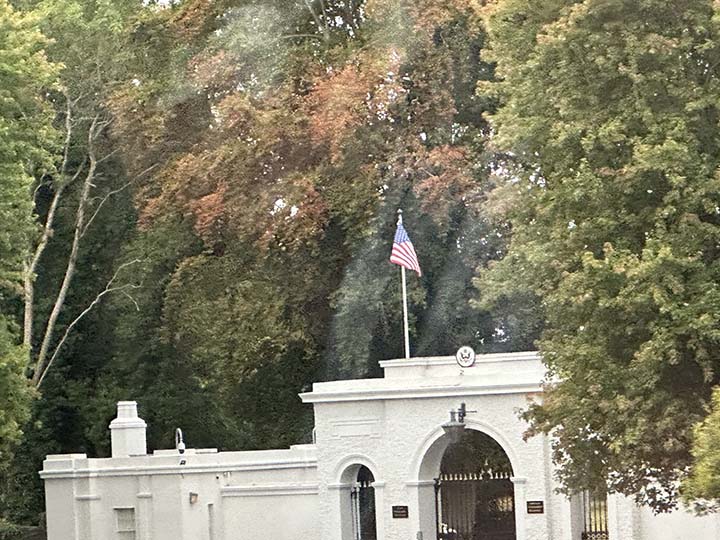
There's the US Embassy! I'll know just where to go if I lose my passport.
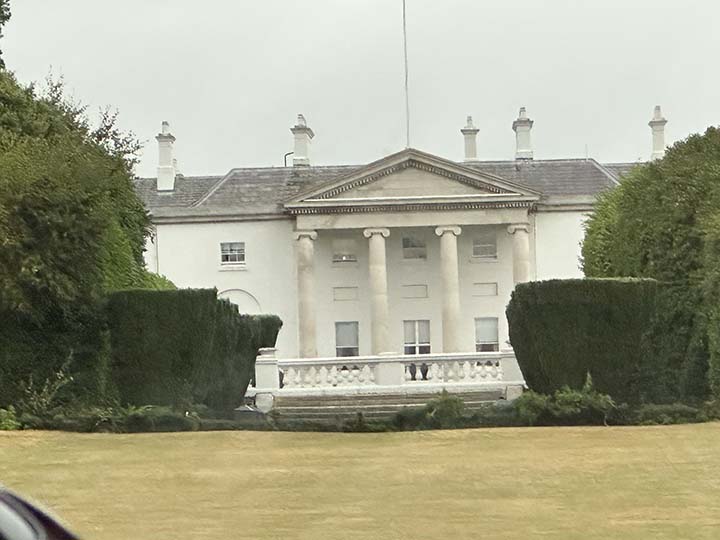
That’s where the president of Ireland lives. The man who designed the White House in Washington also designed this place. Can you tell?
All that back there is the Guinness brewery.
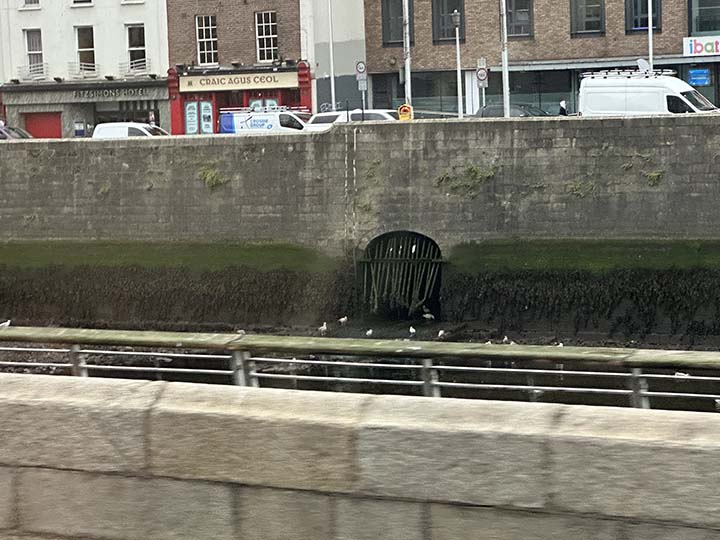
Apparently that sewer drain into the river was once used by Irish revolutionaries to escape from the British, so the British put up an iron fence. Now it seems nobody cares anymore. And just look how low the river is.
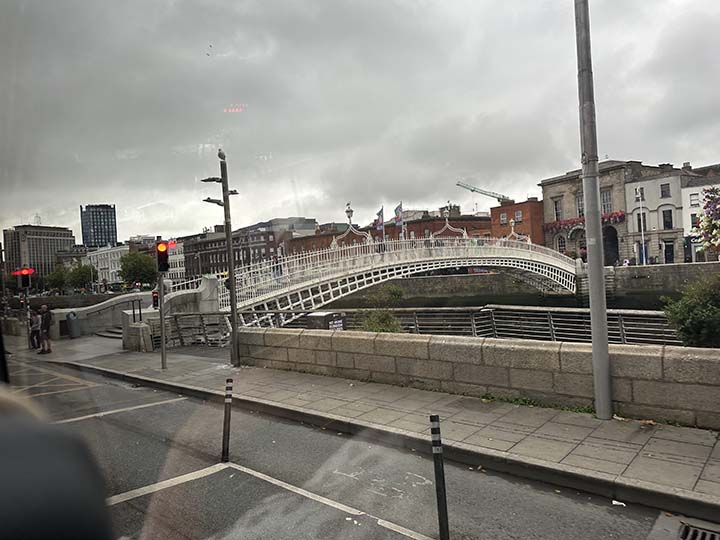
That is the Ha’penny bridge over the Liffey. It got its name because that’s what it used to cost to walk across. The British tried to rename it, the Wellington Bridge, but the people of Dublin kept calling it Ha’penny and they still do today.
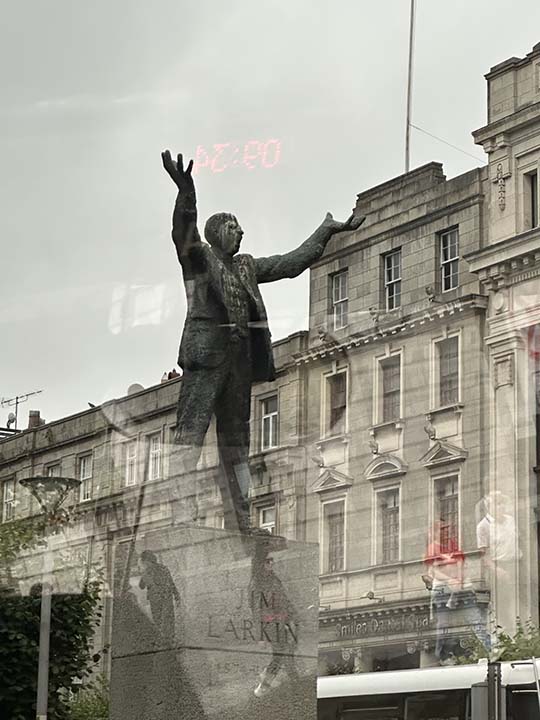
That's a statue of Jim Larkin, an Irish Republican leader in the mid-20th century. I took his picture because he looked so happy. .
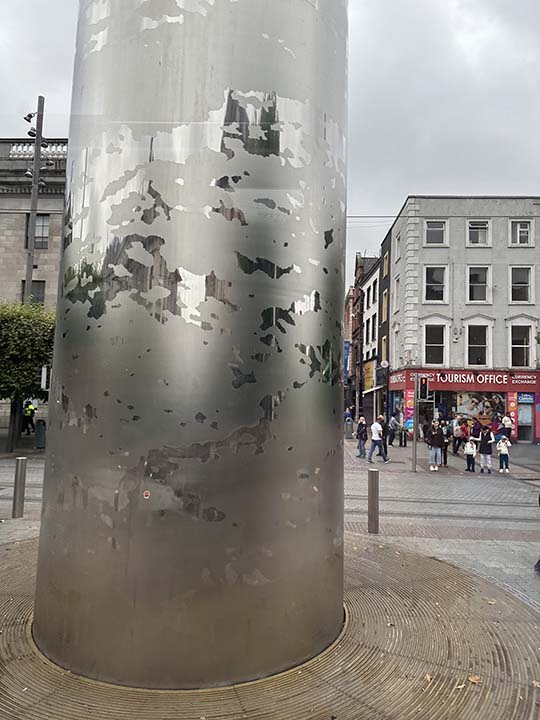
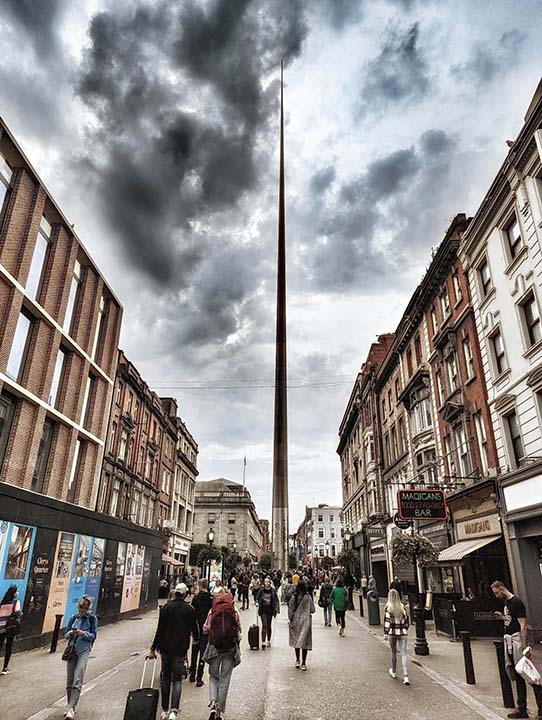
More than once we drove past a monument known as "The Spire." From the bus I could never get a shot of the whole thing. Just the base was about the best I could do.
Because that thing is BIG!
The Spire of Dublin, officially named
the Monument of Light (An Túr Solais), is a massive 120-metre (390
ft) pin-like stainless steel structure on O'Connell Street. Erected
in January 2003, it stands on the former site of Nelson's Pillar and
acts as a popular city meeting point.
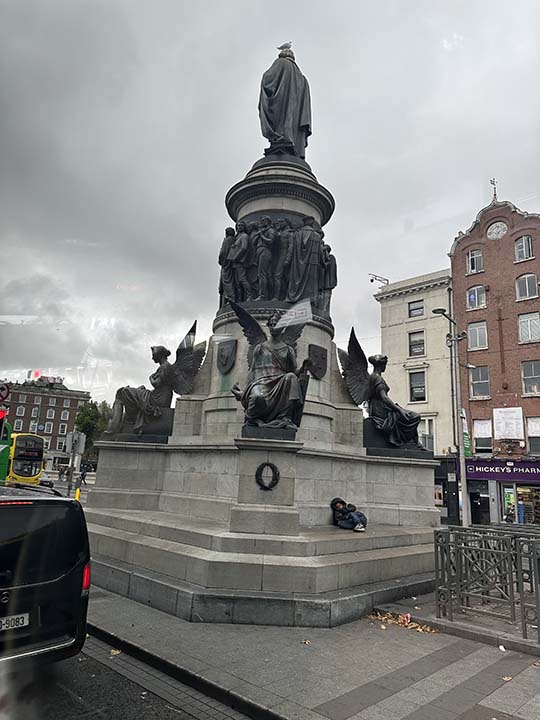
That's a monument to the Irish leader Daniel O'Connell. There is no shortage of monuments to Irish leaders around here.
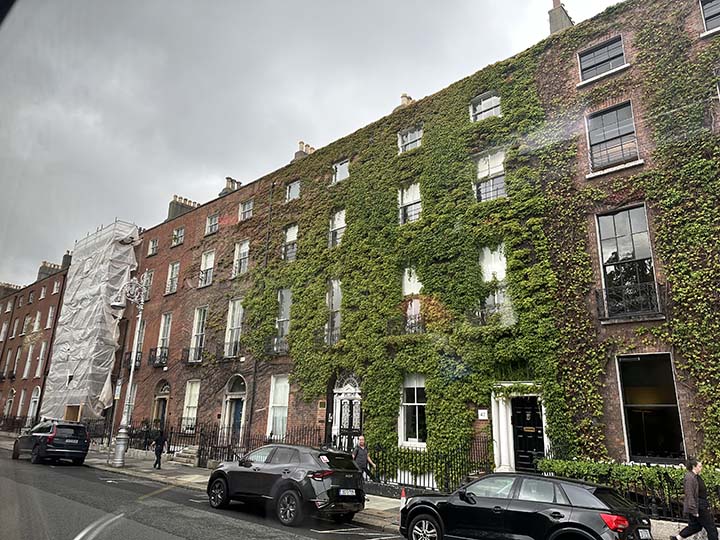
We stopped here while our guide went on at length about how these luxurious townhomes were built by British occupiers who later found it wise to move back to London. See those tall windows? That’s the size of the rooms. The merchant class bought these homes from the British and later the neighborhood went downhill and there could’ve been as many as 100 immigrants living in one apartment. Now the apartments have been fixed up and everything is fine again.
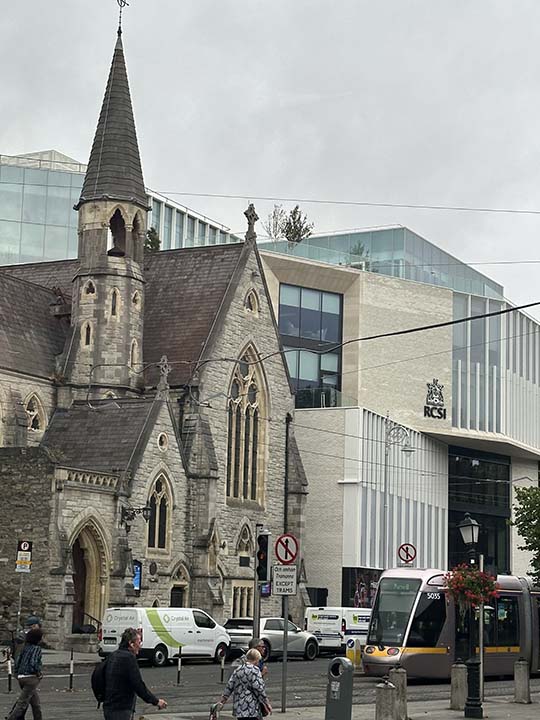
That's the Dublin Unitarian Church next to the Royal College of Surgeons. I guess I was just taking pictures of anything by now.
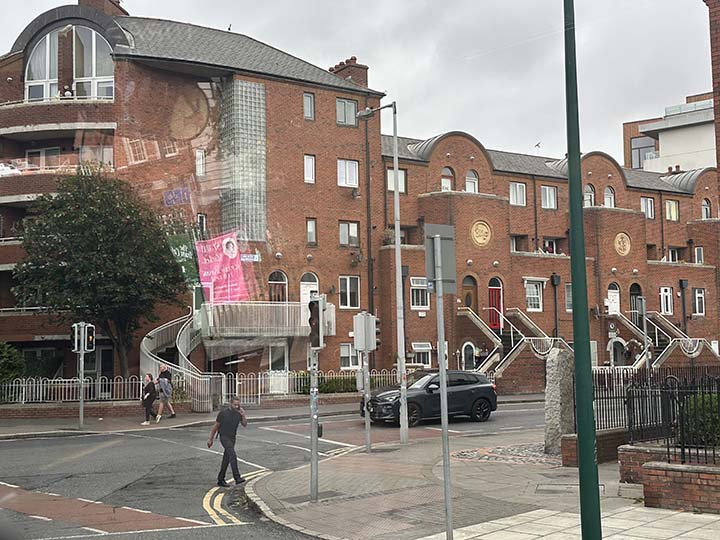
This is subsidized housing.
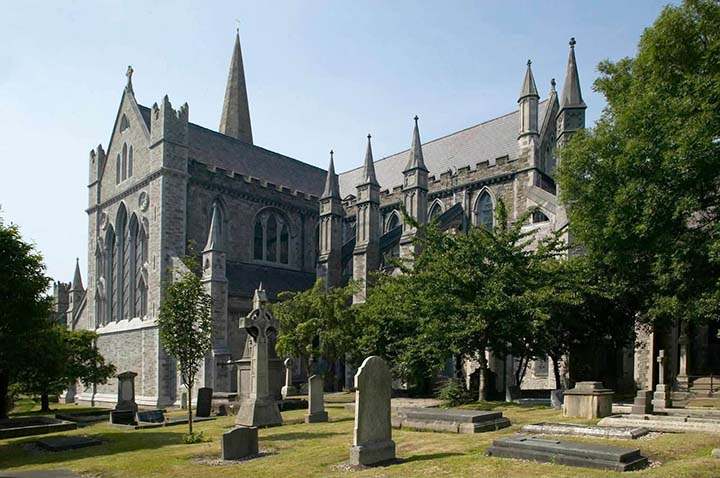
Let’s go to the church named for the patron saint of Ireland, Saint Patrick. Don't get excited about the pretty sky; I grabbed this image off the internet.
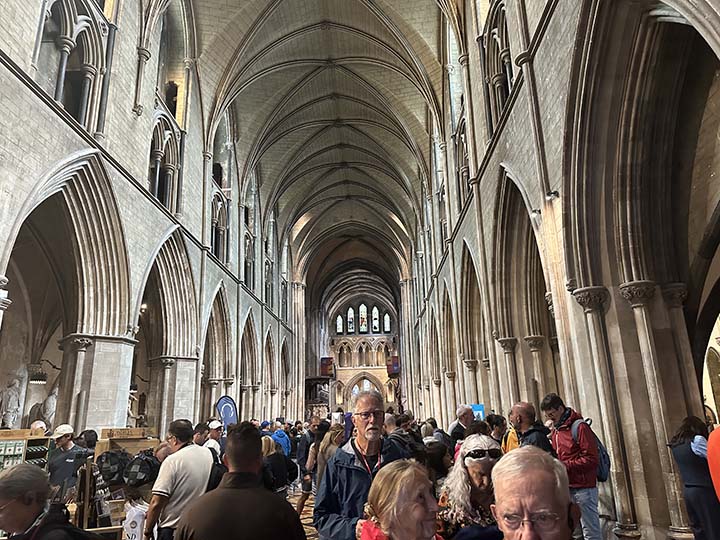
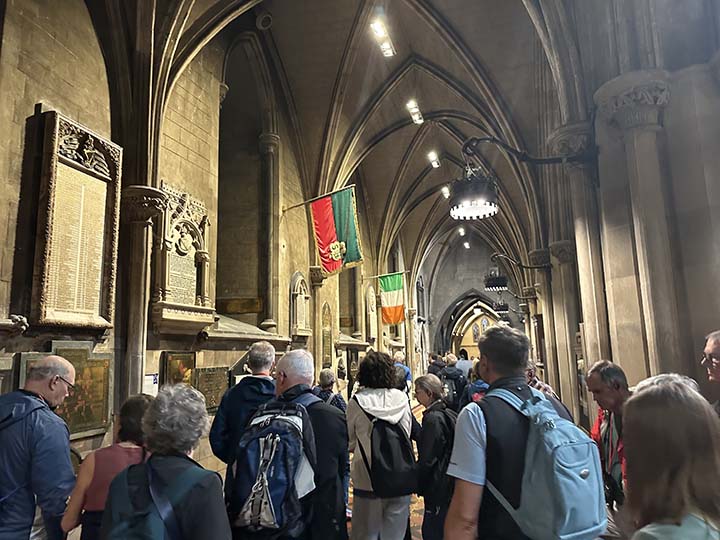
The Road Scholars weren't the only visitors to St. Patrick's this day.
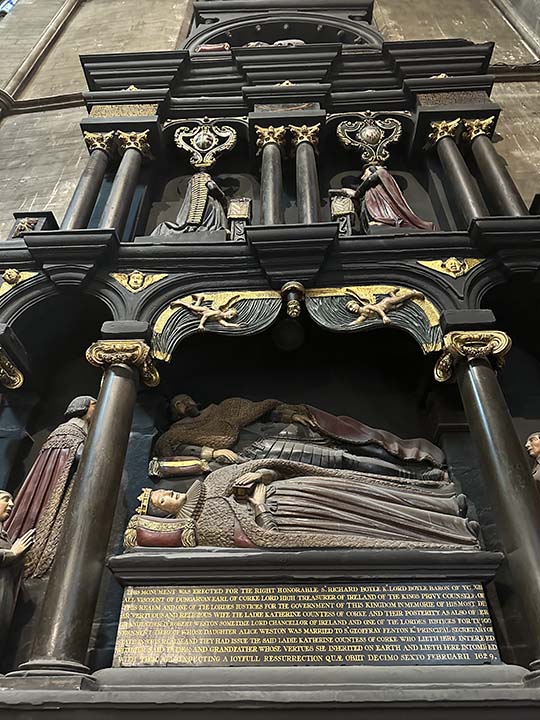
Remember the statue of Robert Boyle in the park at Lismore? This is his family’s monument in St. Patrick’s.
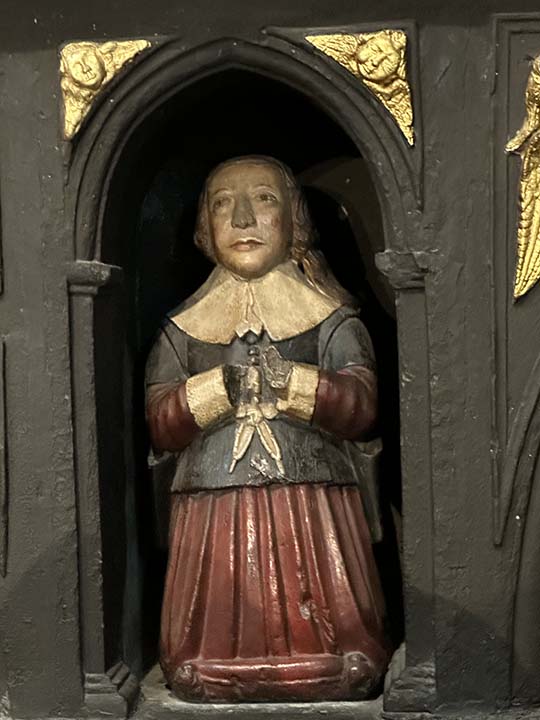
And there is little Bobby Boyle.
Jonathan Swift was once the Rector here.
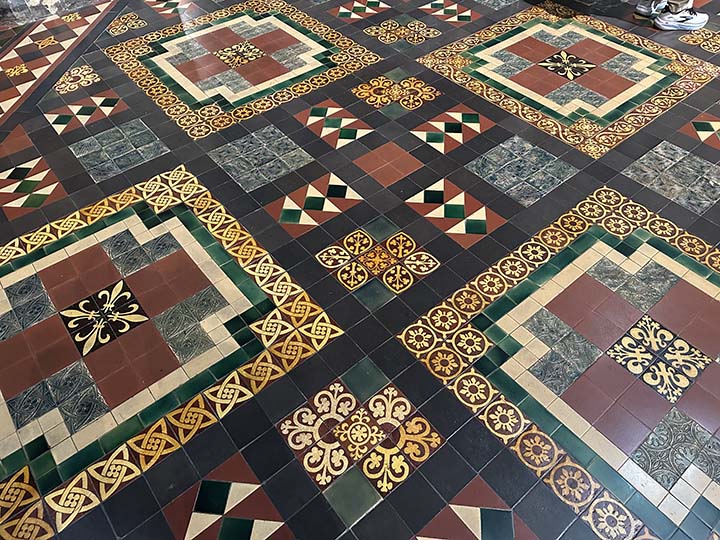
The original cathedral floor got worn away, so the Guinness brewery family paid to replace it. They used designs from the original floor.
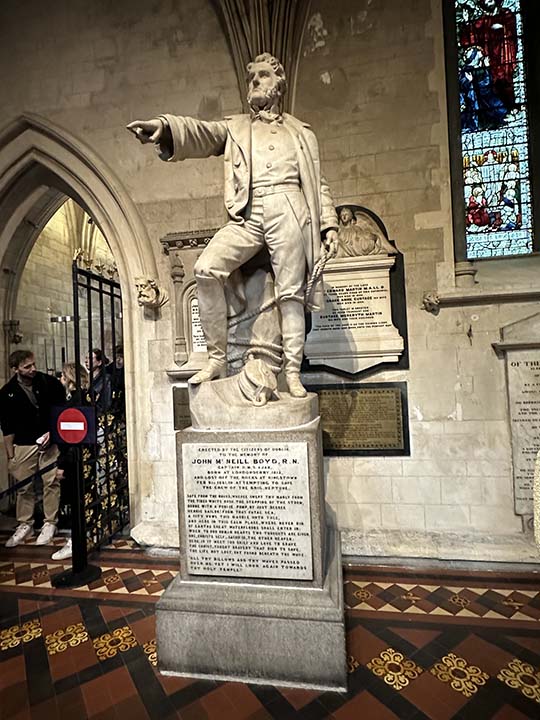
That's a statue of a great Dublin hero, John McNeill Boyd. You can read about him here.
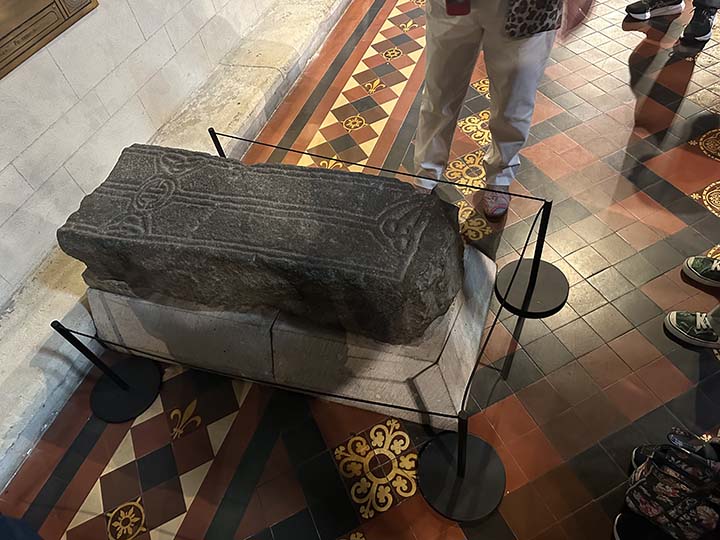
That's an ancient grave slab from the cemetery outside.
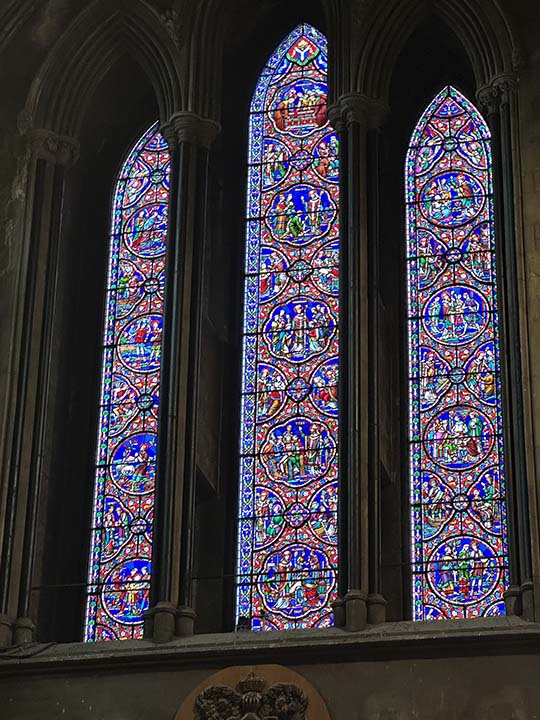
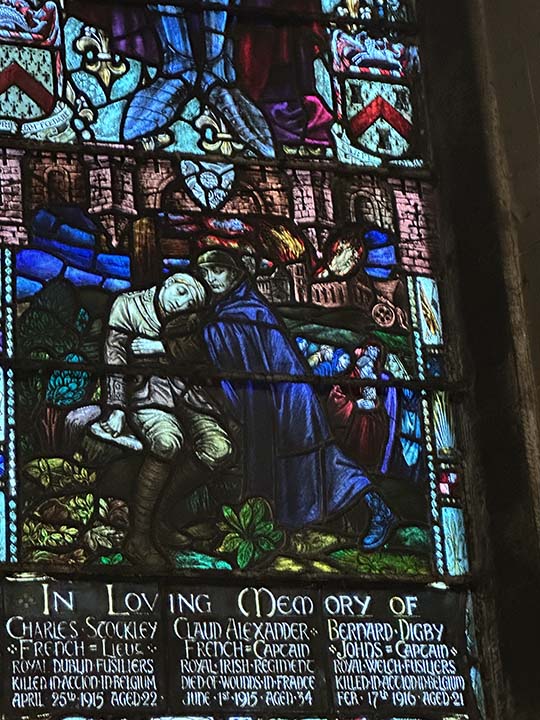
Several of the stained glass windows honor soldiers lost in war.
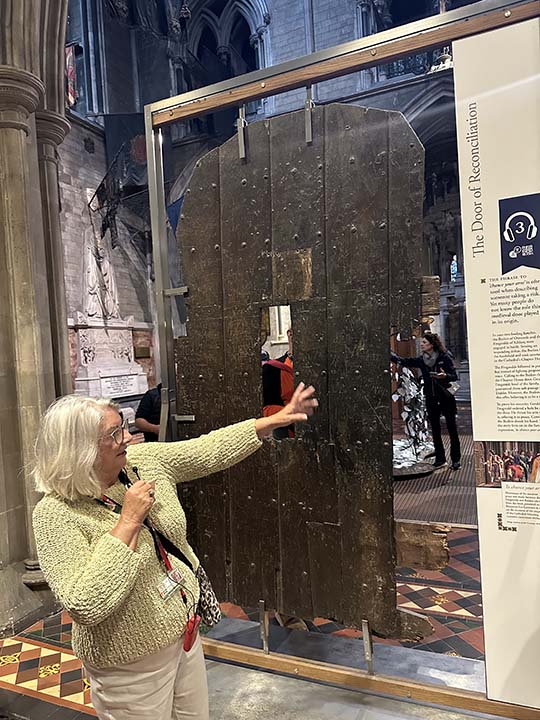
Have you ever heard the phrase
“chance your arm?“ I hadn’t either, but like Brendan has taught me,
every day is a school day. I'm still not convinced it's a famous expression.
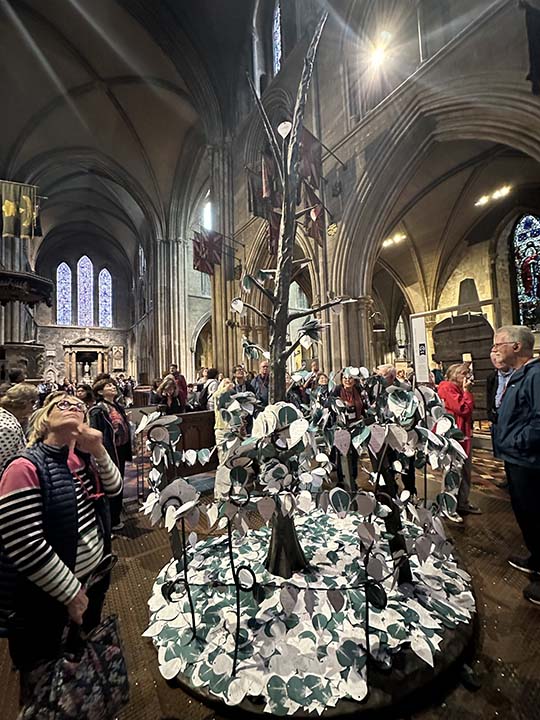
You can write out prayers and leave them hanging on this stylized tree that reaches toward Heaven.
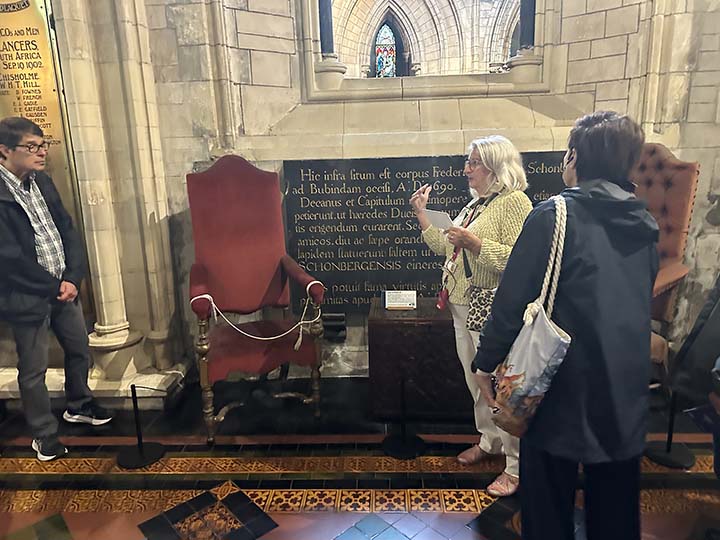
This memorial chair is dedicated to the memory of Frederick, Duke of Schomberg who died at the Battle of the Boyne. There's lots of remembering in this church.
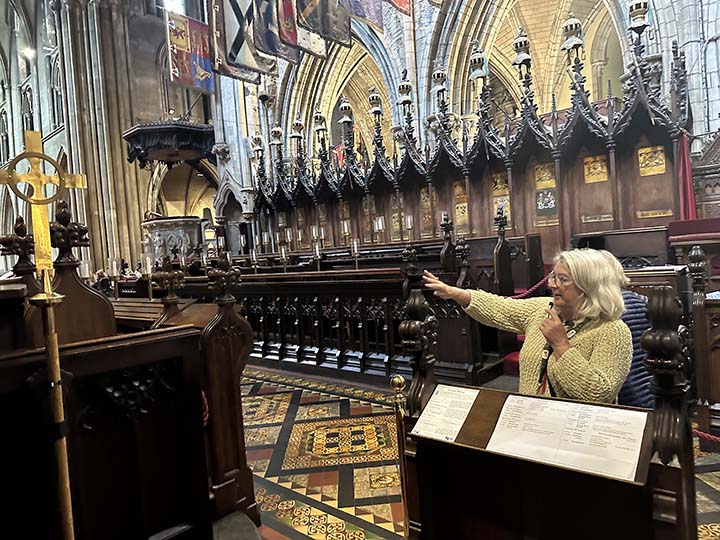
The choir sings up there.
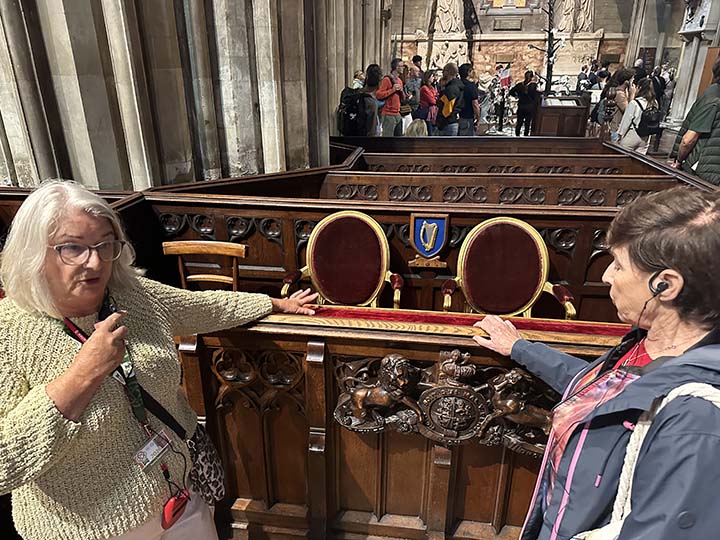
This is the State Pew where all the big shots sit when they pay a visit. \
OK, I have enjoyed this tour and I'm definitely impressed, but enough is enough.
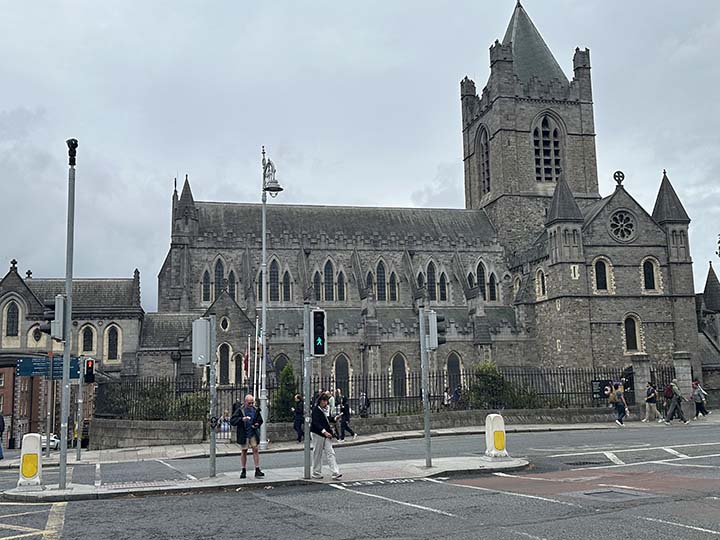
That's Christ Church Cathedral and it's even older than St. Patrick's. But we're not going in.
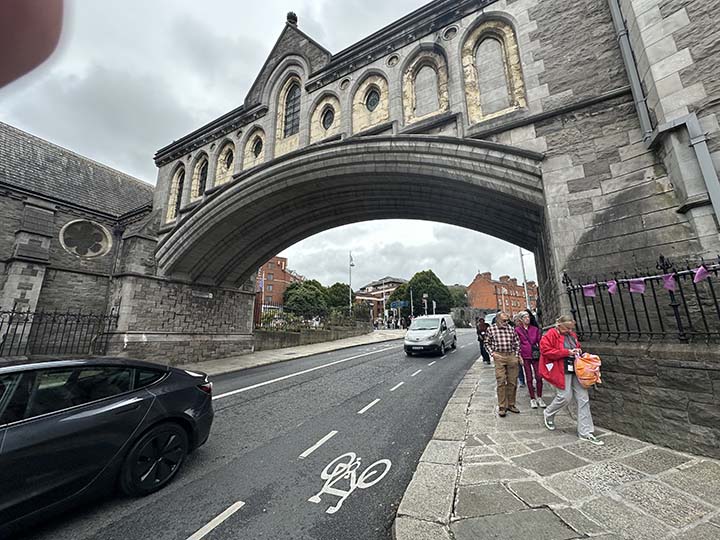
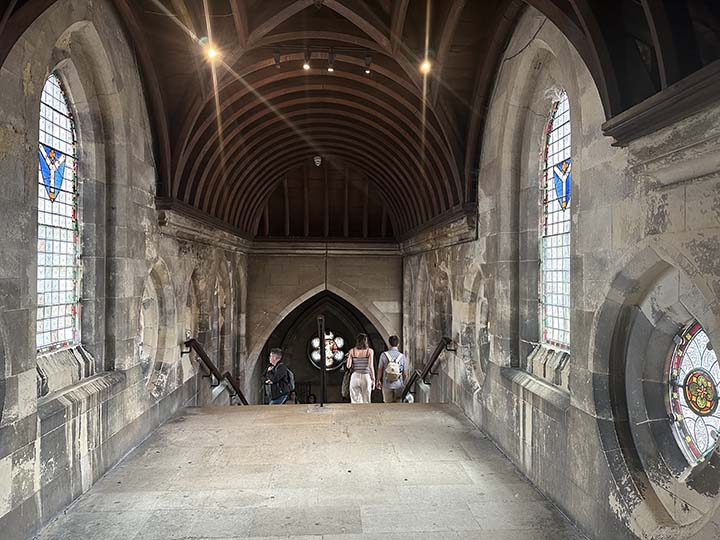
That's the Christ Church Cathedral footbridge over Winetavern St.
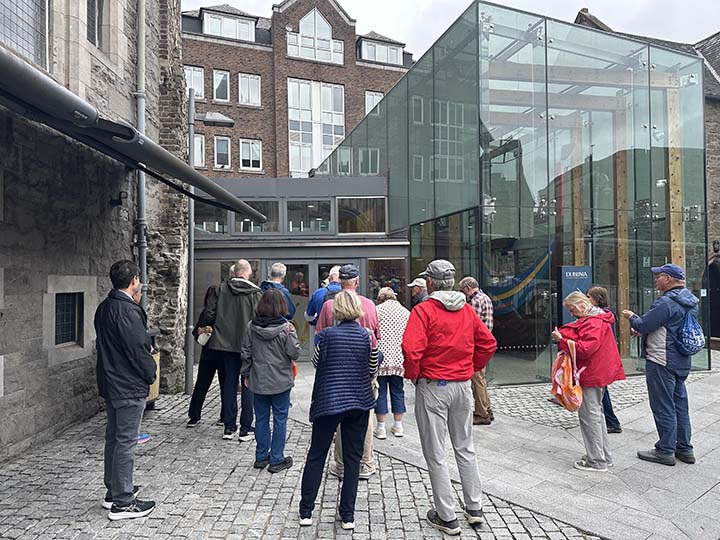
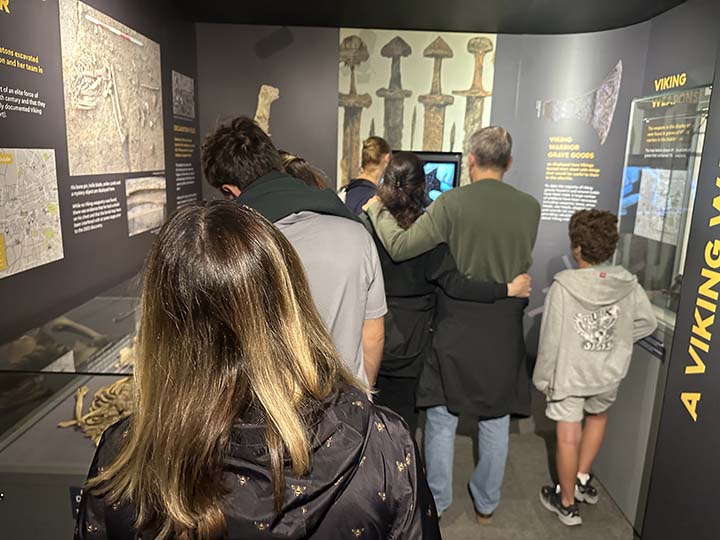
We are about to visit Dublinia, an interactive museum that tells how the Vikings settled this area.
All the tourists who weren't at St. Patrick's are here.
It was a fun museum, and it would have been even better if there had been room to move around all the tourists.
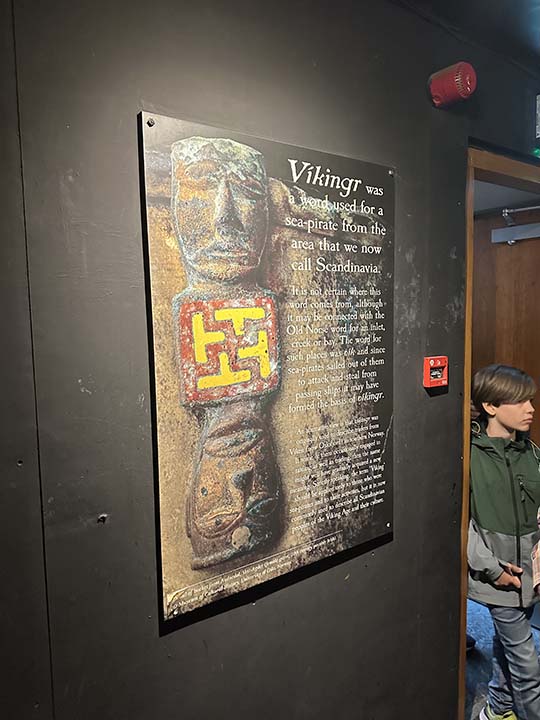
We learned all about the Vikings who settled in this area.
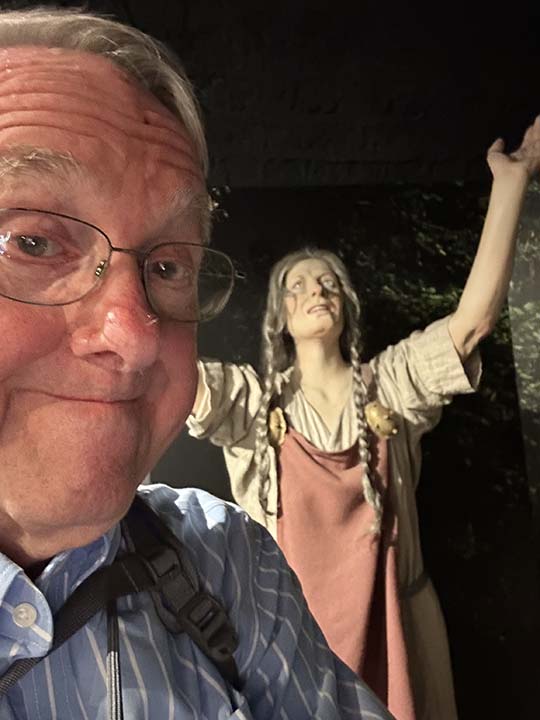
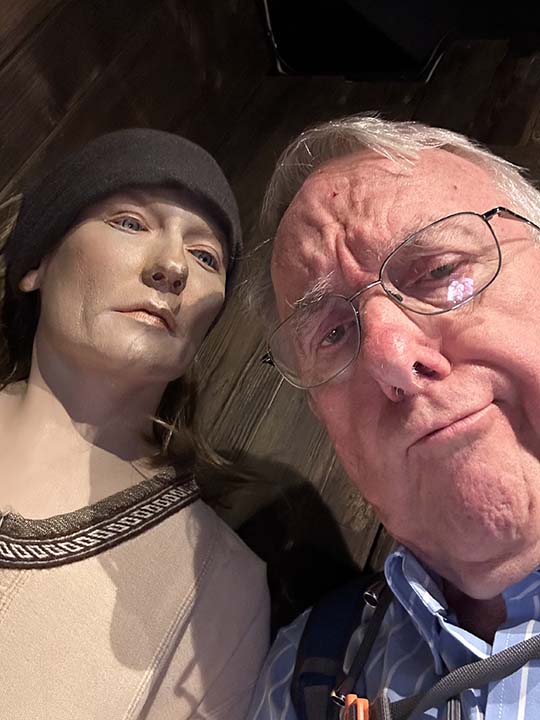
She seems to be having a bad day.
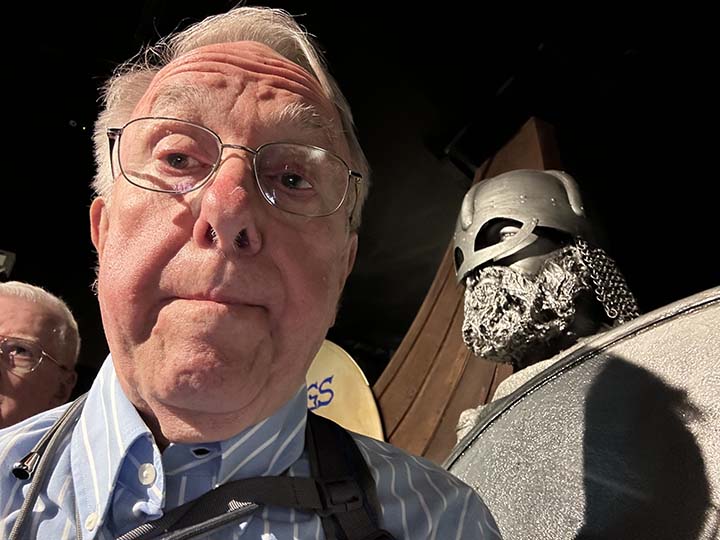
I guess he looks friendly enough. For a Viking.
I have to say that I’ve been to many museums in my life and I have seen exhibits on what I thought was every subject imaginable. But I was wrong. At the Dublinia Museum they cover every aspect of Viking life back in the day. Be sure you have your sound turned up. You don’t want to miss any part of this. Probably.
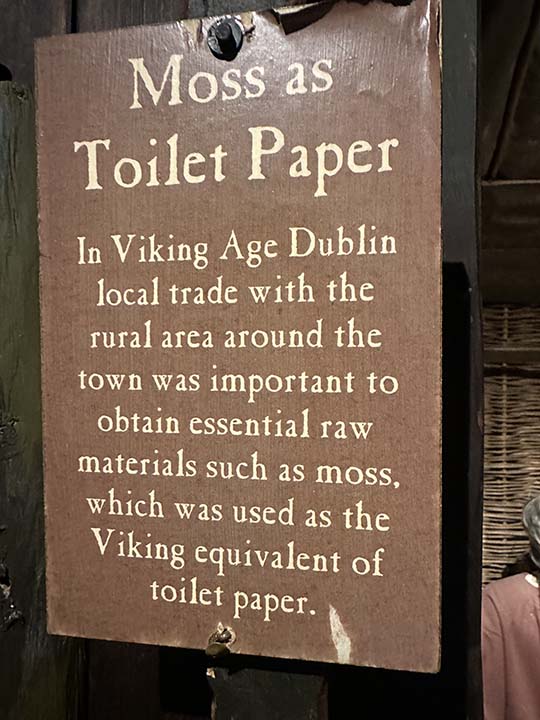
When you step on a hidden pad on the floor, the guy asks you to pass him some moss.
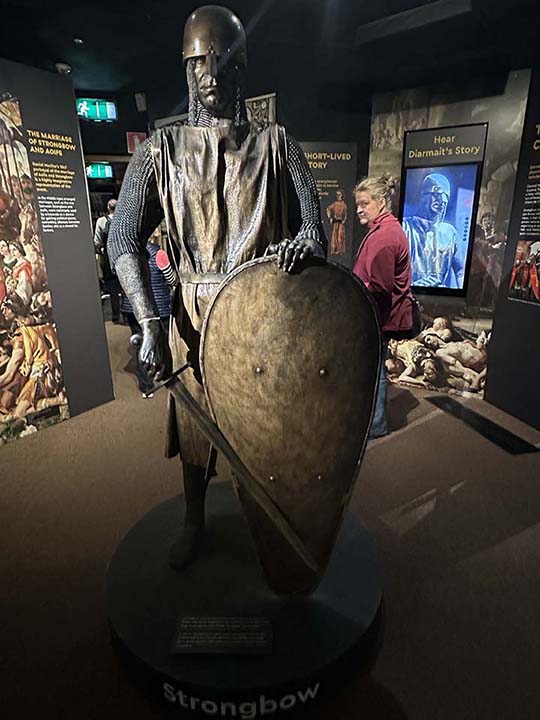
The warrior on the right is Strongbow. He led the Anglo-Norman invasion of Ireland in 1176 and apparently Irish kids still consider him a great hero.
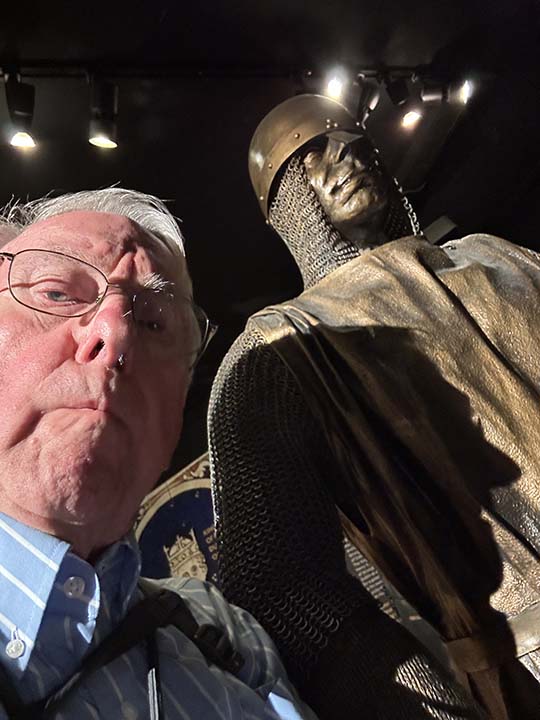
He cut an imposing figure.
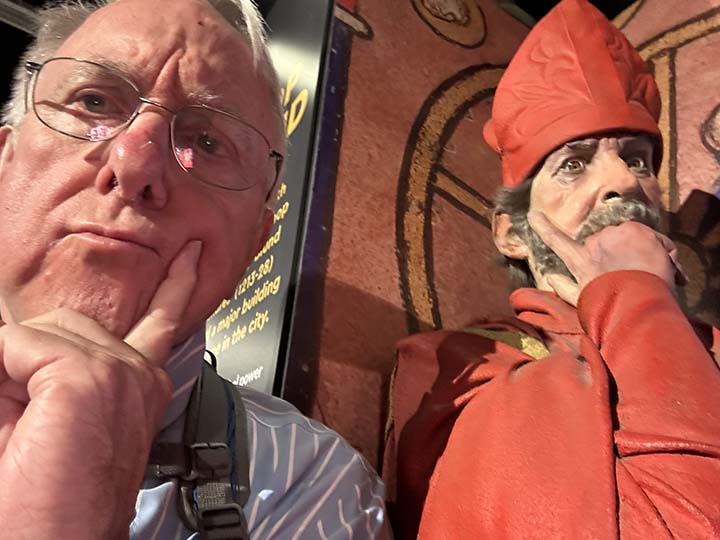
We are contemplating deep thoughts.
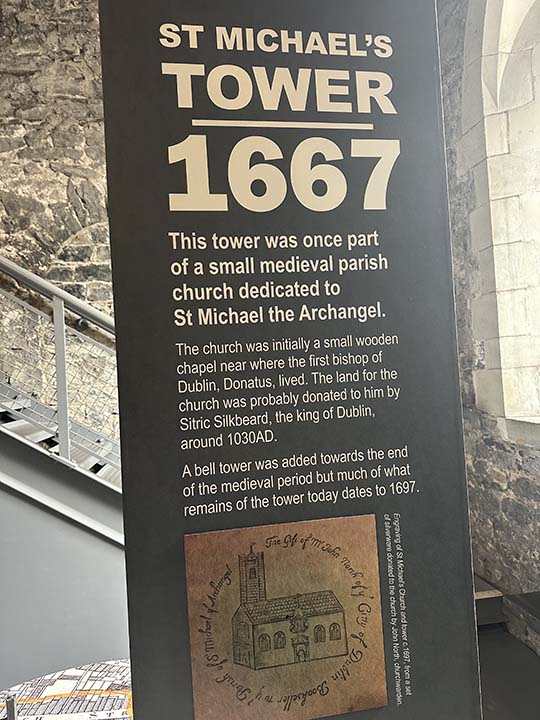
Let's go look at St. Michael's Tower.
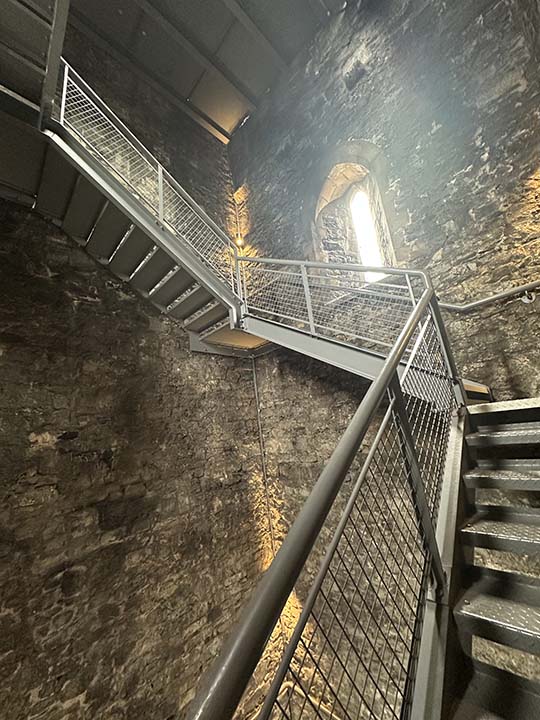
The museum is attached to Saint Michael’s Church and I climbed 197 steps to the top of the bell tower. Why? I’m not really sure.
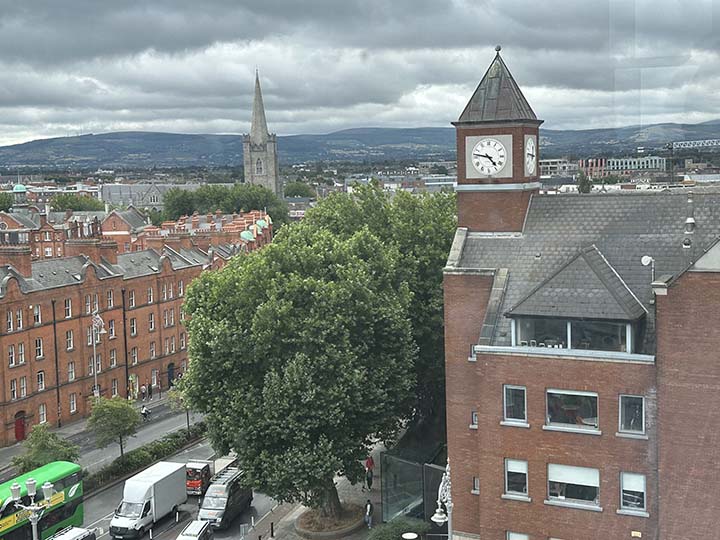
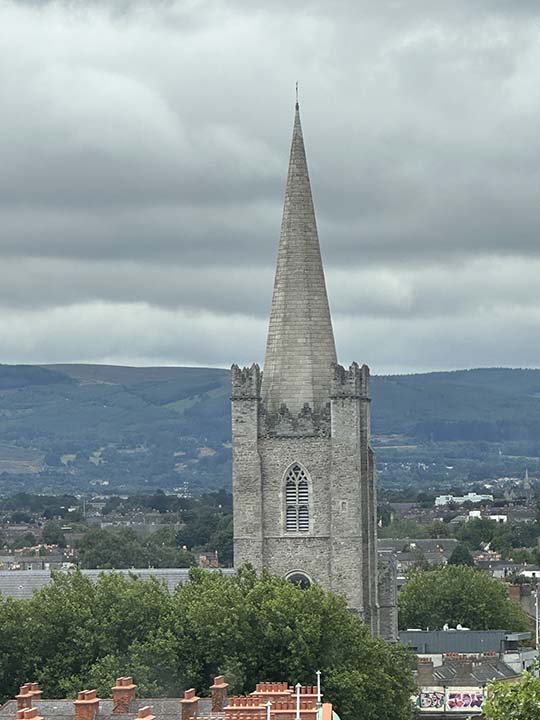
Is that St. Patrick's over there?
Sure is.
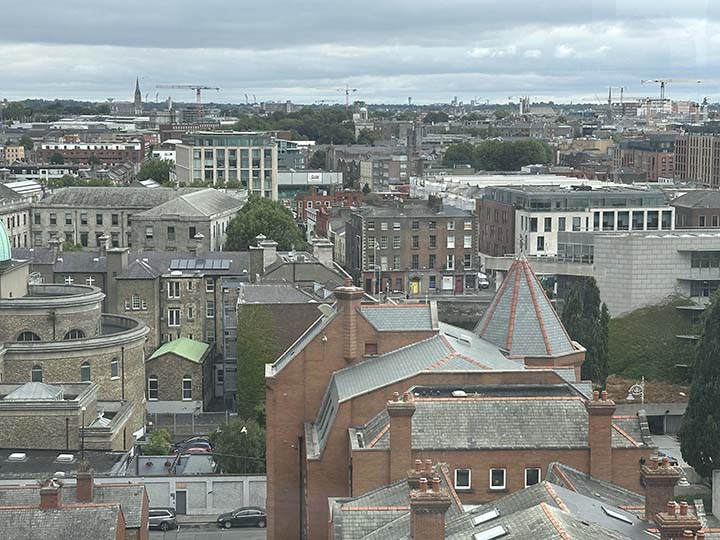
And there's more of Dublin out this way.
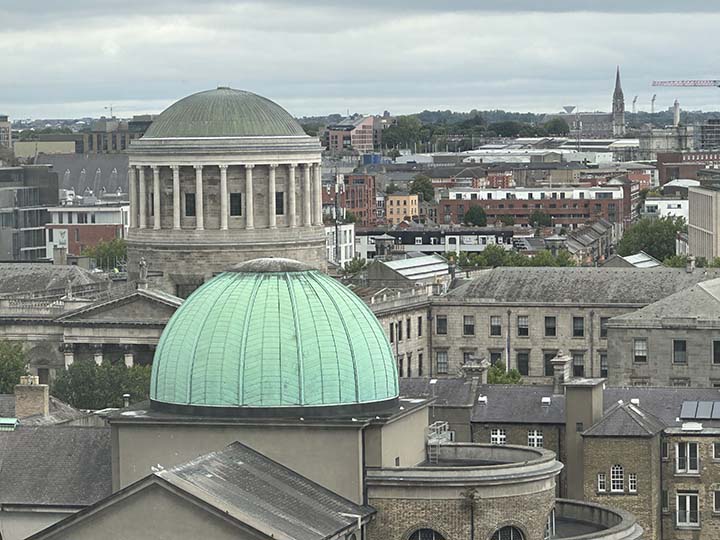
And even more out that way.
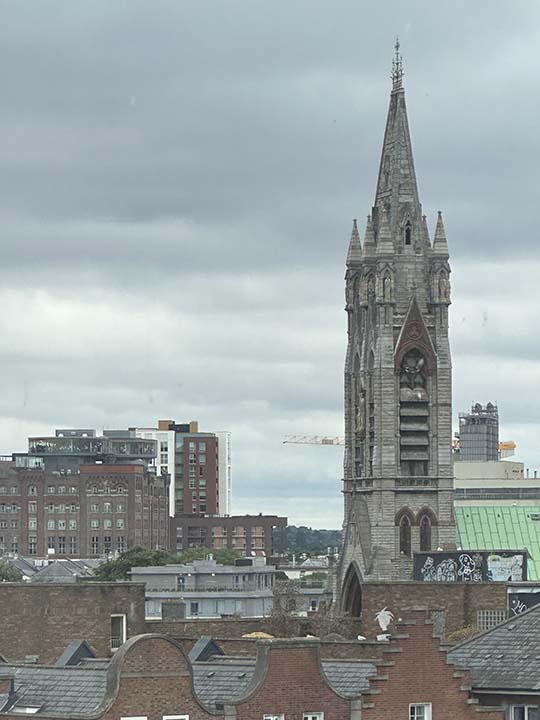
Dublin has no shortage of steeples.
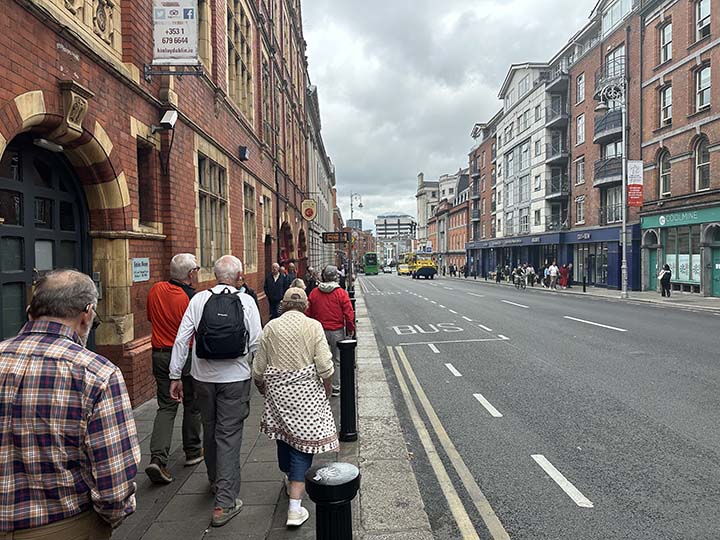
Let's go back out on the street.
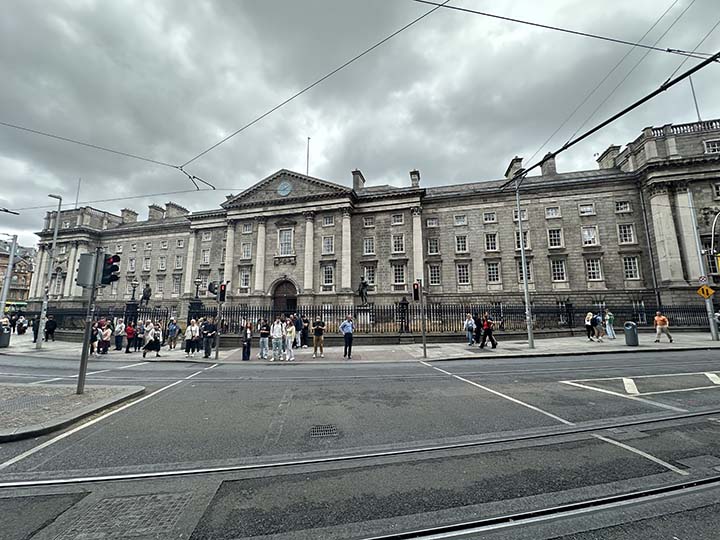
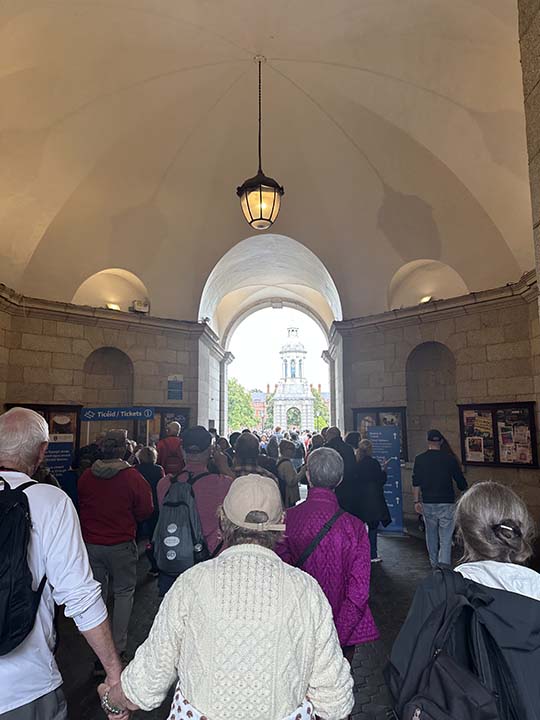
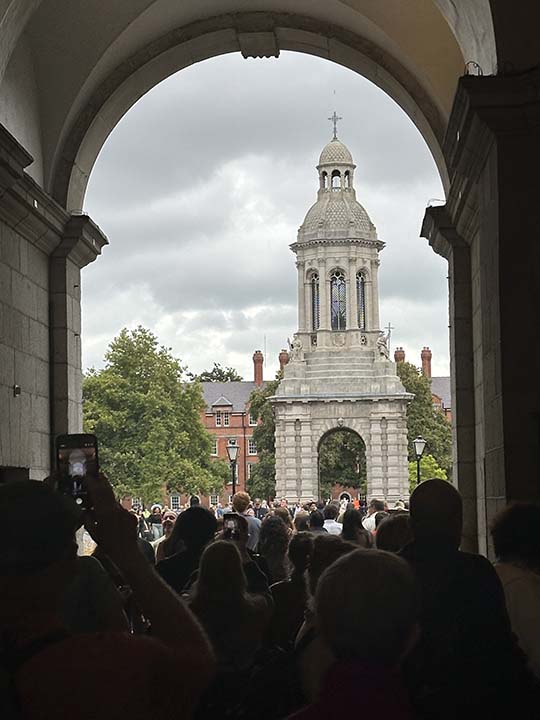
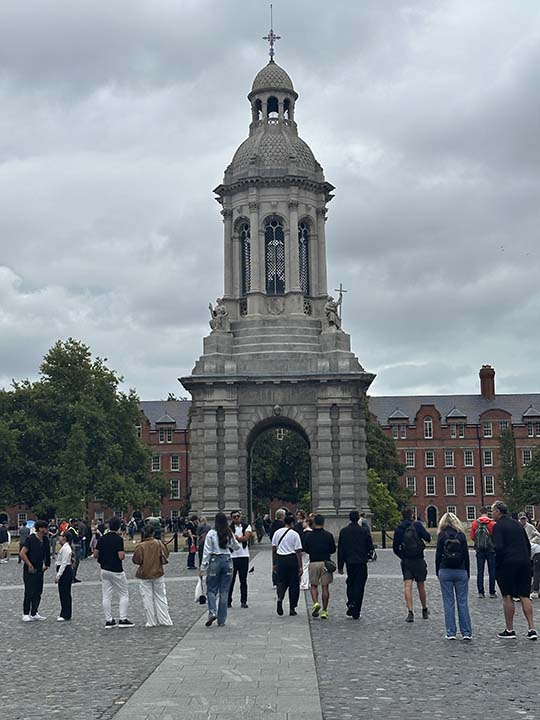
The Road Scholars are headed to Trinity College.
We are going to see the Book of Kells.
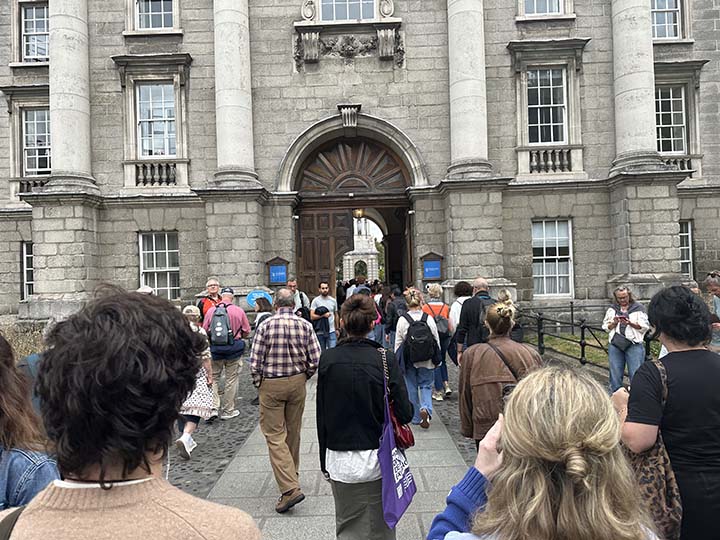
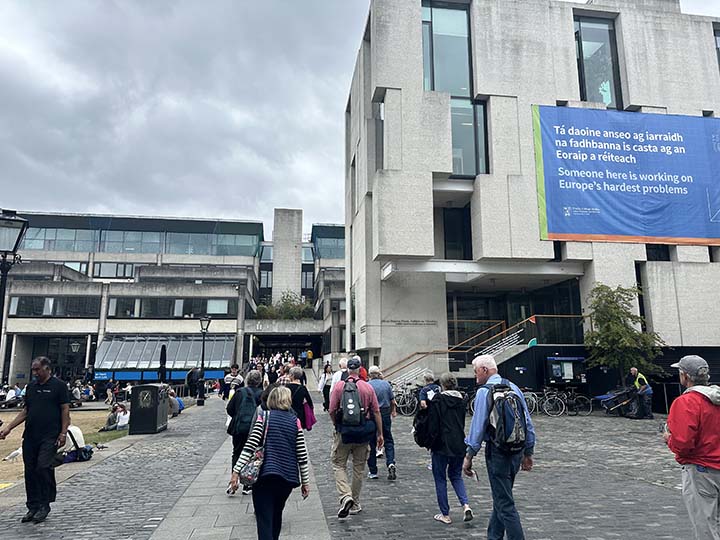
Along with all the tourists who aren’t at Saint Patrick’s or Dublinia.
The ticket booth is supposed to be up there somewhere.
Out of my way, tourists!
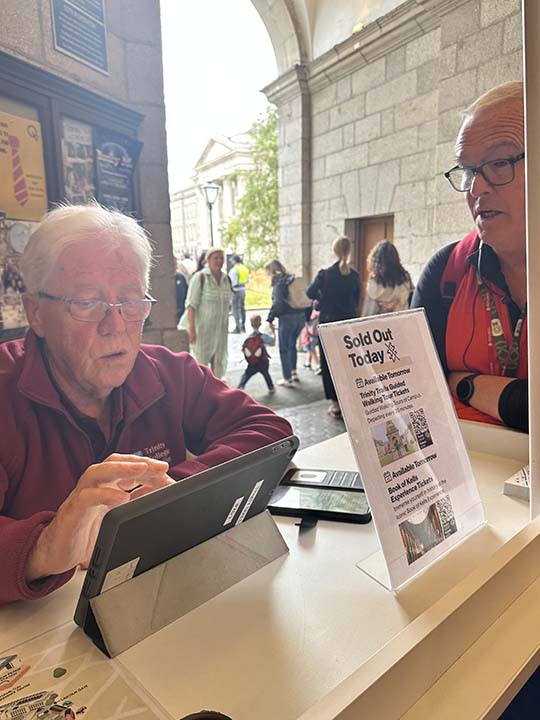
Whoops. Sold out today.
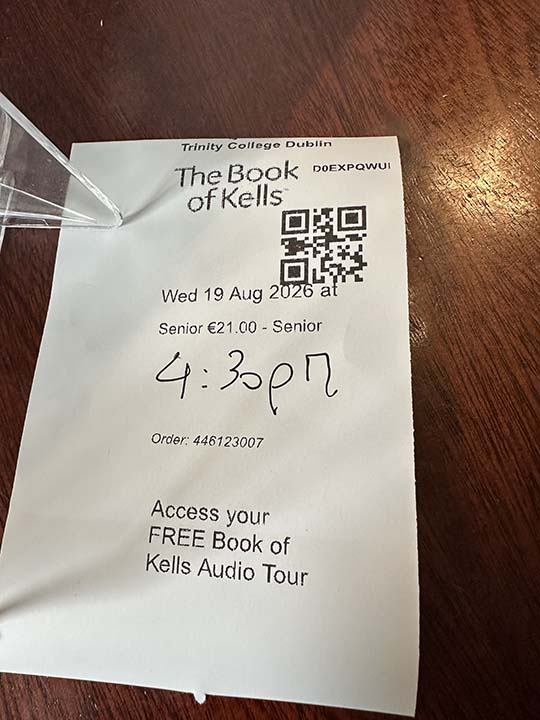
But don't worry...a few of us Road Scholars got tickets for entry tomorrow. And just after we got our tickets they sold out for tomorrow. Whew.
Then the Road Scholars began to scatter as we ventured out into the city on our own.
What would we discover?
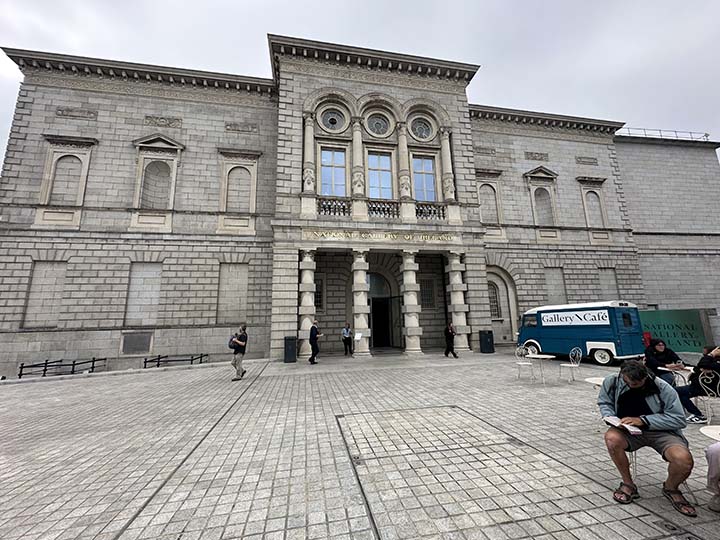
How about the Irish National Gallery? I thought I was the only Road Scholar who went here, but I learned later that Jeri and Jim did too.
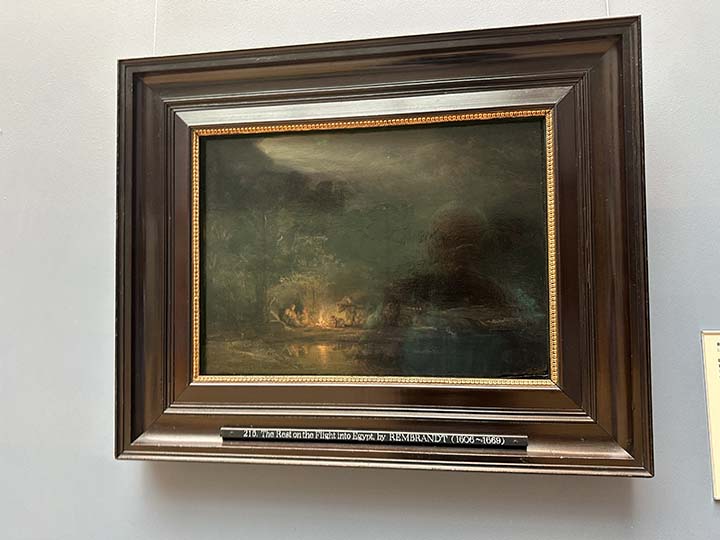
I found a Rembrandt.
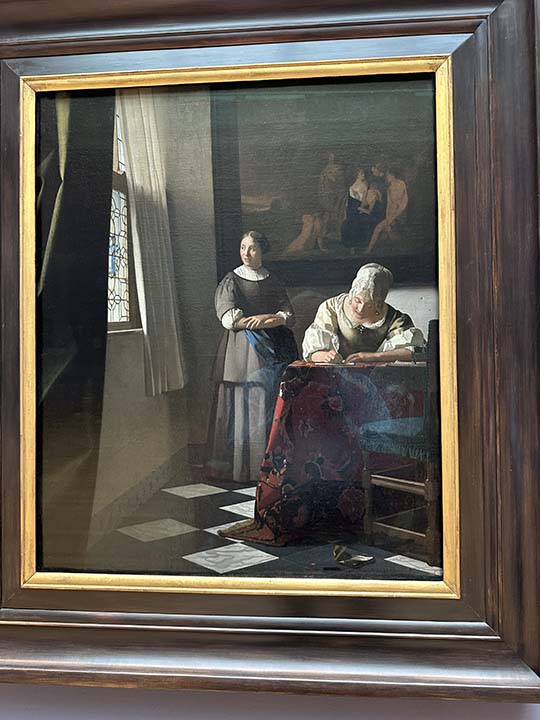
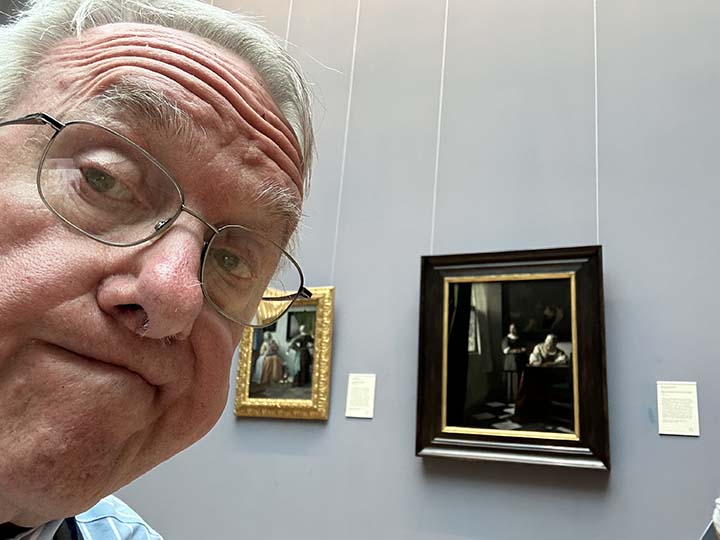
And a Vermeer: Woman Writing a Letter, with her Maid (c. 1670).
I'm always up for a Vermeer.
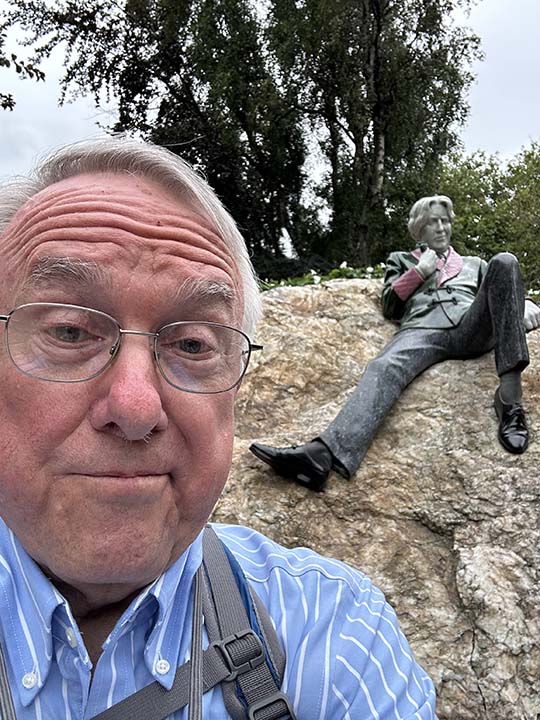
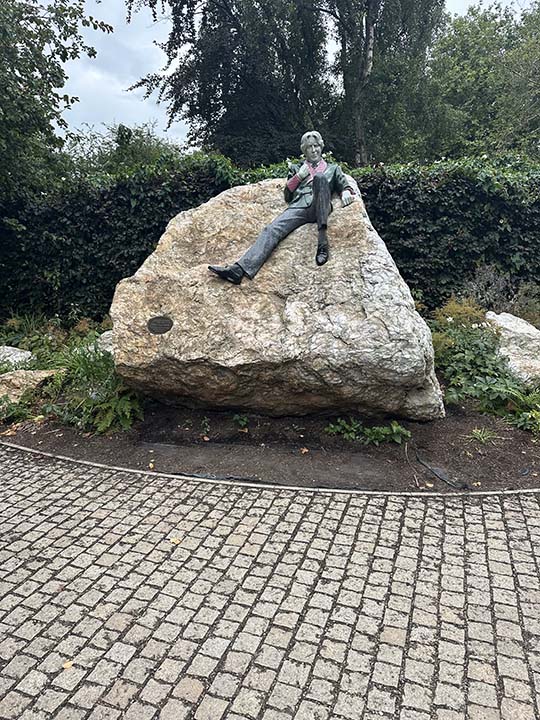
Oscar Wilde's house and garden were nearby. I found him looking a bit dissolute, if you ask me.
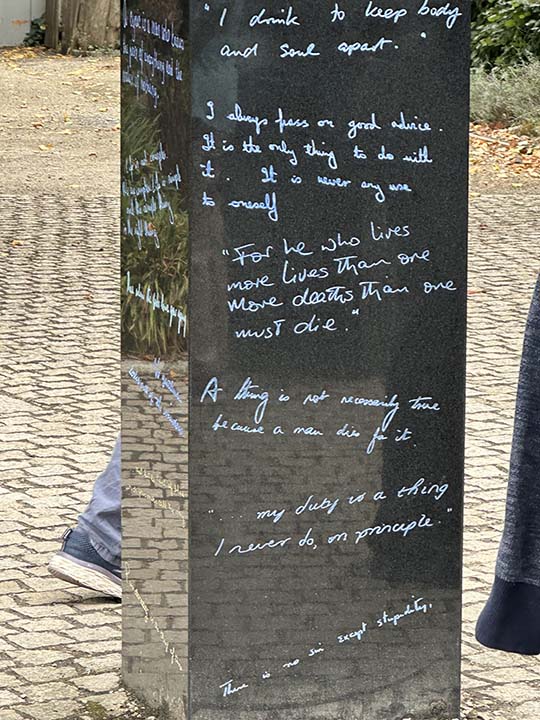
But the man did have a way with words.
We'll leave him to his witty thoughts.
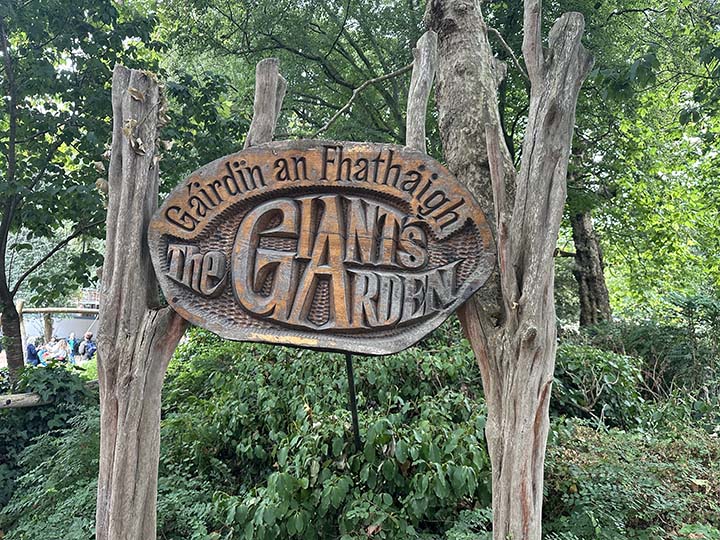
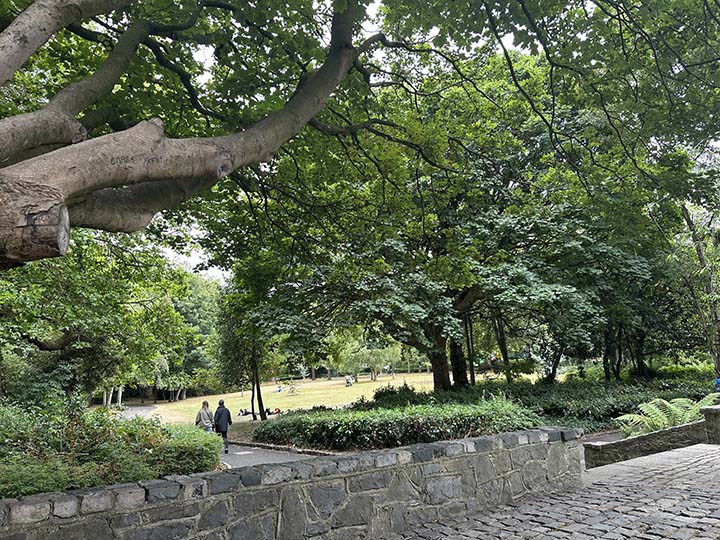
And have a look at the garden out back.
Very nice.
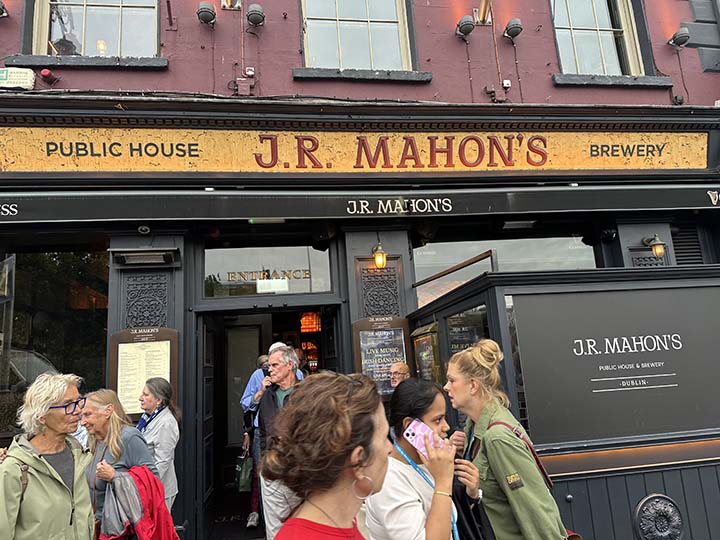
Now I need to find the pub where we'll have dinner tonight.
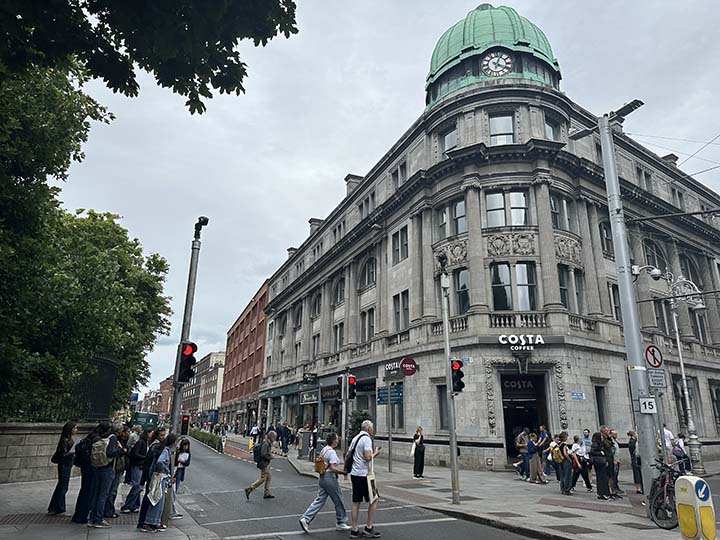
Here's a glimpse of what it was like to walk around downtown. It's a busy place.
Ah. Dinner.
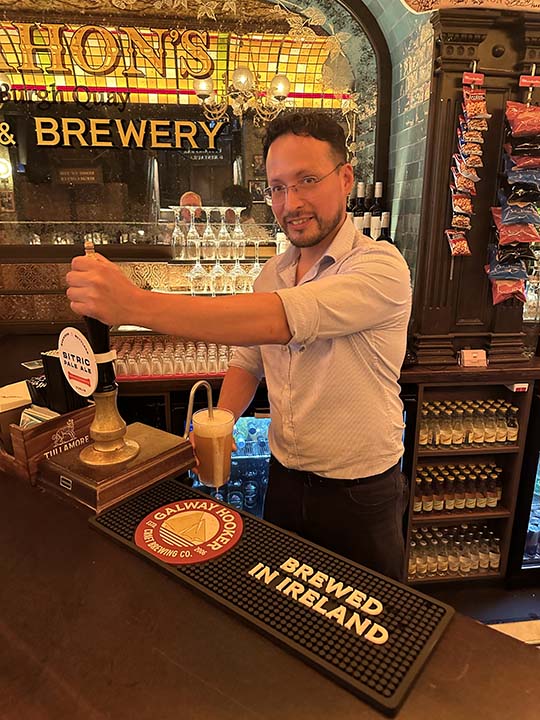
It’s an old-fashioned pub. They still pump beer manually.
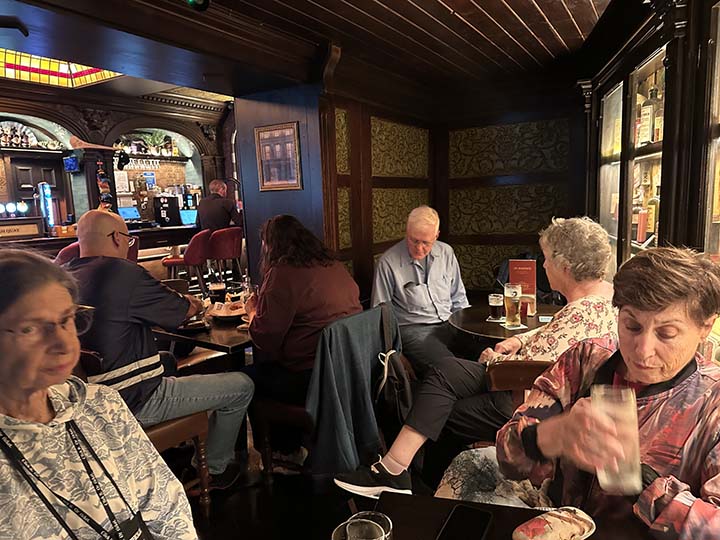
Several of the Road Scholars decided as I did to find the pub early and relax before dinner.
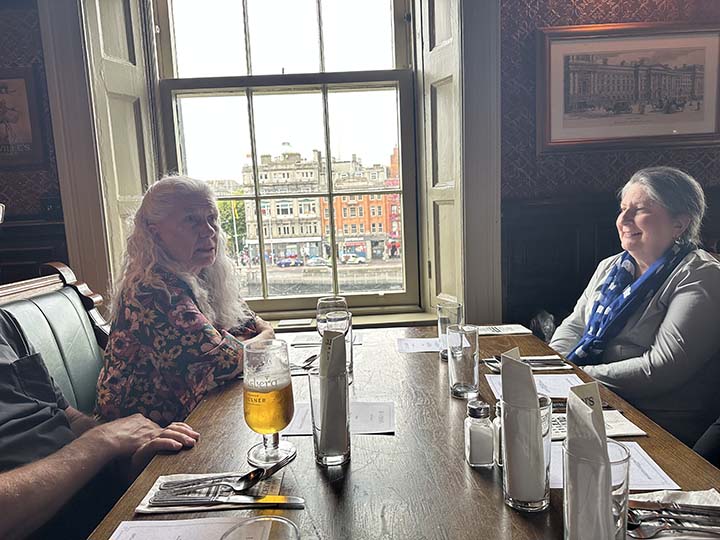
Then we found our reserved tables upstairs.
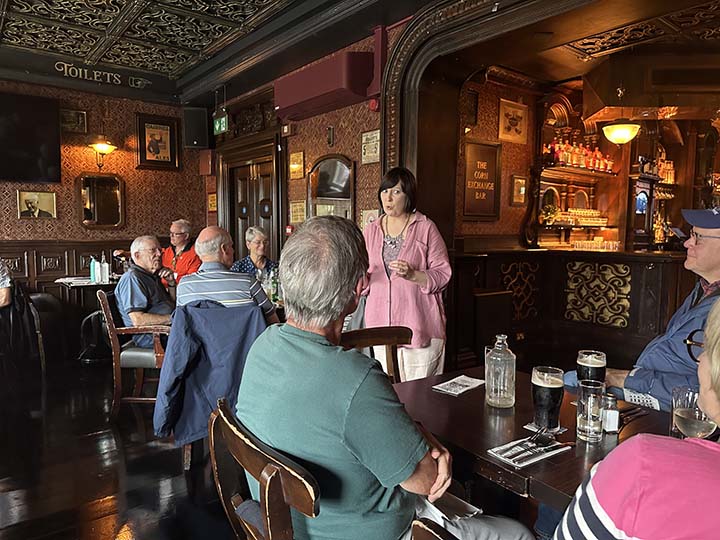
A delightful young lady entertained us at dinner.
Her name was Helena Byrne and she was a talented singer and storyteller.
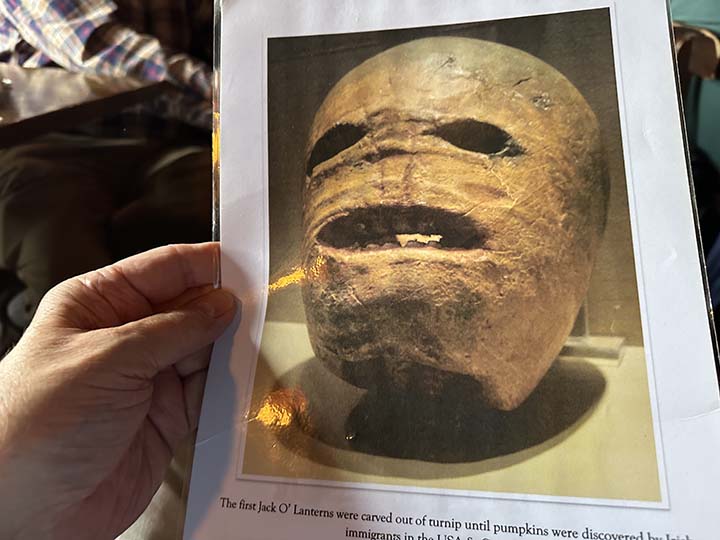
She told about the old days before the Irish had American pumpkins to carve at Halloween, so they had to make do with turnips. I don't know about you, but I think that thing is spookier than any Jack-o-lantern.
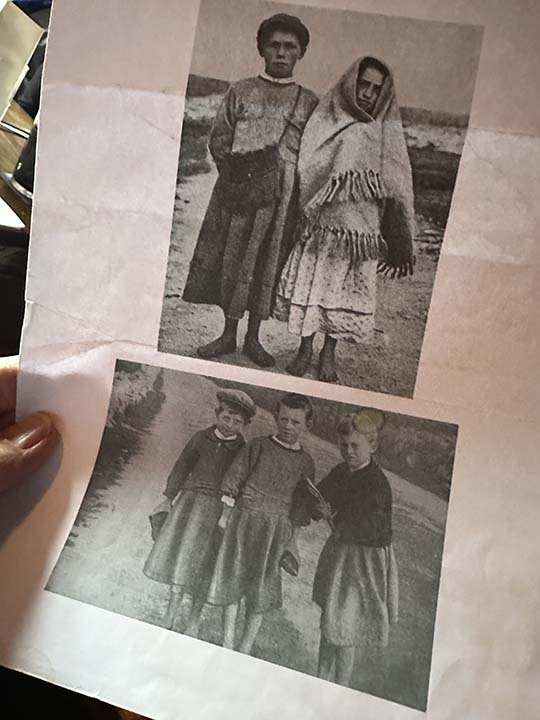
She also told how the Irish genuinely believed that fairies would swoop down and take little boys away. In 19th-century Ireland, boys often dressed as girls until around age 12 or 13 due to cultural beliefs and practical reasons. This practice was particularly prevalent in rural areas, where folklore suggested that dressing boys in dresses would protect them from fairies, who were thought to abduct male children. Helena said she has met very old men who still remember being dressed as girls to fool the fairies.
When Helena was encouraging audience participation she asked if anyone knew "Molly Malone." Well, buried somewhere back in my brain and left over from my barbershop quartet days I sang a couple of lines. Everyone laughed and soon after I returned home my fellow Road Scholar Russ from the trip posted this to WhatsApp, a social media site we were encouraged to use for sharing information. What I sang was nothing like this, but I love it! Russ is a talented guy!
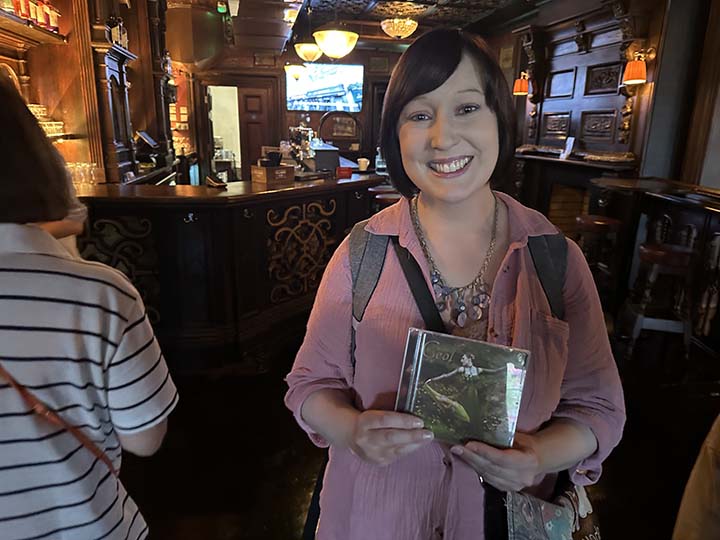
As a reward for helping with the singing, Helena presented me a CD of Irish music that she recorded. Now that was nice.
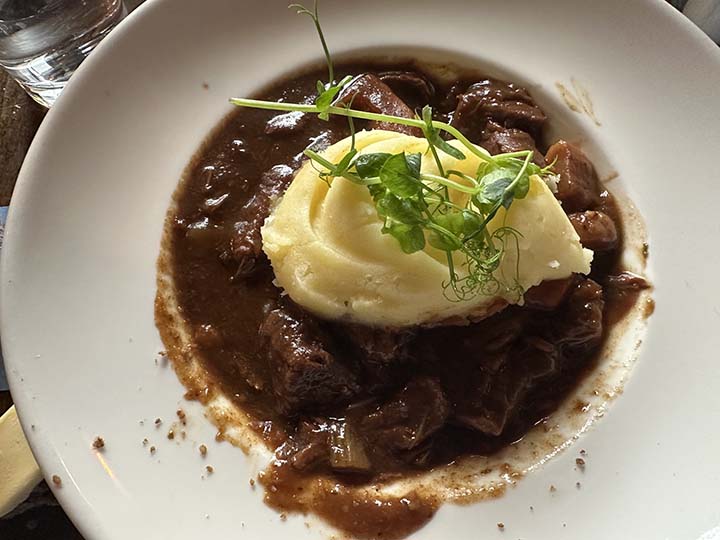
On the other hand, this was dinner.
|