|
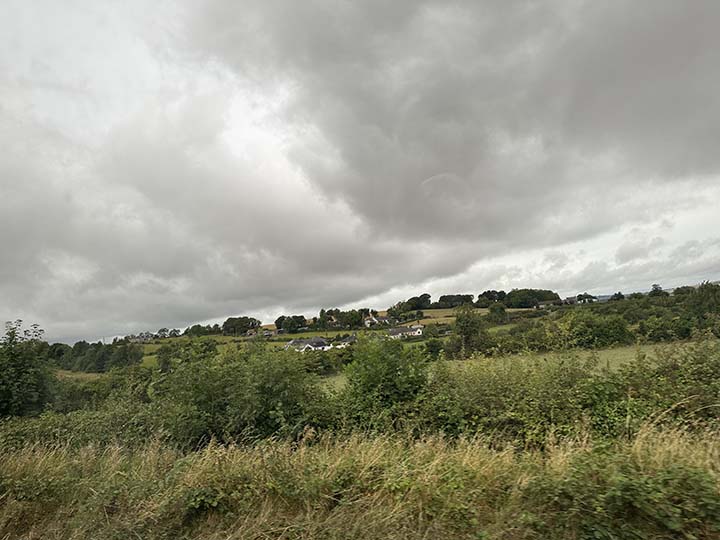
It appears that today will be cloudy with the chance of an occasional glimpse of blue sky.
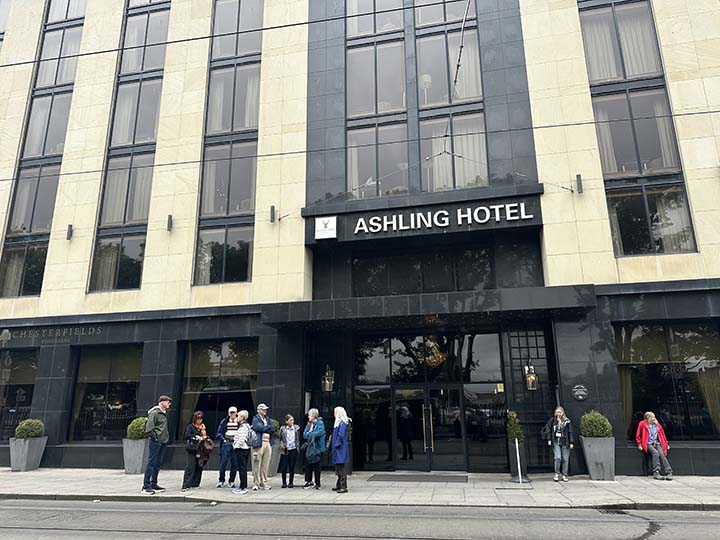
The intrepid Road Scholars gather outside their hotel as they prepare to embark on their penultimate day’s adventure.
Just another bright sunny Irish day. We are going to see an ancient burial ground.
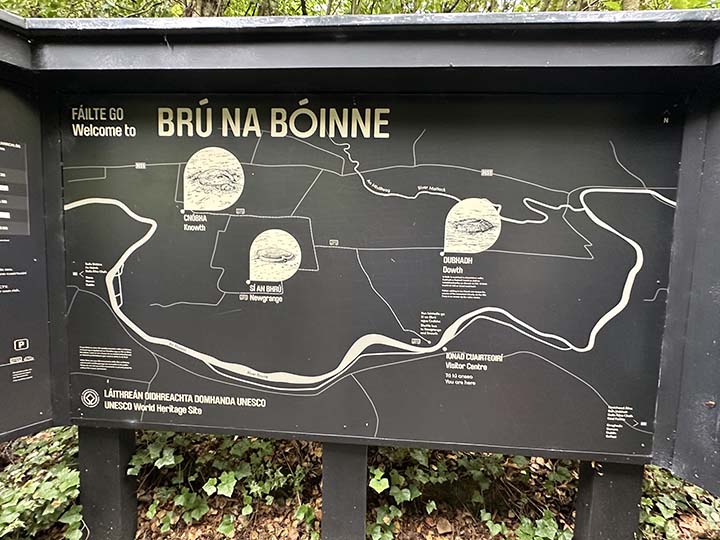
Brú na Bóinne (broona boyne) translates from Irish to "the Mansions or Palaces of the Boyne.” It is an ancient monument complex and ritual landscape in County Meath, Ireland, located in a bend of the River Boyne. It is one of the world's most important Neolithic landscapes, comprising at least ninety monuments including passage tombs, burial mounds, standing stones and enclosures. The site is dominated by the passage tombs of Newgrange (Sí an Bhrú), Knowth (Cnogbha) and Dowth (Dubhadh), built during the 32nd century BC. Together these have the largest assemblage of megalithic art in Europe. The associated archaeological culture is called the "Boyne culture".
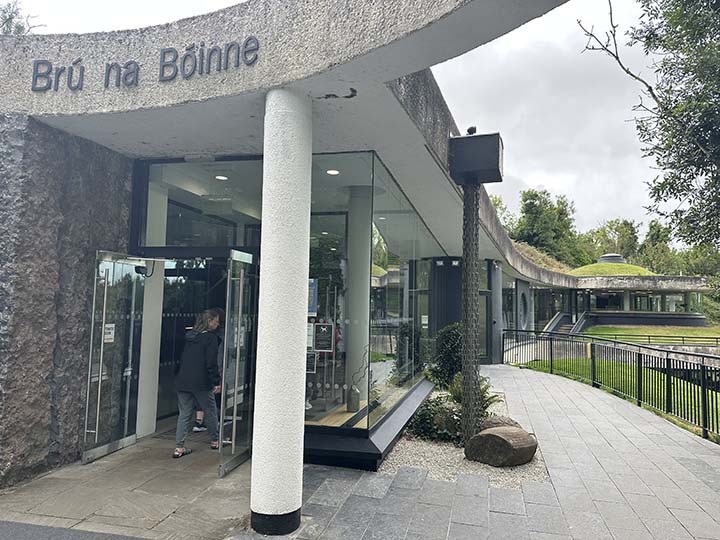
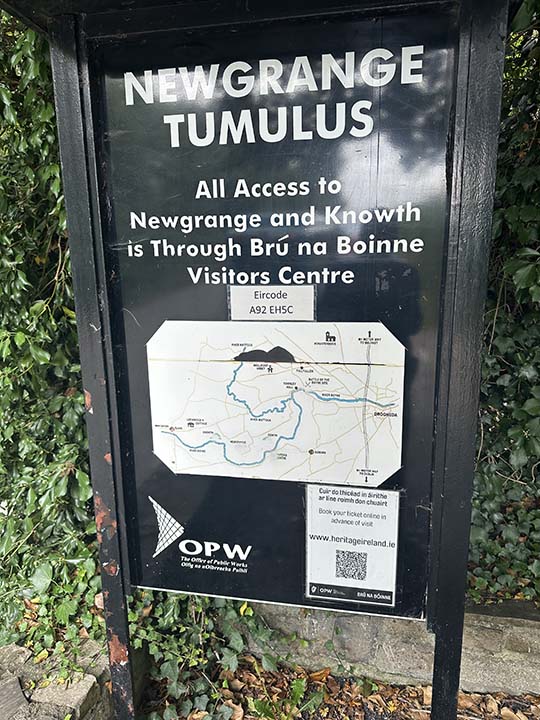
There's a fancy visitor center here.
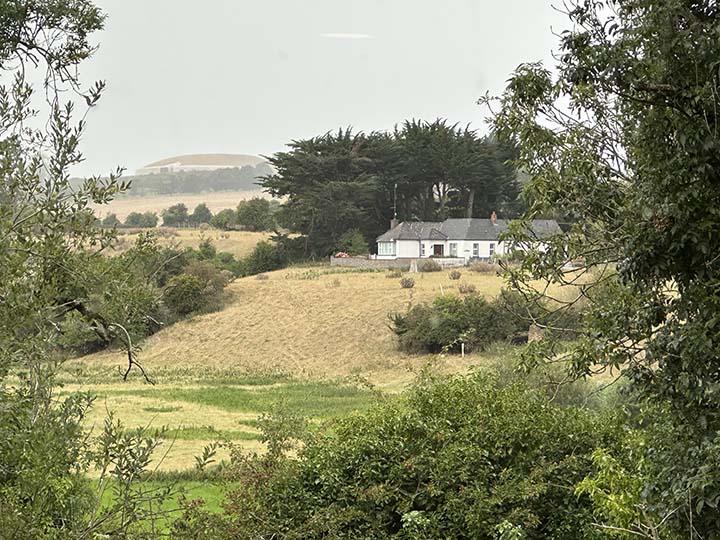
And there's pretty scenery to enjoy.
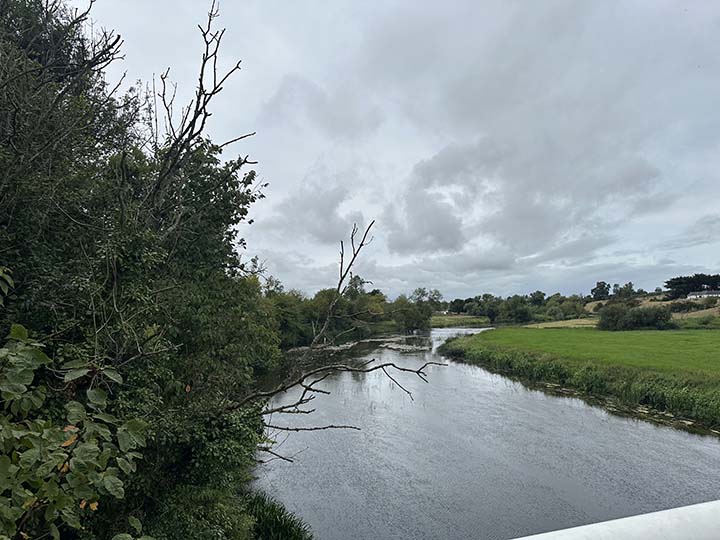
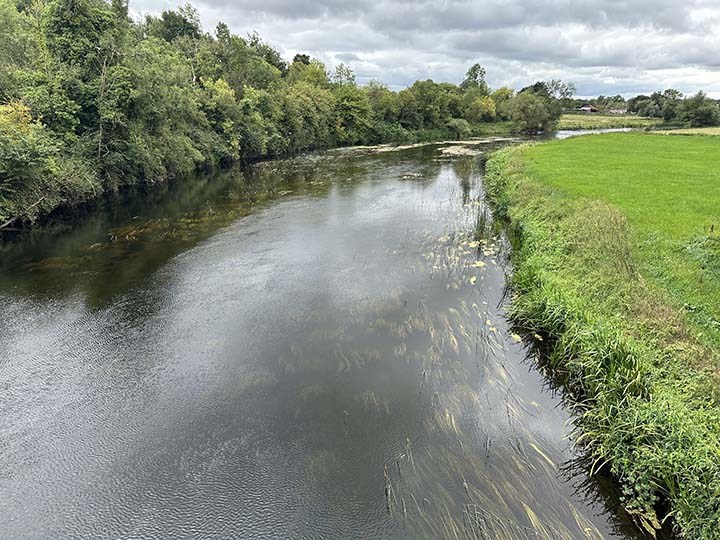
And that is the River Boyne that
figures so prominently in Irish history. Hardly a day has gone by
that a guide has not mentioned “the Battle of the Boyne.“
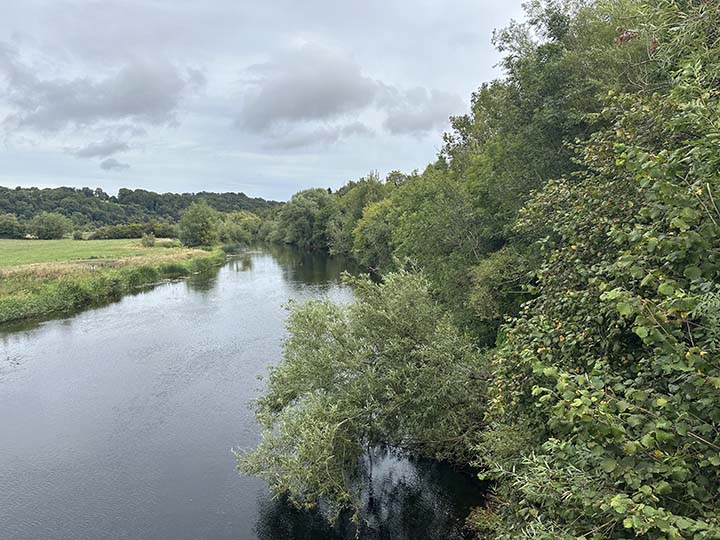
It also makes a pretty picture.
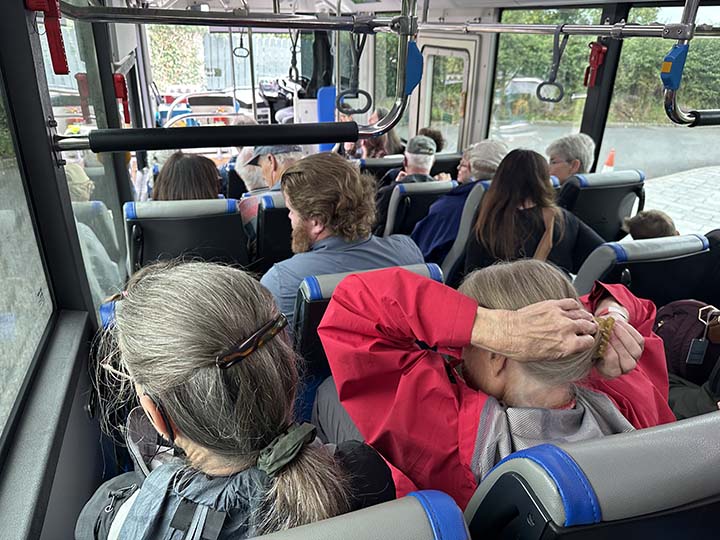
We are taking a bus to see the Brú na Bóinne burial mounds.
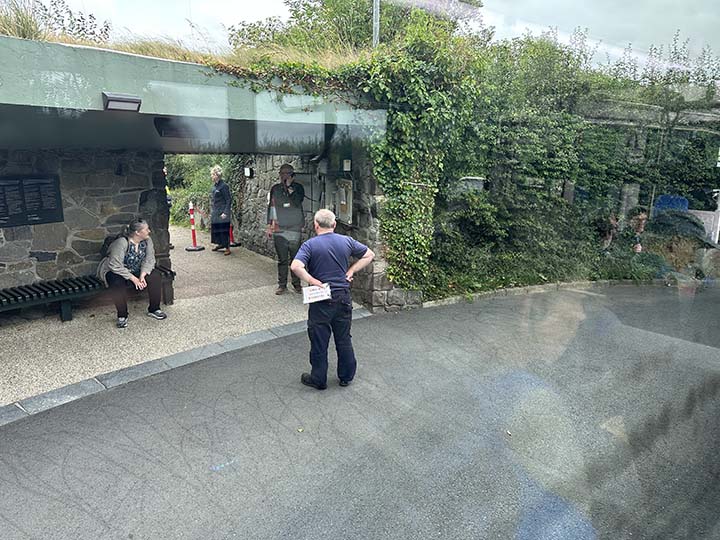
And here we wait for another bus.
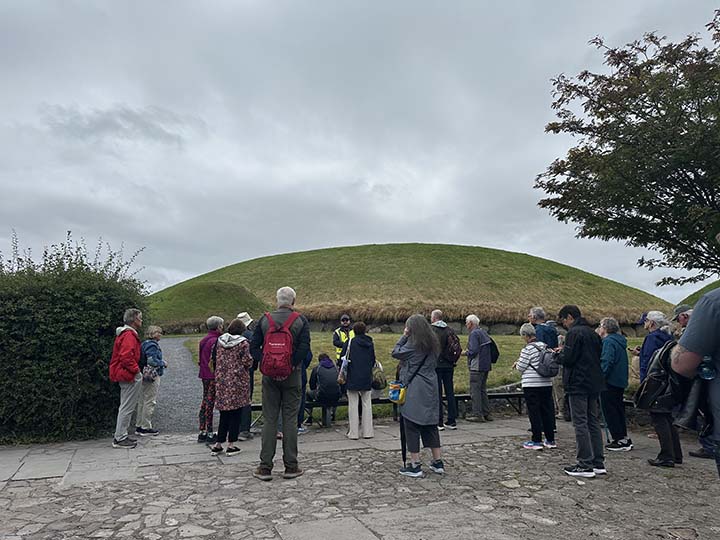
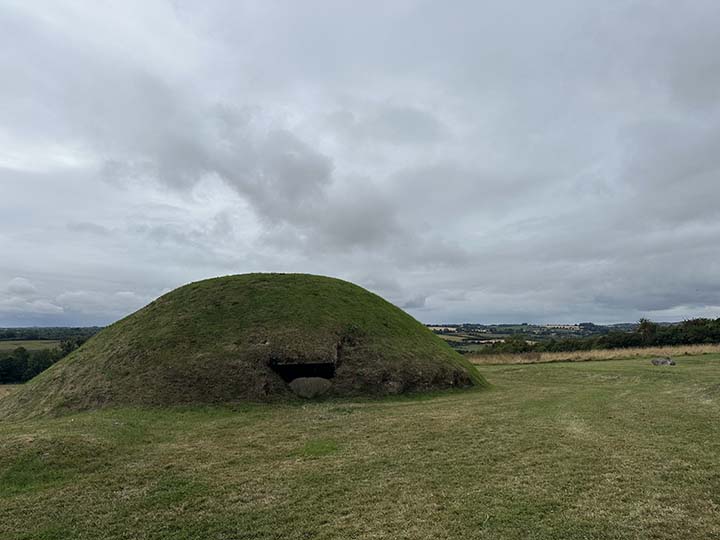
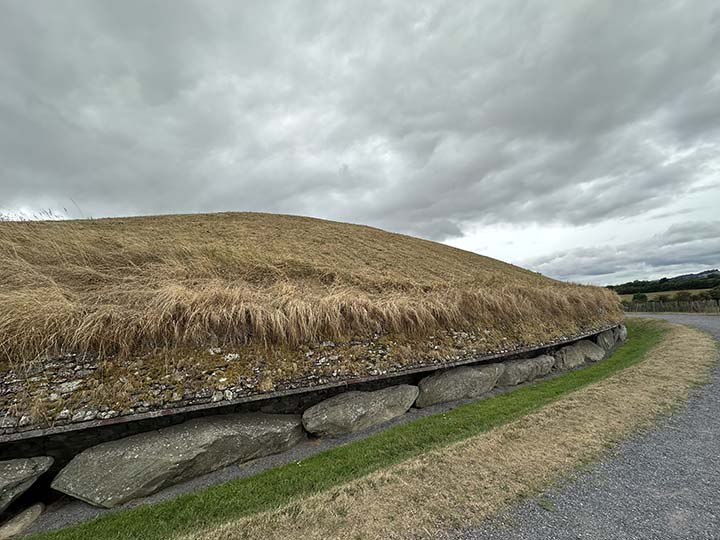
Now that is an impressive burial mound.
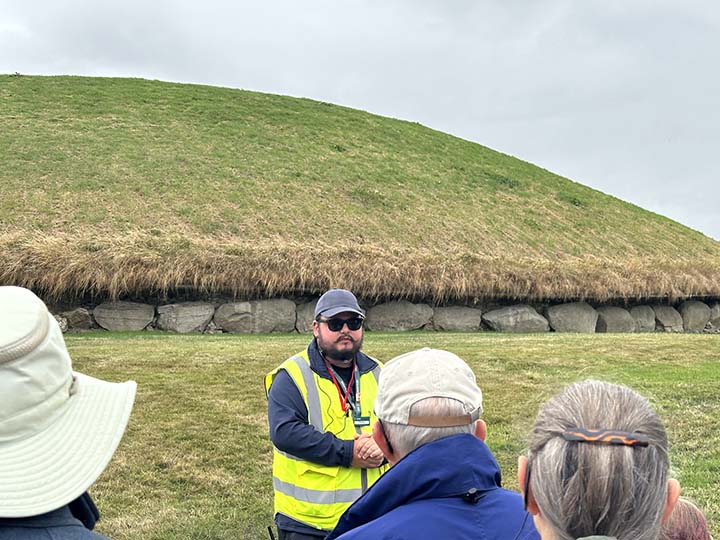
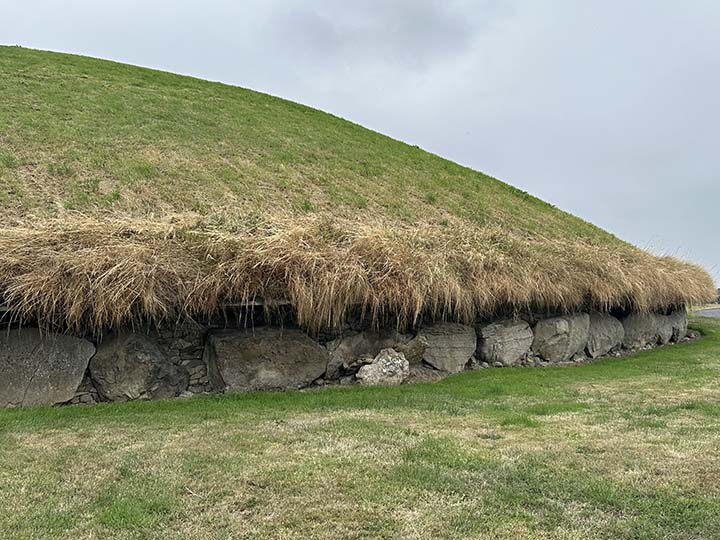
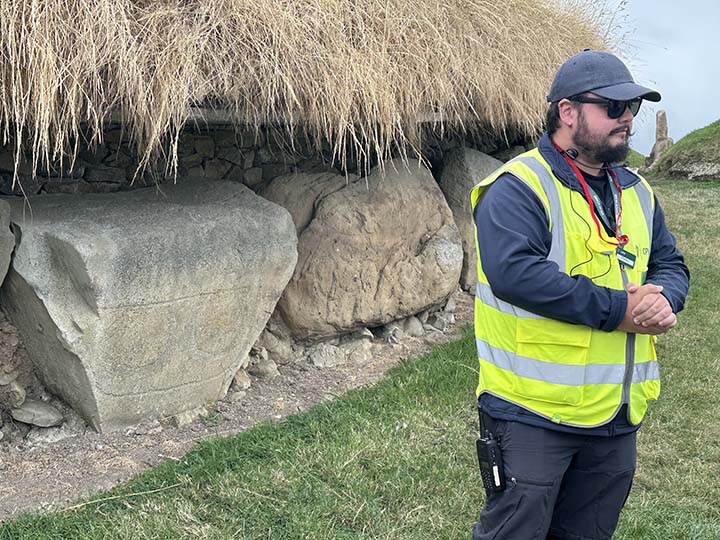
This is the large central mound at Knowth (kuh-NOATH). Slightly larger than Newgrange, this site features a massive central mound with two opposing passage tunnels (east and west) aligned with the equinoxes, surrounded by about 18 smaller satellite tombs. Our friendly guide is telling us all about it.
All this is very old.
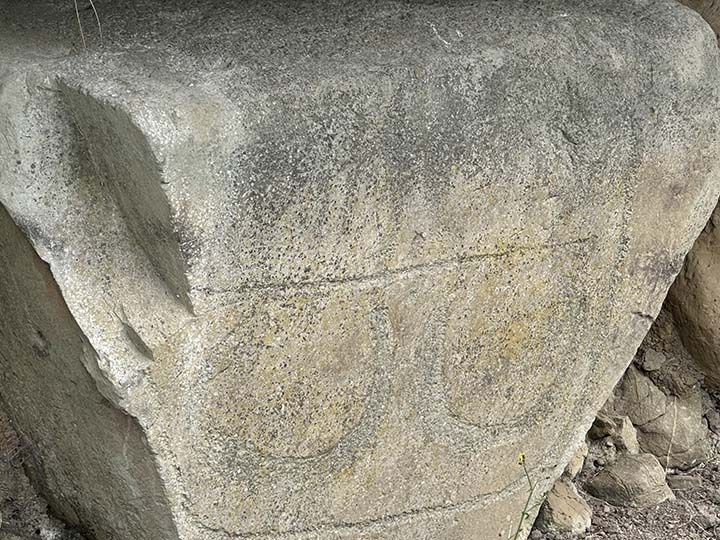
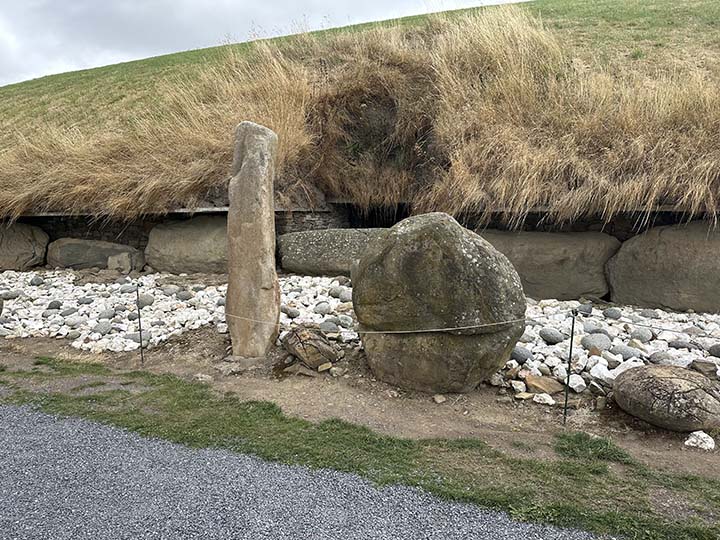
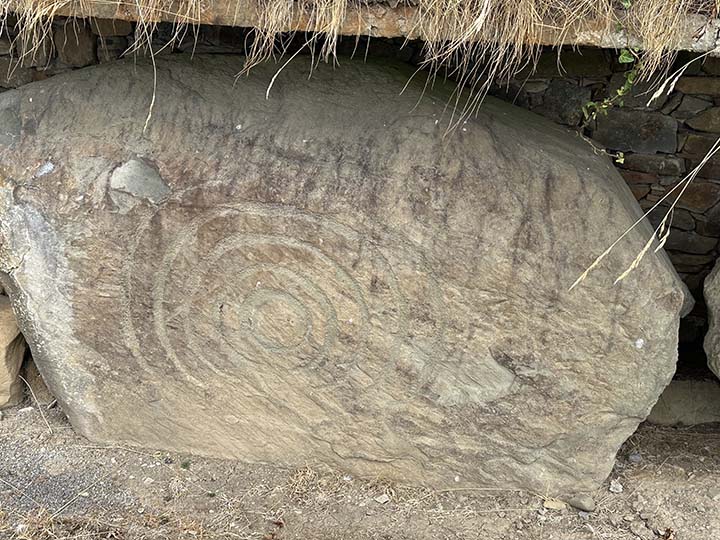
These stones with their carvings predate the pyramids by about 2000 years.
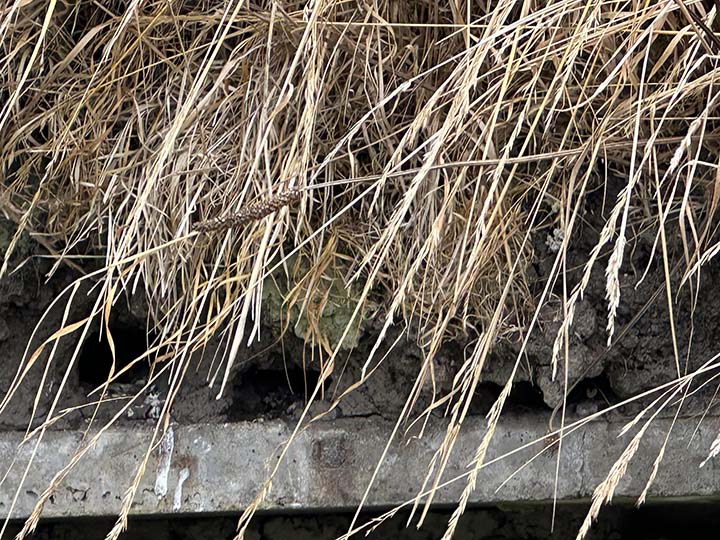
He says we should look closely under the grass.
Little bower birds like the mound and they build their nests in it.
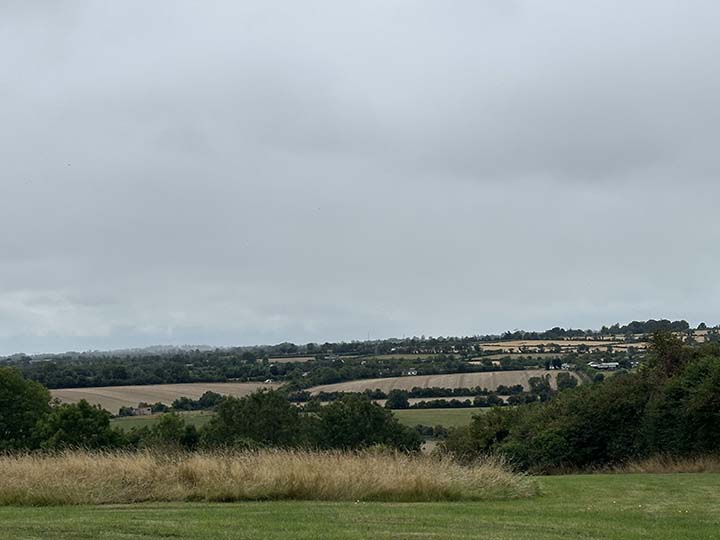
It's a gray day but still the view is nice.
At the equinox, the sun casts a shadow from that tall stone onto the opening in the mound. The opening leads into a passage that goes almost to the center of the mound. There is another passage on the other side that almost but not quite meets it. There are burial chambers at the ends of each of the passageways.
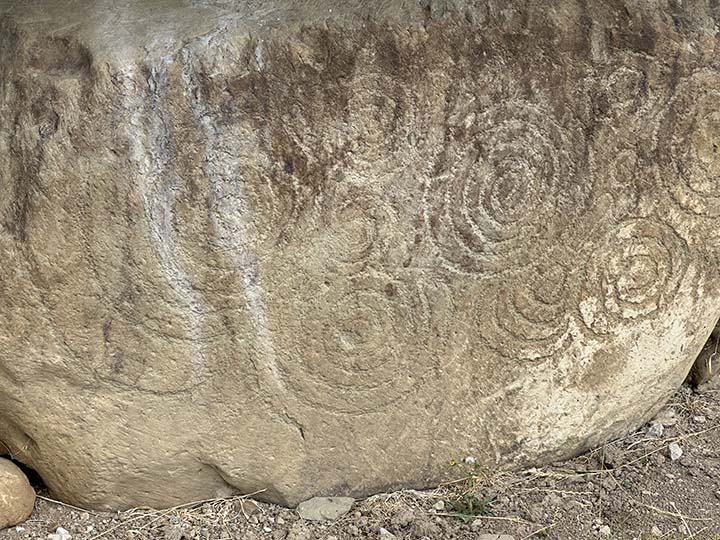
These are 6000 year-old inscriptions and nobody knows quite what they mean.
Maybe something to do with stargazing?
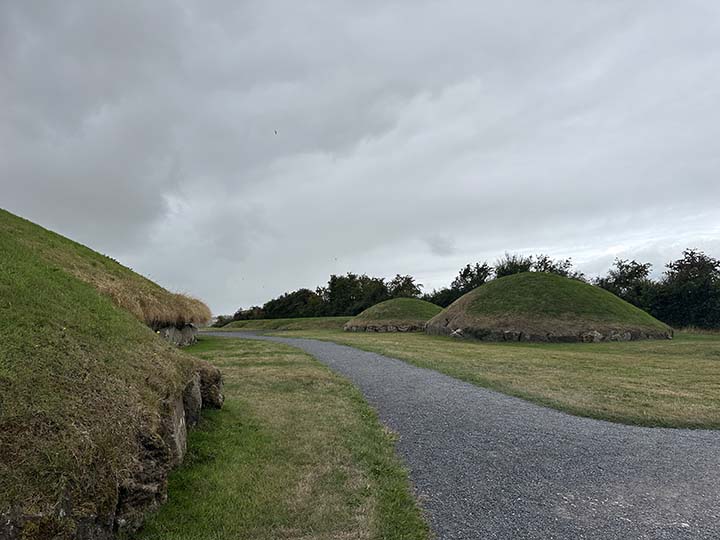
There are big mounds and there are some less than big mounds.
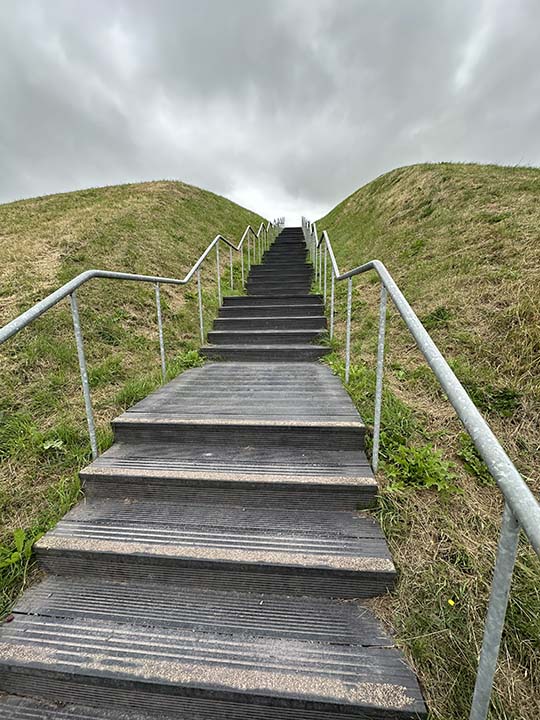
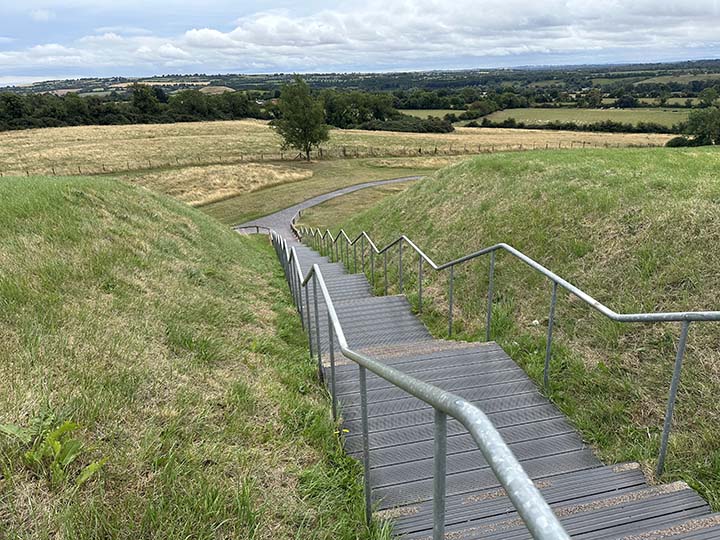
There are lots of stairs in Ireland. These lead to the top of the mound.
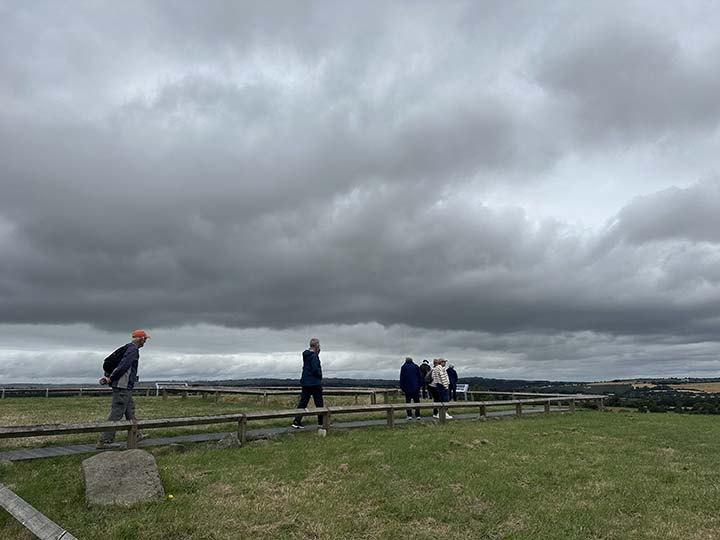
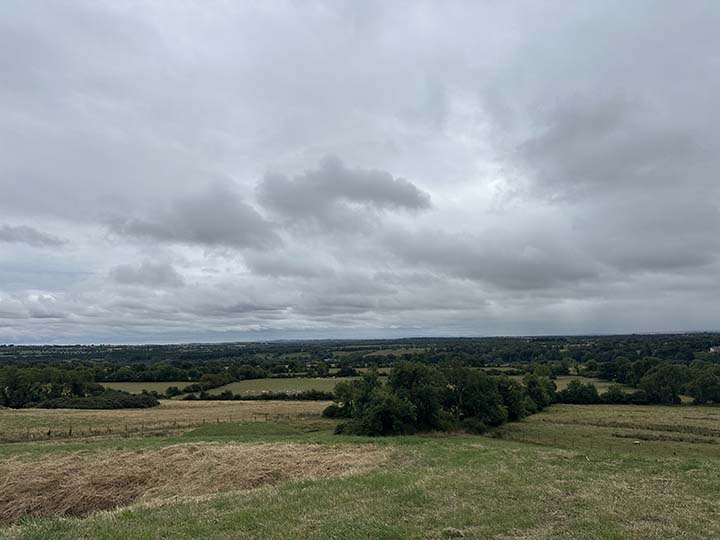
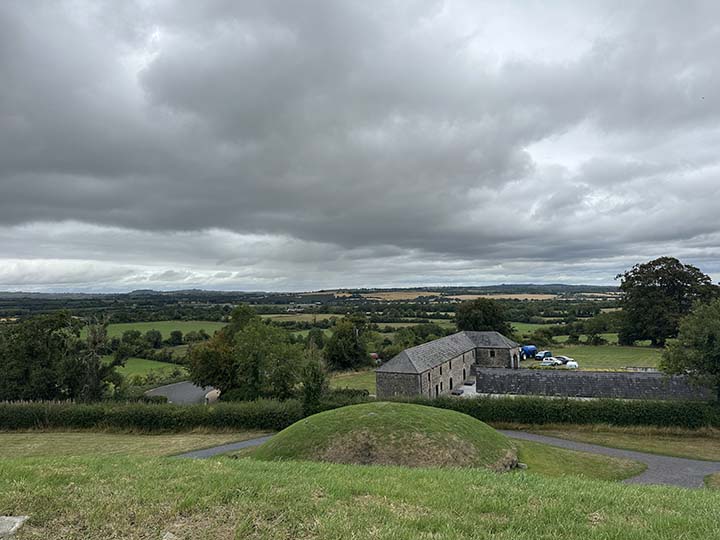
And here is the view from up there.
Even on a cloudy day, Ireland is beautiful.
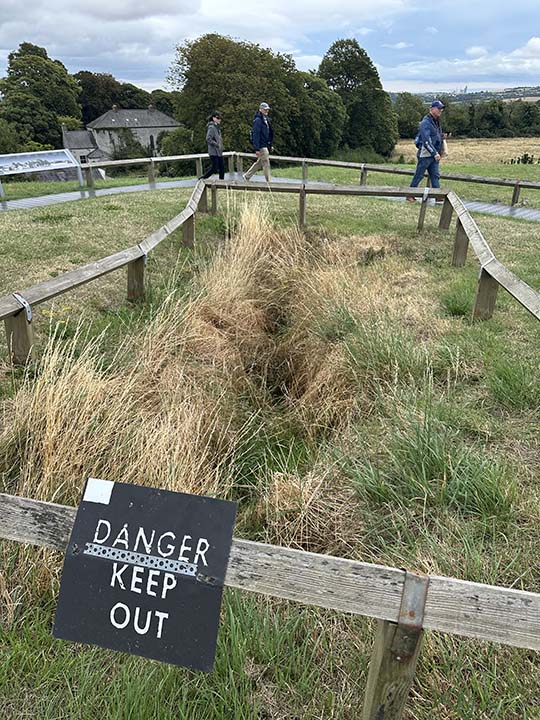
Apparently, you can jump in there and fall into one of those burial chambers. I preferred to follow the instructions written on the sign.
I could stand up here and gaze at Ireland all day.
But stairs await.
I took a little walk all the way around the mound. Nothing special to see here except some more little mounds.
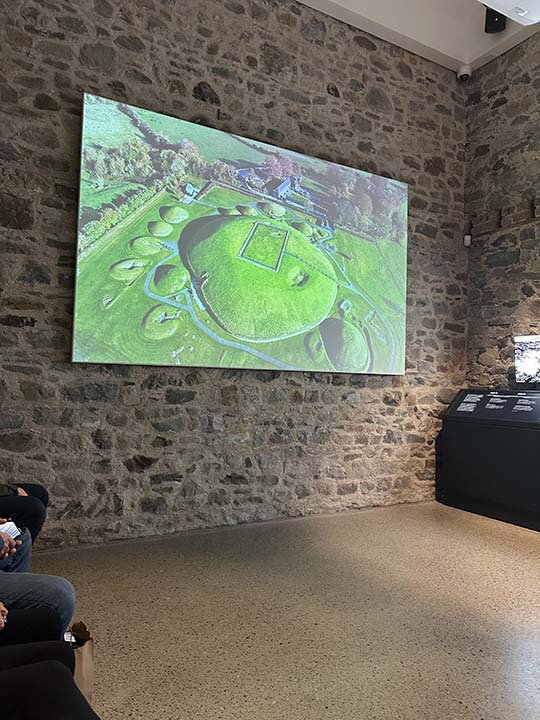
We watched a movie that illustrated the area as viewed from above.
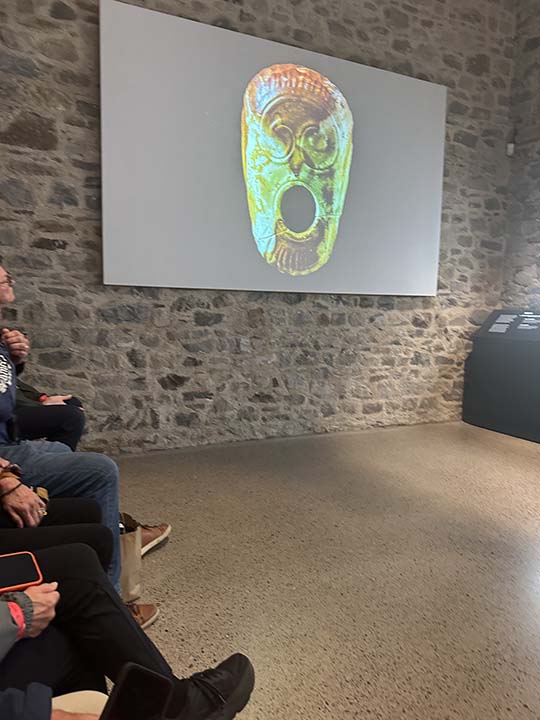
These mounds were pillaged in the 19th century, but even in the 20th century there were still treasures to be found. Here is a burial mask from about 5000 years ago.
Now lets see another area.
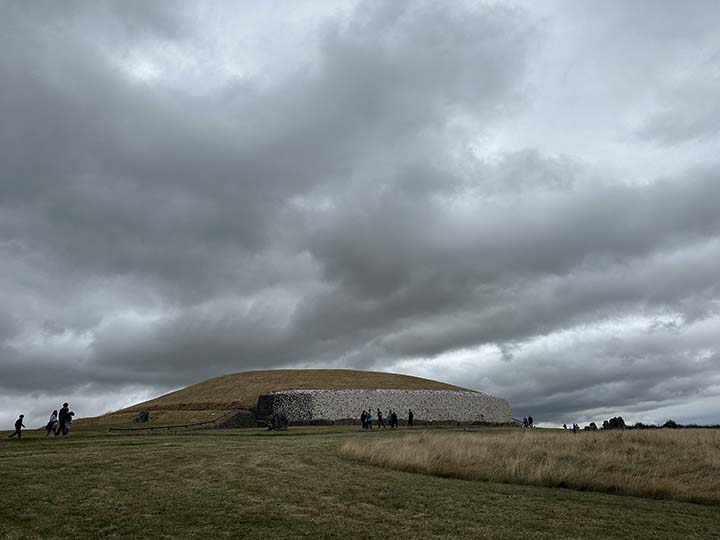
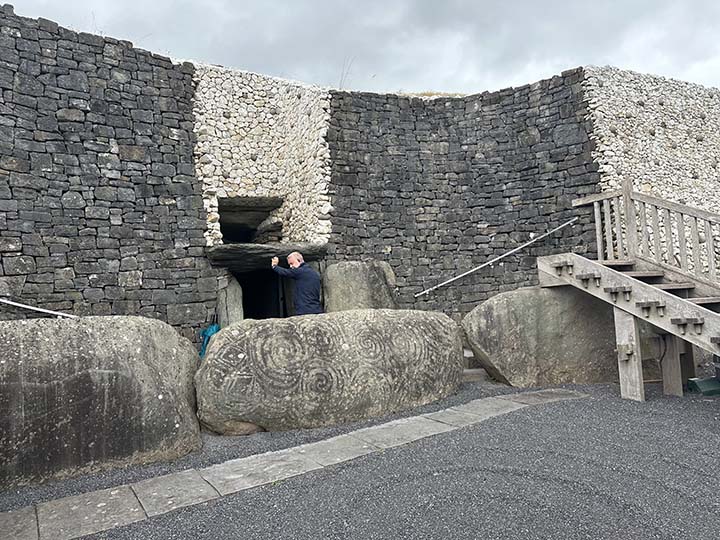
We rode the bus to another mound. Most people call this one Newgrange for some reason, but the proper name is Sí an Bhrú. Maybe Newgrange is easier to pronounce.
We are going inside this one.
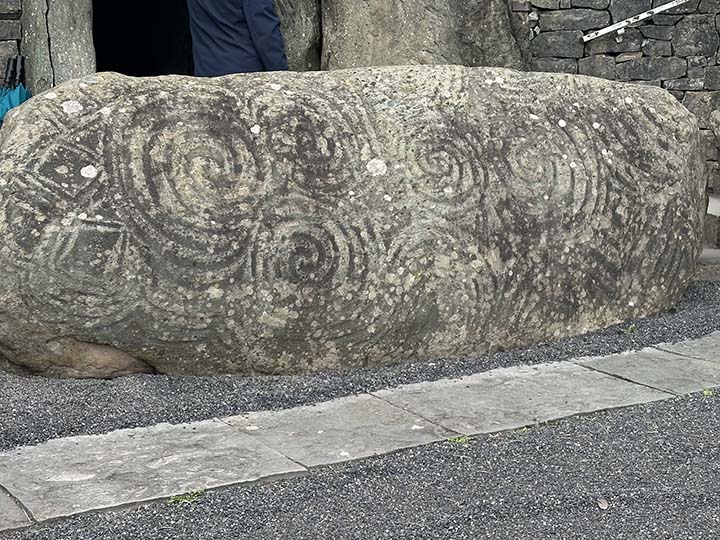
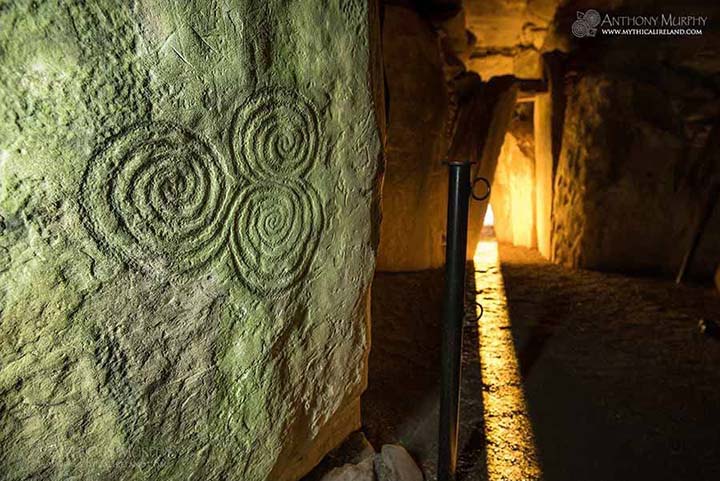
More crazy carvings. Some think the artist had been eating mushrooms. But if others are right about this showing stars in the sky you have to admit it predates Van Gogh by a few thousand years.
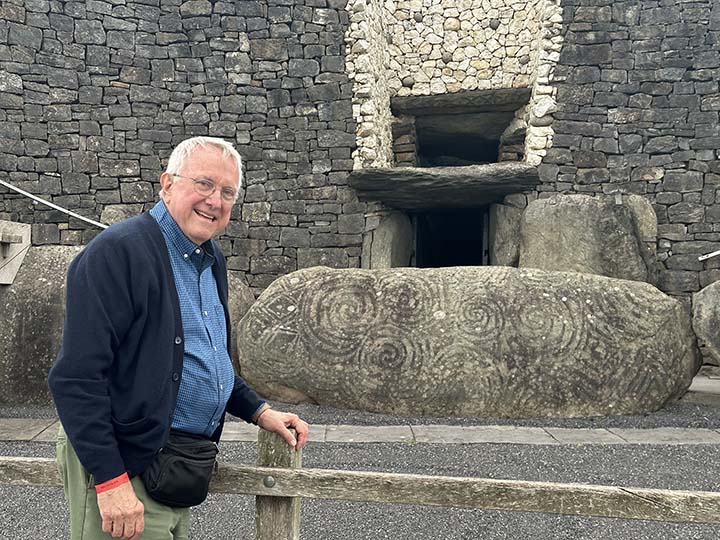
That’s me and some mysterious Neolithic writing. I think it's a Starry Night.
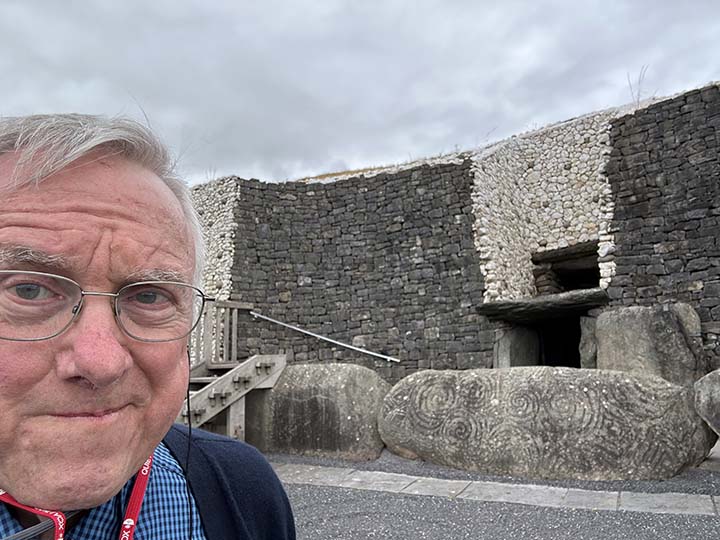
Somebody offered to take my picture with the Starry Night rock. I guess this shot is better than the selfie. Hold in your belly, Bill.
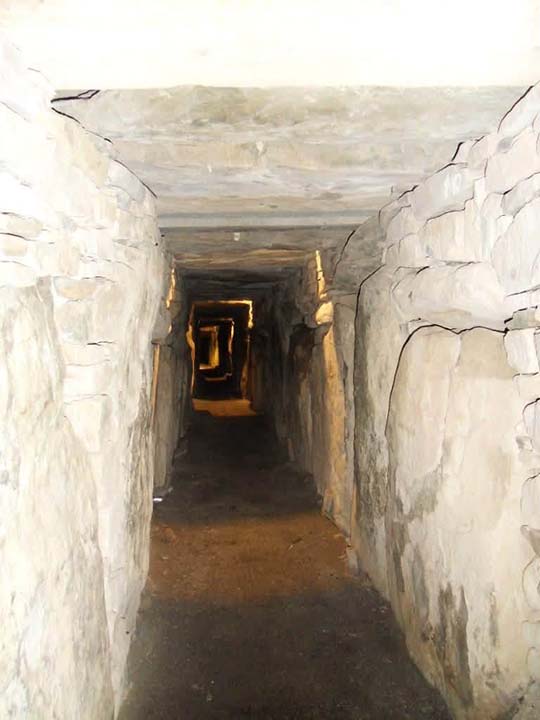
They didn’t allow photography inside, so I downloaded this picture from the Internet. This is the passageway to the chambers in the middle of the mound.
Our guide pointed out more carvings and then turned out all but one of the lights so we could see what it’s like at the equinox when the sun shines through the open door.
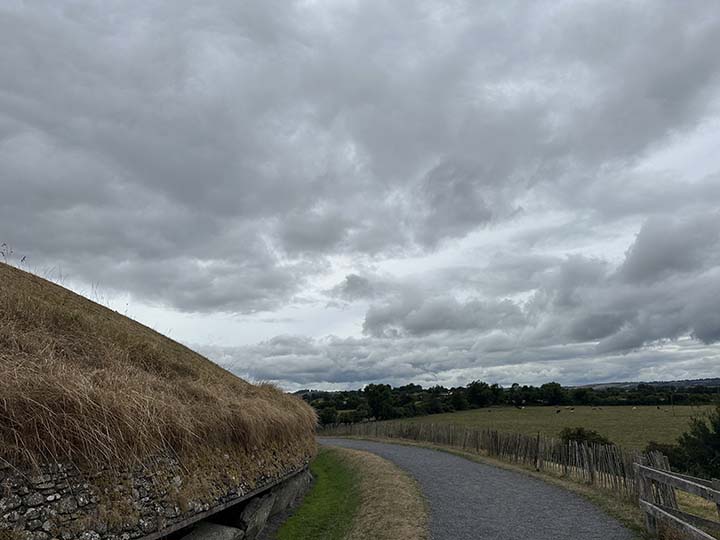
Lets take a little walk around this mound. It's big and it's old.
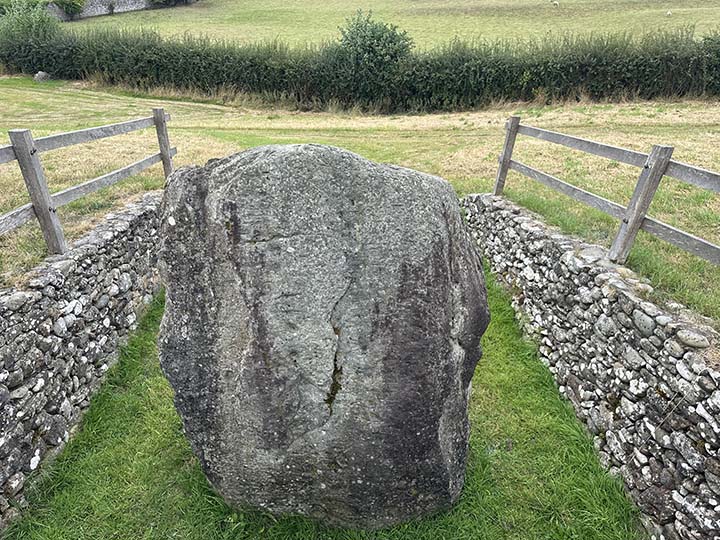
That's a standing stone. Significance? Your guess is as good as anybody's.
But it's peaceful here.
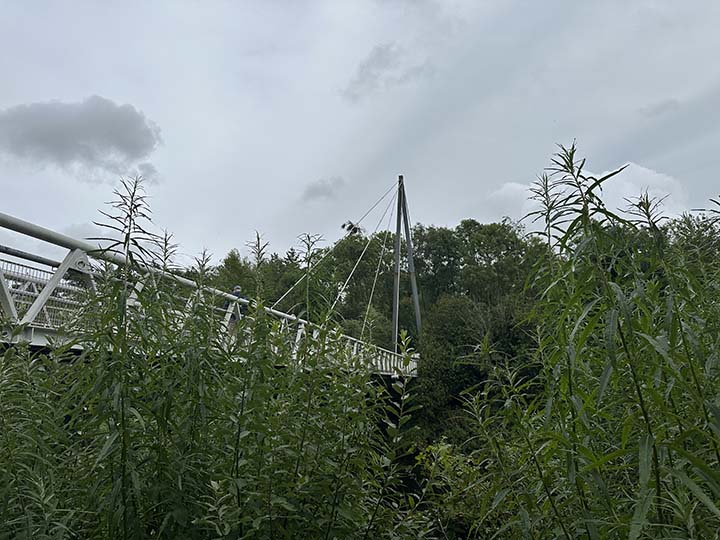
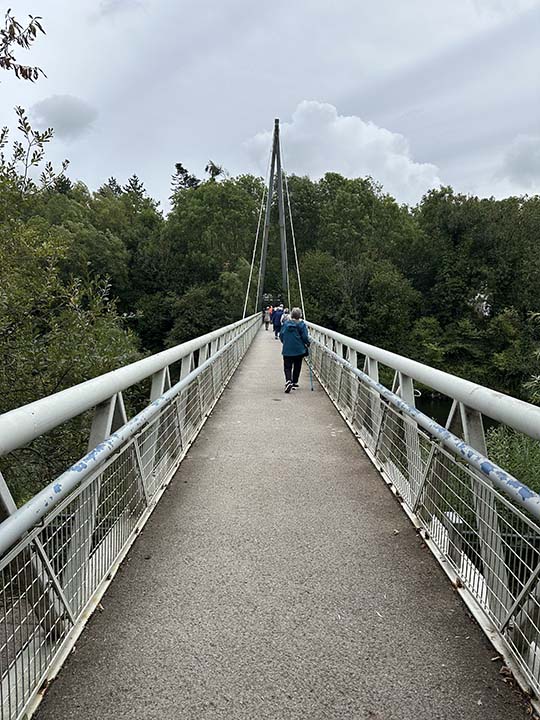
The pedestrian bridge over the Boyne.
It's a picturesque bridge.
And that was pretty much it for today. No complications, just an interesting outing.
|