|
Did it rain on our final day? Of course it did. But we had some bright sunshine too, so Irish weather didn't disappoint.
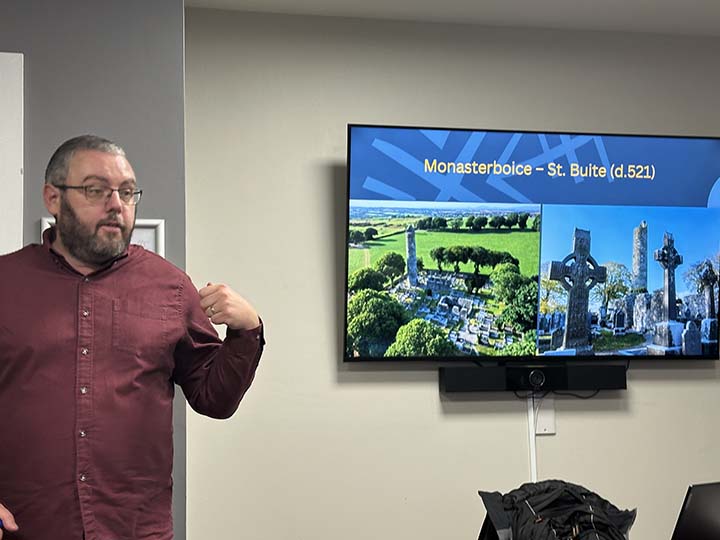
We started the day with the lecture by one of the managers at Dublinea.
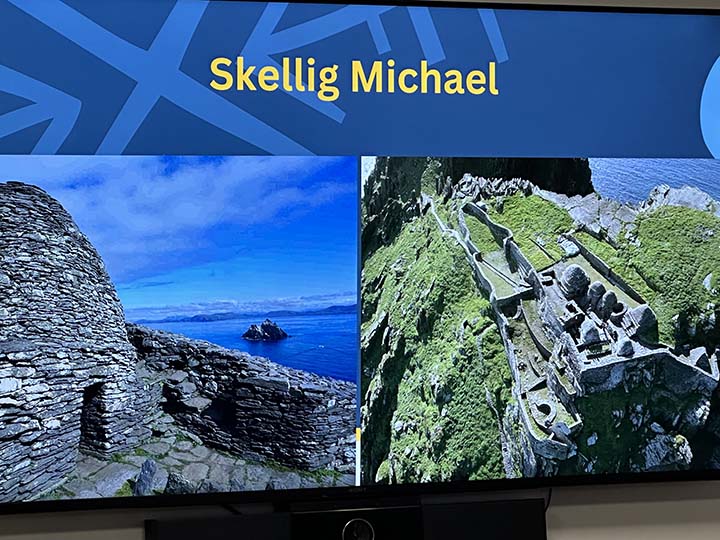
I was so happy he showed us Skellig Michael, a little island off the Irish coast. I mentioned it earlier, on the day we drove around the Ring of Kerry. It was the Star Wars movie location where Luke Skywalker had become a hermit in his later years. But the real story of the real hermits who lived there is just as good. Our speaker told us all about this place — how it was populated by hermits who wanted to live in a place removed from most others, and by anchorites who wanted to be absolutely alone. He told us that beyond the main monastery there was a treacherous path that involved jumping from one rock over a chasm to another rock. If you slip, you plunge into the north Atlantic. Anchorites would disappear up there and depend on hermits to toss them some food occasionally until eventually no one ever heard from them again. The Rock: It’s a hard place.
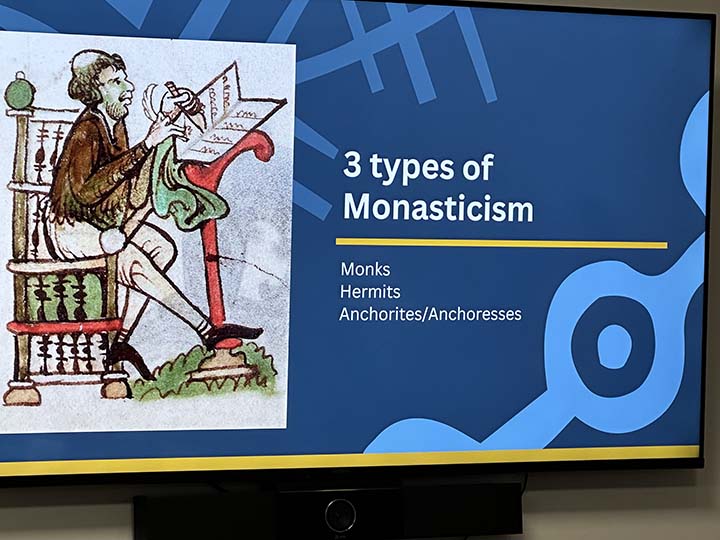
He talked about the monastic tradition in Ireland, and his presentation was fascinating. For instance, I didn't know all this. Did you know all this? Monks
Hermits
Anchorites
As Brendan says, "Every day is a school day."
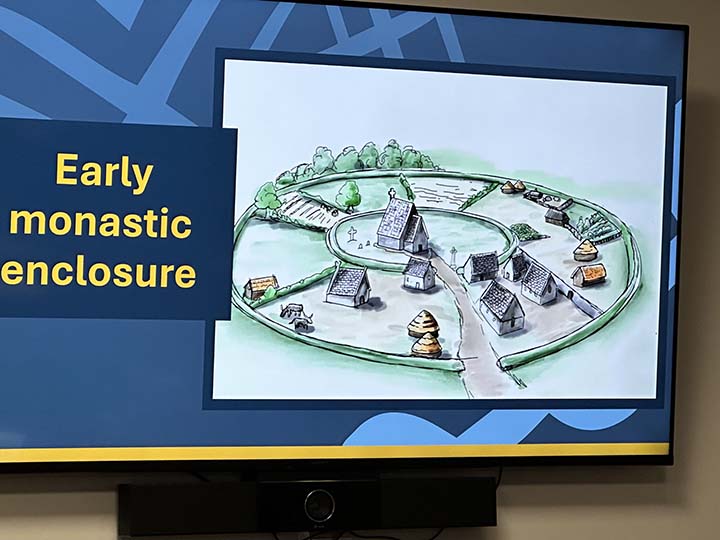
Here's an illustration of an encampment where the ancient Irish monks lived.
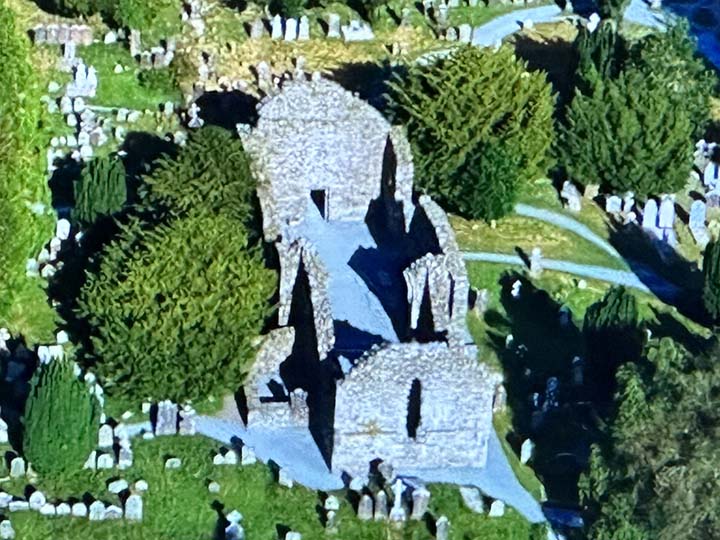
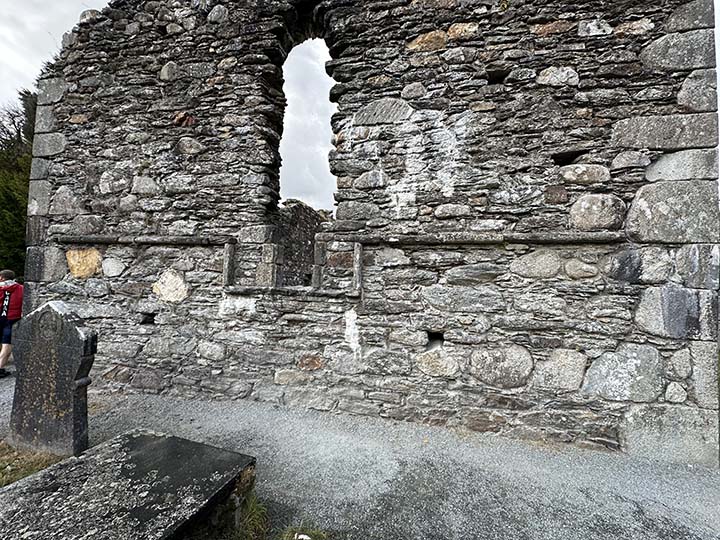
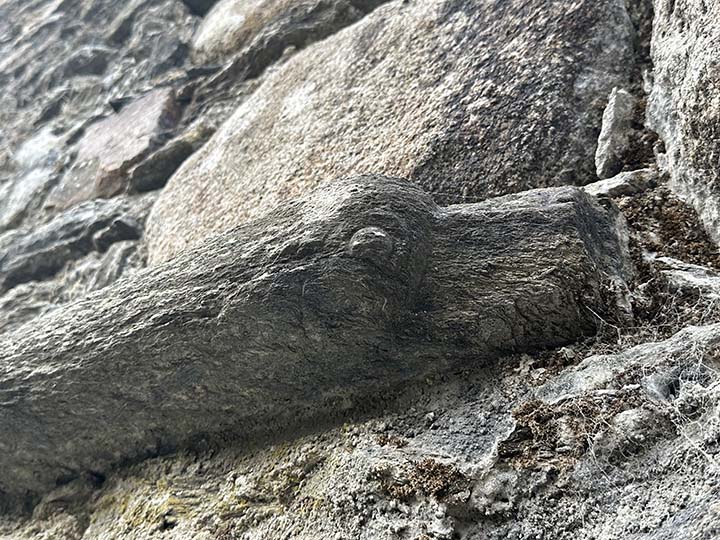
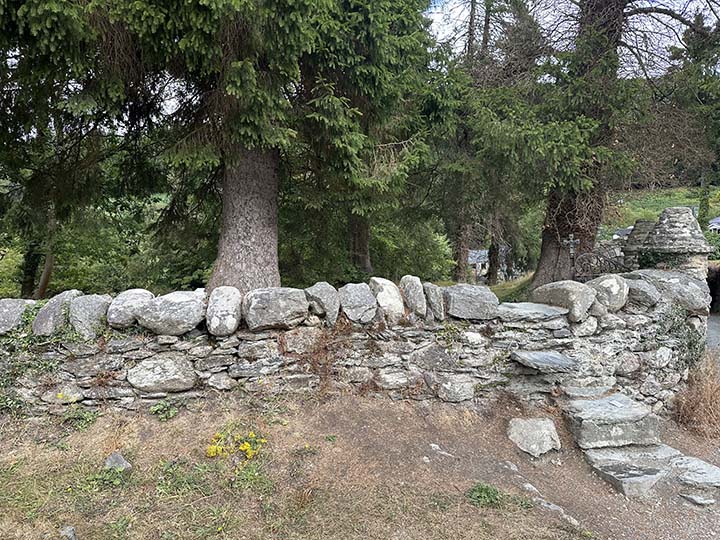
This is a picture he showed of Glendalough (glenda-lock), an ancient church complex we will visit later in the day. He told us to be sure to look for the snake in that wall closest to the bottom of the picture. He said the snake would be looking at us.
So off we go on our final bus ride of the trip.
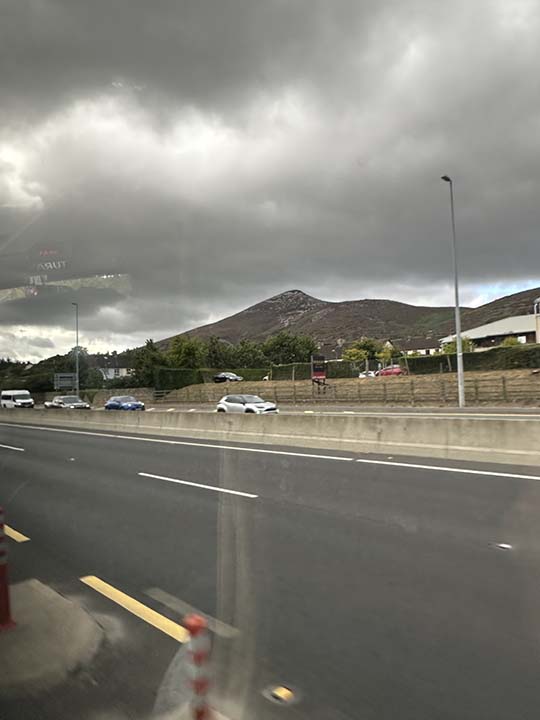
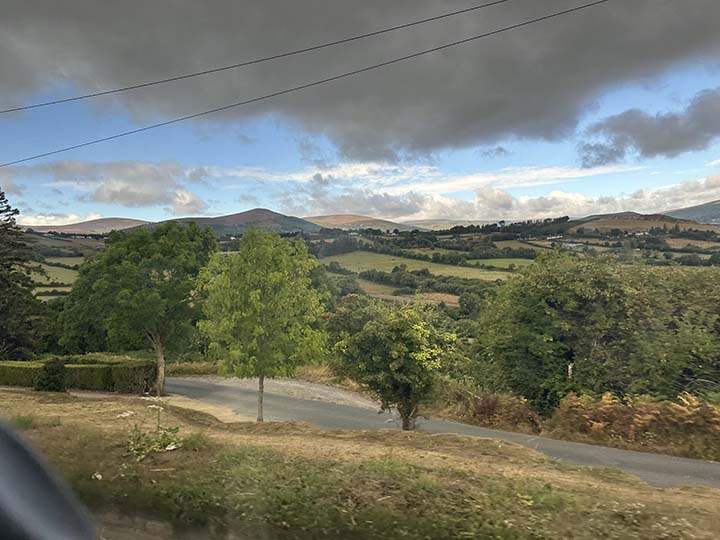
Just another lovely Irish day. They call that hill “Sugarloaf,” according to Brendan.
Blue sky! Hallelujah!
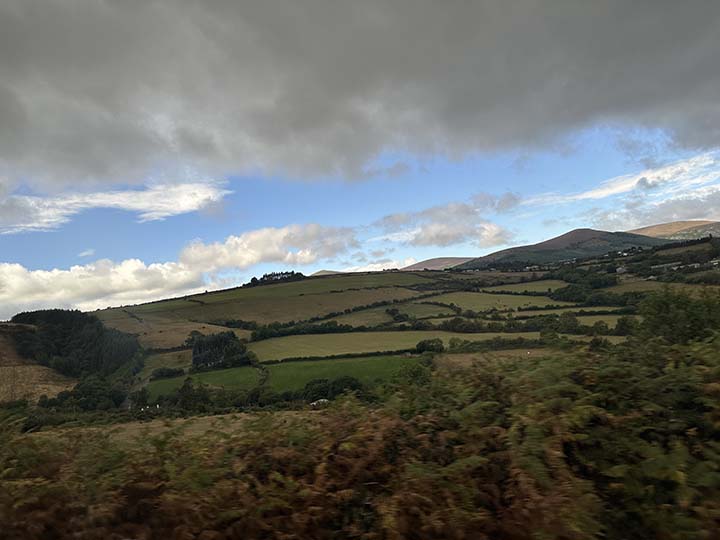
Here's a glimpse of what the bus rides were like. The countryside was often beautiful, but there certainly was plenty of it.
Lovely countryside.
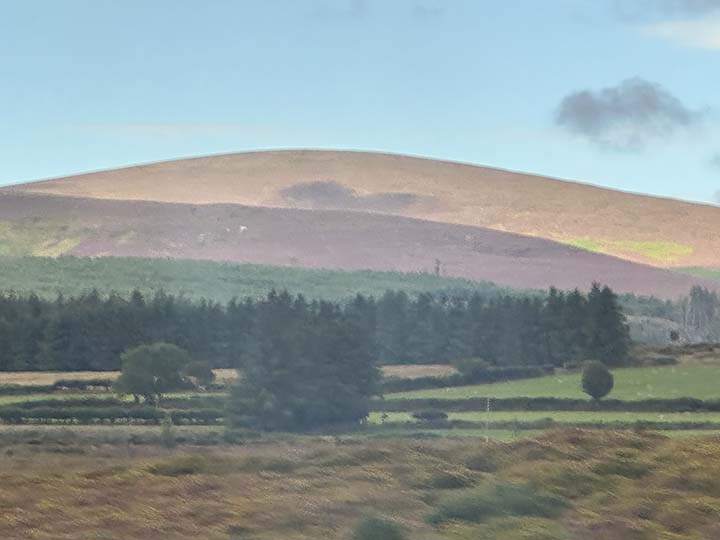
Brendan says all that purple is the heather on the hill.
What a gorgeous day!
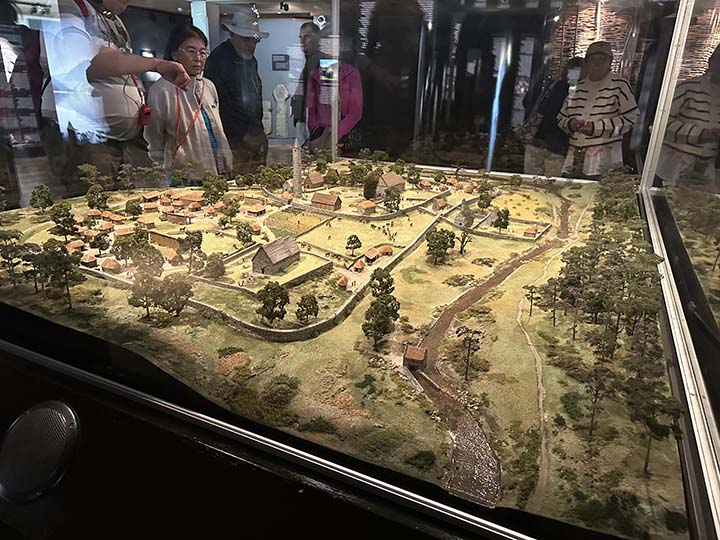
Now we have arrived at Glendalough and we are looking at a scale model of the place. Dating to the 6th century, the Glendalough Monastic Site is an early medieval Christian settlement founded by St. Kevin in County Wicklow, Ireland. It features a famous 30-meter-high round tower, a ruined cathedral, and several churches set in a scenic glacial valley.
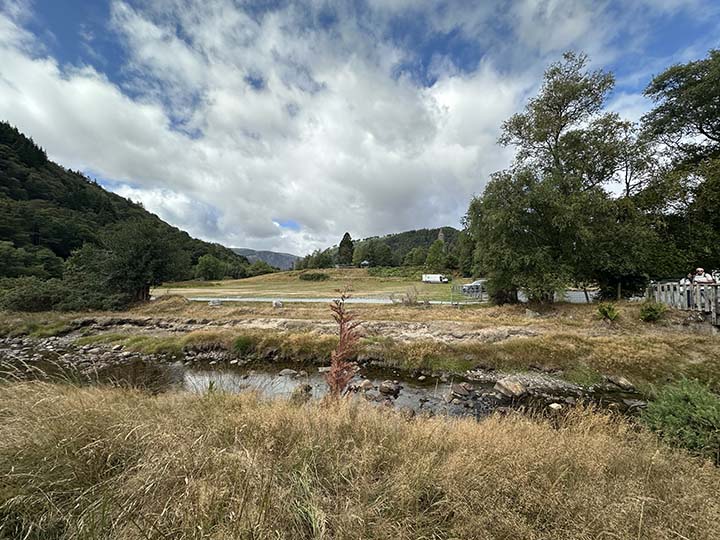
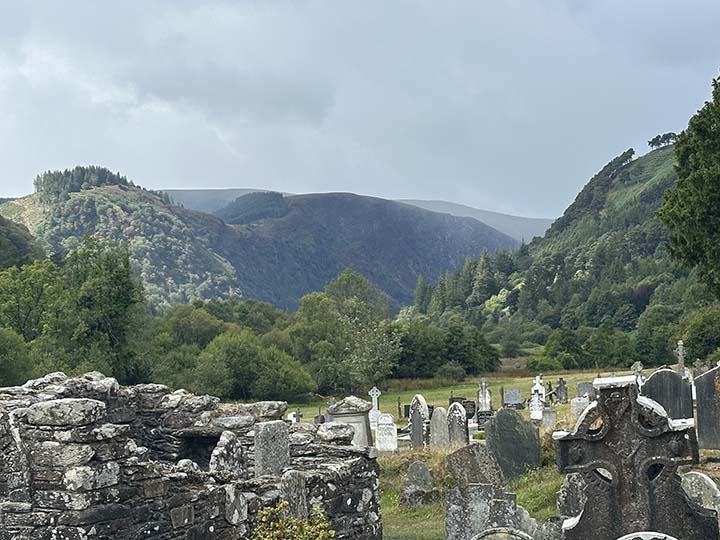
Indeed it is scenic.
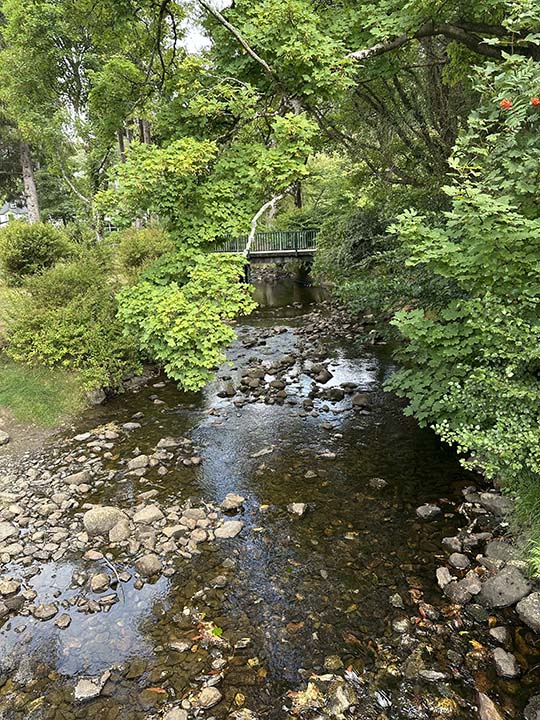
It's pretty here.
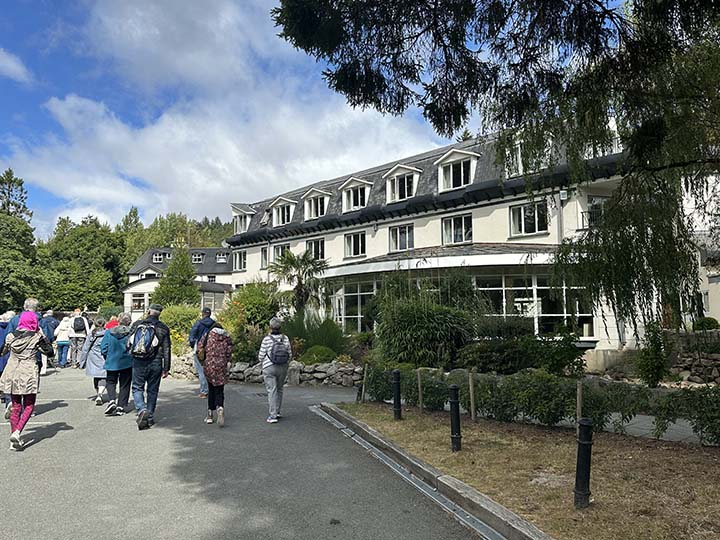
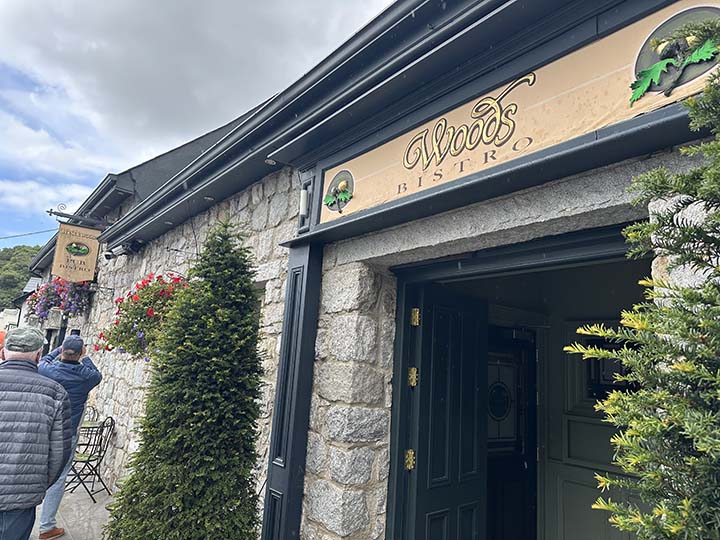
And there's a nice hotel where we can stay if we ever want to come back.
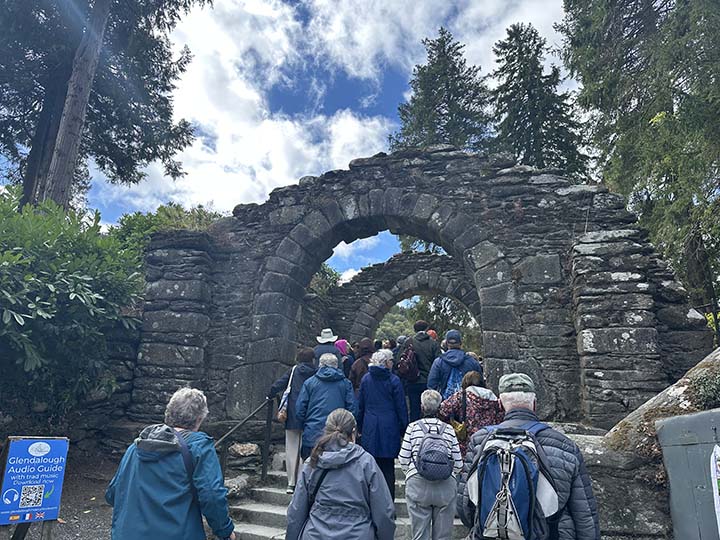
Now let’s go see the ruins.
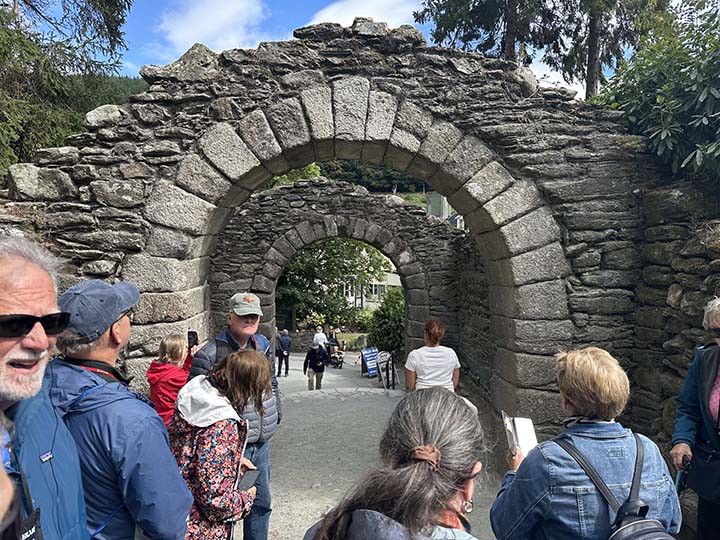
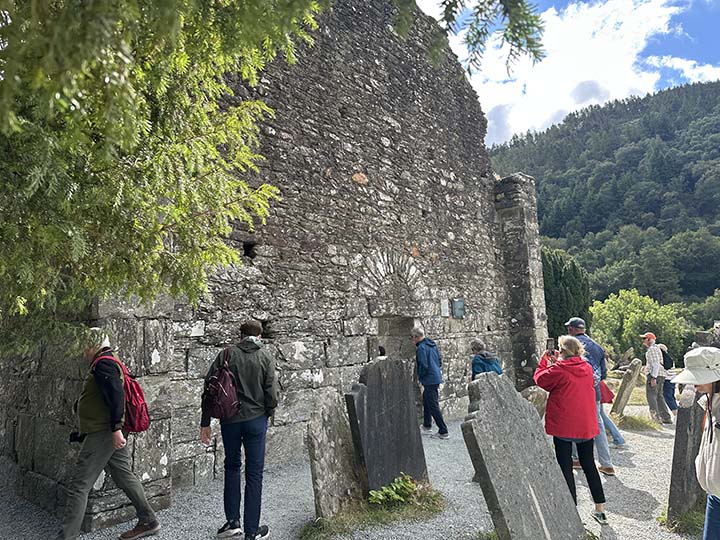
That ancient archway is still held in place by the keystone.
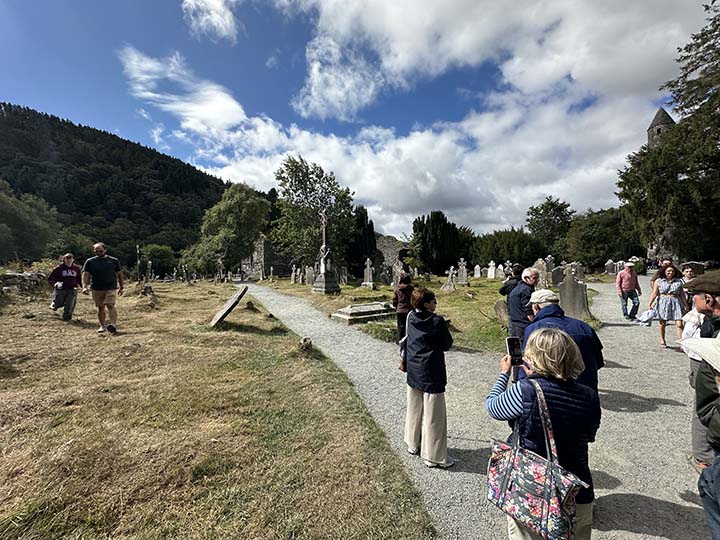
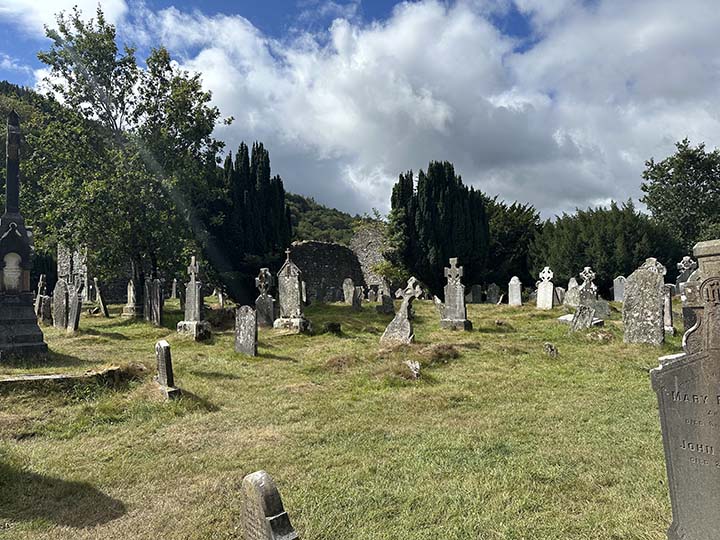
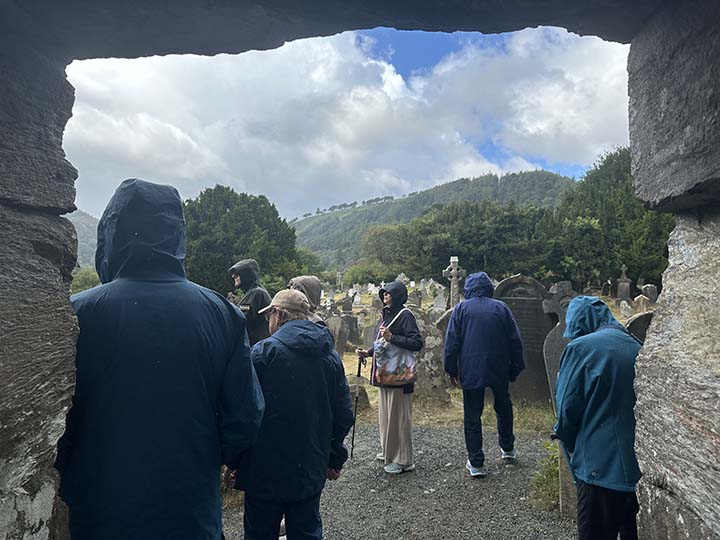
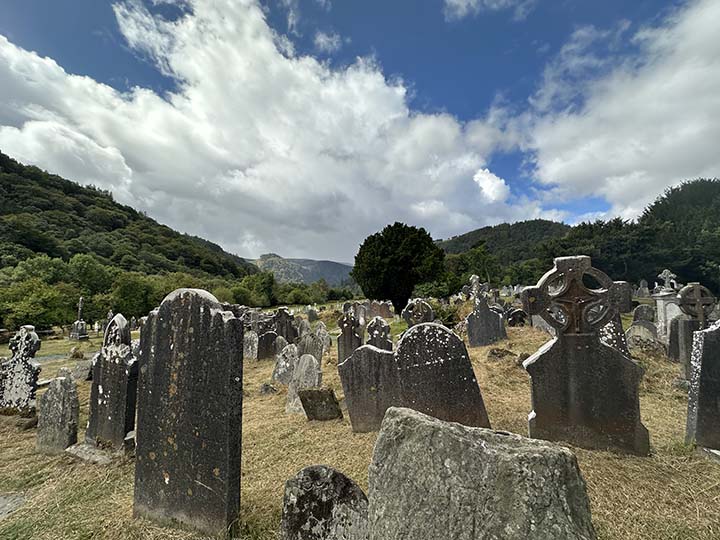
The church doesn’t function, but the graveyard still does. In fact, somebody was being buried while we were there.
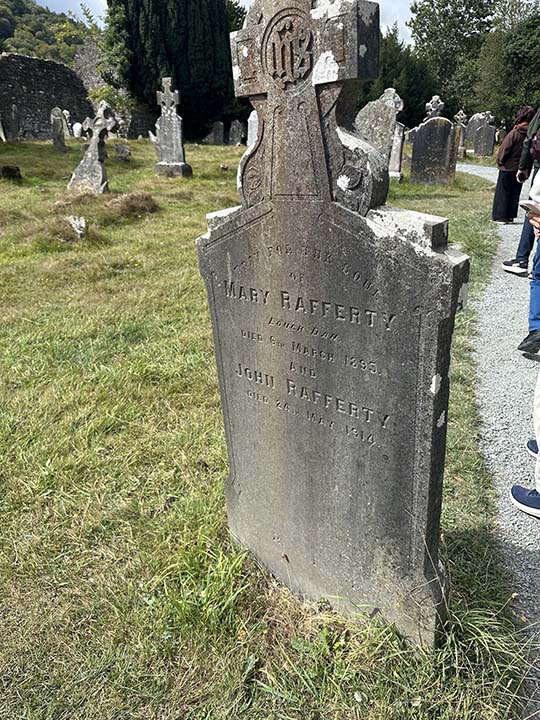
There are headstones galore.
I heard that in another generation the last of the now-closed church's parishioners will have died and there will be no more burials here.
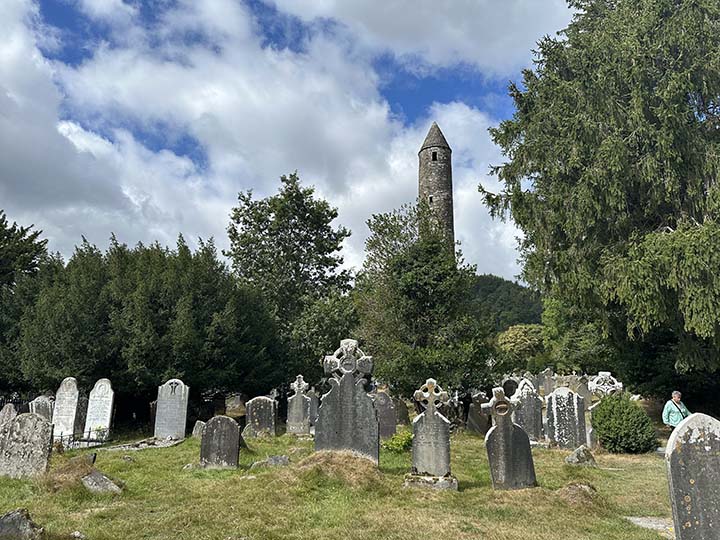
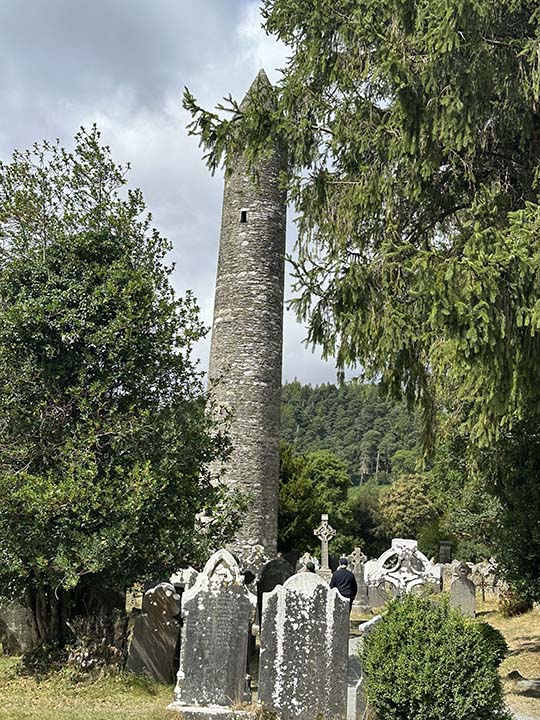
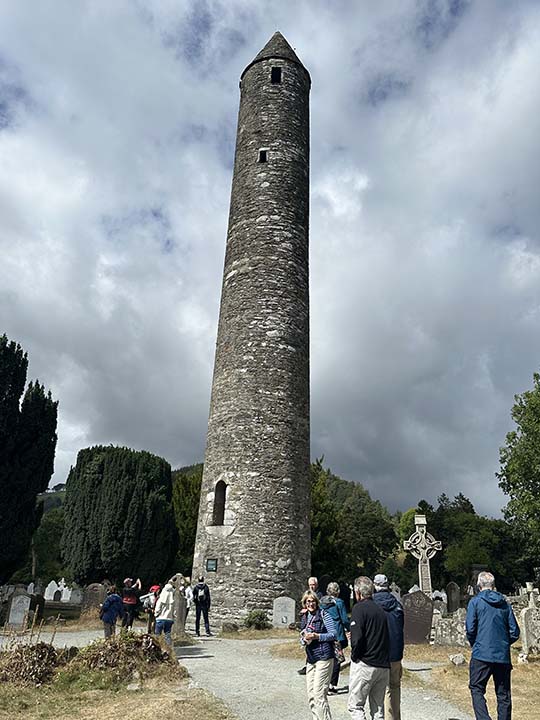
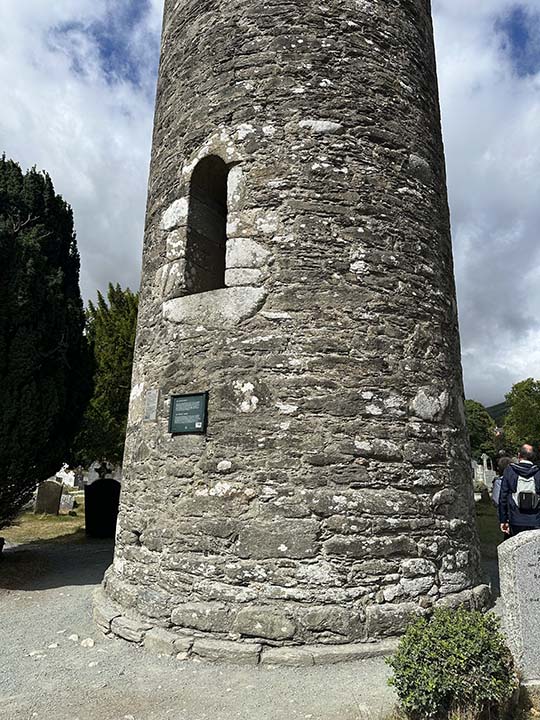
There’s the famous round tower
It's impressive.
Notice how high the door is from the ground? Some people have claimed that when the Vikings were approaching, everybody would climb the ladder and go through the door and pull the ladder in after them so the Vikings couldn’t get at them. But that’s silly.
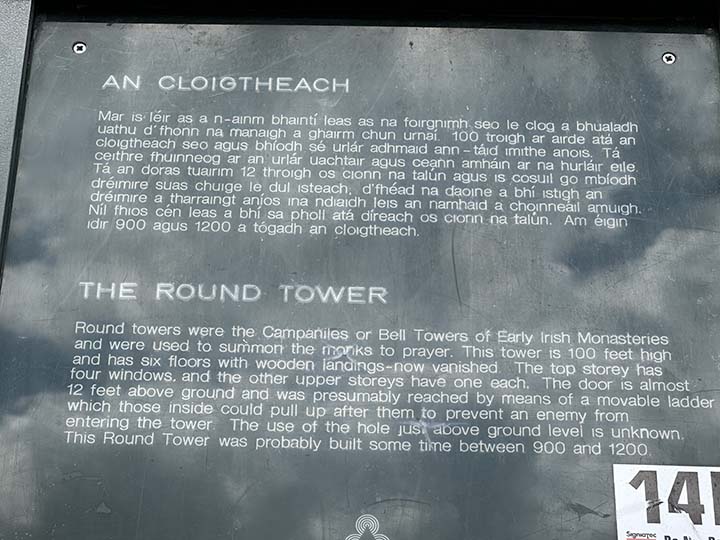
It’s just a bell tower. And there wasn’t even a bell in it. Monks held the bells in their hands and rang them. Everything below the door is solid foundation designed to hold up the tower.
You can read all about it here.
Let's go see the church.
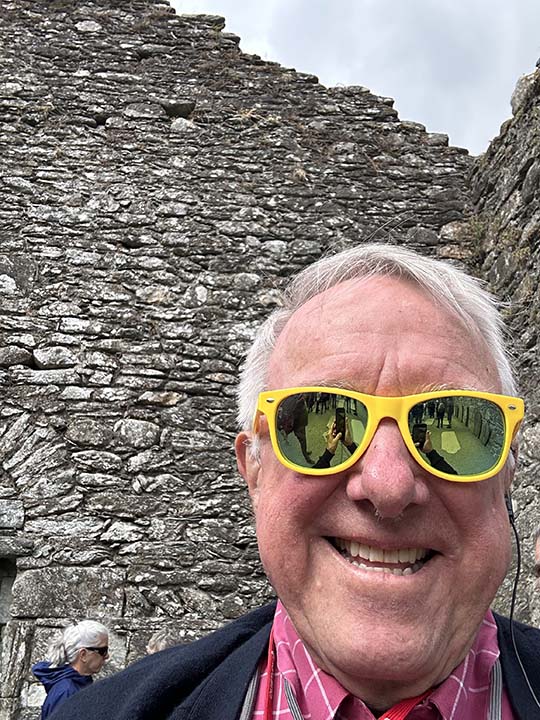
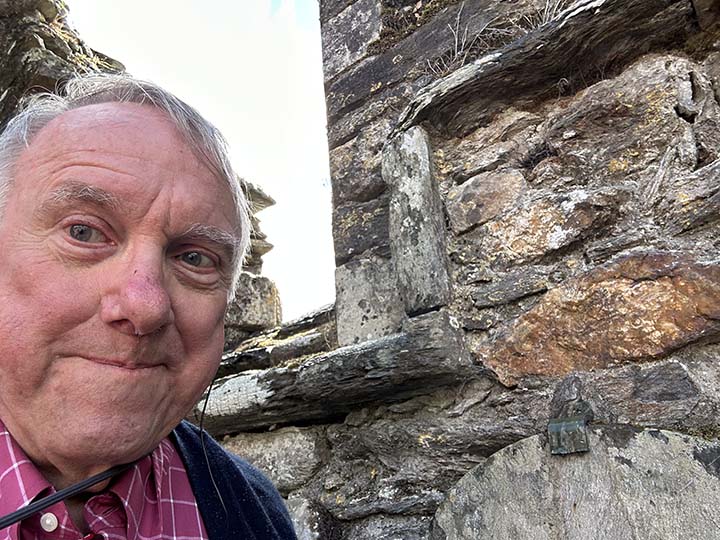
I wore my Universal Studios sunglasses. Some of the Road Scholars were so impressed by my snazzy good looks that they took my picture.
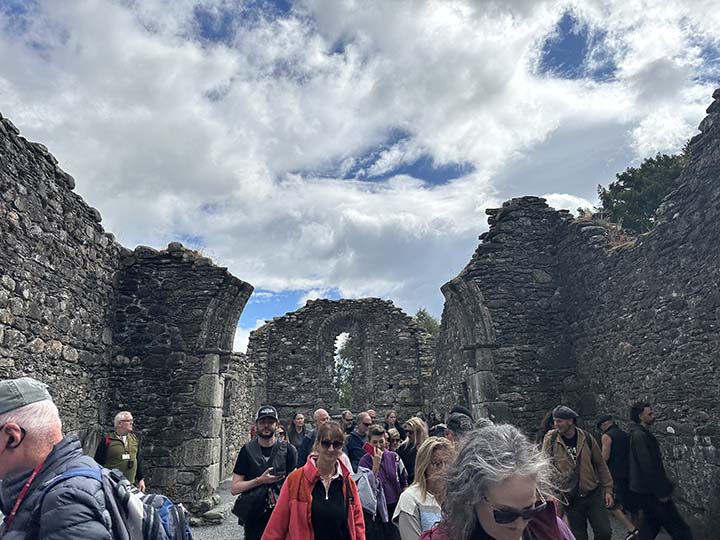
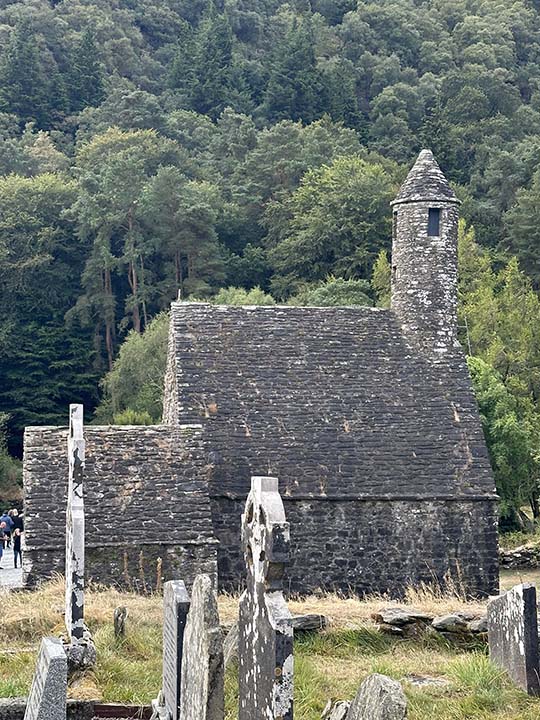
It’s Saint Kevin’s old church. There's not just a whole lot left of it.
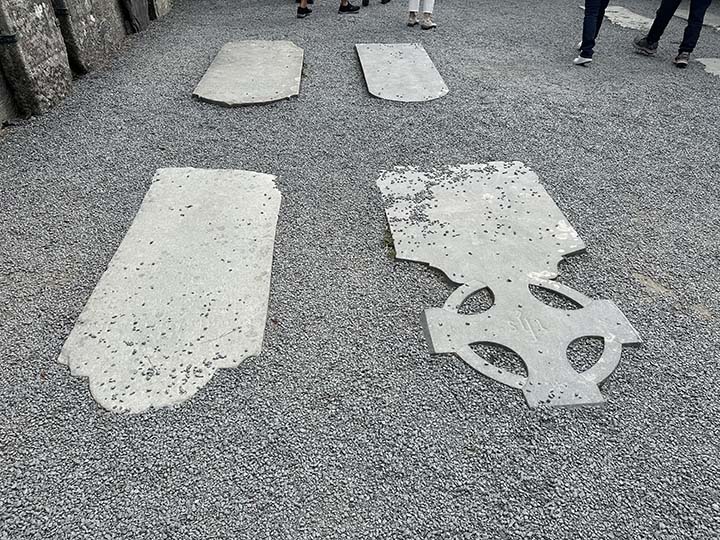
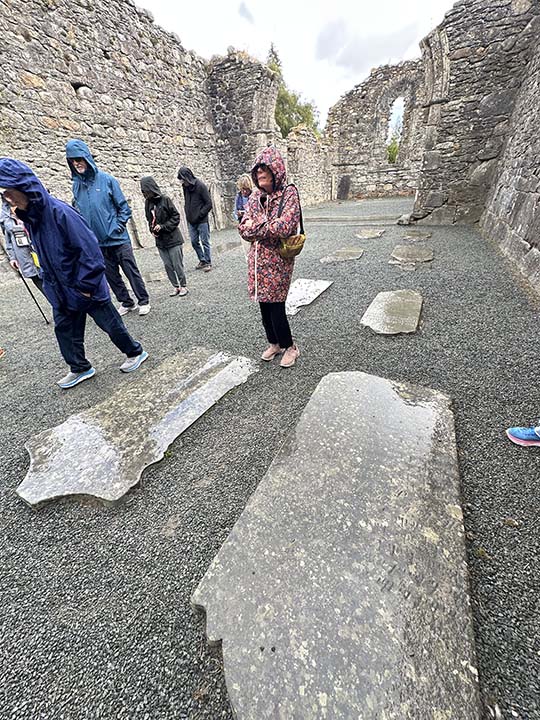
There were some old headstones on the floor.
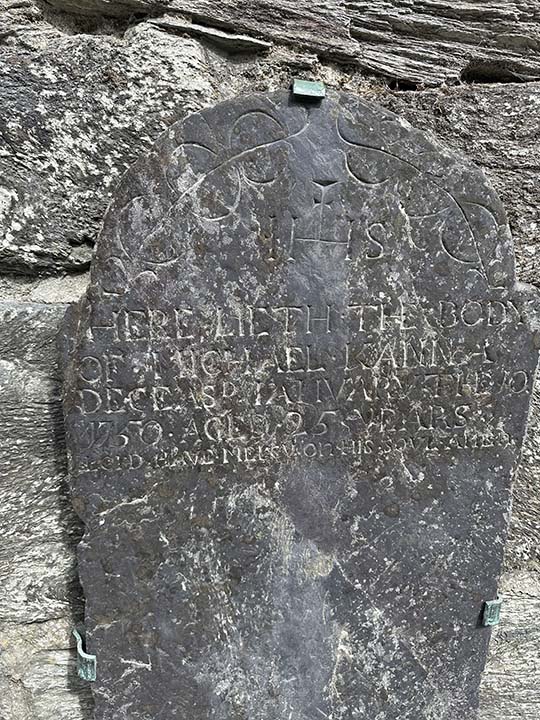
And in the walls.
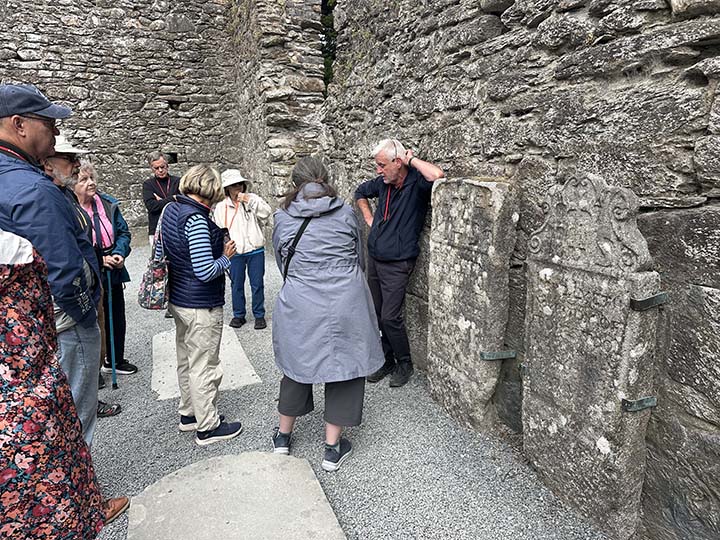
Our guide was friendly but I think he'd done all this before a few times.
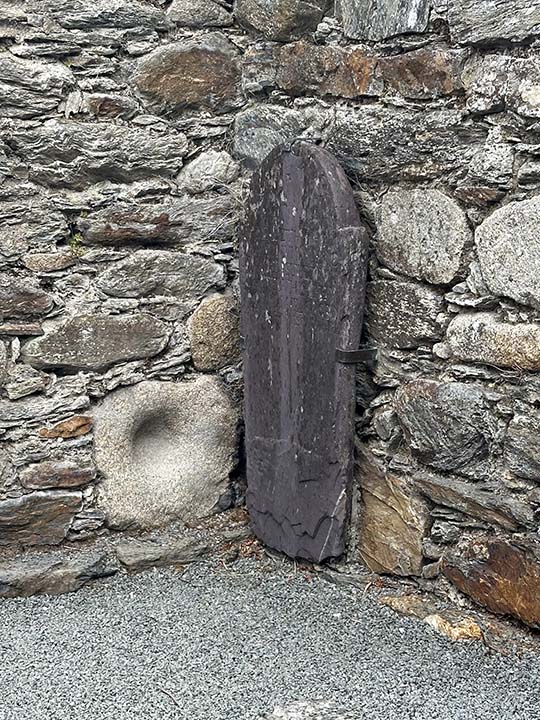
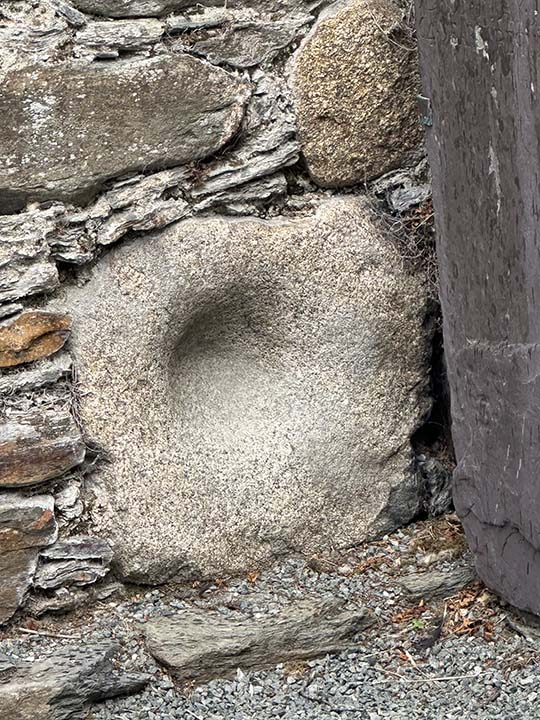
Our guide said nobody can figure out what this stone was doing in the wall over in the corner behind the altar.
It looks like a stone for grinding grains, but why is it here?
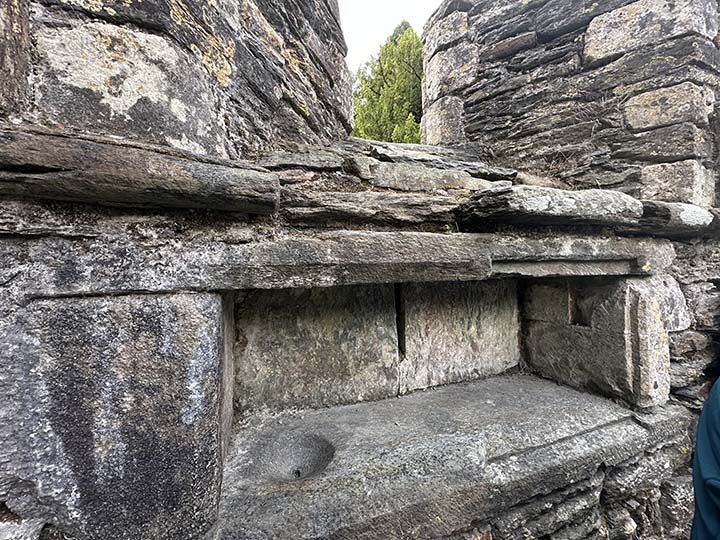
Part of the altar.
Wait a minute. Rain? Seriously? On a day like this?
Let's get out of here.
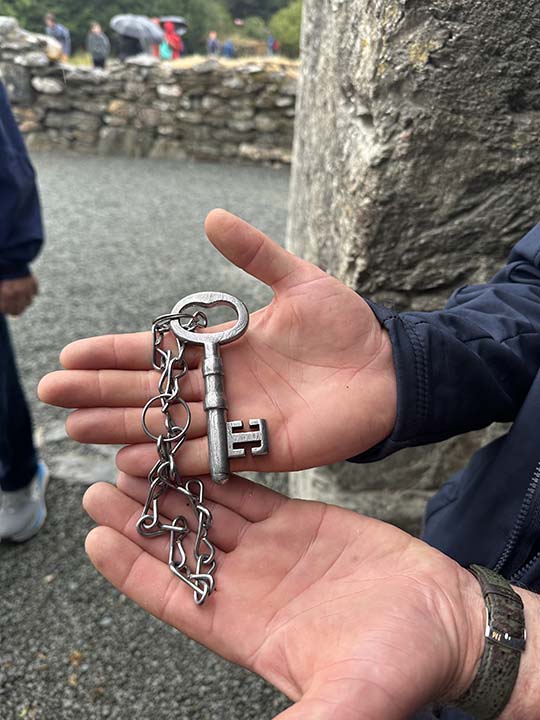
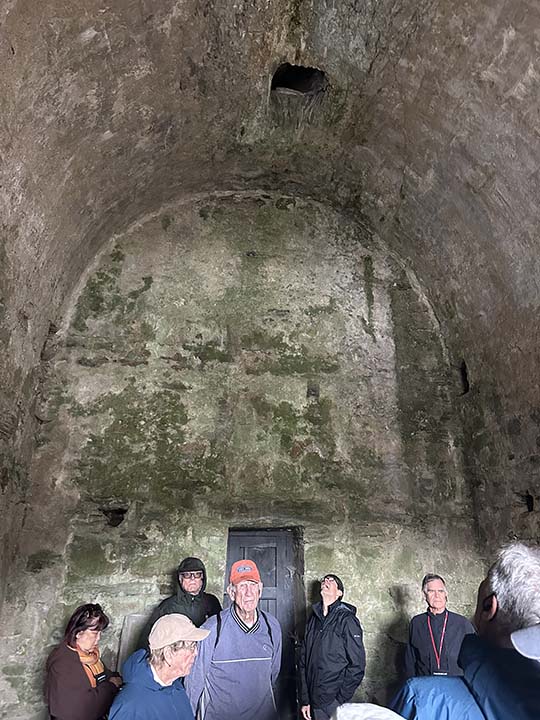
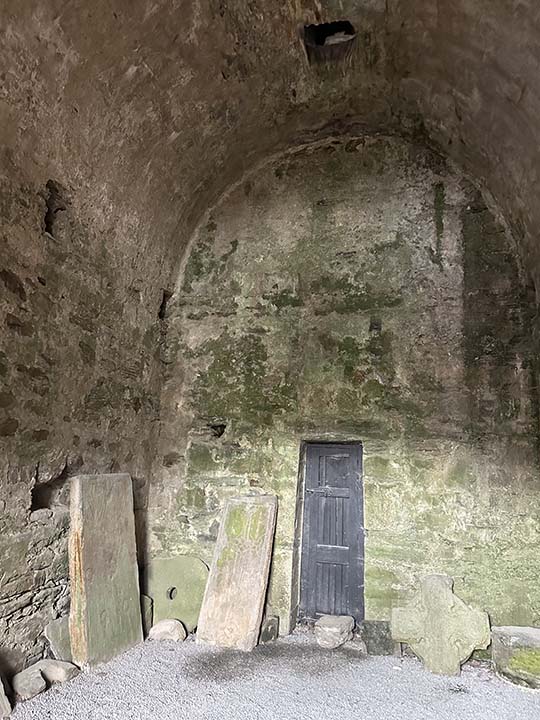
Fortunately for us, our guide had a key to Saint Michael’s Chapel.
That's it over there.
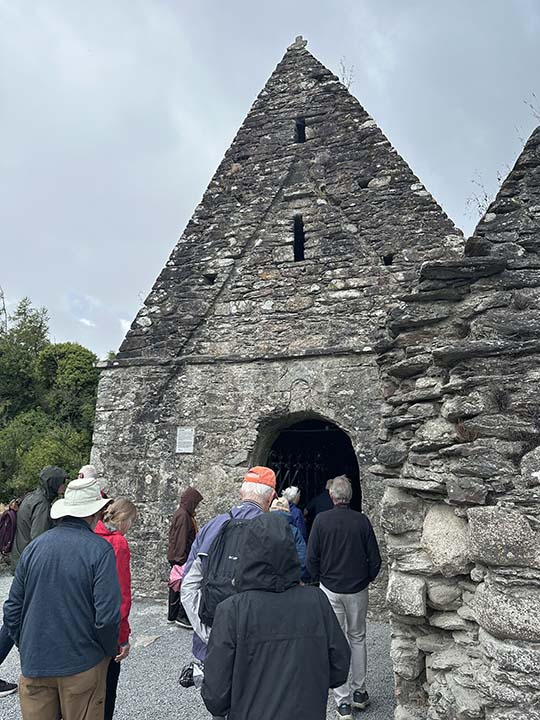
So here we go. Hurry, hurry.
There's not much to see in here, actually.
It may be a little moldy, but at least it's dry.
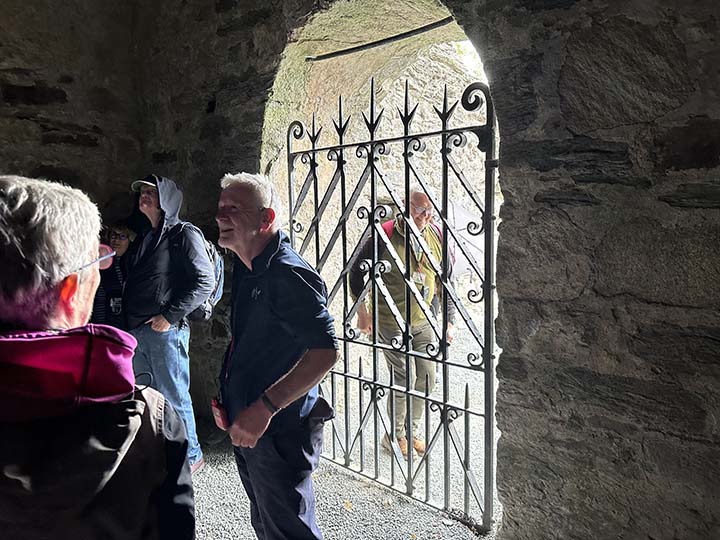
Brendan keeps guard outside the door.
And now the sun has come out again.
This is a beautiful setting.
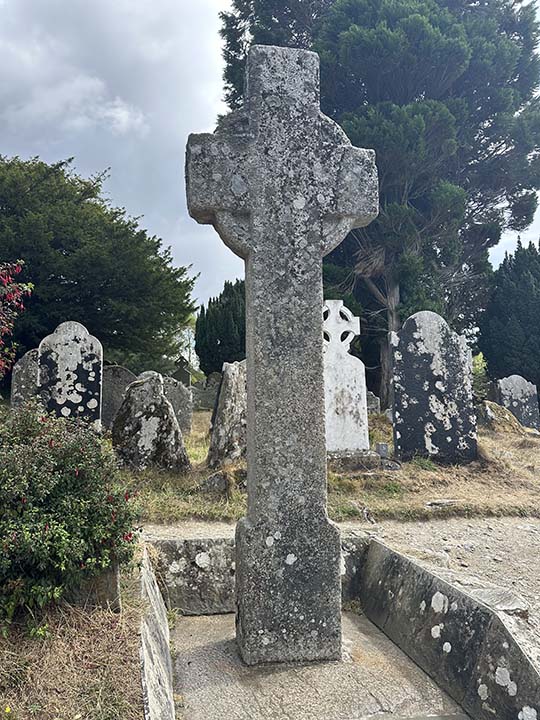
An ancient Celtic Cross. They're everywhere around here. Legends say Saint Patrick combined the Christian cross with the pagan sun symbol to help convert the Irish by showing Christ as the true light. Well that's what they say.
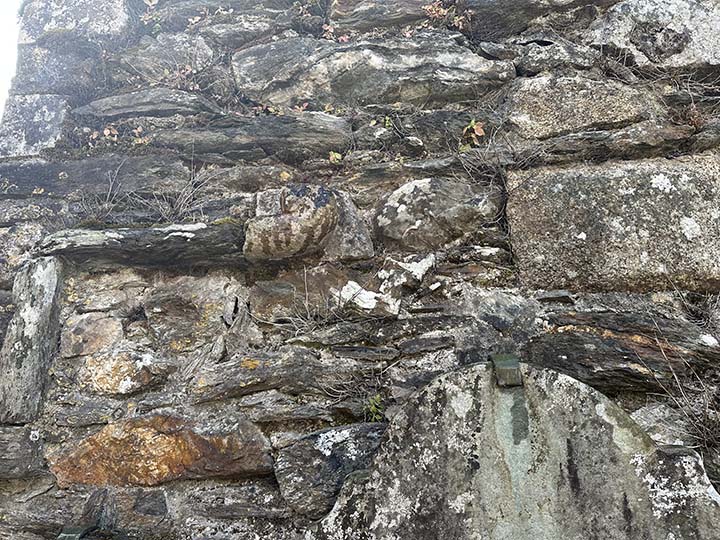
Remember, our speaker this morning told us to look in these stones to find a hidden snake with a distinctive eye. Our guide wanted everybody to go off and explore on their own, but I'd made him promise to show me the snake. So where is it?
Not here by the altar where I thought it would be..
But I'm not giving up.
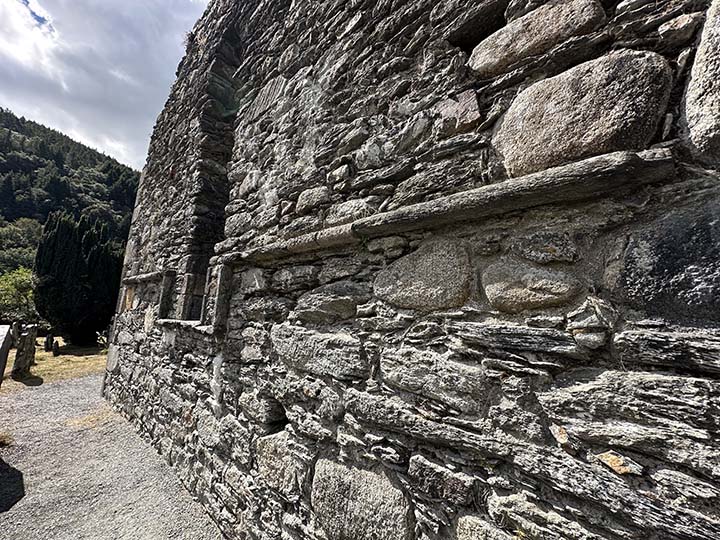
Why do the stones look like that.
Could that be the snake with the eye? Our guide had no idea why there would be a snake in the wall, but there it is.
And he's looking at us.
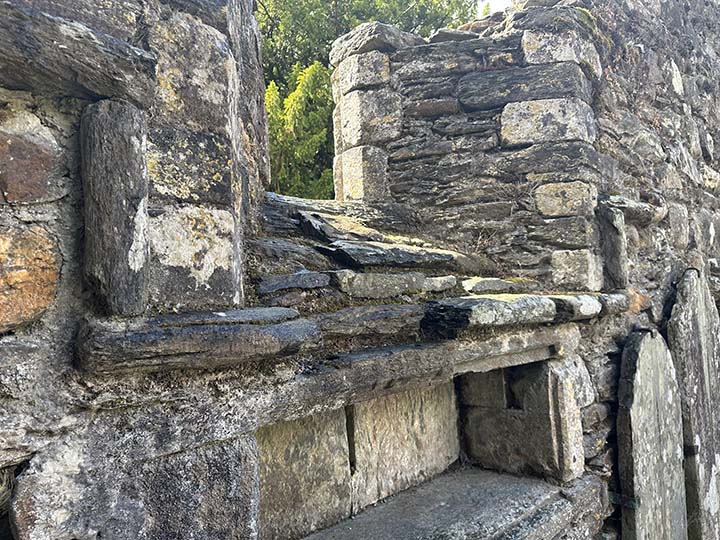
That wall had steps, so you could climb over, but the sheep could not.
Lunchtime!
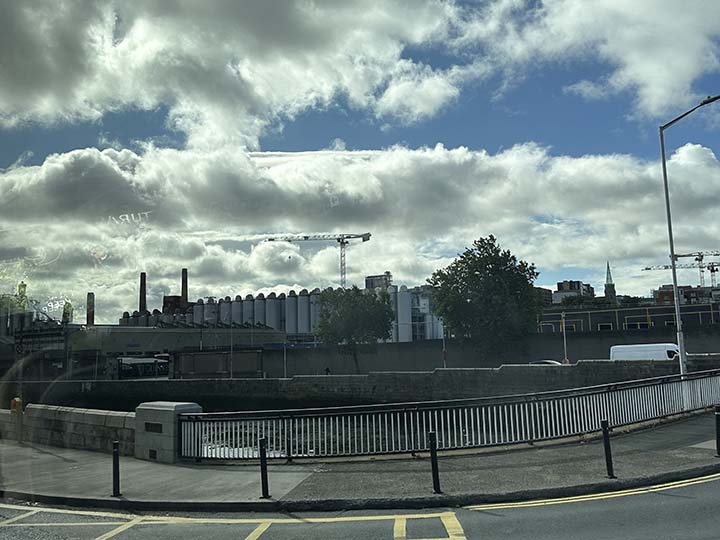
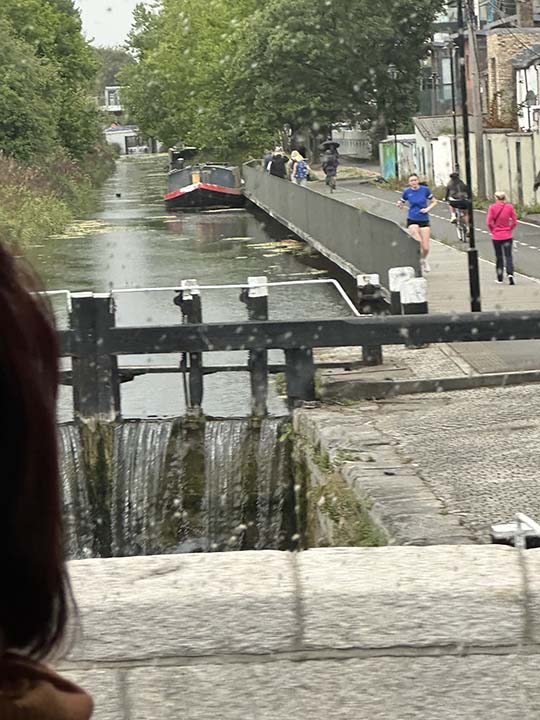
As we drove back into Dublin, we passed a lock and dam.
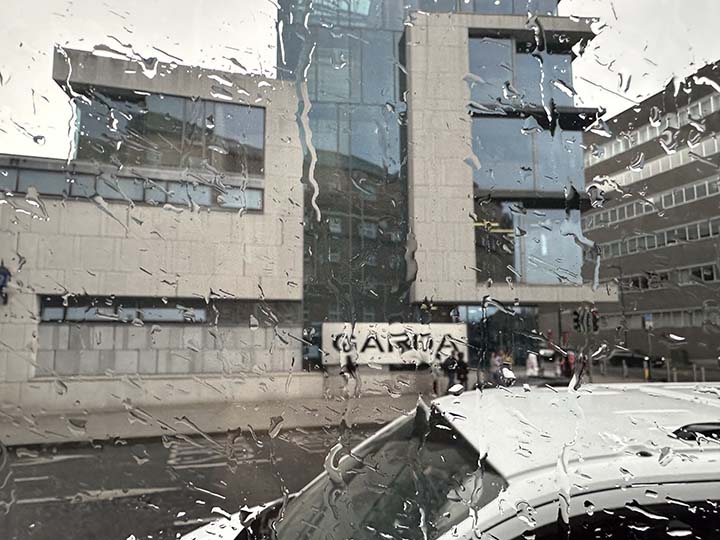
Then the rain started in earnest. Garda is the main city police station. You can read Garda on that sign, can't you?
Several of us ran inside the hotel in the rain to get ready to go see the Book of Kells with Brendan leading the way.
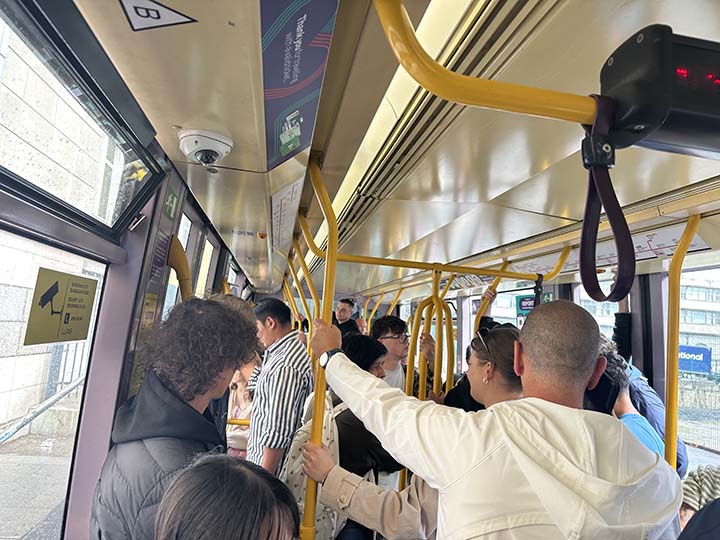
We took the tram.
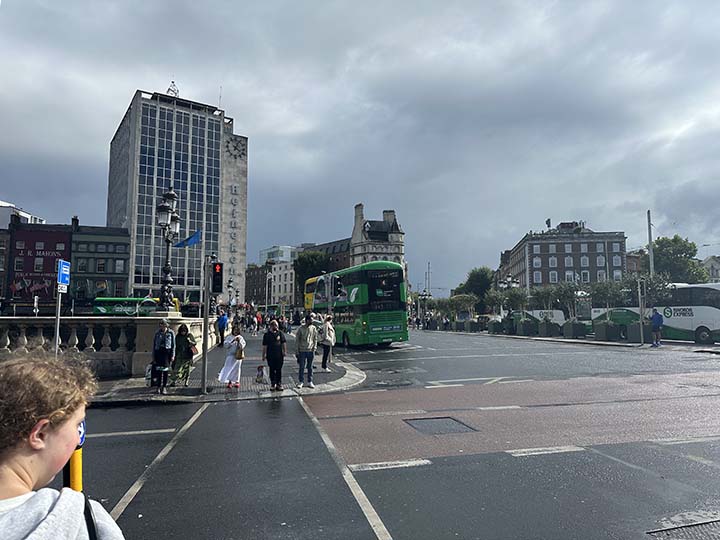
The rain let up pretty much.
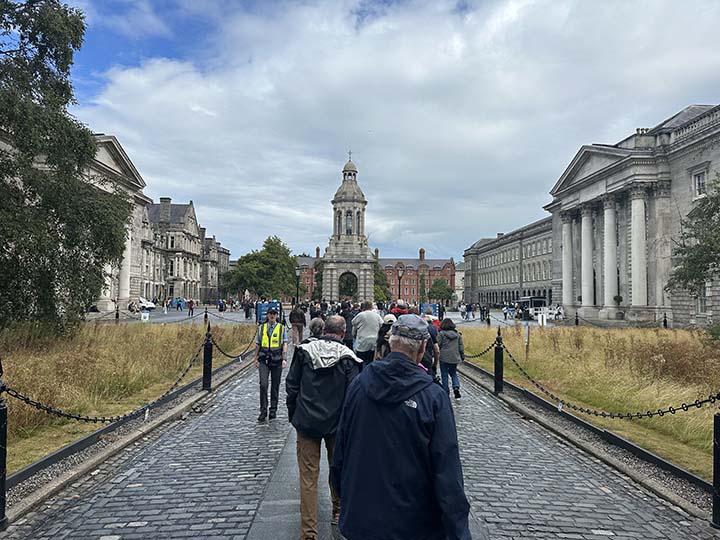
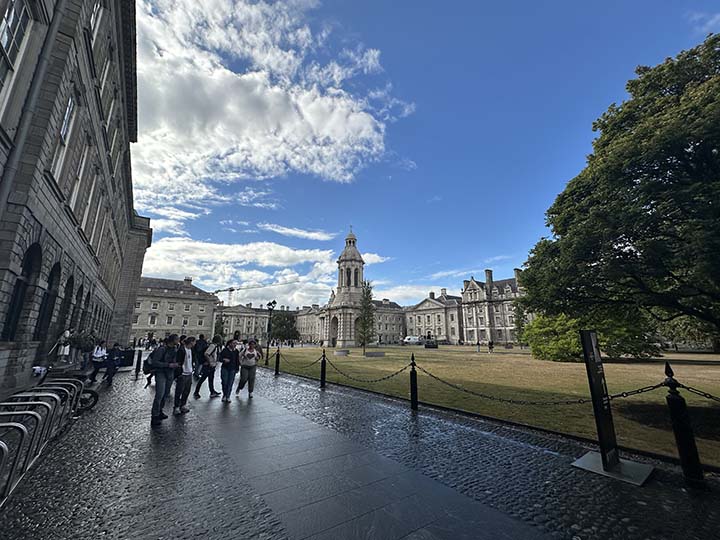
And then we arrived at Trinity College, where the Book of Kells is stored. The town of Kells wishes it were stored right there where it was held for hundreds of years. They would really like to have all the tourist money, but unfortunately, some bishop gave the book to the university 350 years ago and the college has no interest in giving it up.
And what, you may be asking, is the
Book of Kells?
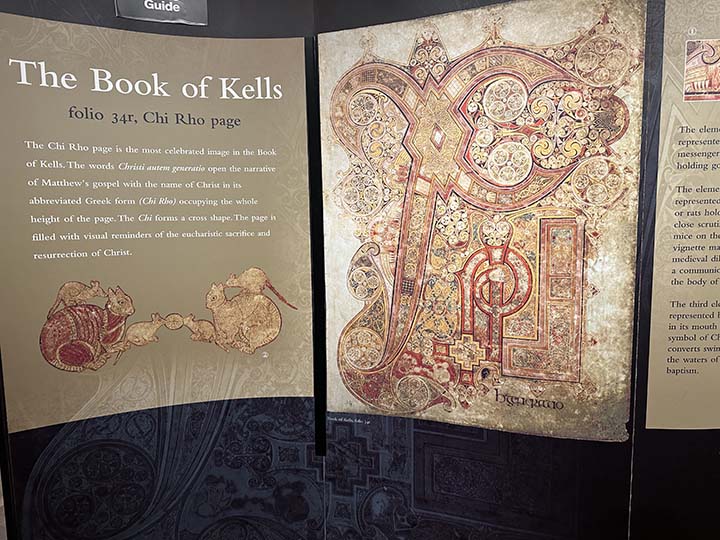
The Book of Kells is an illustrated manuscript and Celtic Gospel book in Latin, containing the four Gospels of the New Testament together with various prefatory texts and tables. It was created in a Columban monastery in Ireland or Scotland, and may have had contributions from various Columban institutions across Ireland and Scotland. It is believed to have been created c. 800 AD. The text of the Gospels is largely drawn from the Vulgate, although it also includes several passages drawn from the earlier versions of the Bible known as the Vetus Latina. It is regarded as a masterwork of Western calligraphy and the pinnacle of Insular illumination. The manuscript takes its name from the Abbey of Kells, County Meath, which was its home for centuries.
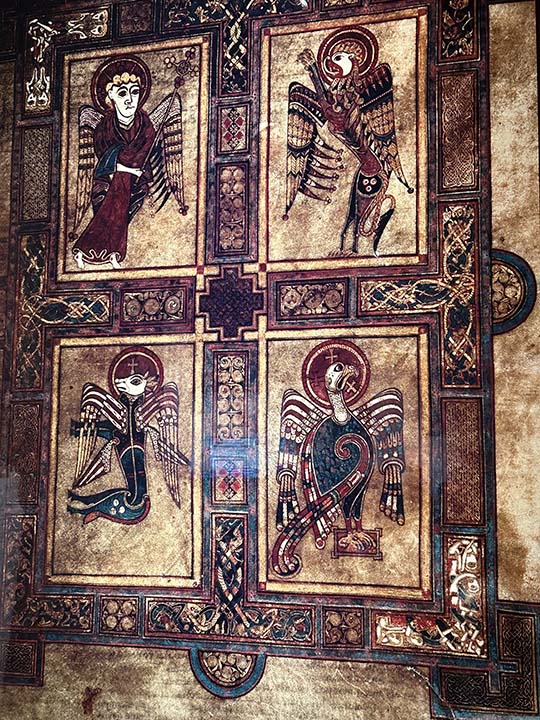
The illustrations are incredible works of art. These four figures represent Matthew, Mark, Luke, and John.
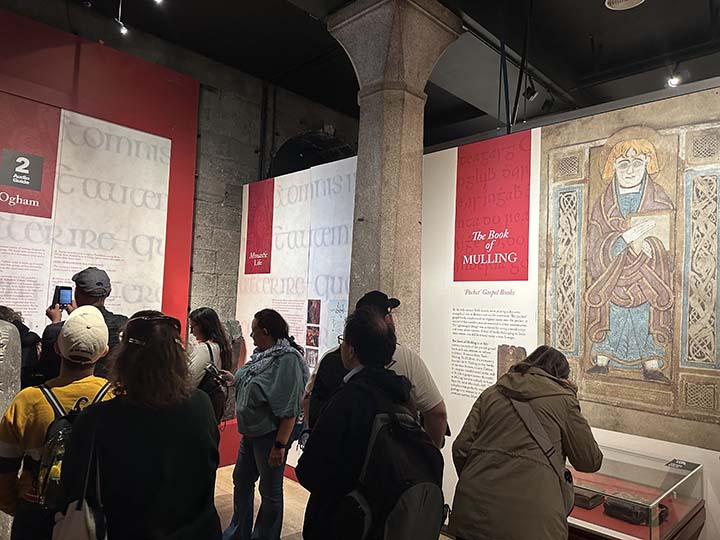
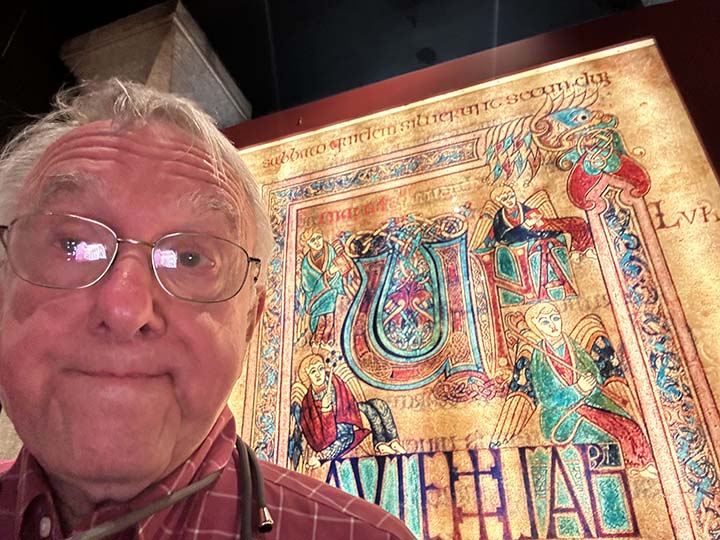
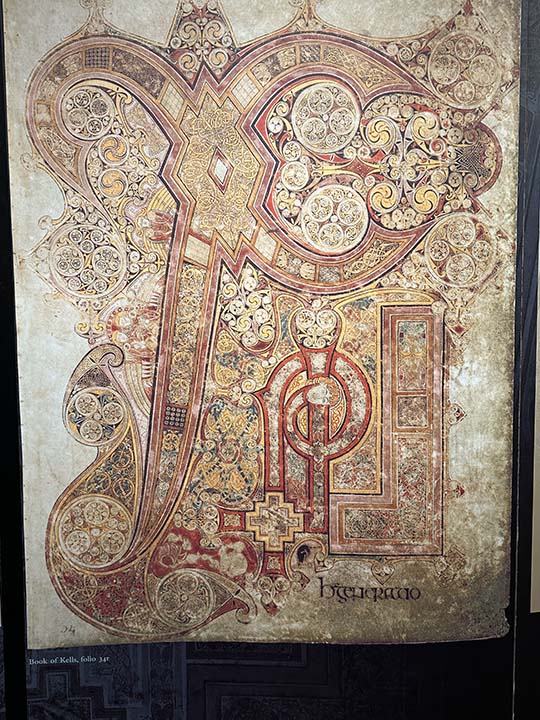
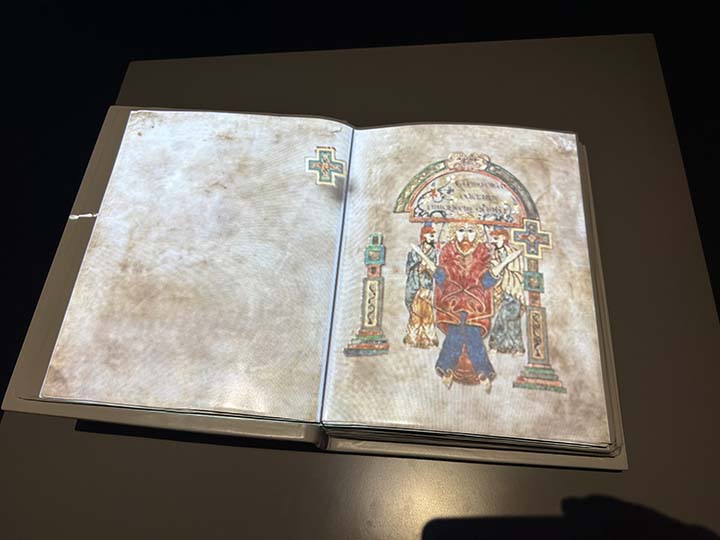
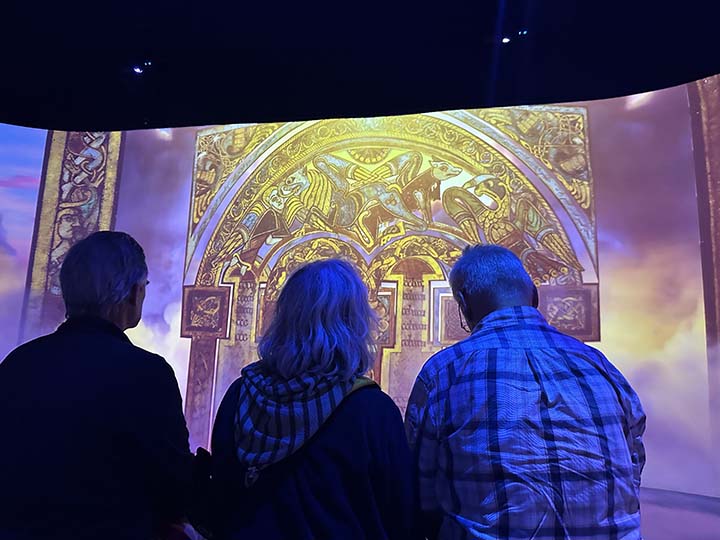
I took this picture of a large illustration in the “Book of Kells Experience” which is designed to explain things before you see the actual book.
These posters are gorgeous. I can’t wait to see the actual book. I mean, just look at the detail. Apparently the book stays on display and they turn the page about once a month.
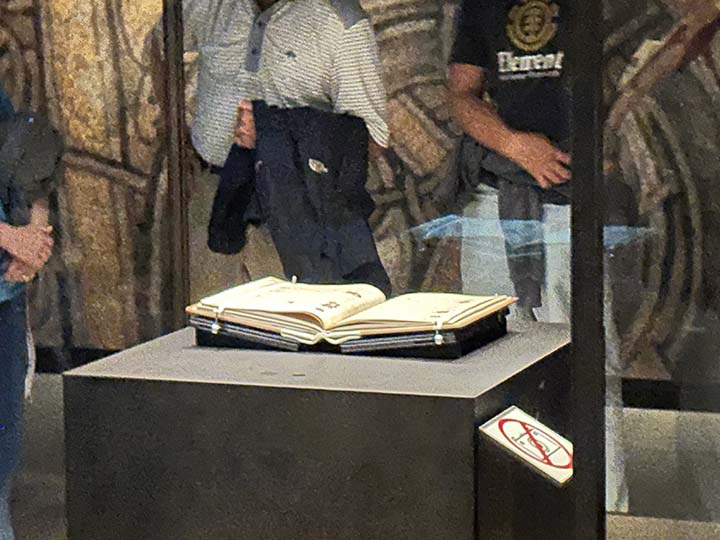
Oh no! They don’t allow you to take pictures of the real thing. But don’t worry, I hid behind the wall and snapped this from where the guard couldn’t see me.
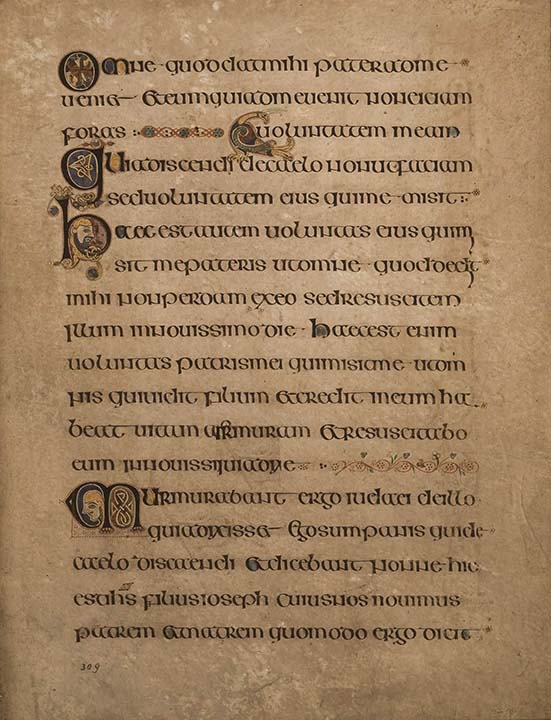
Imagine my disappointment when this was the kind of page we could see today. No intricate illuminations. Still pretty nice, though. I downloaded this shot from the internet.
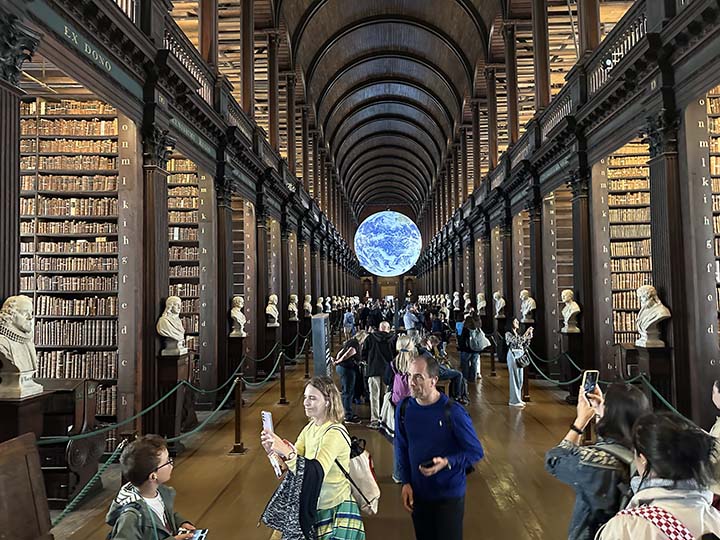
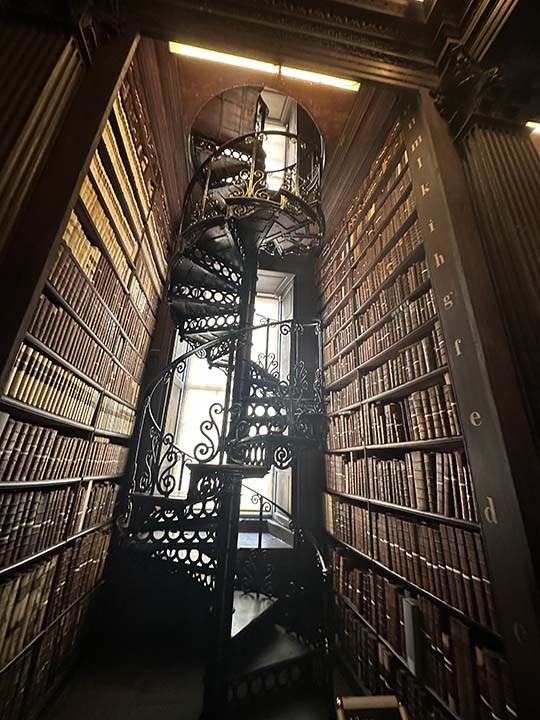
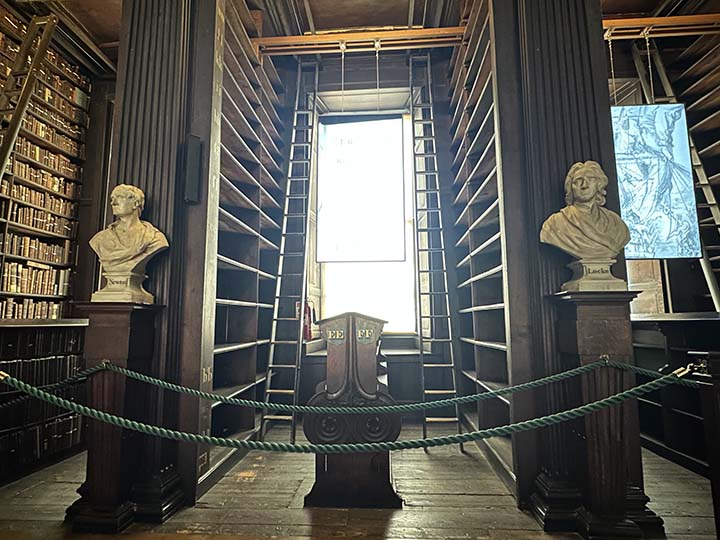
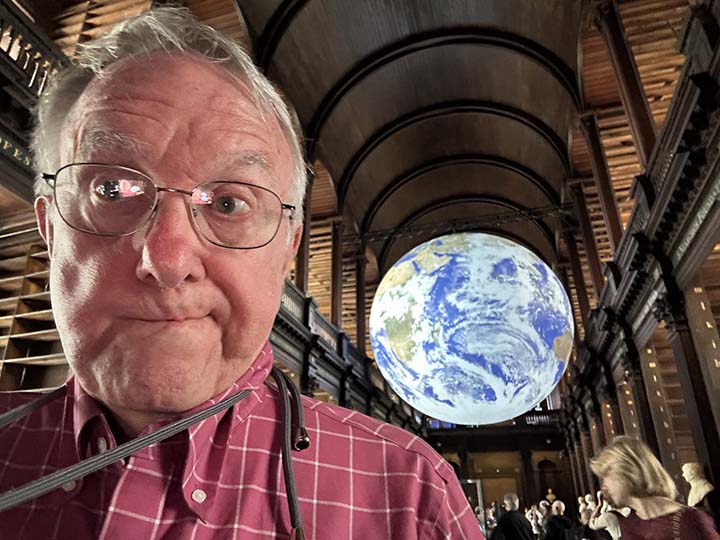
Then we toured the old Trinity College library, where most of the books have been removed because they are renovating the place.
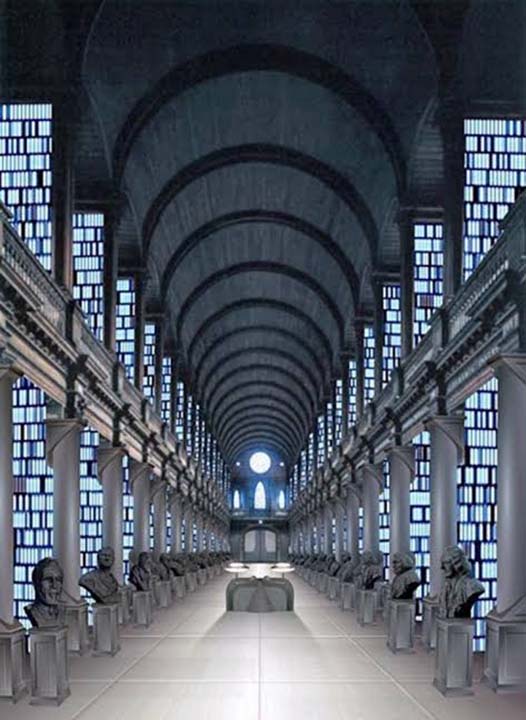
One of my friends from a Star Wars internet discussion group forwarded this movie still to me. This shows the Jedi library. Looks pretty familiar, if you ask me.
There were still a few old books to be seen.
But not many.
Just me and the empty shelves.
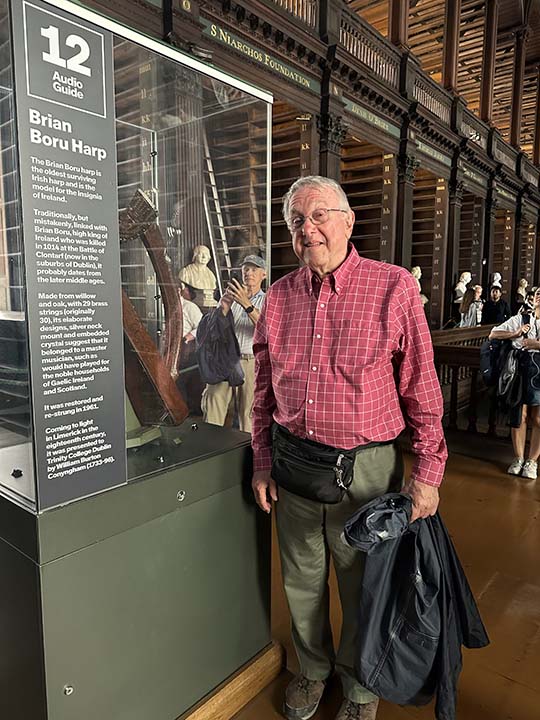
The symbol of Ireland is the harp. And this is Ireland’s oldest harp. On the left. Don’t get smart with me.
The rain has stopped again!
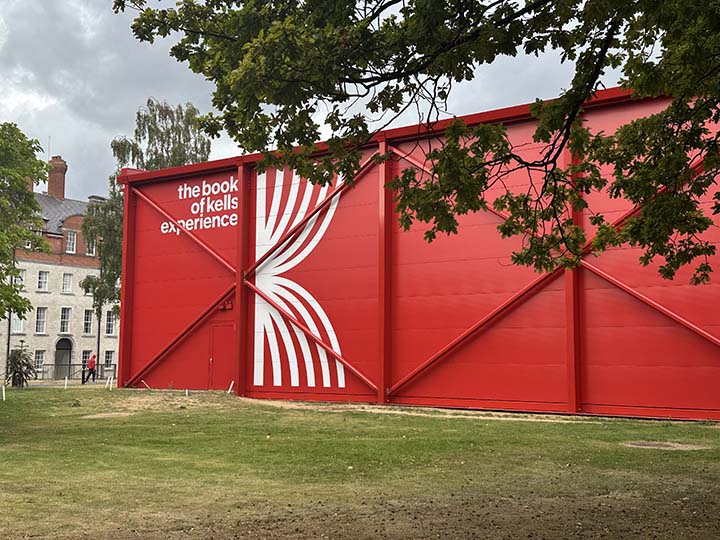
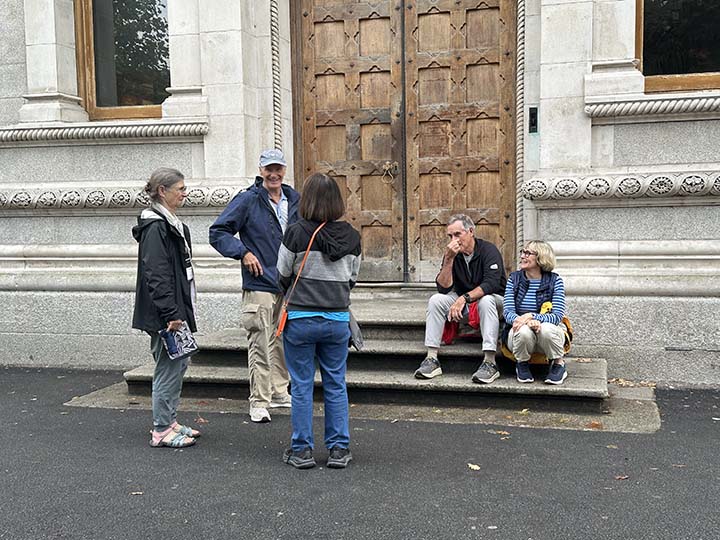
They said the exhibition would continue in “the red building.” Now which building do you think they meant?
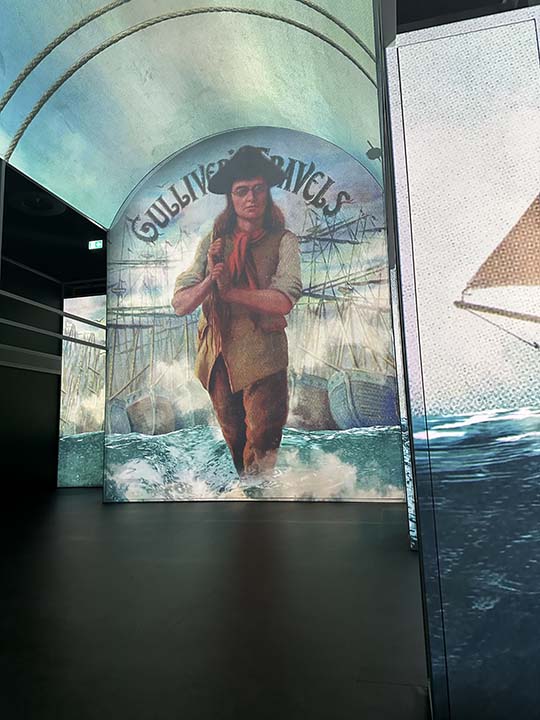
We saw an elaborate audiovisual experience inside.
It was all about books.
Some of which were famous.
The audiovisual animation was pretty impressive.
The Road Scholars who saw the book of Kells are figuring out how they’re going to get back to the hotel. We ended up taking cabs.
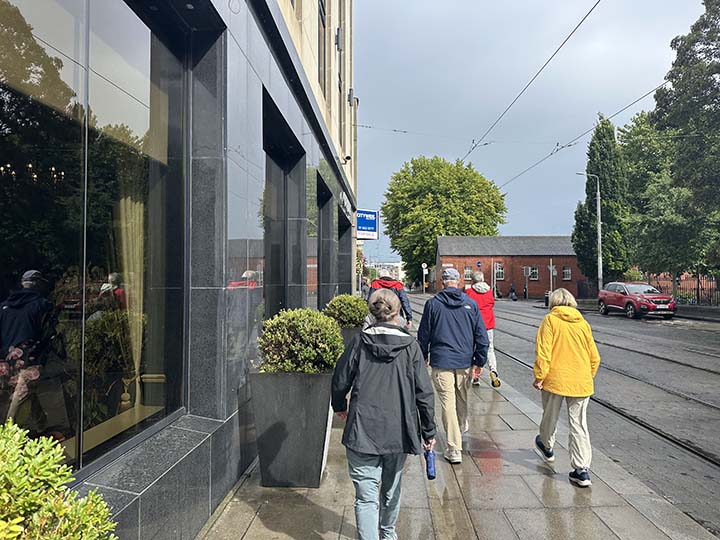
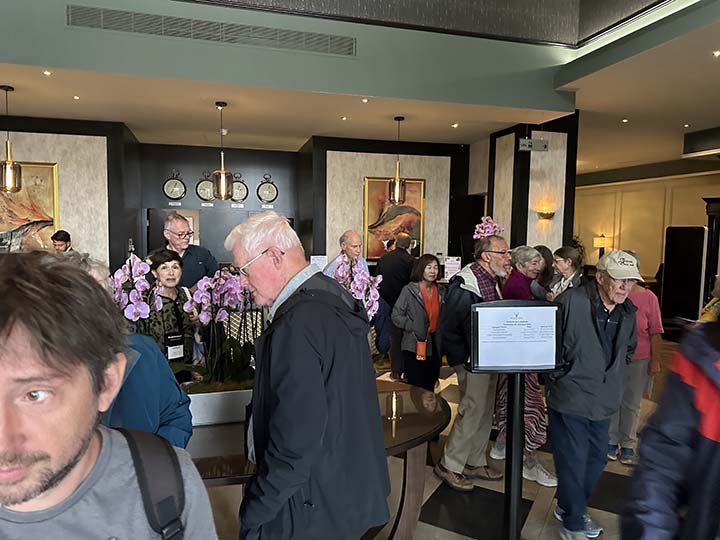
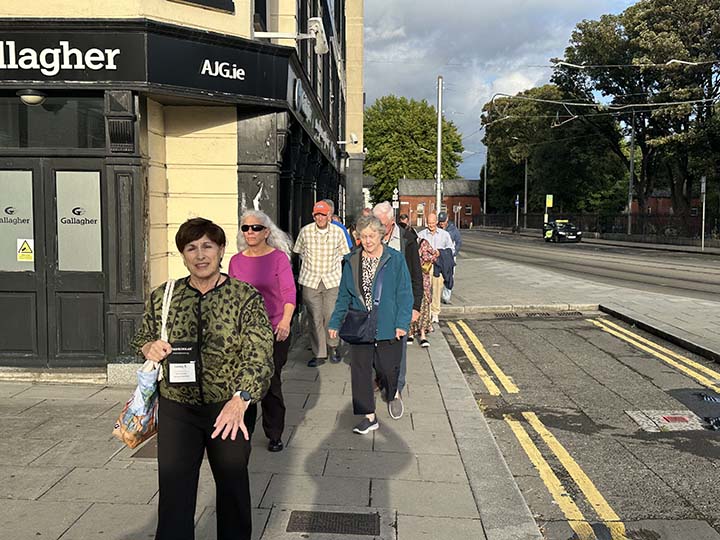
And just a short time later we gathered in the hotel lobby to begin our walk to the farewell dinner.
One last walk together.
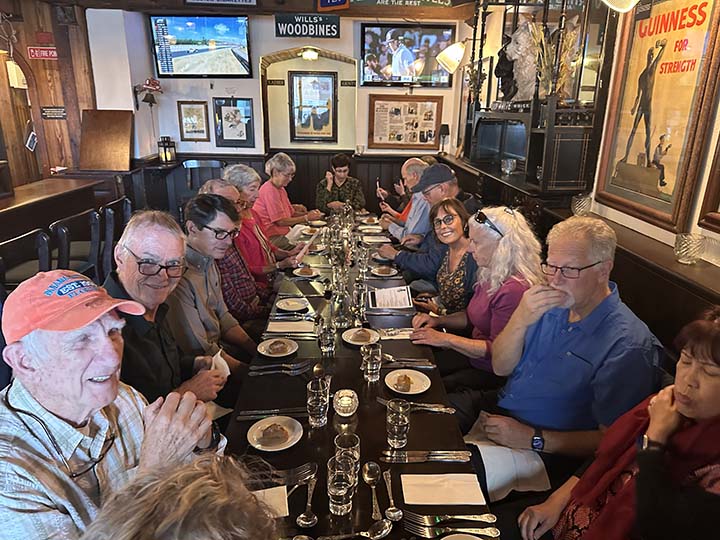
And one last dinner together.
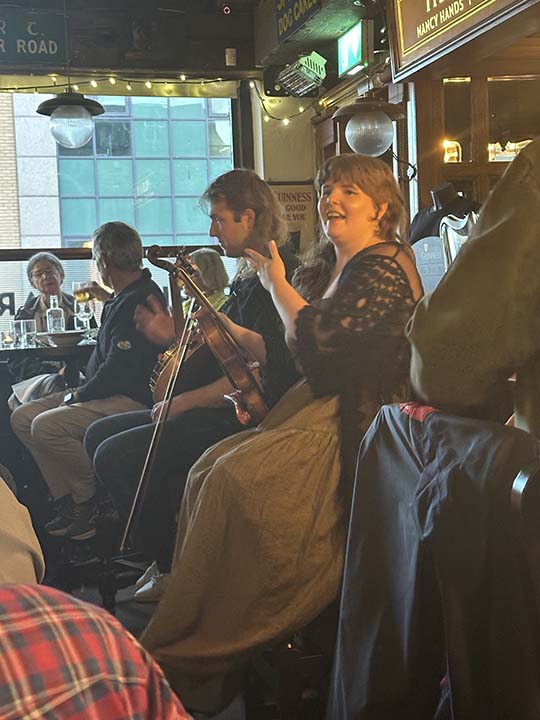
Road Scholar once again arranged some delightful entertainment.
Just listen.
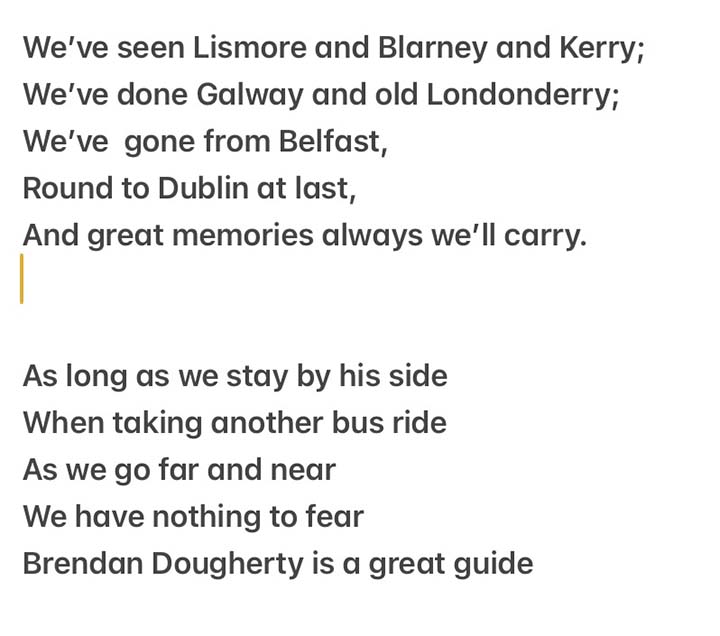
These are the limericks I'd written to say goodbye to everybody
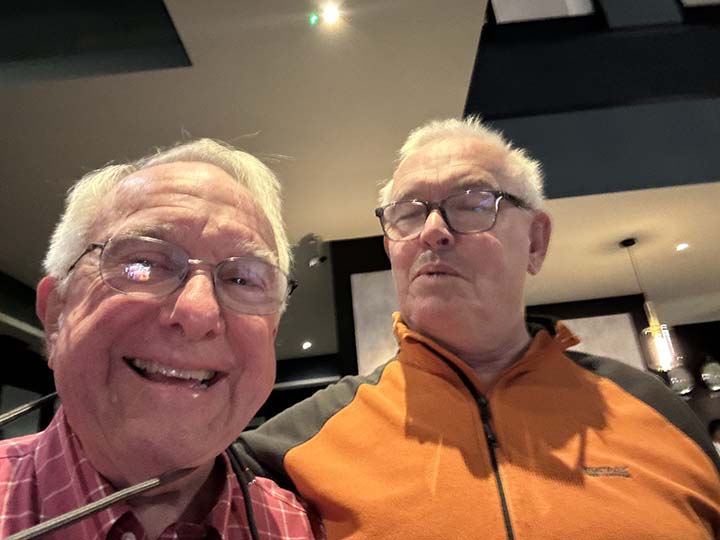
And here's a final selfie at 6:30 AM the following day, this time with Brendan Doherty, our masterful guide. (He did complain that it was too earlly in the morning to be taking pictures, but he was a good sport.) I had a great time on this trip and I will always remember it fondly for the fascinating sights and experiences. I learned a lot and that made me happy. The weather and occasional meal disappointments never dampened my enthusiasm. Thank you Road Scholar and thank you Brendan!
|