|
Belfast...hmmm...weren't people exploding bombs and shooting each other here just a few years back?
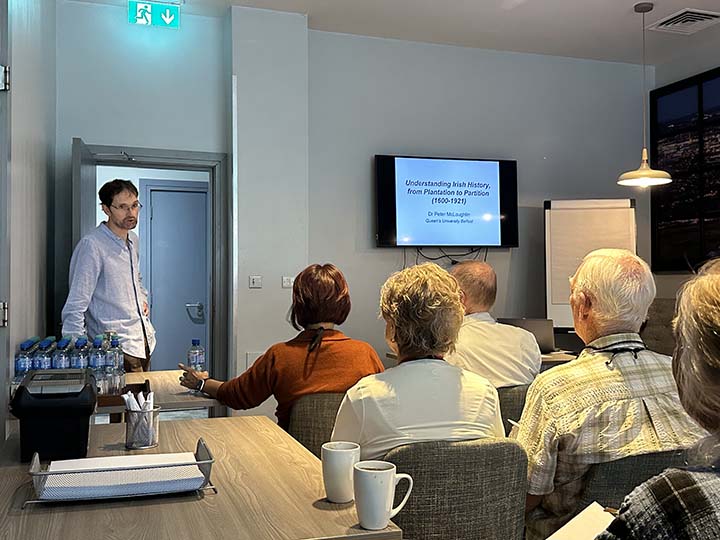
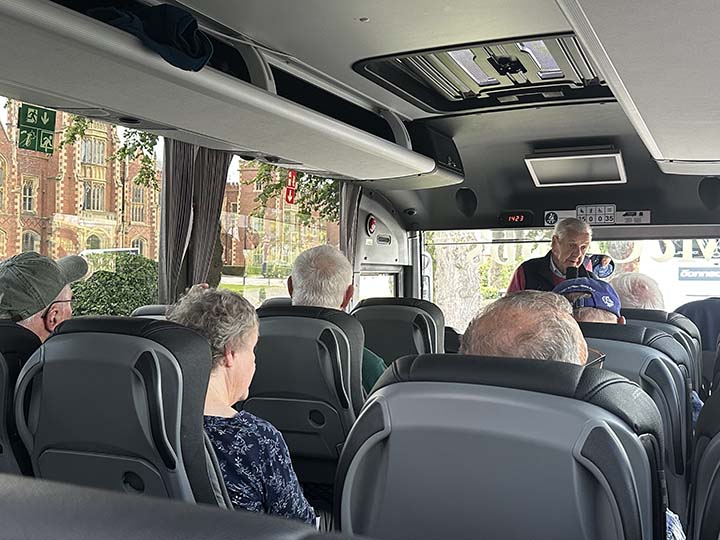
Here's our morning lecturer, Dr. Peter McLoughlin, Queens University, Belfast. He told us all about Irish History from plantation to partition. (More than one speaker used the word "plantation" basically to mean "planting of people in a place" and it had nothing to do with cotton fields and big houses with white columns, though at one point we did drive pretty close to the Hill of Tara, but I'm getting off the subject.) His lecture was one of the best I have ever experienced in all my travels with Road Scholar. In the space of just over an hour he managed to present Irish history in a way that made sense of the troubles between the Catholics and the Protestants over the centuries. The problems involve nationalism, religion, and economics. And when you hear it discussed the way he did it you feel like you understand it all. Of course there’s conflict between the haves and the have-nots, the powerful and the powerless in a society where the minority rules the majority. This was a great way to start the day. I would sit through it again if I could. So here's what I think I learned about the history of Ireland. Back in the Dark Ages everybody in Ireland was pagan. Then in 432 AD a Catholic missionary named St. Patrick arrived. You may have heard of his day. And then with a little help from his friends, in a short 700 years everybody in Ireland was Roman Catholic. That lasted until 1690 when, because of political problems in England, two English armies held a significant battle on the banks of the River Boyne in Ireland, resulting in the defeat of the Catholic King James II by the Protestant King William III. That's the William and Mary William. Suddenly the British were in charge in Ireland and being Catholic was no longer a smart thing if you wanted to be among the in-crowd. Were the Irish resentful? Of course they were, and lots of resentment can build up over the years, especially as the British treated the Irish like chattel and scarfed up all the good Irish produce to feed their armies while the Irish had to learn to subsist mainly on potatoes. That actually worked OK, sorta, until the mid-1800s when blight wiped out virtually all the potato crop and roughly a million people died of starvation and famine-related illnesses. As a result, one to two million Irish fled the island, moving mainly to North America and Great Britain. (Remember, there was plenty of food other than potatoes to feed the Irish people, but the British were in charge and the British had to feed their armies.) After the potato famine ended in 1852, the remaining Irish naturally wanted to overthrow their British oppressors, and thus began a push for Irish independence. resulting in armed conflicts that lasted well into the 20th Century. A semi-solution was reached in 1921 in which Ireland was partitioned between six northeastern counties which became known as Northern Ireland and remained British, while the rest of Ireland, racked by sectarian violence, became a real mess. Eventually in 1949, southern Ireland declared itself a republic. Still, occasional shootings and bombings and constant unrest continued throughout Ireland, especially in Belfast, the capital of Northern Ireland. It wasn't until 1998 that the "Good Friday Agreement" was signed, bringing -- to the relief and amazement of nearly everybody -- a blessed end to "the troubles." And everybody lived happily ever after. So far. And that's Irish history in a nutshell. I may have left out one or two things. Right, Brendan?
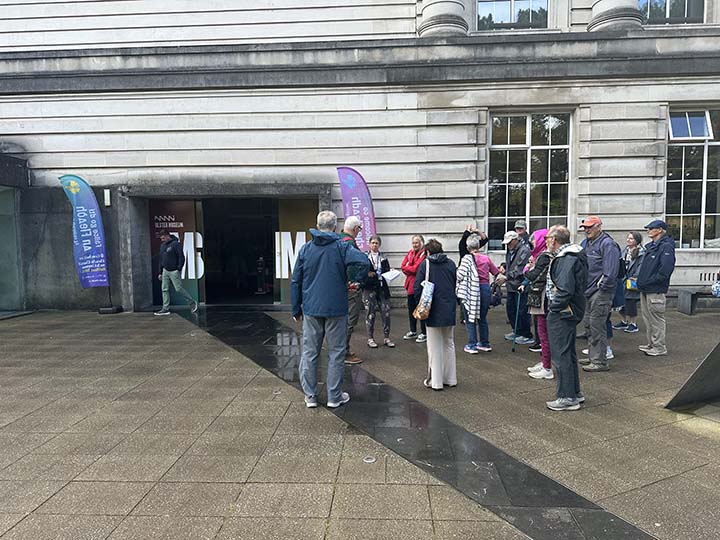
The Ulster Museum located in the Botanic Gardens serves as Northern Ireland's main home for natural sciences, dinosaurs, fossils, and wildlife collections alongside local history and art. Oh boy, a museum!
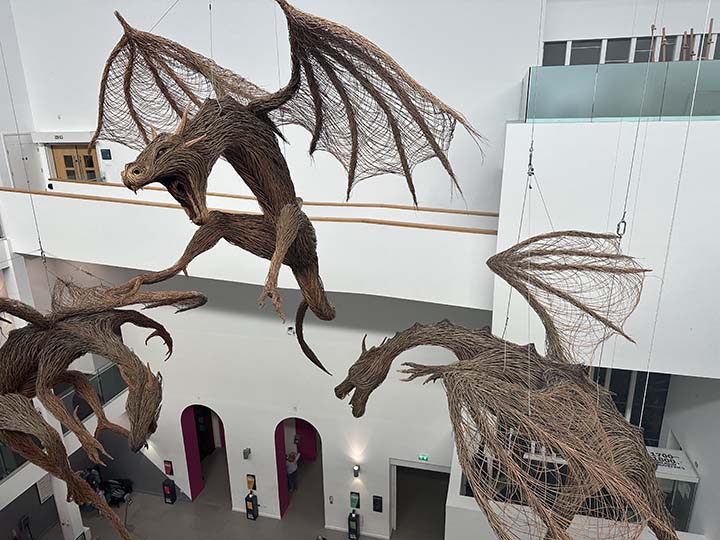
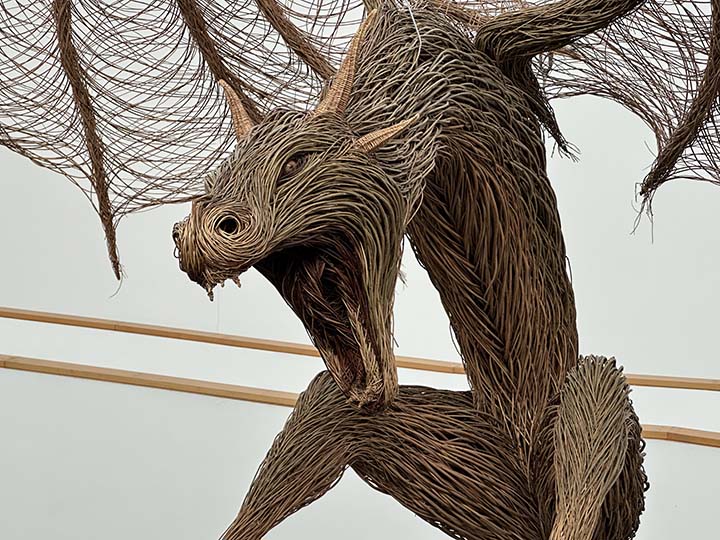
I did not know that Ireland had dragons.
Actually, these were props created for an event related to Game of Thrones. Pretty artistic, I think.
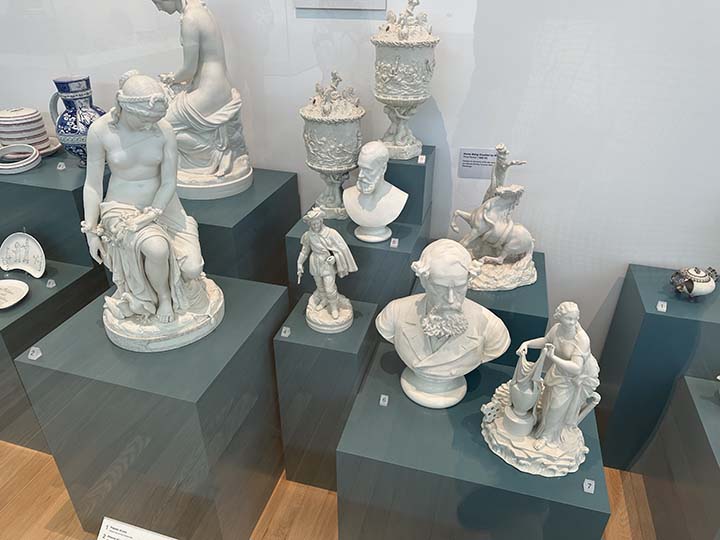
This museum had a little bit of everything from pottery to jewelry to rocks to dinosaur bones and ladies’ dresses. All the exhibits were very well done, but to me it seemed like they had thrown together a little bit of everything on any subject you could imagine.. You know, in the section on Irish manufacturing I wouldn’t have been surprised to see a kitchen sink.
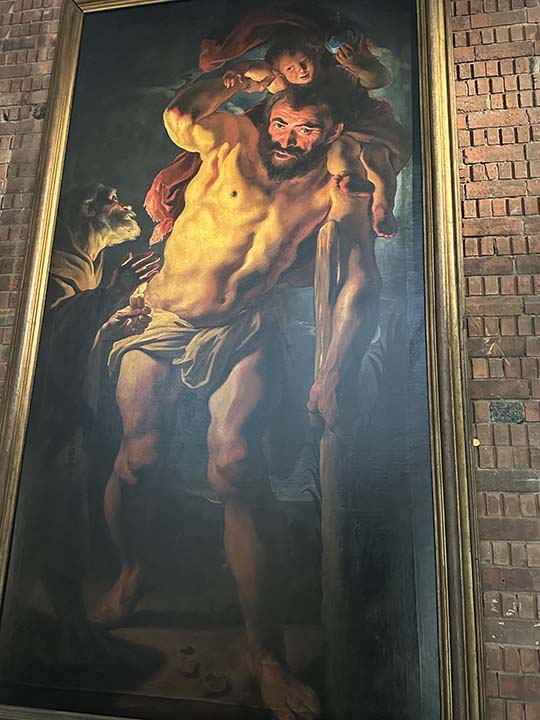
This is Saint Christopher Carrying the Christ Child by the Flemish Baroque painter Jacob Jordaens, created around 1625–1630. Baby Jesus looks terrified.
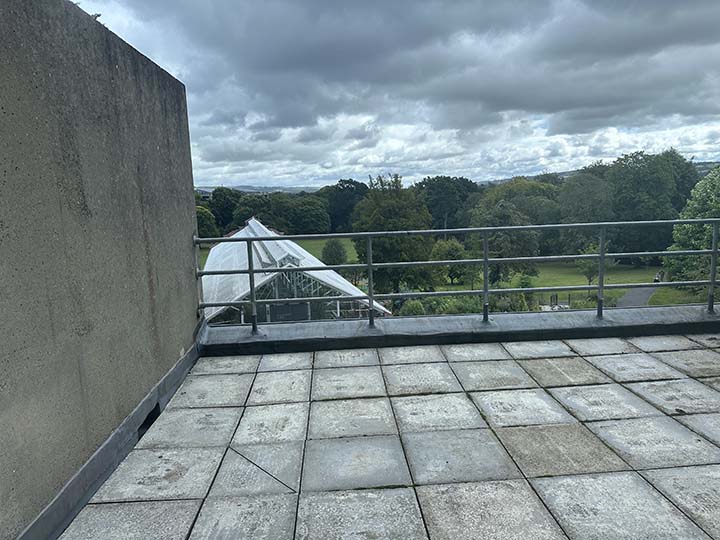
Nice day out there.
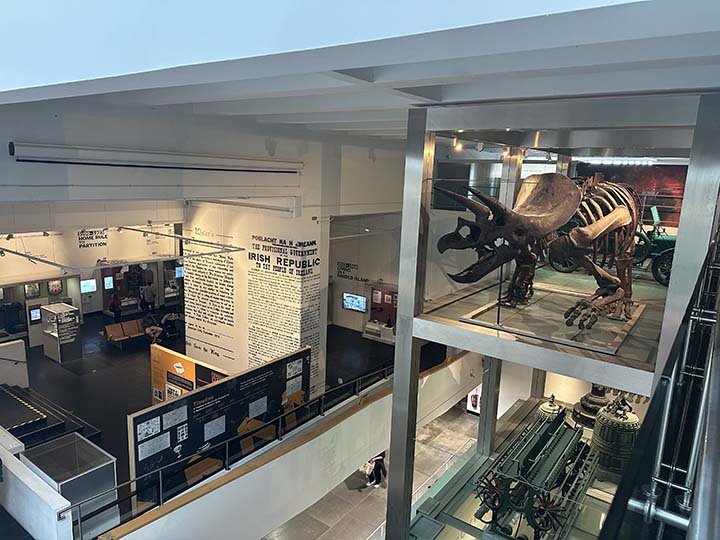
I see a dinosaur and an exhibit on Irish history.
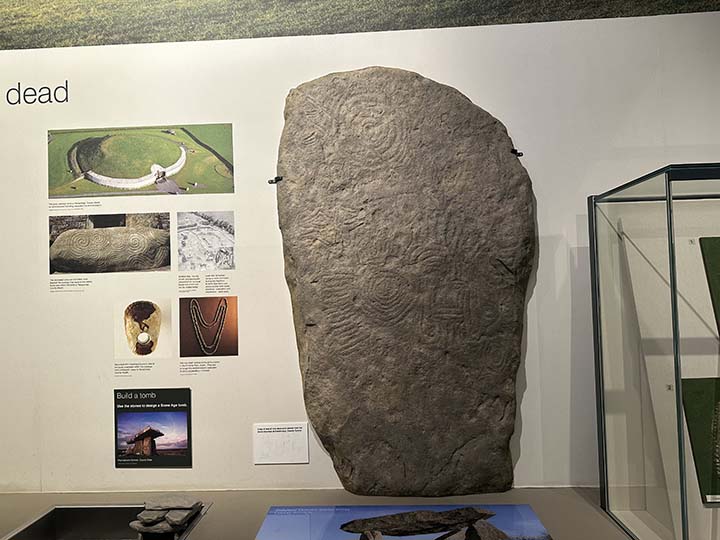
That's a very old rock.
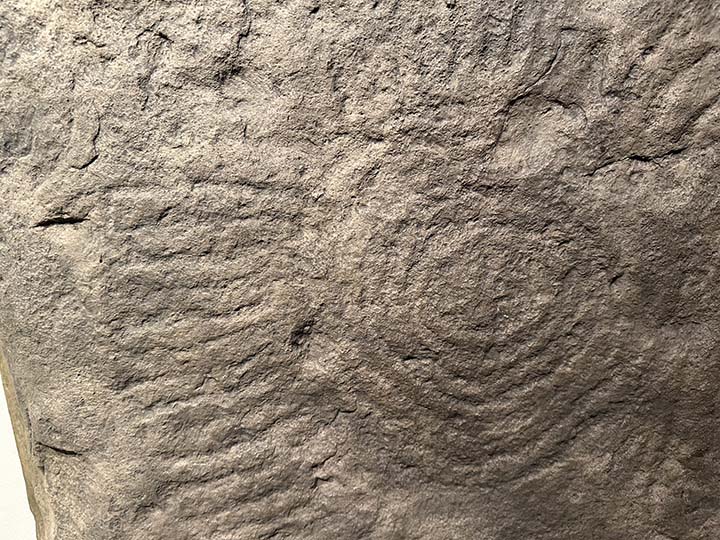
Its inscriptions date to the Neolithic period. We'll actually see rocks with these inscriptions on the final day of the trip.
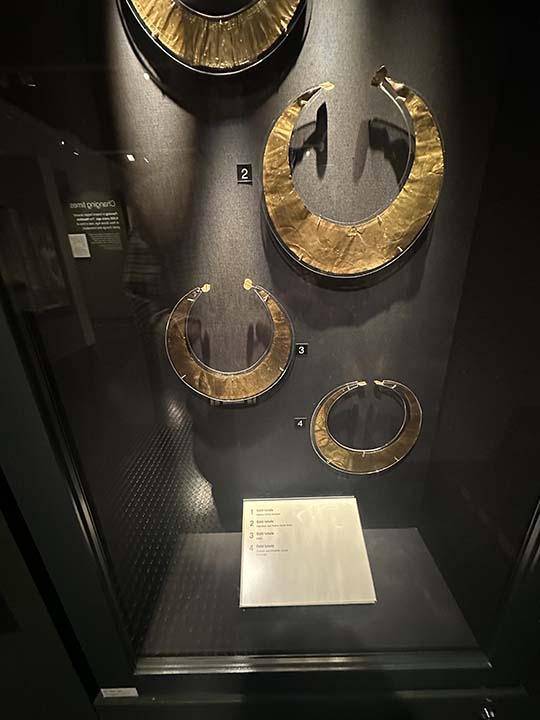
There was an exhibit on ancient Irish metal work like these golden trinkets.
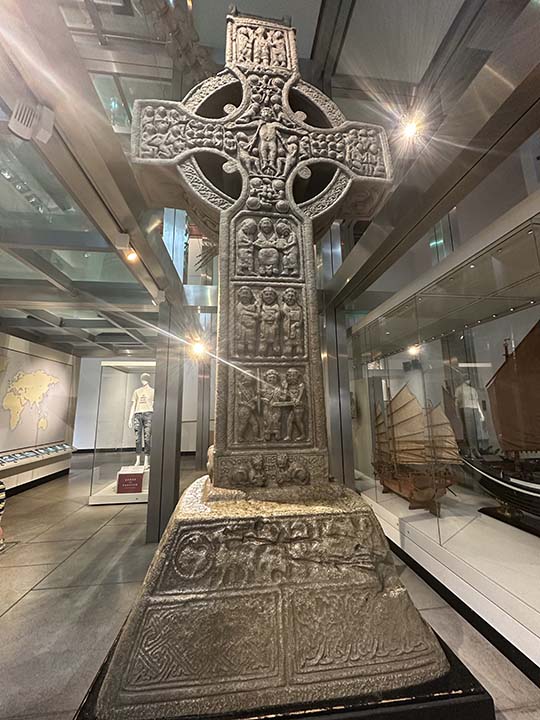
This is a plaster copy of a famous High Cross, requested to be made by Muiredach, abbot of the monastery at Monasterboice, County Lough (who died in 922 AD). The cross acted as a "bible in stone" with carvings based upon biblical stories including the three wise men and the last judgment.,
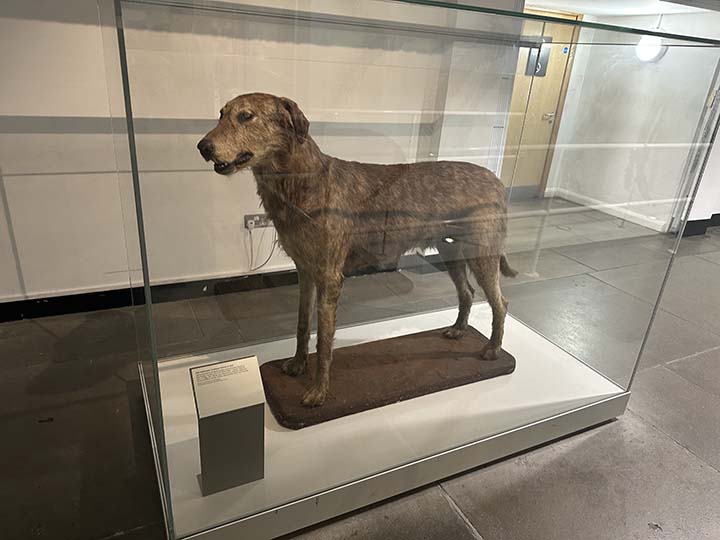
There was even a dead dog. The
stuffed Irish wolfhound at the Ulster Museum in Belfast is a famous
champion dog named Patrick of Ifold, born on Saint Patrick’s Day in
1923. Preserved through taxidermy after his death, this iconic
canine is a beloved fixture of the museum's natural history
galleries.
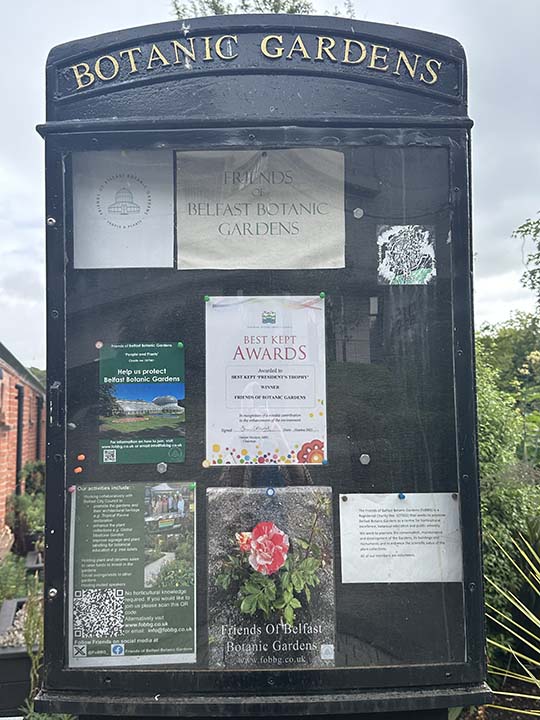
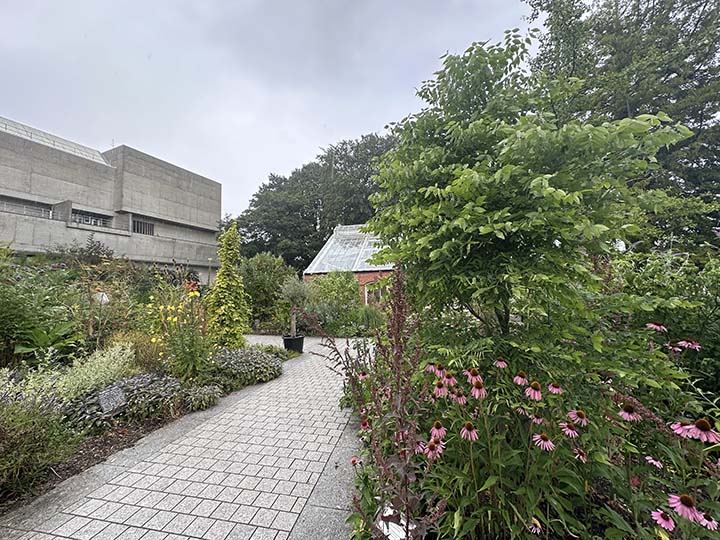
There were extensive botanic gardens.
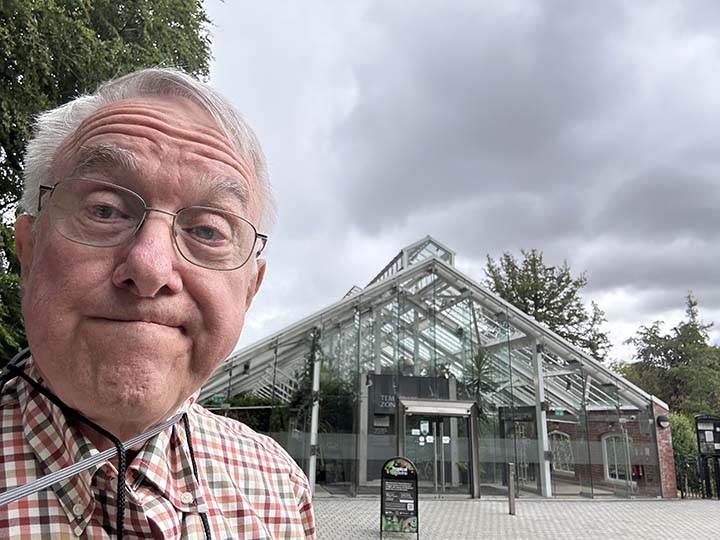
So let's go have a look.
It's pretty our here, but it's cold and misty.
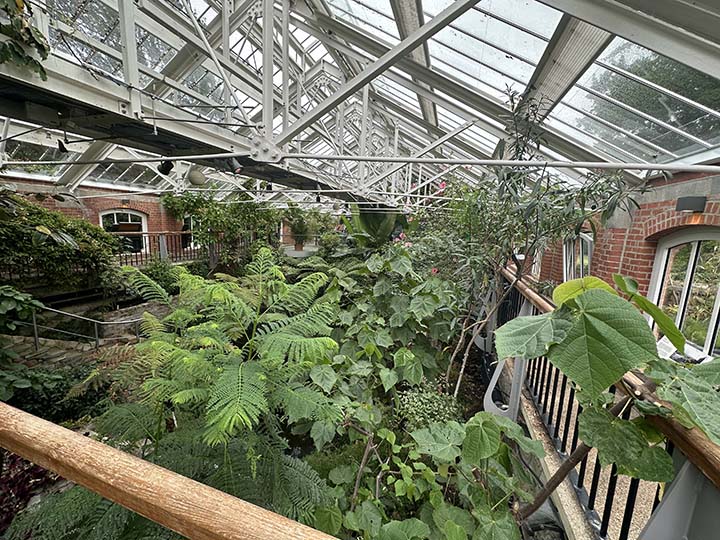
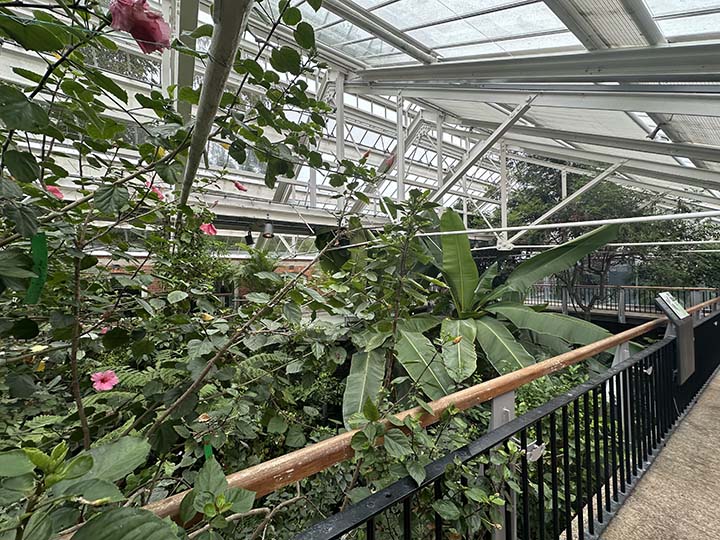
So let's have a look inside.
Where it's warm and muggy.
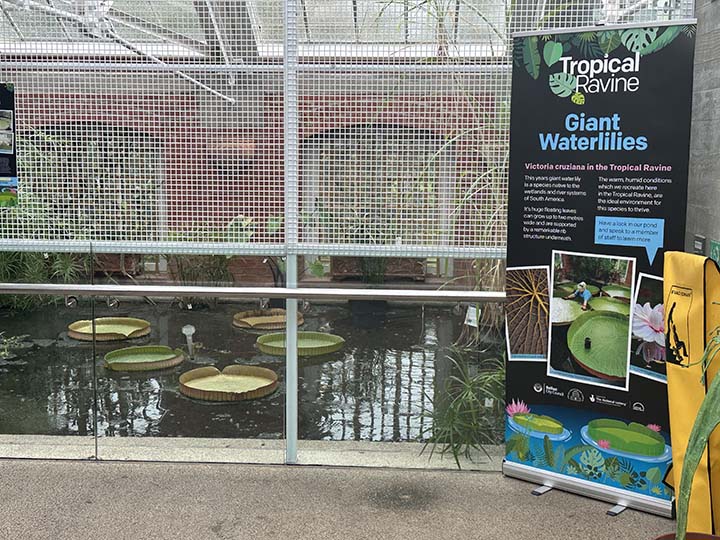
Nice water lilies.
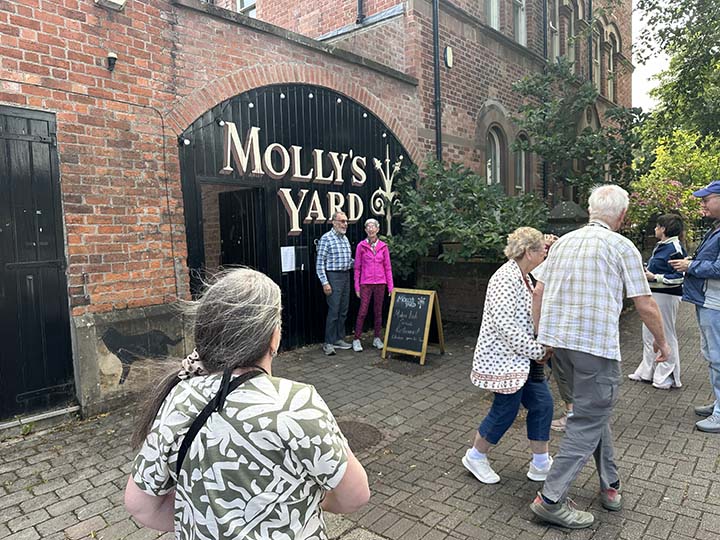
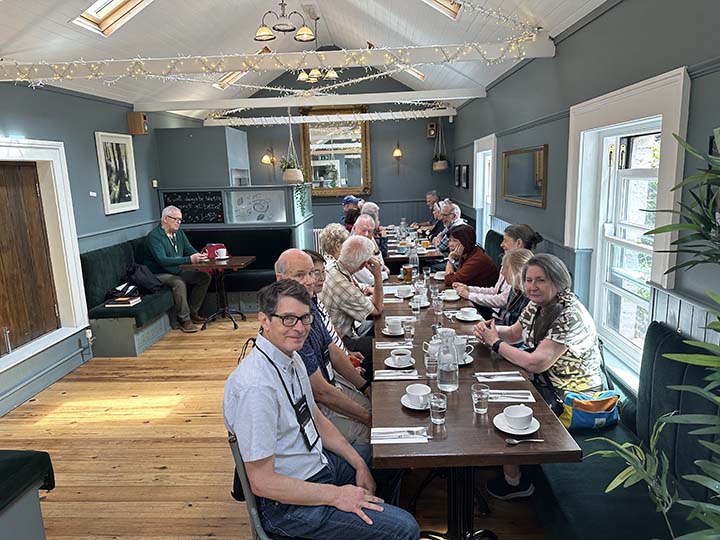
We had lunch at a nice restaurant. Russ and Susan are over there posing.
Nice place. We are all having fun getting to know each other. The food was fine, but I am still looking forward to having an excellent meal in Ireland. My burger was OK if you like overcooked dry ground beef topped with a fatty rasher. We didn't always make Brendan eat by himself.
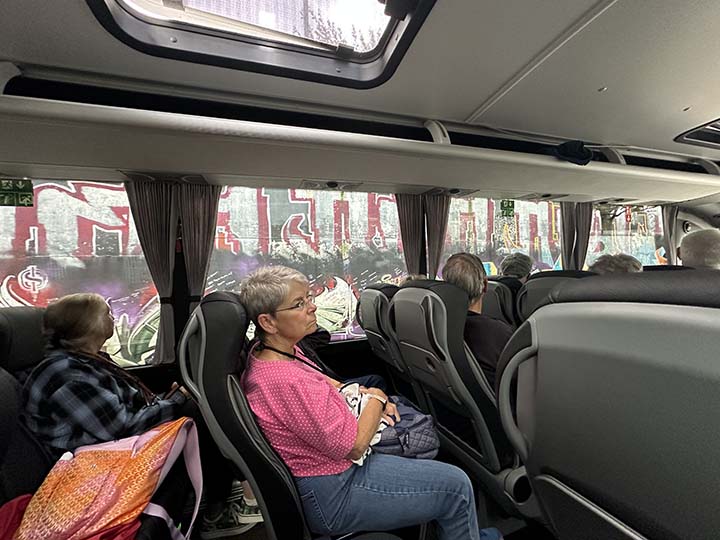
We picked up a local expert to explain things to us as we rode our bus through the streets of Belfast.
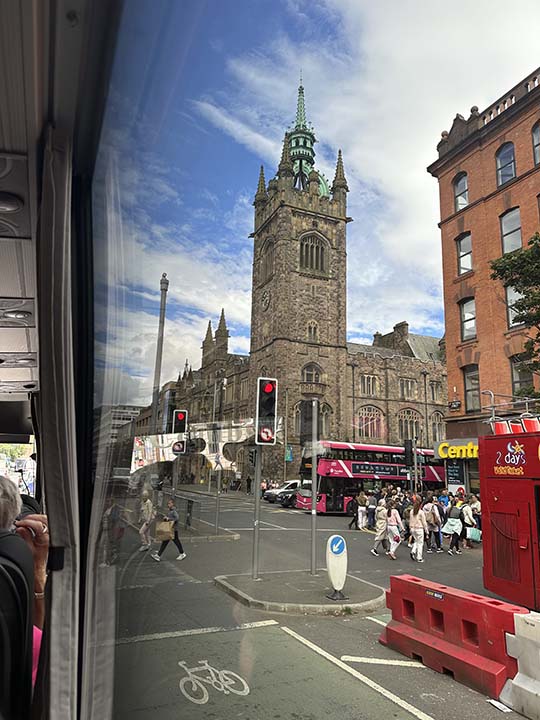
That is Irish Presbyterian headquarters.
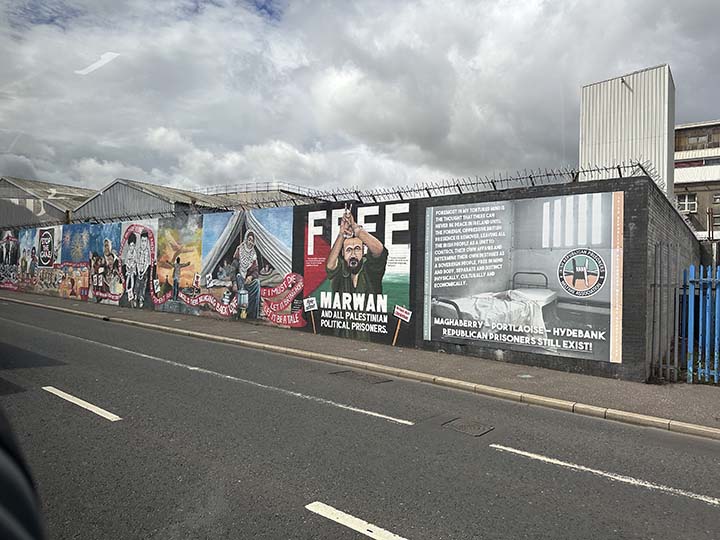
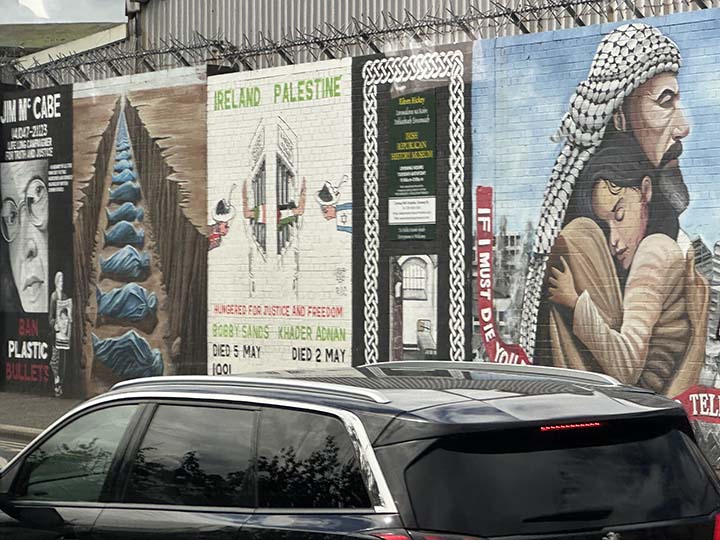
And that's a wall of murals.
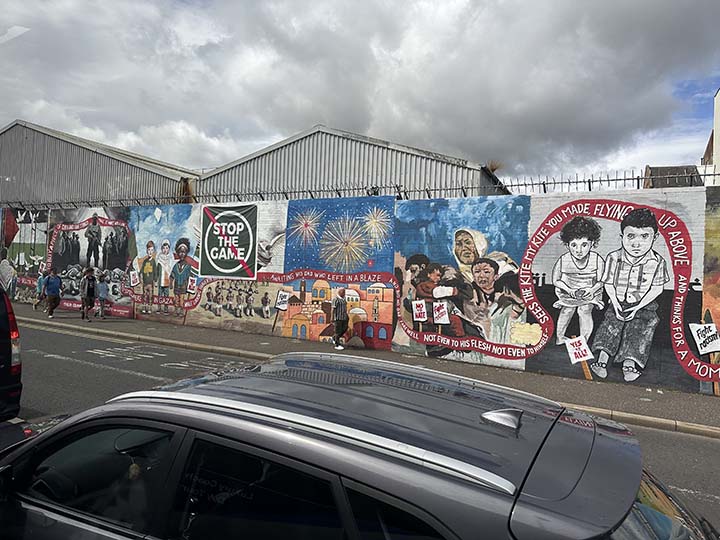
And that's more murals.
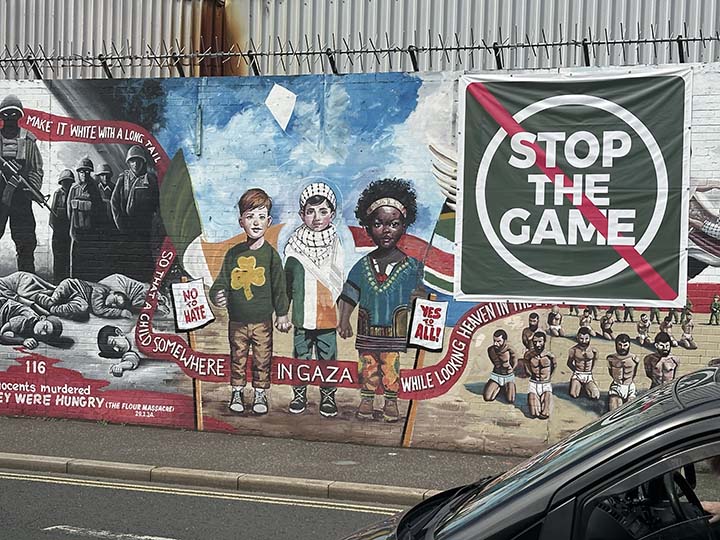
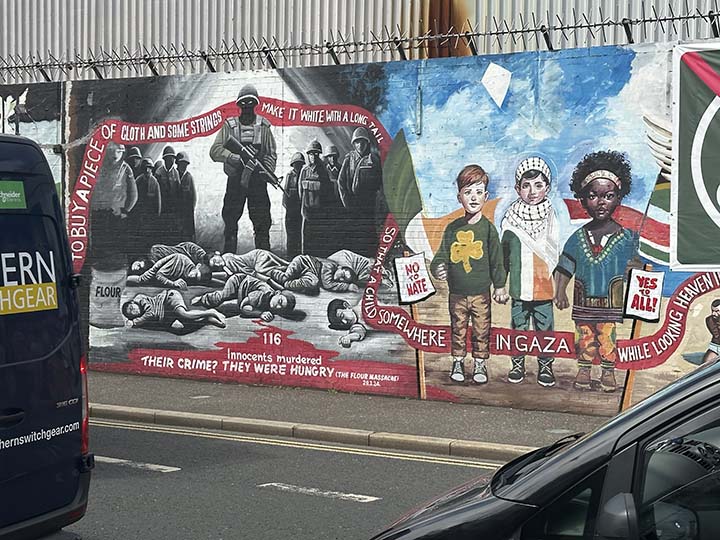
Many places we saw in the city are covered in political murals, supporting Palestine or Israel or Catholics or protestants or you name it.
They're artistic.
And the stories they tell are often grim.
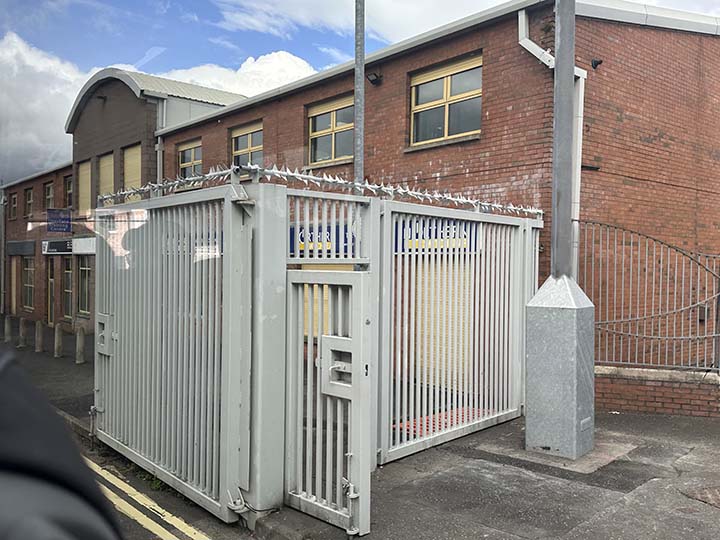
We are crossing into an area of Belfast that was noted for violence in the 70s and 80s, but not so much these days, thanks to the Good Friday Agreement. We didn’t even have to be examined by men carrying rifles.
Any surface that can be painted appears to feature a mural.
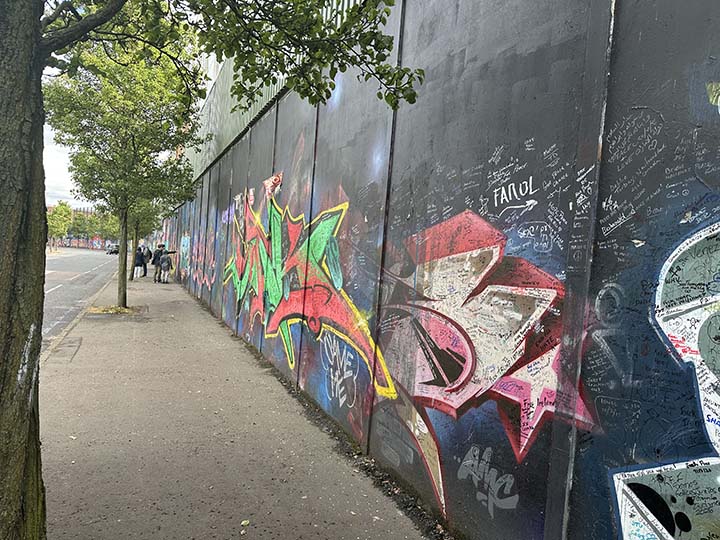
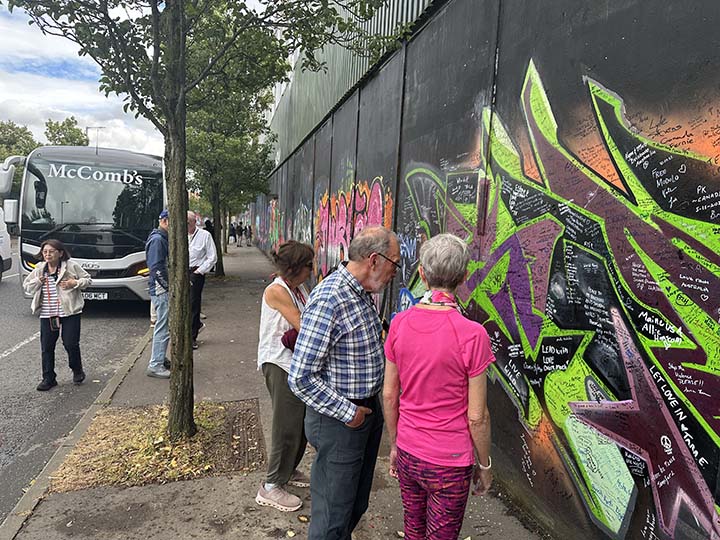
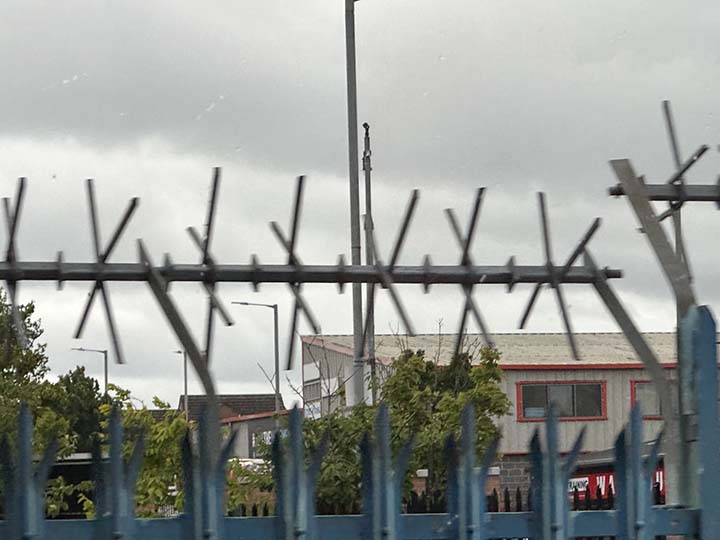
The Catholics are on one side of the wall and the Protestants are on the other side of the wall and at one time there was lots of fighting along here.
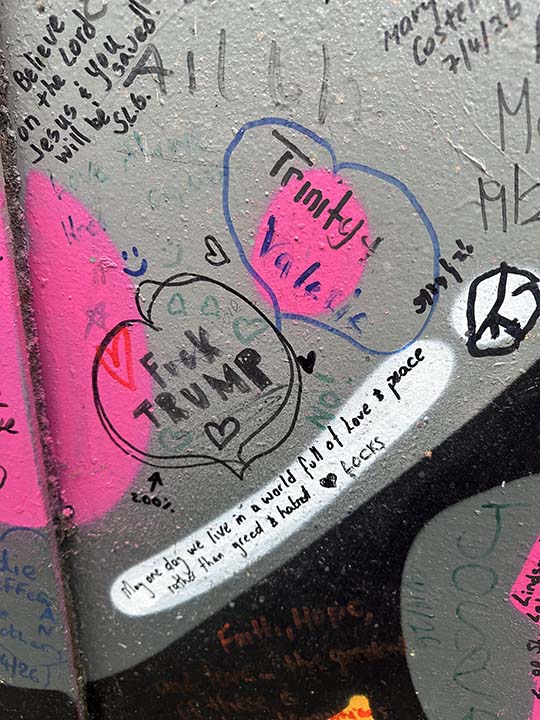
Now people just draw on the wall. Personally, I consider that an improvement.
People do still have some strong opinions to express.
Even though things are mostly calm around here, I still think I don’t want to live in this neighborhood.
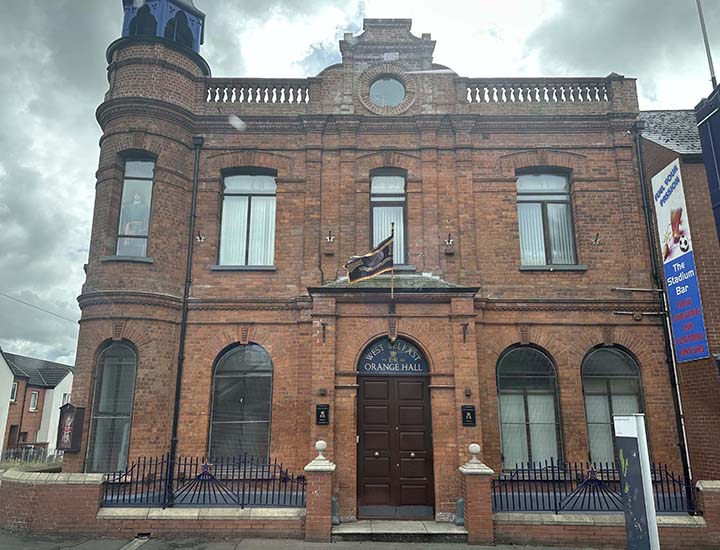
Remember William III who defeated Richard II at the Battle of the Boyne? He may have been Britain's Anglican king but he originally was Dutch. William of Orange. So it's not surprising to see references to orange here in Northern Ireland.
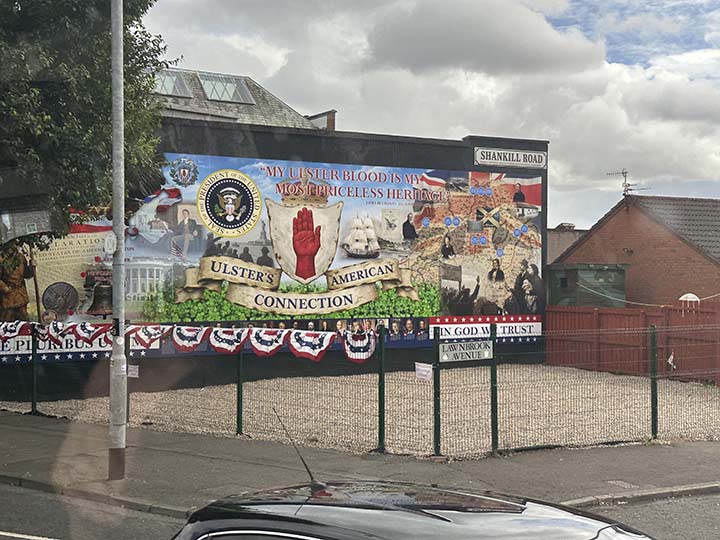
There are murals for just about every subject. Somebody thinks America is just great.
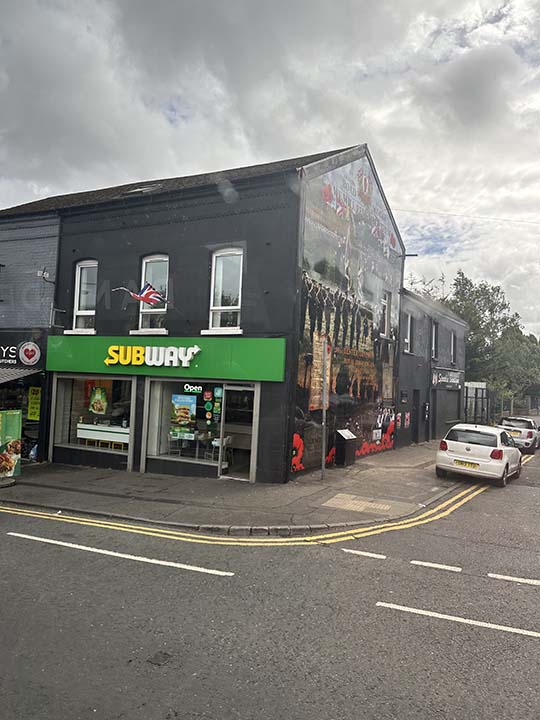
The Subway sandwich shop has a political mural.
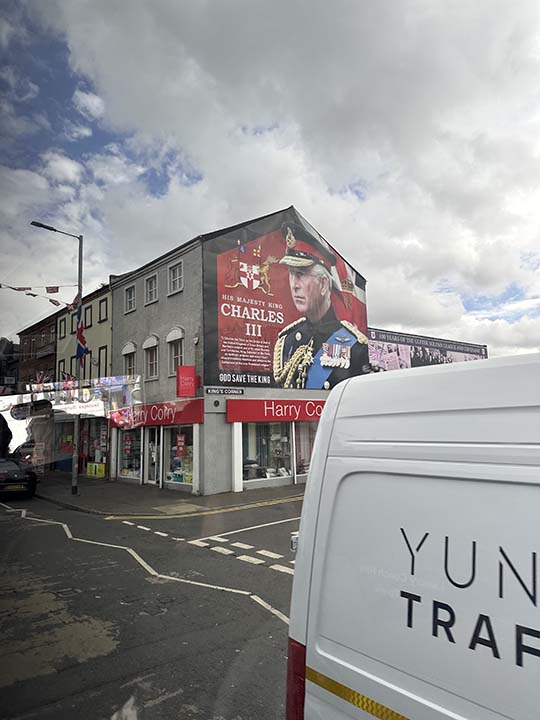
He's the King of Northern Ireland among other places.
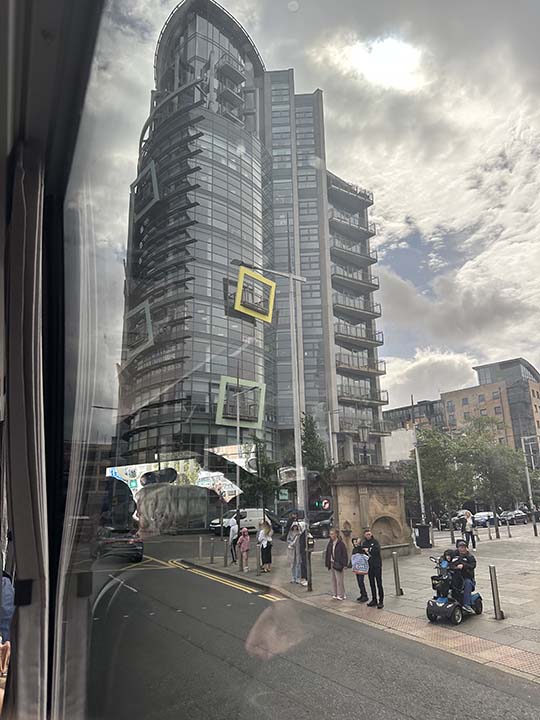
Well, that’s a fancy building. This
is The Boat, a 14-story residential and commercial tower located in
Queen's Square, Belfast. Completed in 2009, the building features
commercial offices on floors ground through 9, with luxury
apartments occupying floors 10 to 14.The tower's distinctive
colored, square-shaped balconies are designed to represent sails in
reference to its location by the river Lagan.
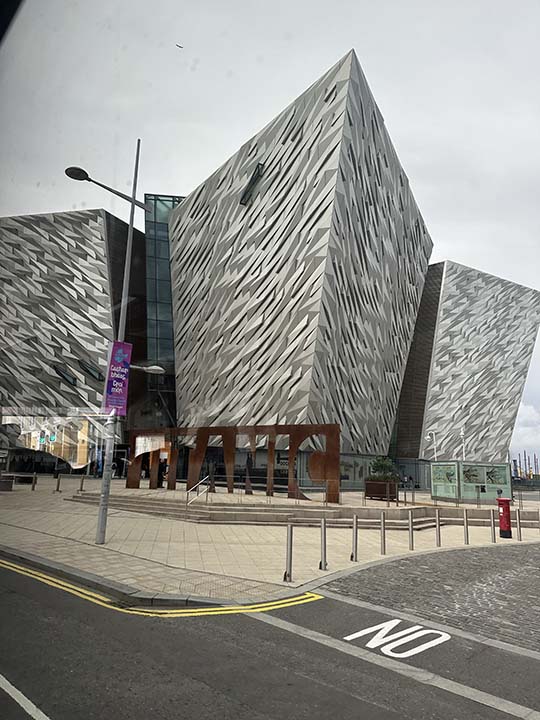
This building is in the Belfast shipyard where the Titanic was constructed. The wings of the building are supposed to represent the prows of ships sailing north south east and west. They say that these representations are to scale so when you are standing beneath one of the wings and looking up, you are seeing the size of the Titanic.
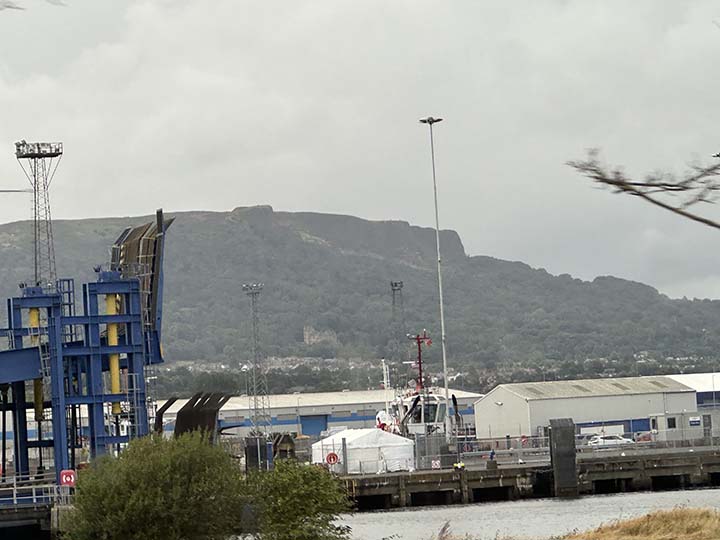
Jonathan Swift said that when he saw that mountain over there and noticed how much it looks like a reclining giant, he got the idea for Gulliver’s travels.
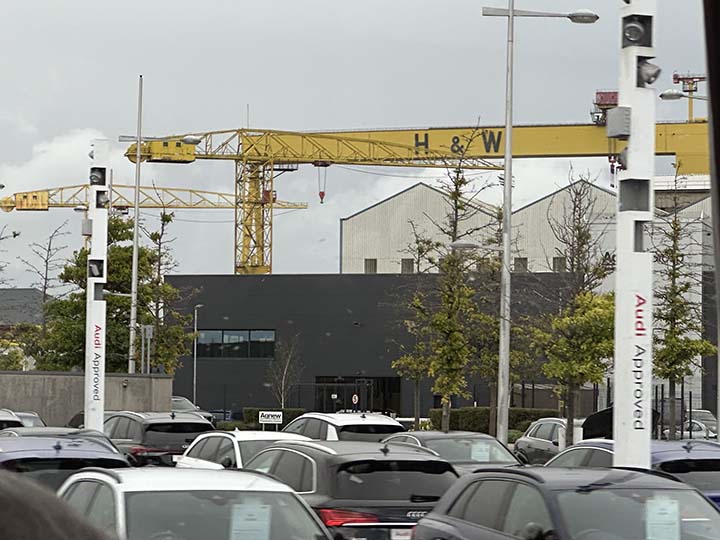
They still build big ships here
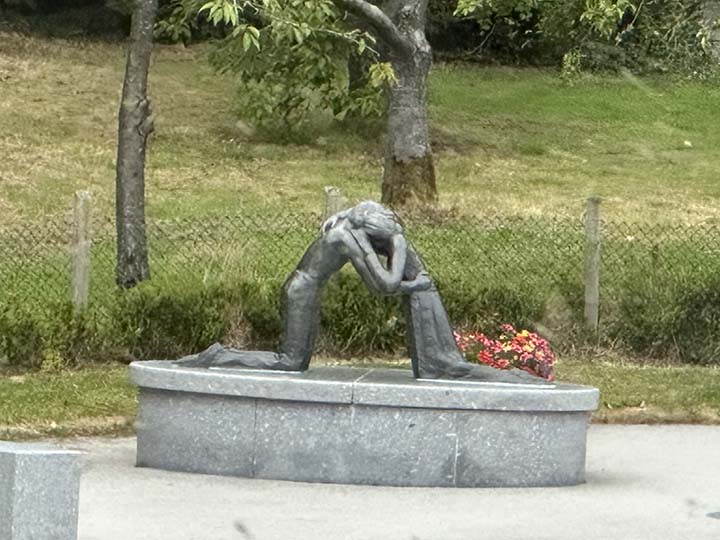
This is Reconciliation, a bronze sculpture created by artist Josefina de Vasconcellos. Created in 1977 and originally titled Reunion, it was inspired by a newspaper story about a woman walking across Europe to find her husband after World War II. The sculpture depicts two kneeling figures with their arms around each other and heads bowed together, representing human healing, reconciliation, and peace between nations. Replicas and casts of the artwork are placed at prominent peace and memorial sites worldwide, including Coventry Cathedral, the Hiroshima Peace Park, Stormont Estate in Belfast, and the Berlin Wall Memorial.
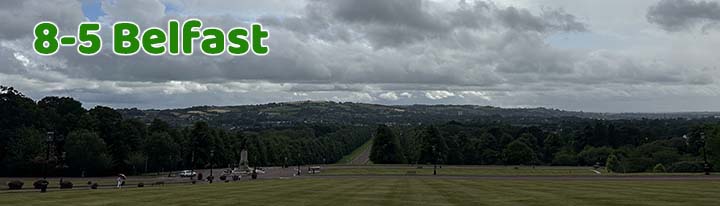
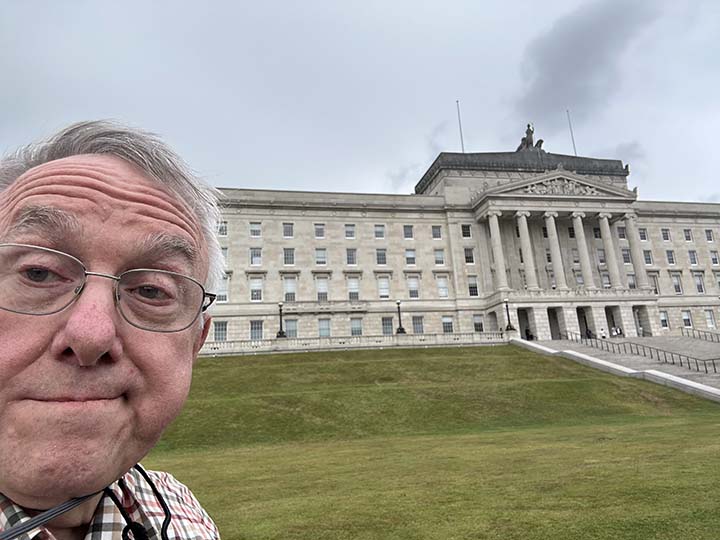
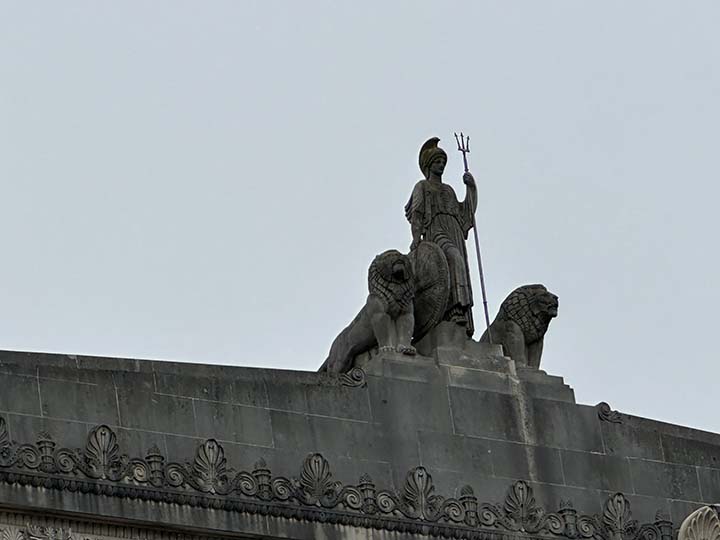
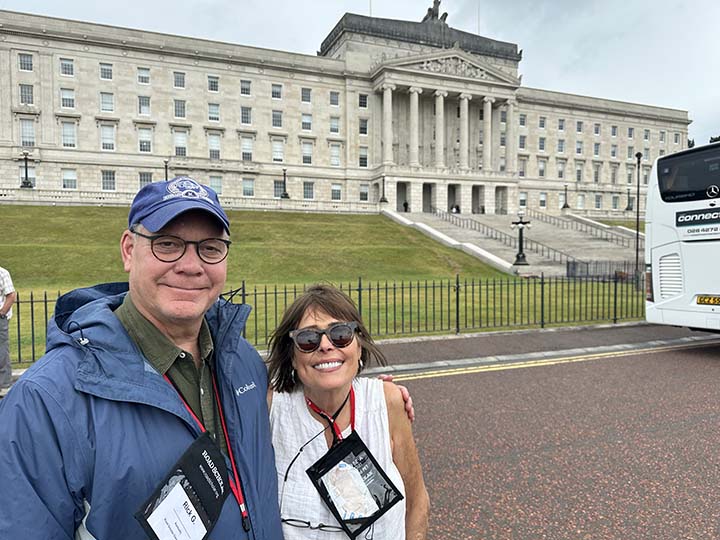
The Parliament Buildings at Stormont are the seat of the Northern Ireland Assembly, the devolved legislature for Northern Ireland. Opened in 1932, it sits in the 224-acre Stormont Estate on the east side of Belfast.
It looks sufficiently official.
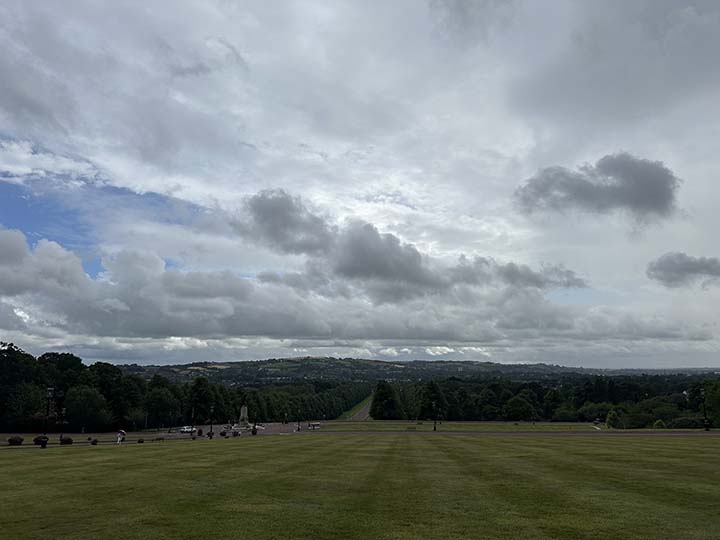
Look, everybody See that blue sky over there?
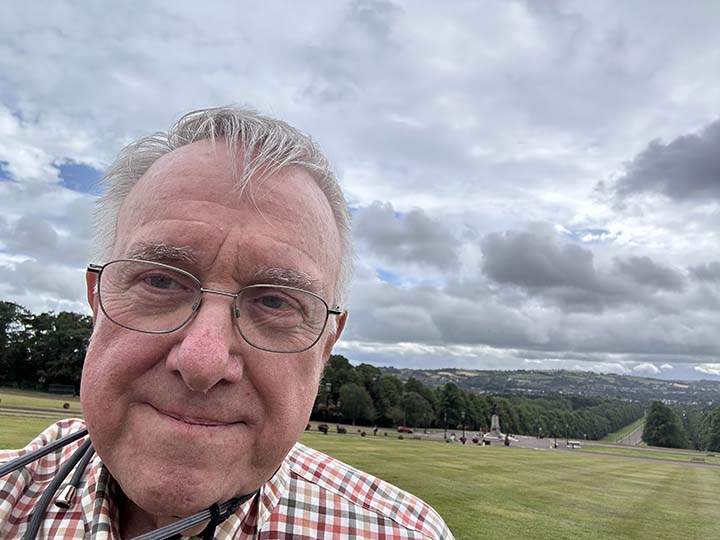
The view from up here is quite nice.
While chatting with Mary Beth and Rick I learned that they're from Lexington, Kentucky, and they know my friend Terry Sellars. How about that?
|