|
Today we will have sunshine. I can just feel it.
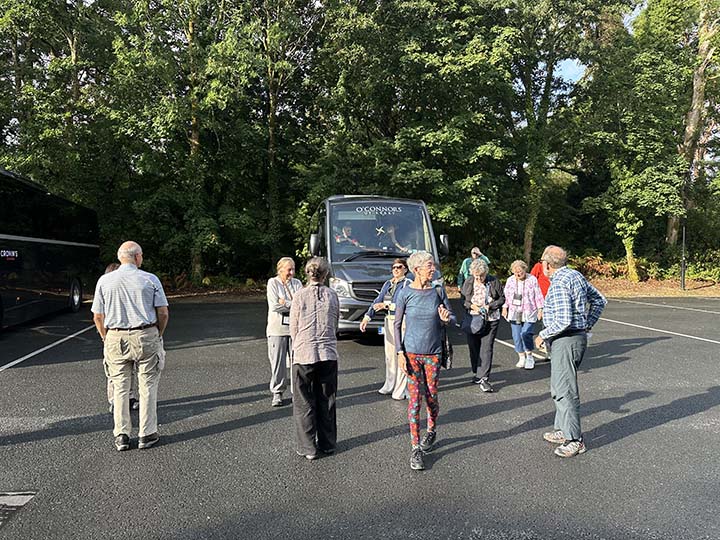
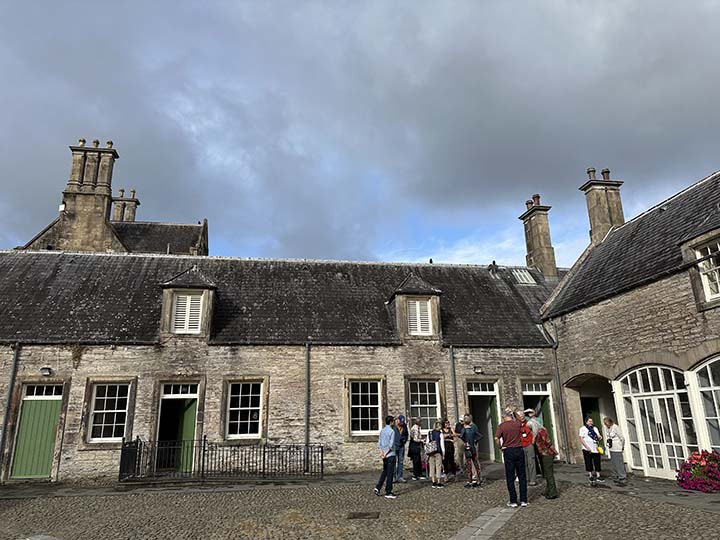
The Road Scholars are getting ready for more Irish adventures.
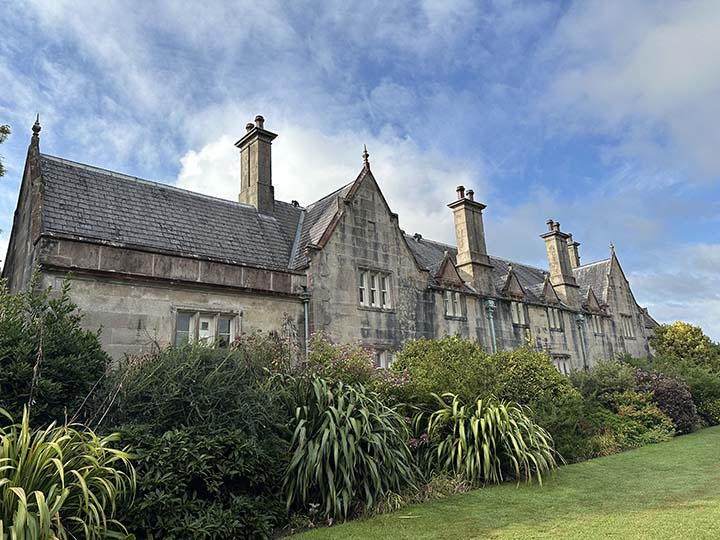
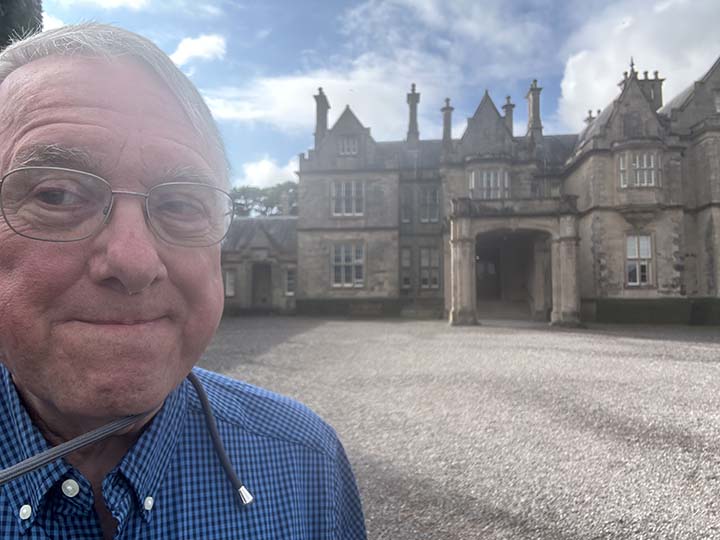
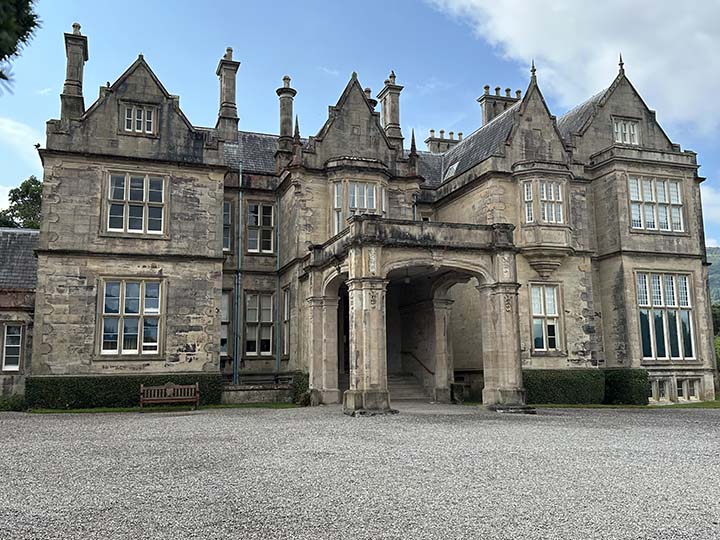
We are going to tour Muckross house.
It’s kind of like Downton Abbey only not quite so big.
And maybe not quite so impressive. But still, this is a nice place. Muckross House is located on the small Muckross Peninsula between Muckross Lake and Lough Leane, two of the lakes of Killarney, 6 kilometers (3.7 mi) from the town of Killarney in County Kerry, Ireland. In 1932 it was presented by William Bowers Bourn and Arthur Rose Vincent to the Irish nation. It thus became the first National Park in the Irish Free State (now Republic of Ireland) and formed the basis of the present day Killarney National Park. The house now forms part of a visitor attraction marketed as Muckross House, Gardens and Traditional Farms
With sixty-five rooms, it was built in the Tudor style. Extensive improvements were undertaken in the 1850s in preparation for the visit of Queen Victoria in 1861. It is said that these improvements for the Queen's visit were a contributory factor in the financial difficulties suffered by the Herbert family which resulted in the sale of the estate. In 1899 it was bought by Arthur Guinness, 1st Baron Ardilaun who wanted to preserve the dramatic landscape. He did not live in the house, but rented it out to wealthy groups as a hunting lodge. Bill thinks he could probably live here.
There are touristy carriages.
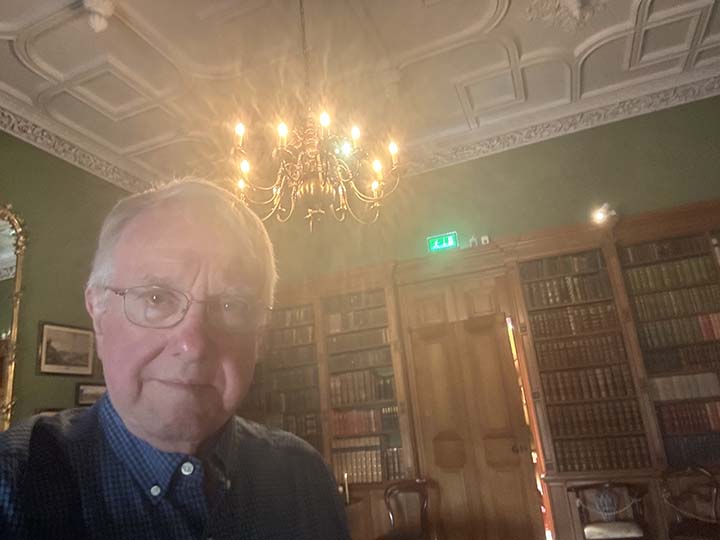
We went inside for a brief welcome, and then we walked through the place all on our own.
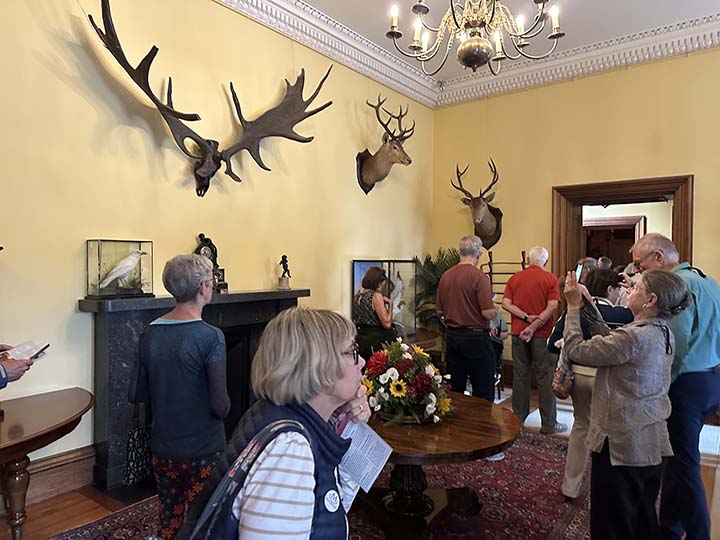
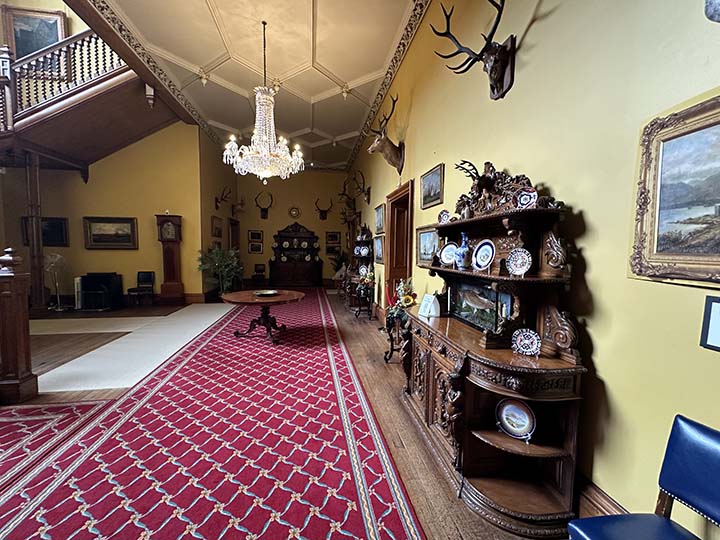
First stop was the "gun room." There were guns here, but mostly the results of what the guns shot.
Was Downton Abbey decorated with dead animals? I don't remember that.
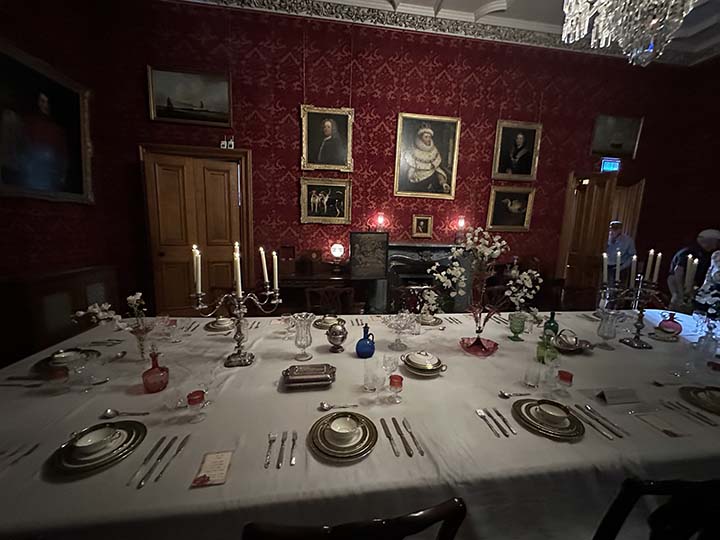
They had set a table for us.
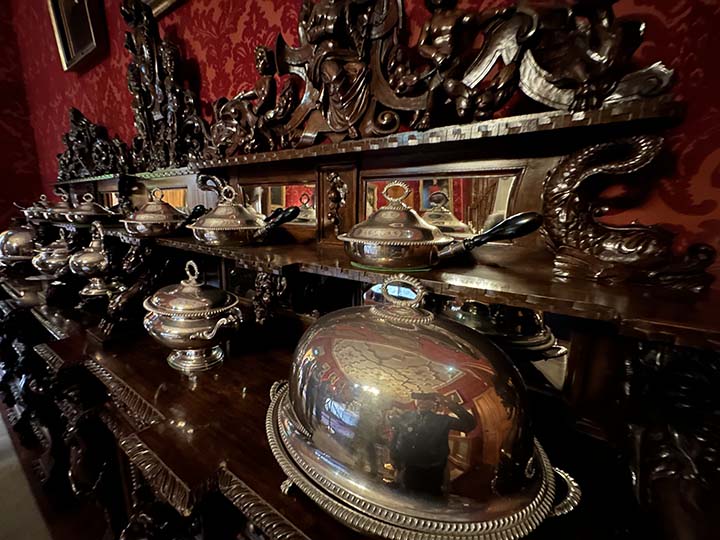
And oh what a silver service they had!
Bill is suitably impressed.
This is very nice but just think what a good interior decorator could do with the place.
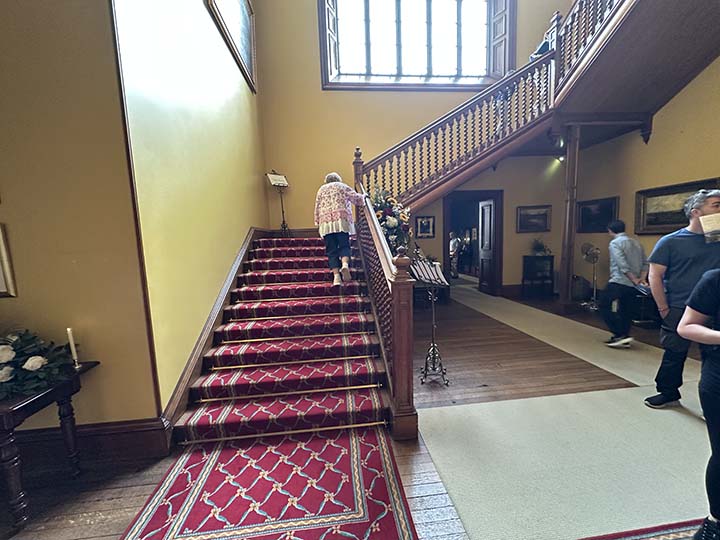
Phyllis gamely attacks the staircase. There are lots of stairs in Ireland.
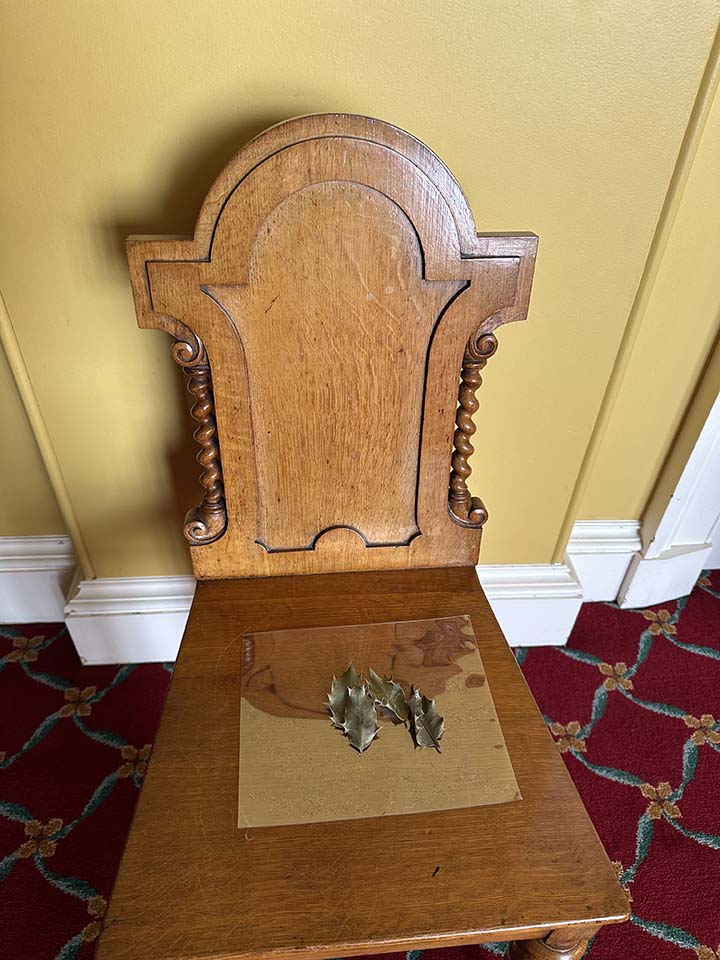
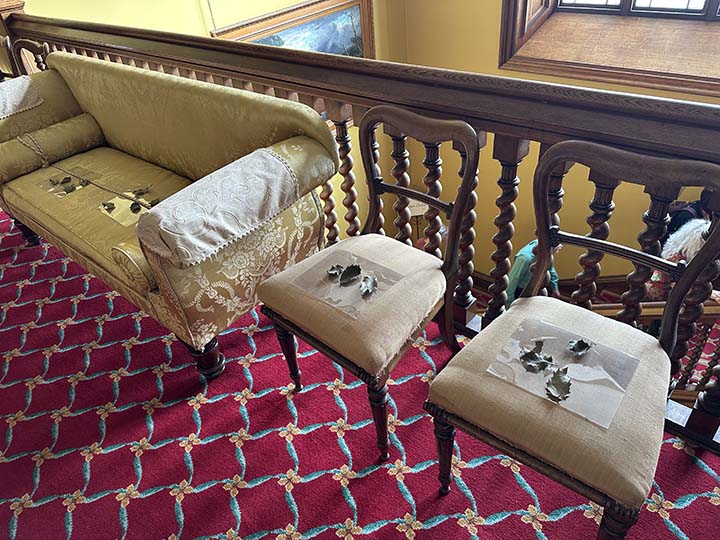
They thought they were being very clever with their method of preventing people from sitting on the furniture. See those dry holly leaves? Ouch!
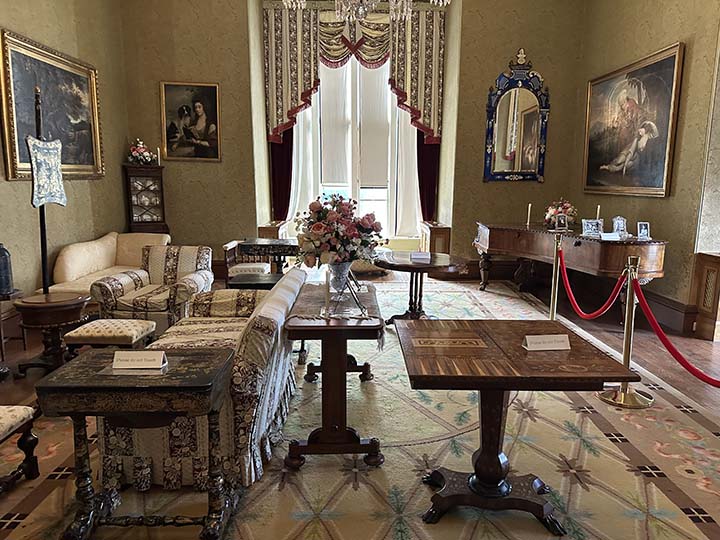
You can't sit anywhere around here.
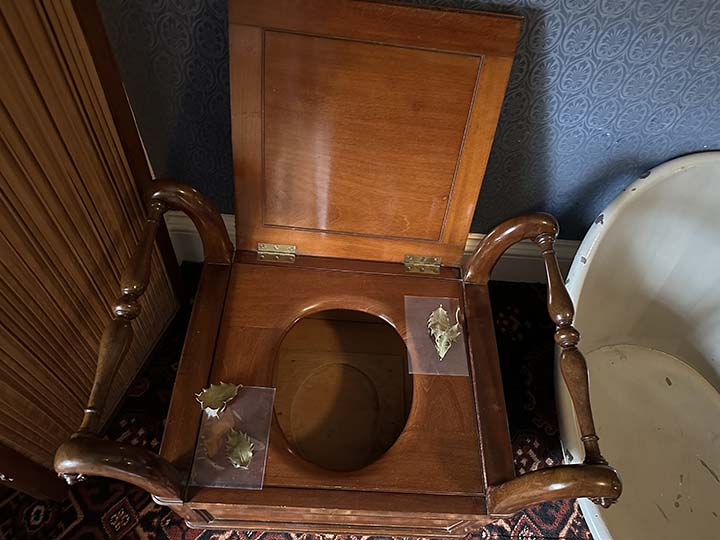
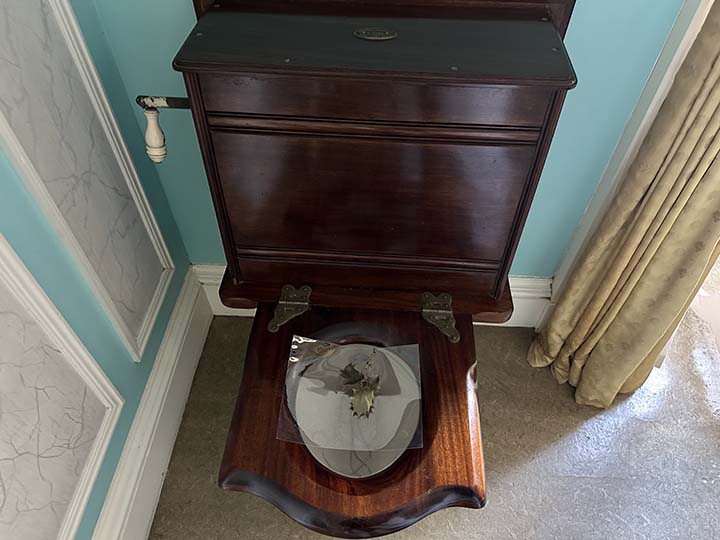
And don't even think about using the potty.
But I don't need to sit down!
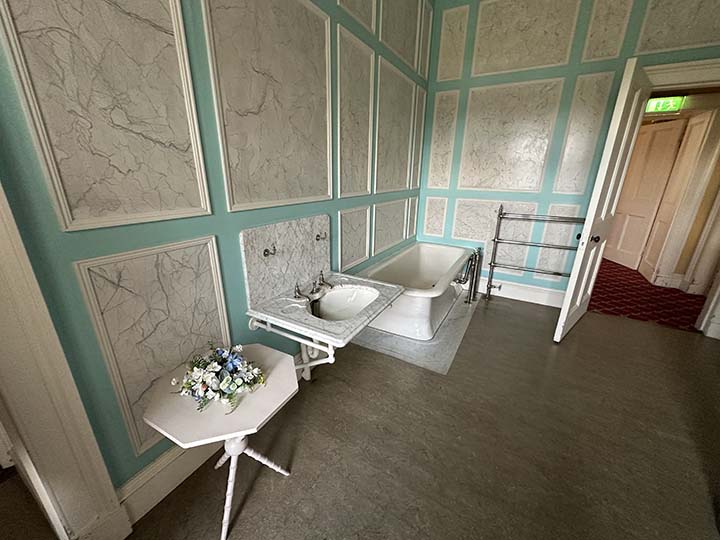
You probably can tell this is a bathroom.
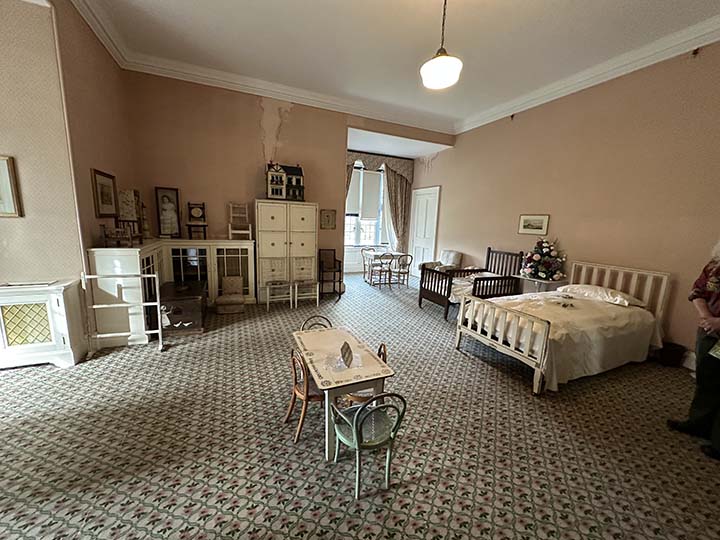
And this is the nursery.
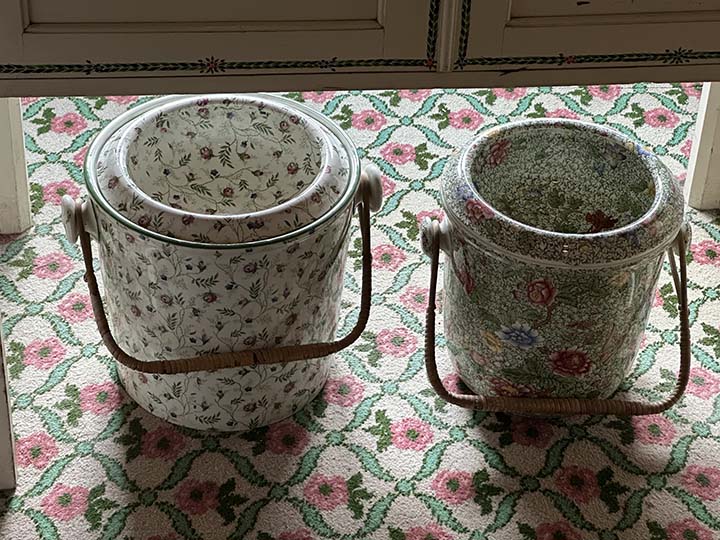
My grandmother used to keep one of these under her bed.
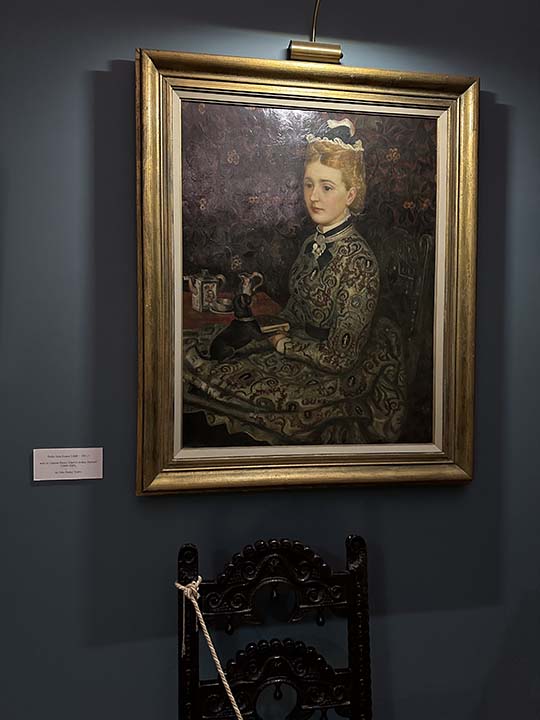
This is Emily Julia Keane (1848–1911). The portrait was painted by William Butler Yeats’ father, John Butler Yeats.
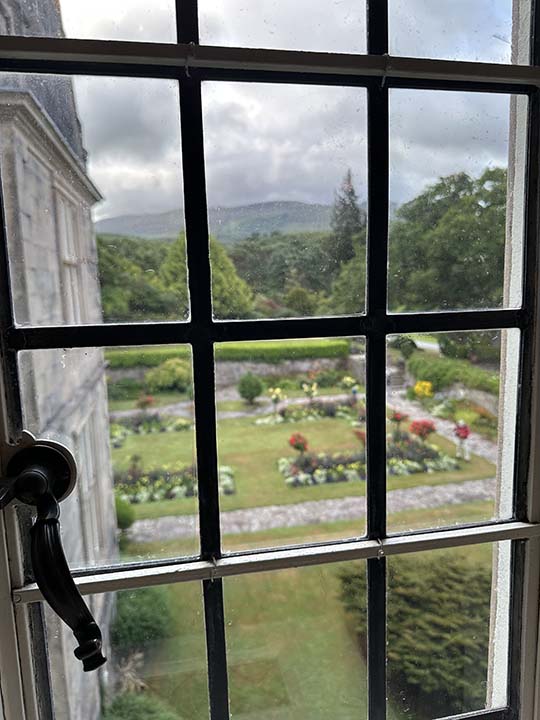
Nice garden out there.
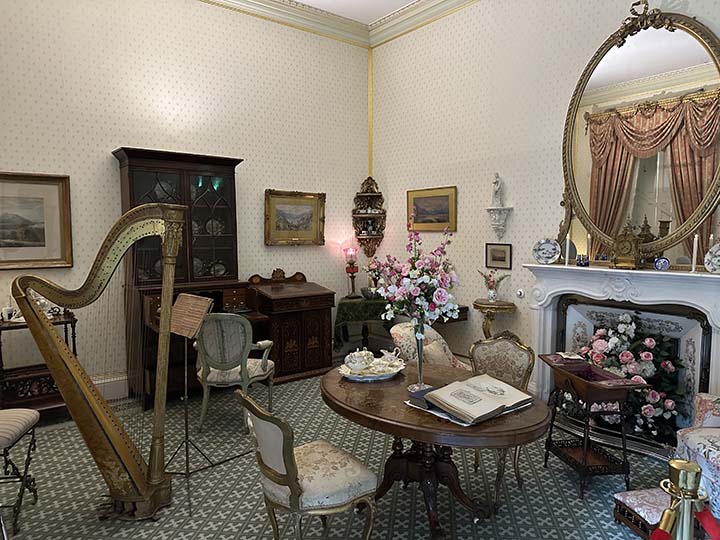
The music room.
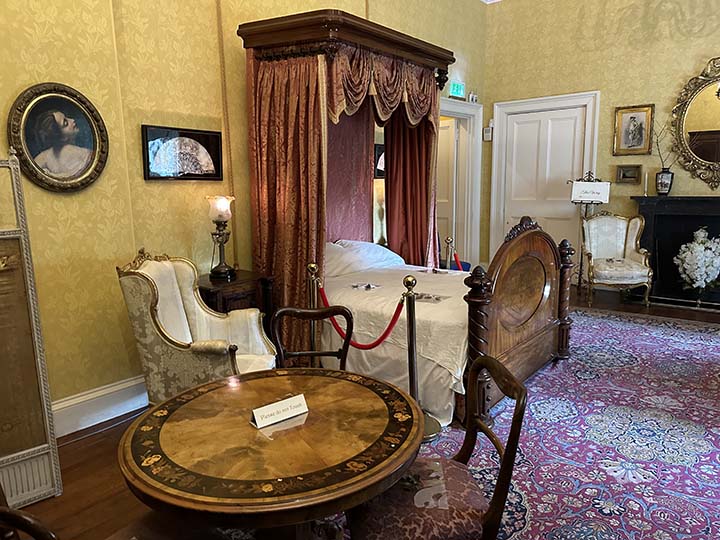
This is the bedroom where Queen Victoria slept on her visit here.
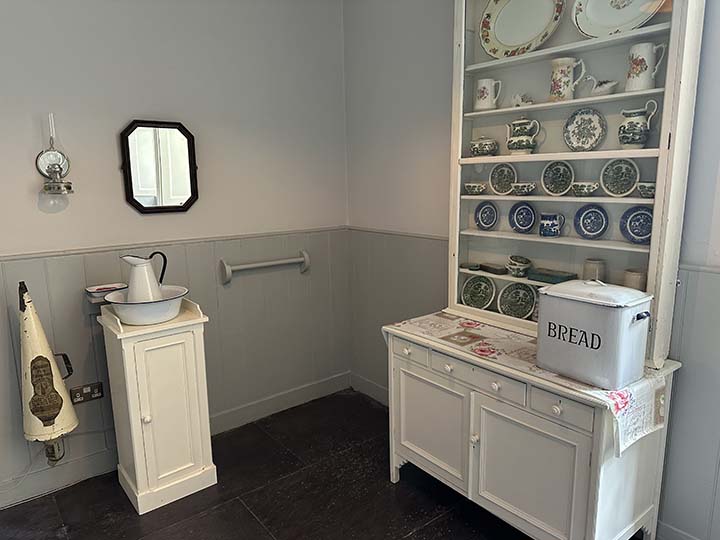
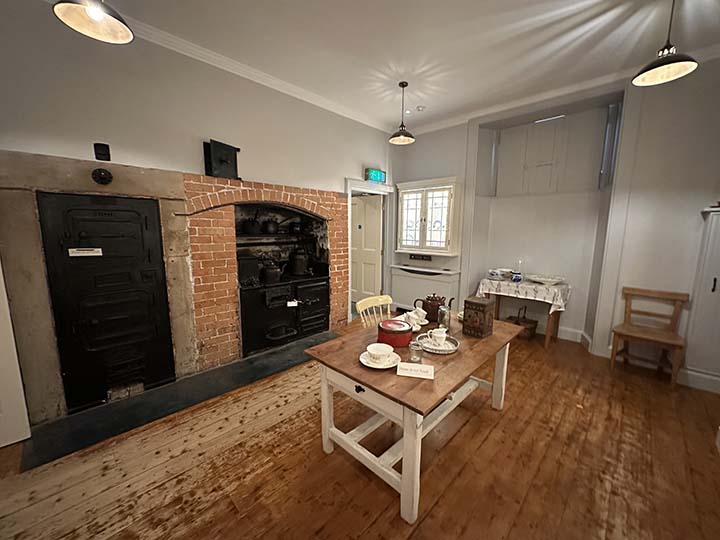
Here is some of the kitchen.
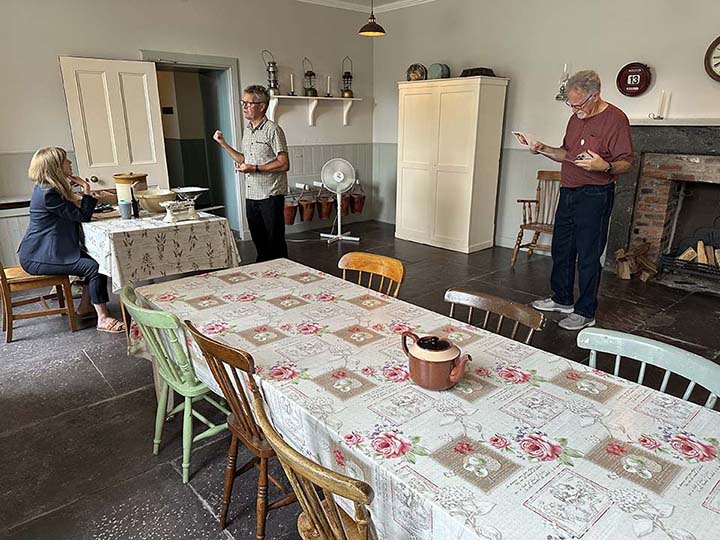
And here is some more of the kitchen.
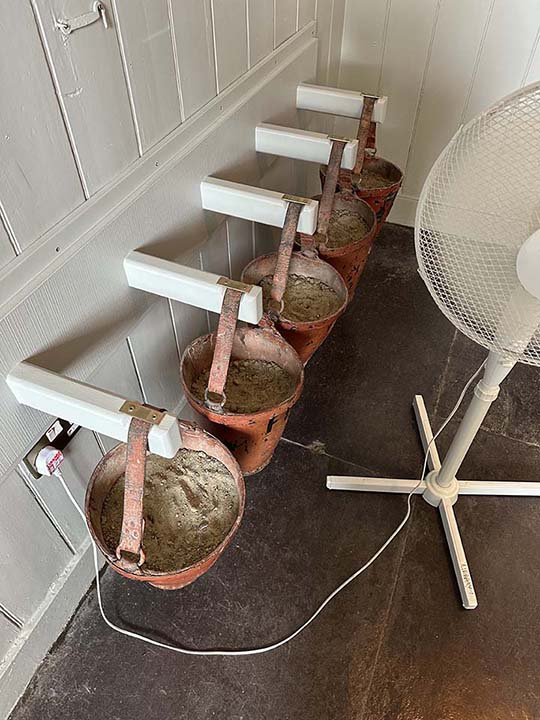
You have to be prepared just in case the kitchen catches on fire.
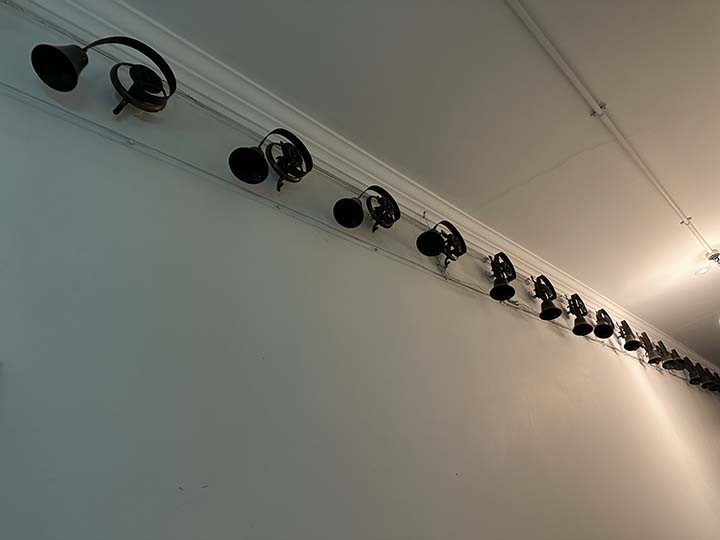
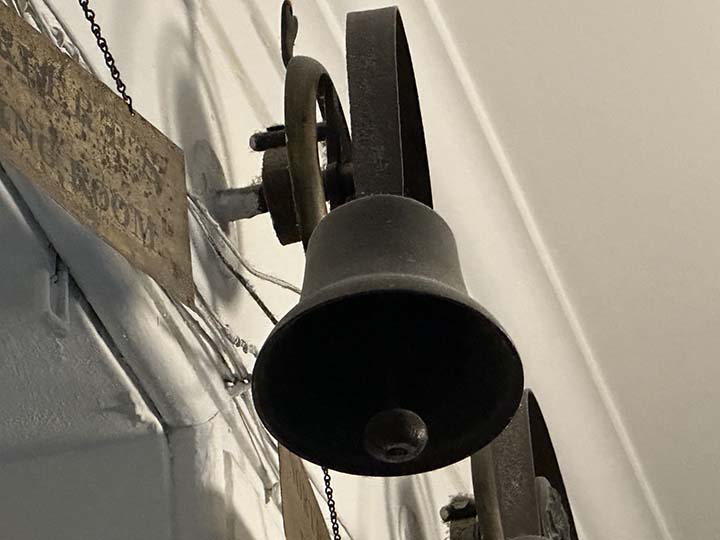
Well, look up there! It’s those jingly bells from Downton Abbey.
I’ll bet that one rings for Carson.
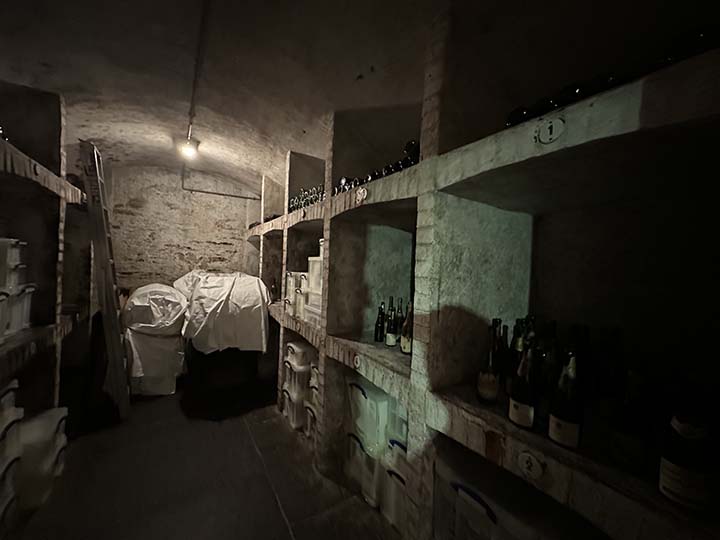
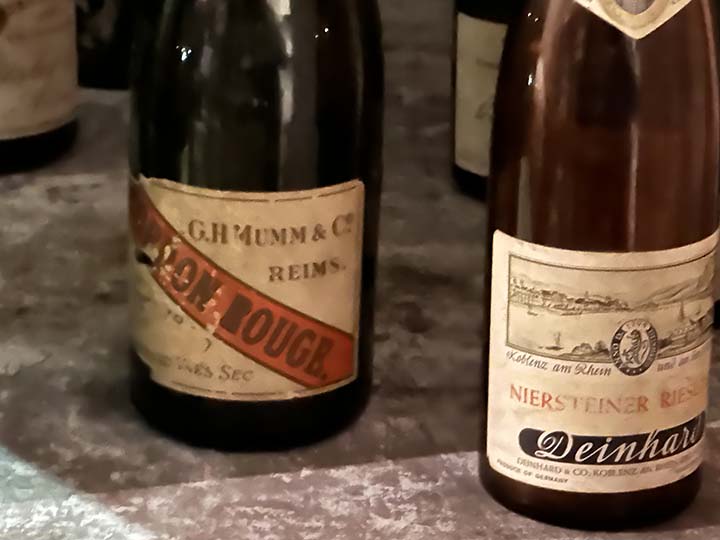
It's the wine cellar.
Apparently they liked Champagne.
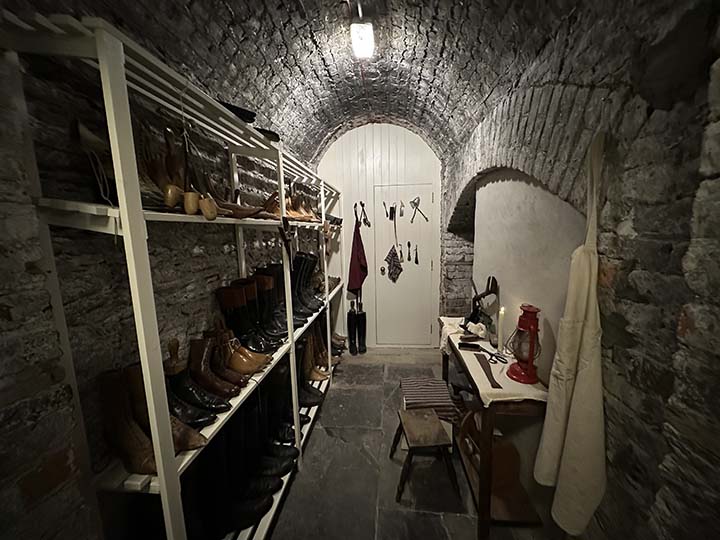
This is where the footman shined the shoes.
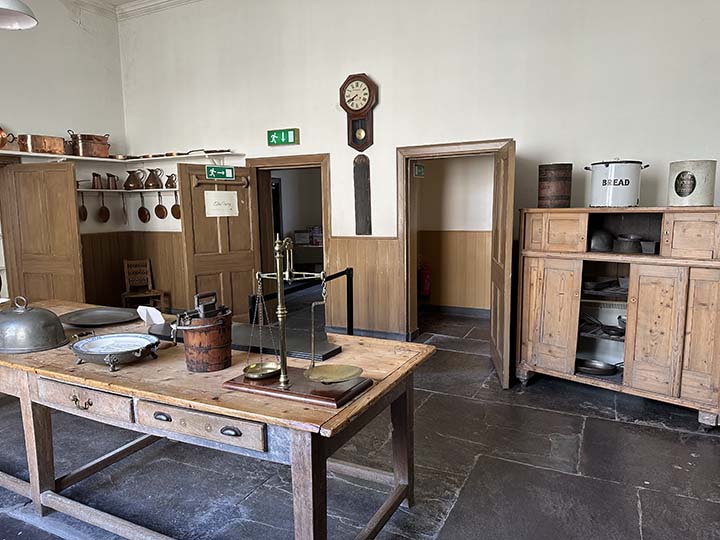
And this is more kitchen.
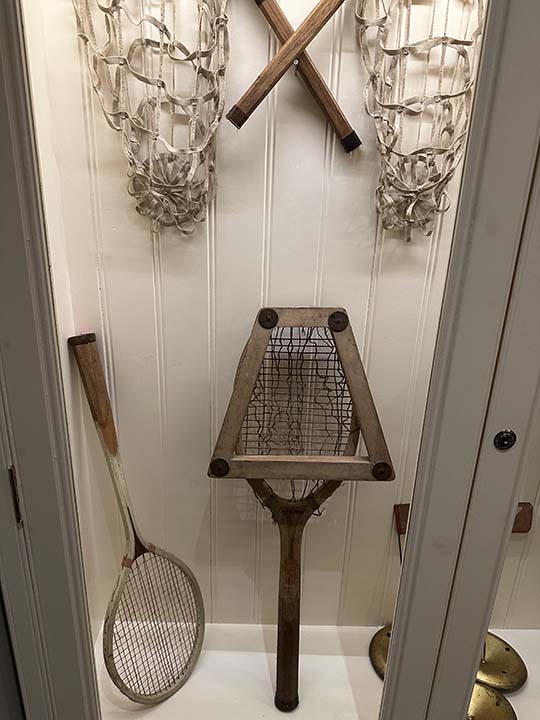
Tennis, anyone?
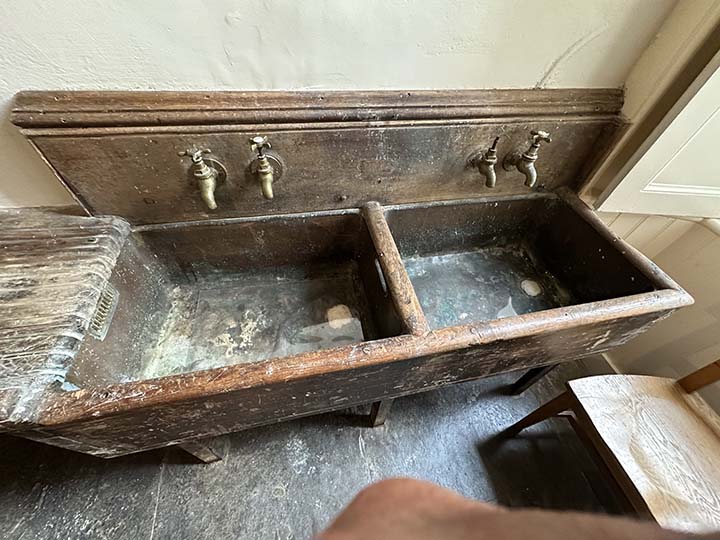
Somebody needs to clean the sink.
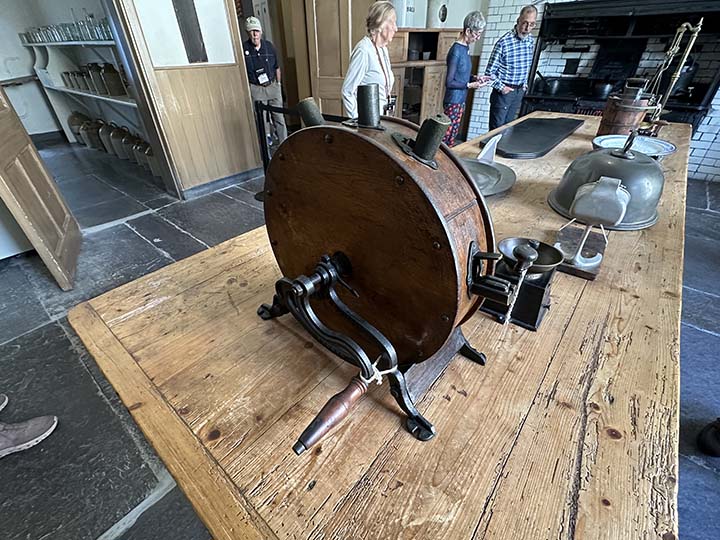
Still more kitchen.
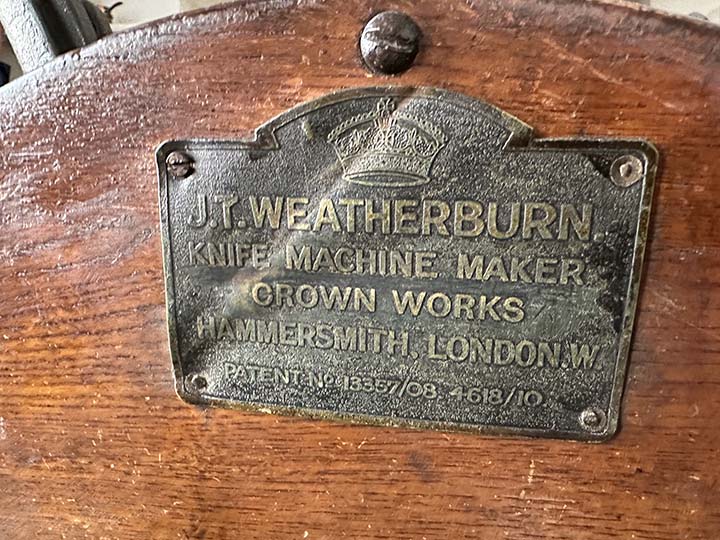
I couldn’t figure out what that thing was, but it had a label on it.
A knife sharpener. Well, how about that!
Bye now, to the big house.
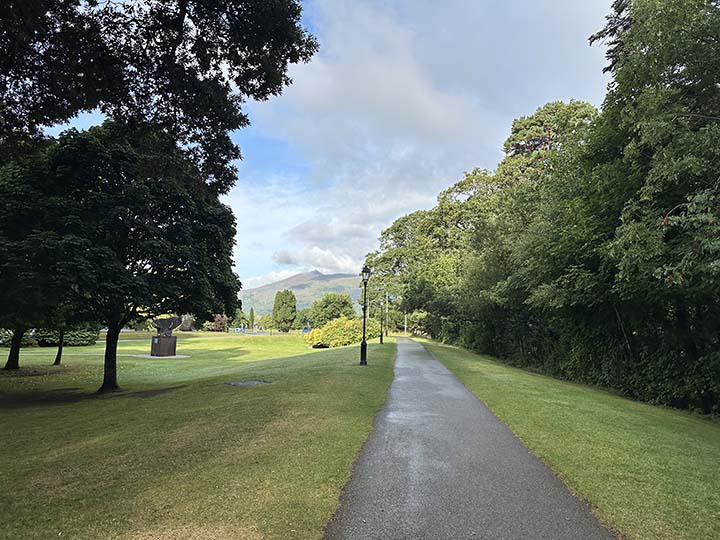
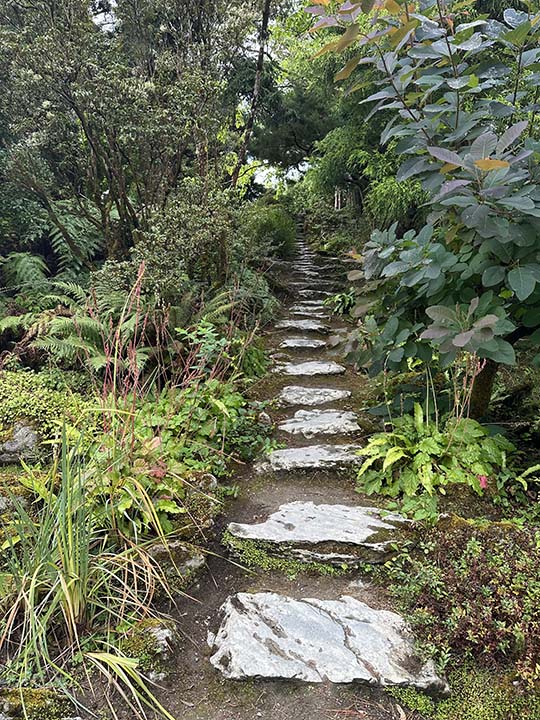
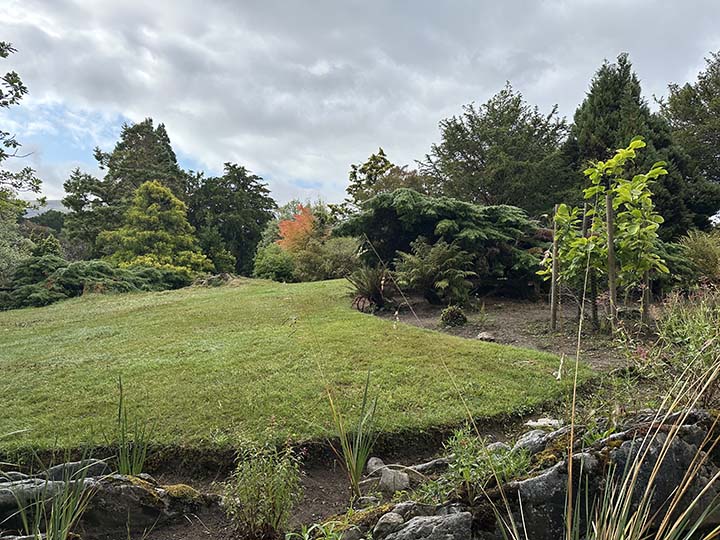
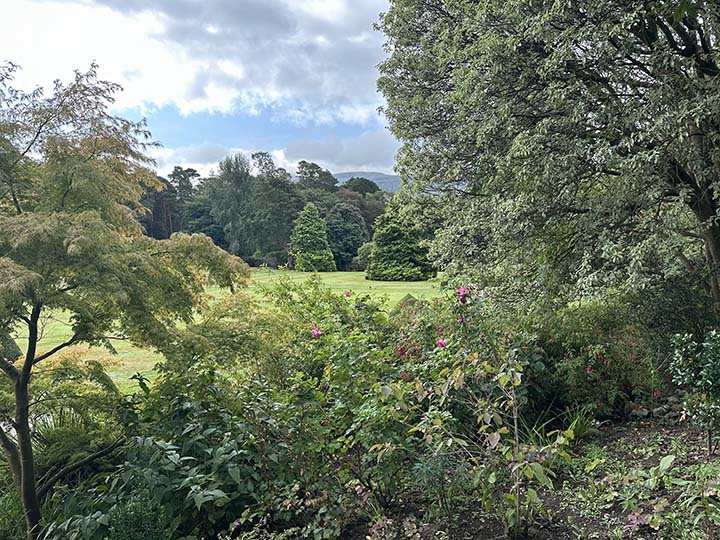
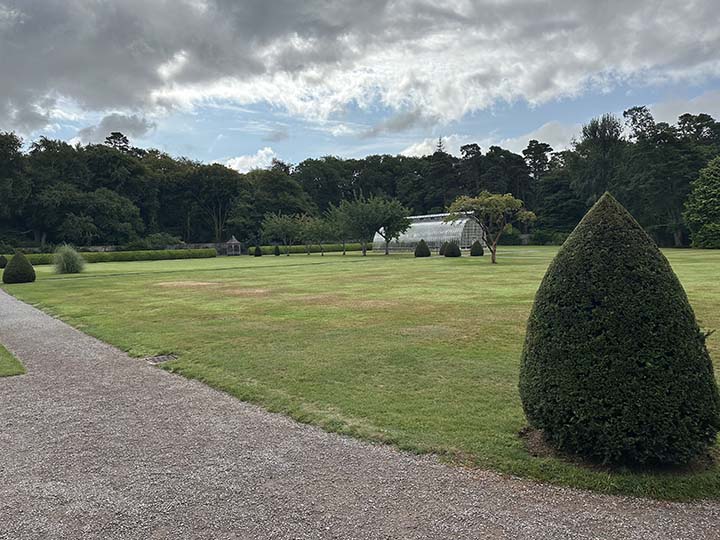
Let's explore the gardens.
It's nice out here.
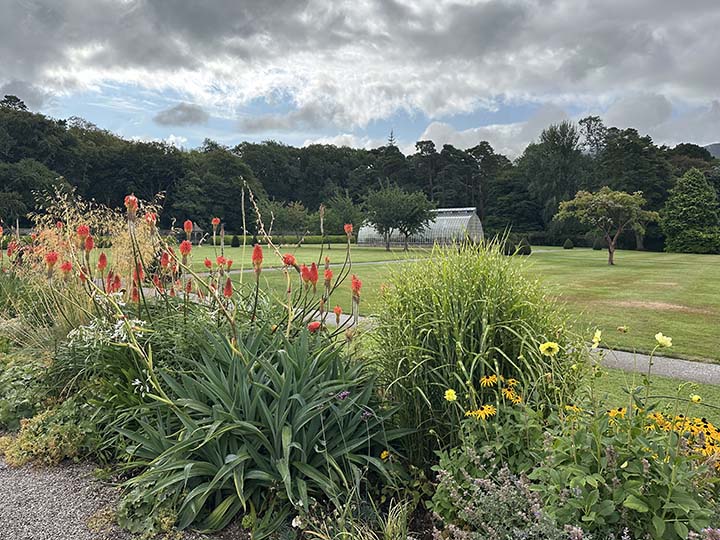
See the blossoms?
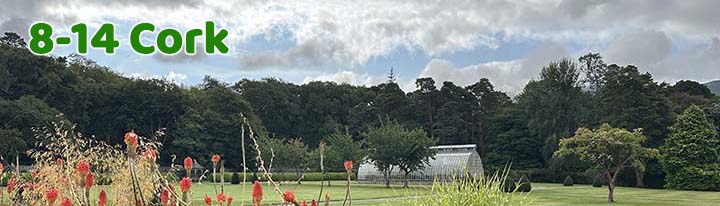
See the greenhouse?
There's some color.
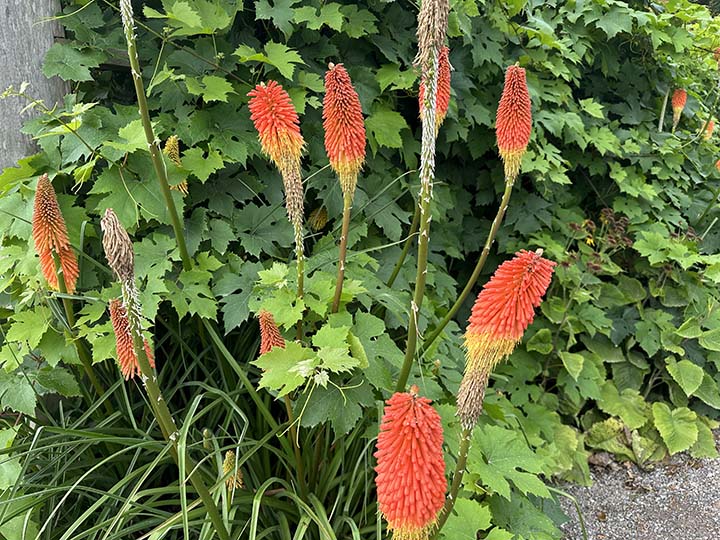
There's a closer view of the color.
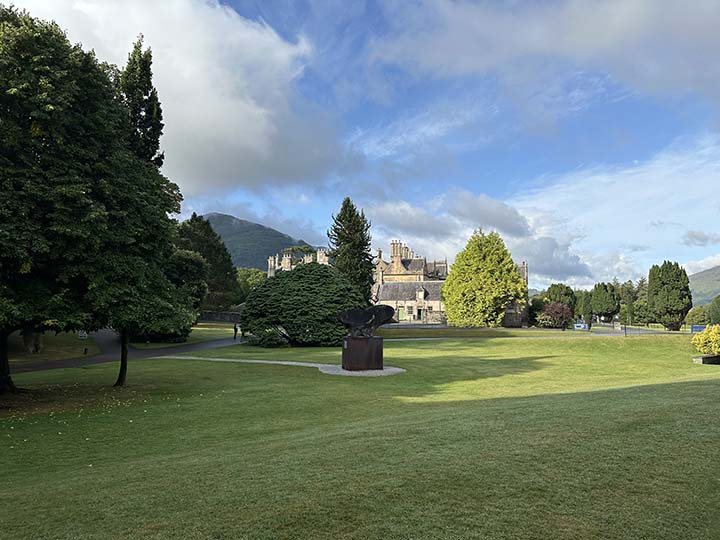
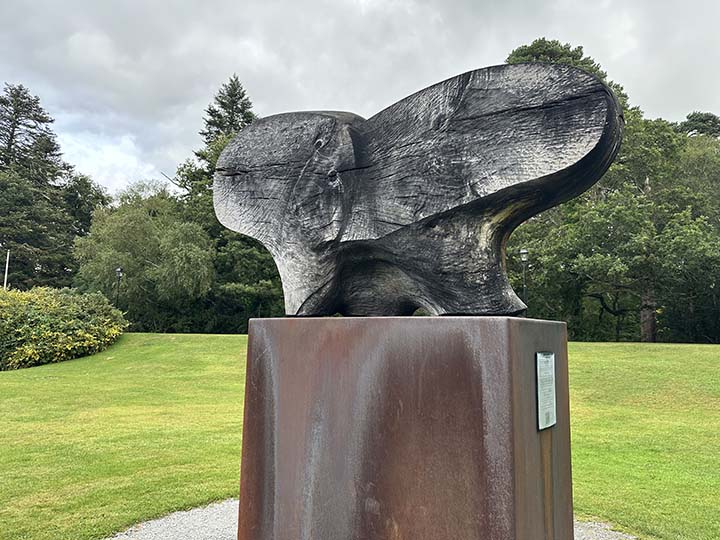
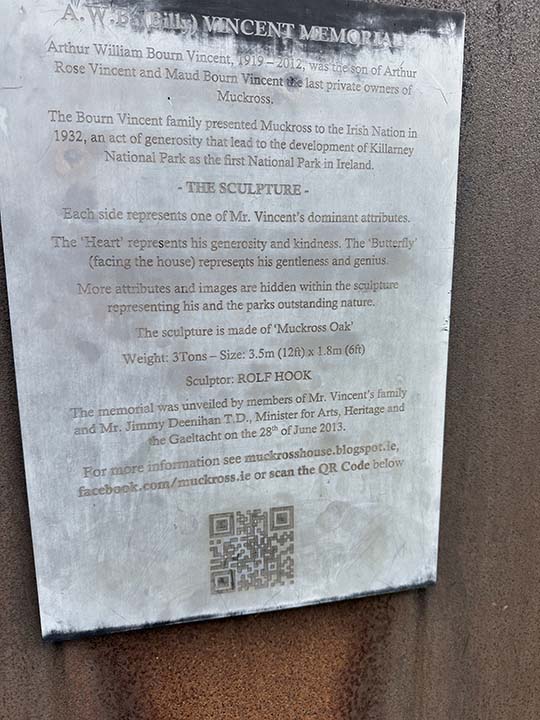
We found this sculpture and even Brendan didn't know what it was. A whale's tail, maybe?
Nope. It's a butterfly. How about that.
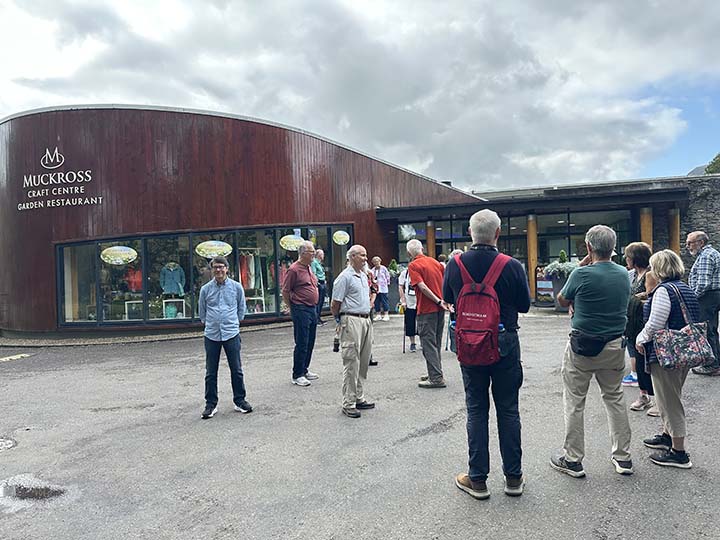
Brendan gathers the troops because it's time to get back on the bus.
There's still plenty of countryside to see.
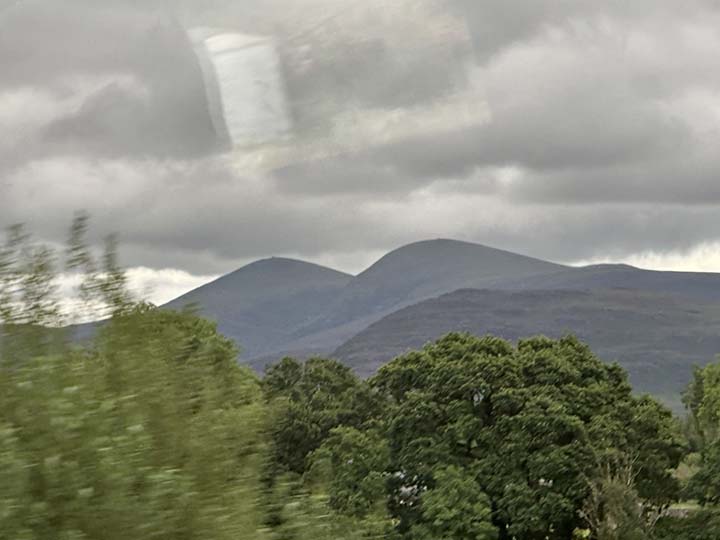
Well, would you look at that? Brendan said these are the Paps of Anu, a pair of distinct, breast-shaped twin mountains located in County Kerry, just west of the border with County Cork and near Killarney. The name connects to the ancient Irish mother goddess Anu (also associated with Ana or Danu), viewed as the great mother and nourisher of the gods. How about that.
I see blue sky!
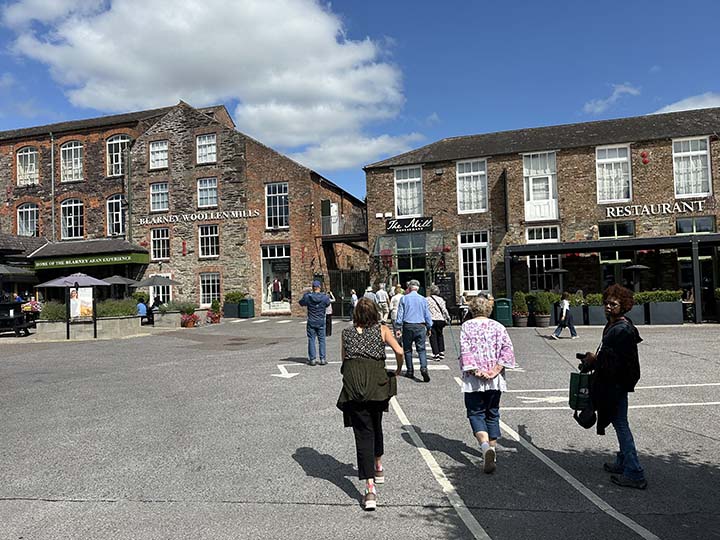
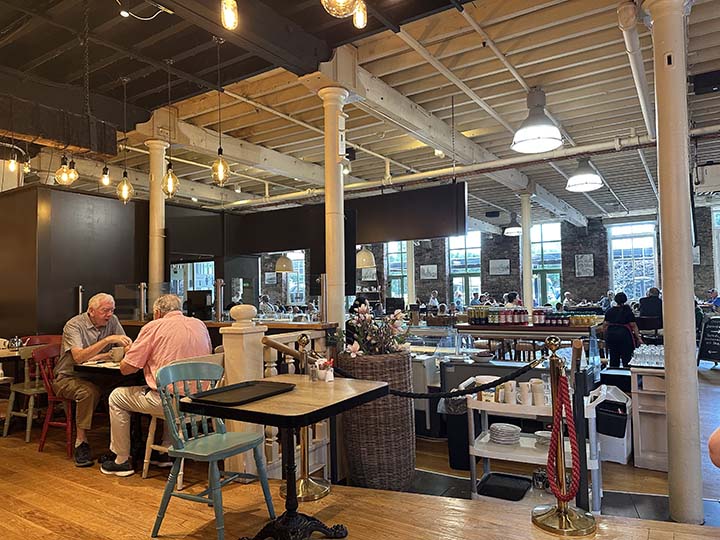
Lunchtime at the Blarney Woolen Mills.
This place used to be a woolen mill, but now it has been converted into a tourist trap.
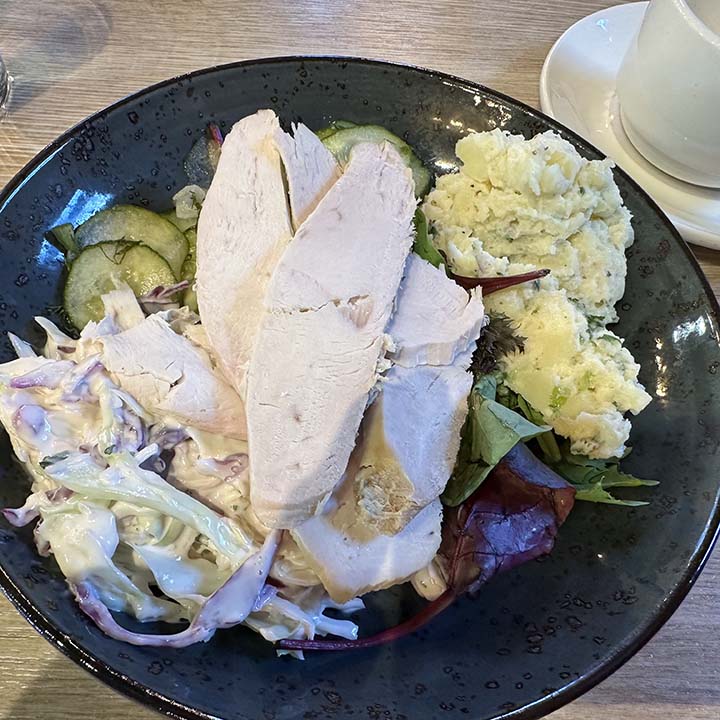
The chicken salad actually was pretty good.
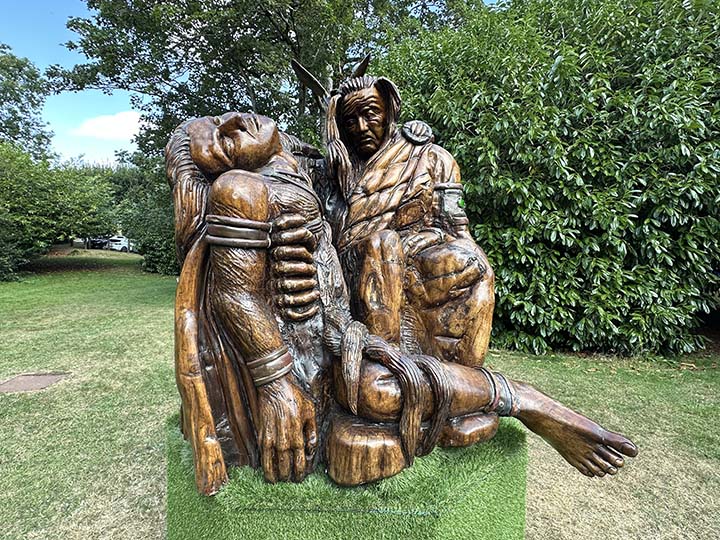
Even Brendan wasn't sure what this was, so I took a picture, planning to check Google when I got home. Here's what I found. This striking piece is titled The Death of Ferdia. It is a monumental wooden sculpture created by the late New Orleans-based outsider artist and poet, Herbert Kearney. The sculpture is directly inspired by a tragic Celtic myth from the Táin Bó Cúailnge (The Cattle Raid of Cooley). It depicts the legendary Irish warrior Cú Chulainn cradling the body of his best friend and foster brother, Ferdia. According to the myth, the two warriors were "milk brothers" who trained together under the legendary warrior woman Scáthach. Later in life, political manipulation and honor forced them onto opposing sides of a massive war. They were forced to fight each other in an epic, heartbreaking duel at a river ford that lasted for several days. Ultimately, Cú Chulainn killed Ferdia with his legendary spear, the Gae Bulg, and immediately filled with profound grief, carried his dying brother's body across the river to mourn him. Well I declare.
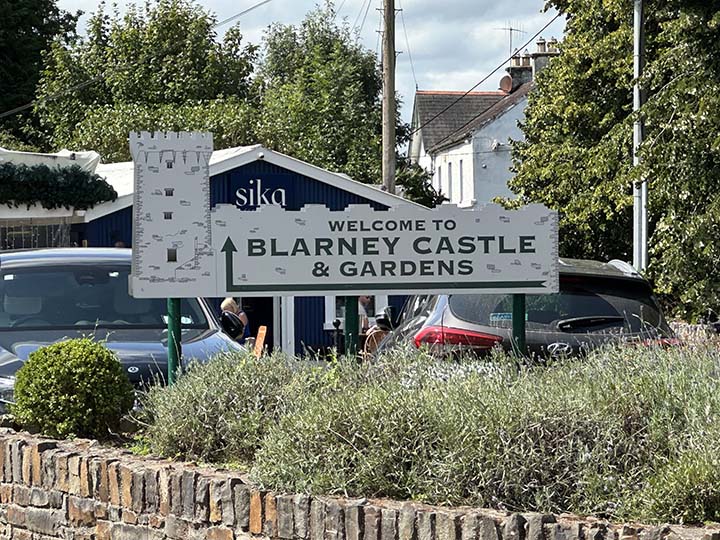
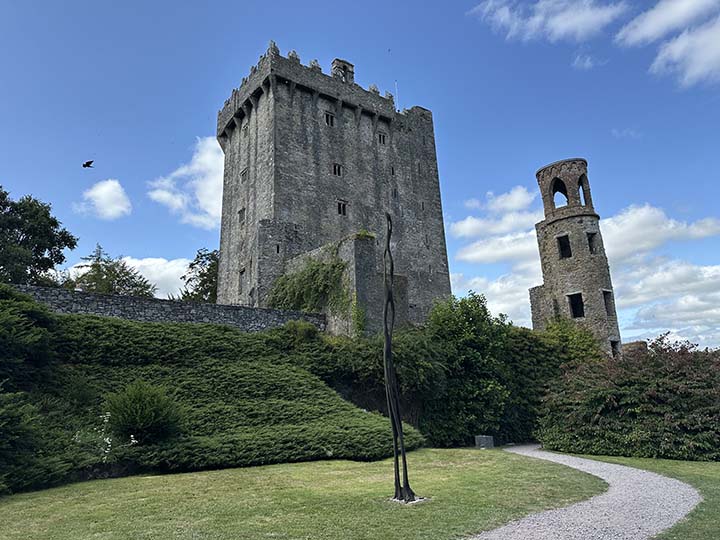
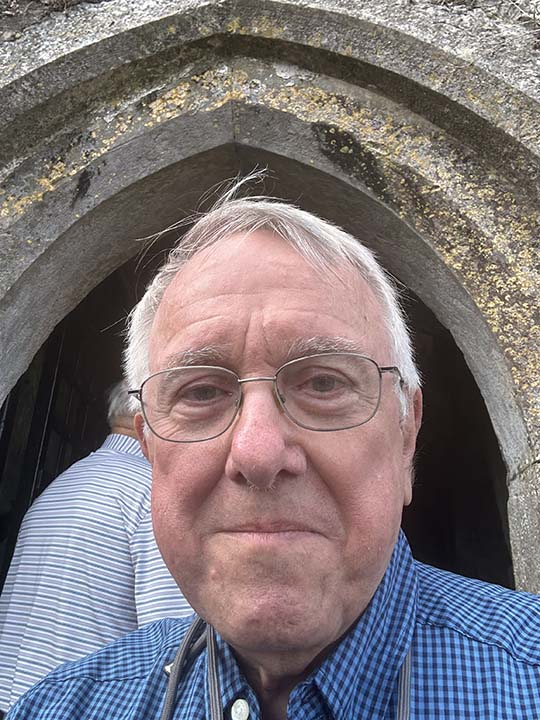
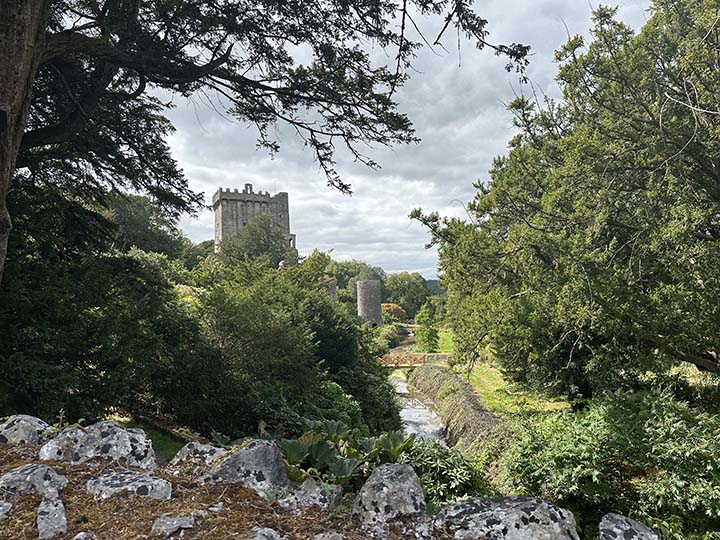
Just across the road is Blarney Castle.
So we walked over there.
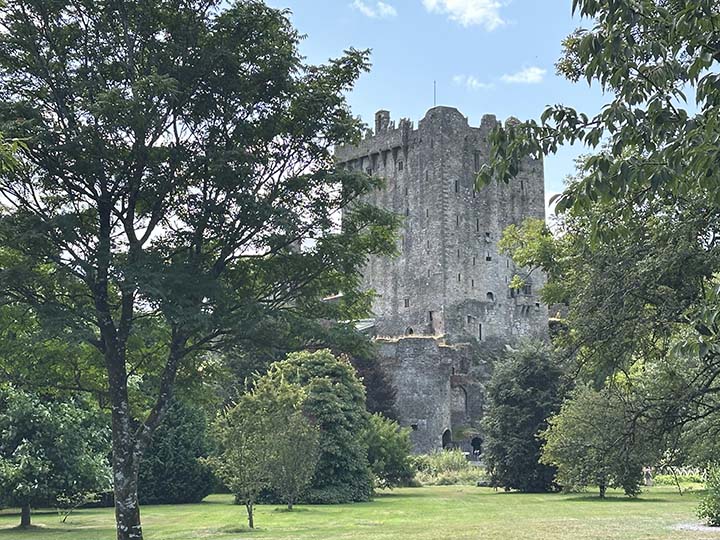
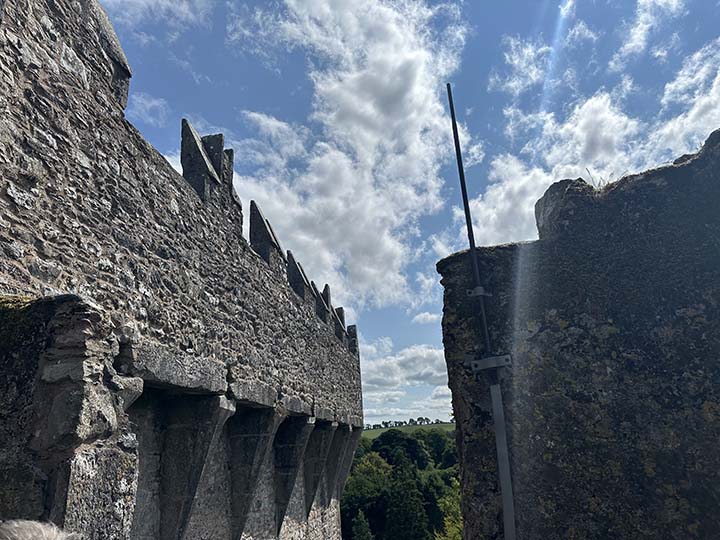
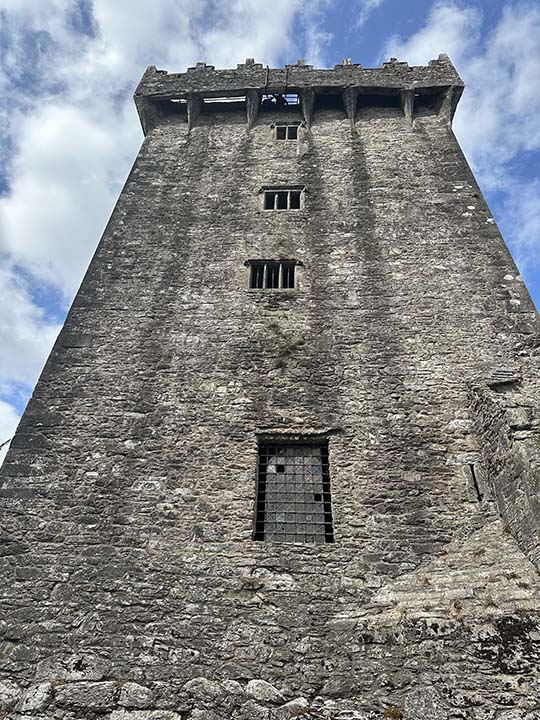
Blarney Castle (Irish: Caisleán na Blarnan) is a medieval stronghold in Blarney, a town in Cork, Ireland. Though earlier fortifications were built on the same spot, the current keep was built by the MacCarthy of Muskerry dynasty, a cadet branch of the Kings of Desmond, and dates from 1446.
Blarney Castle is now a partial ruin with some accessible rooms and battlements. At the top of the castle lies the Stone of Eloquence, better known as the Blarney Stone. Tourists visiting the castle may hang upside-down over a sheer drop to kiss the stone, which is said to give the gift of eloquence. There are many versions of the origin of the stone, including a claim that it was the Lia Fáil—a numinous stone upon which Irish kings were crowned.
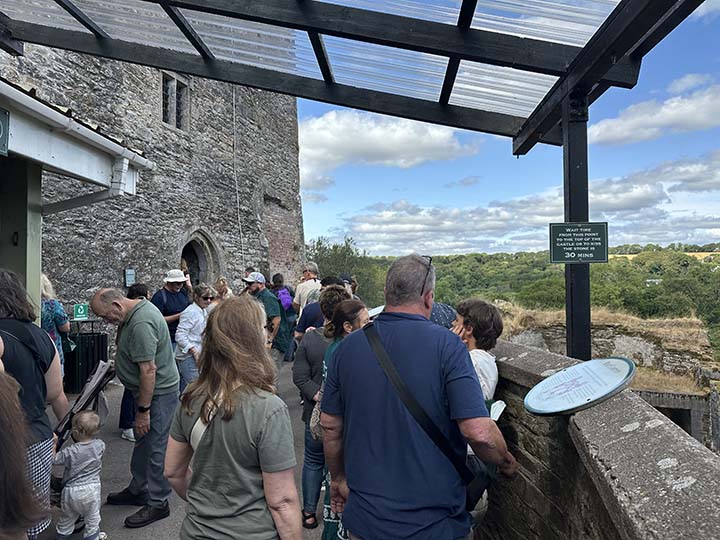
Lots of people, that's who.
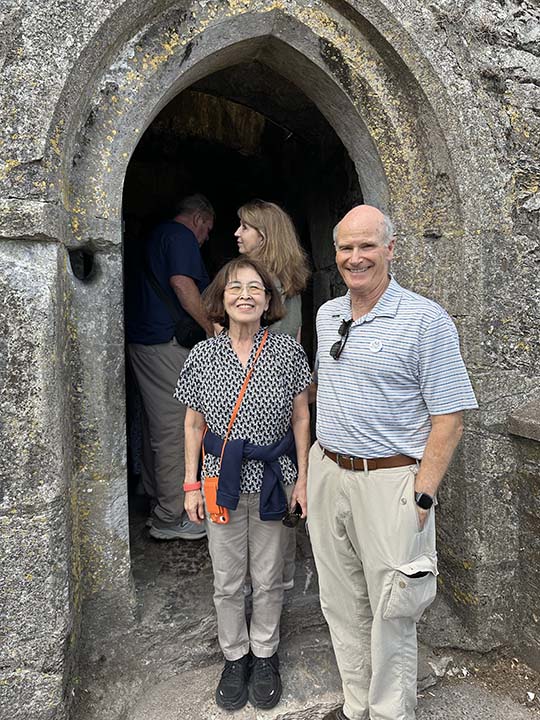
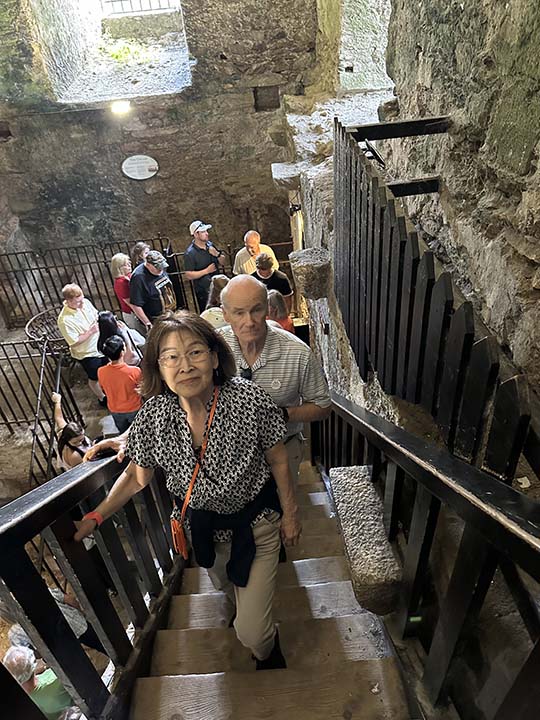
Anne and Karl, two of the Road Scholars, were just in front of me in line.
Let's do this!
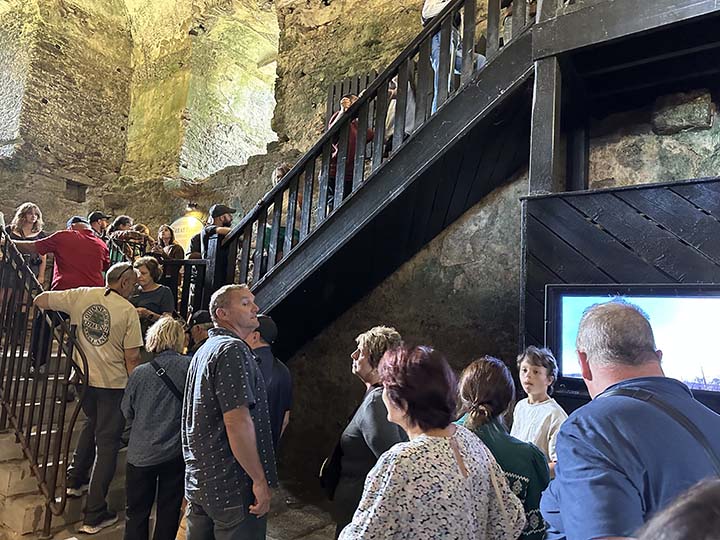
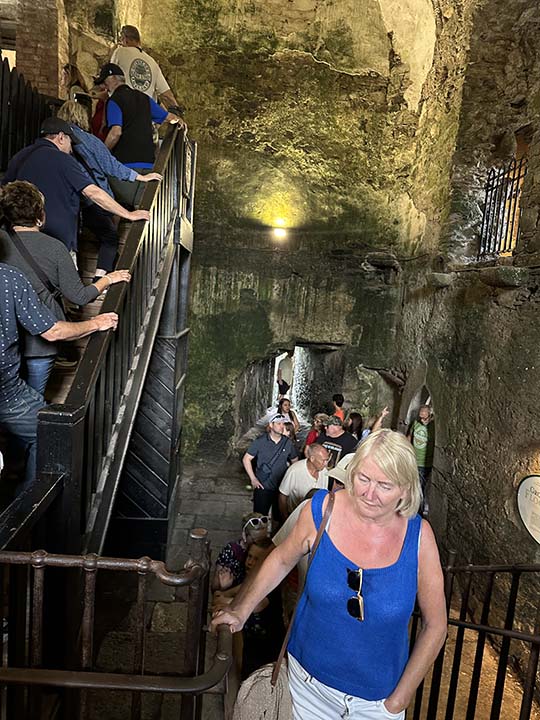
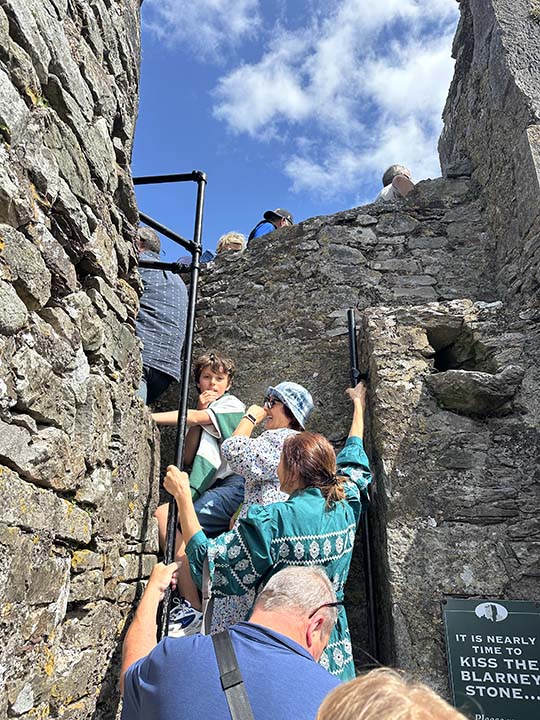
Somebody said there were 235 steps to the top, but I did not count.
Sounds about right, though.
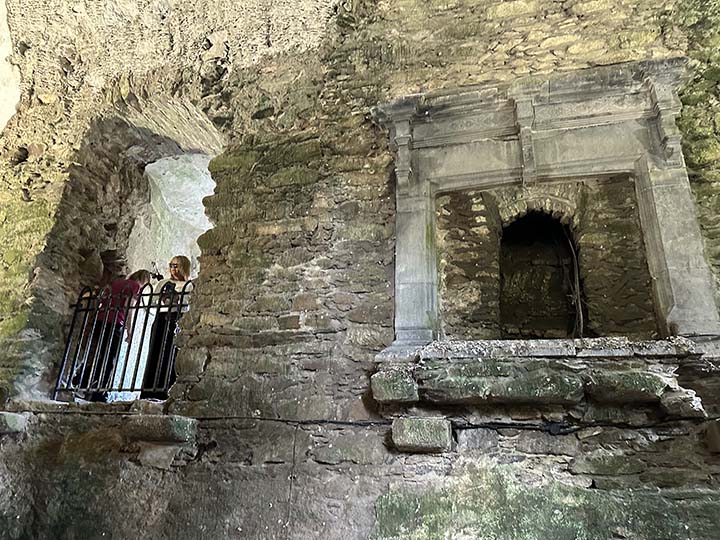
On the way up we passed rooms that used to have floors before there was a fire.
Here come Anne and Karl.
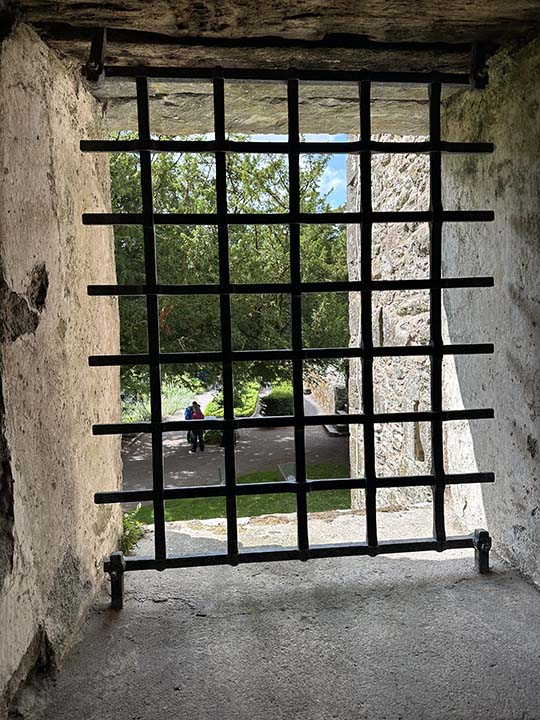
The bars keep the tourists inside.
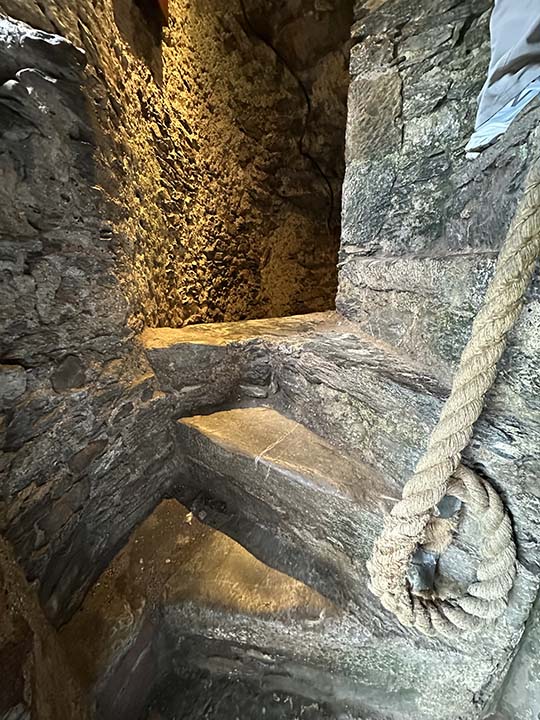
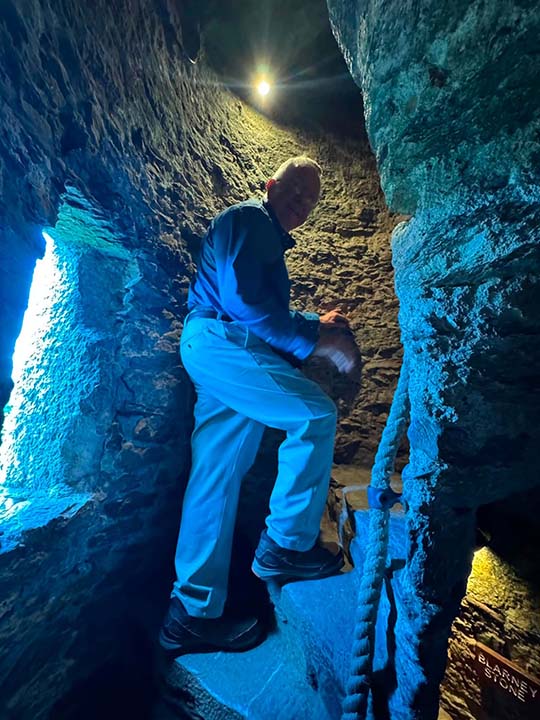
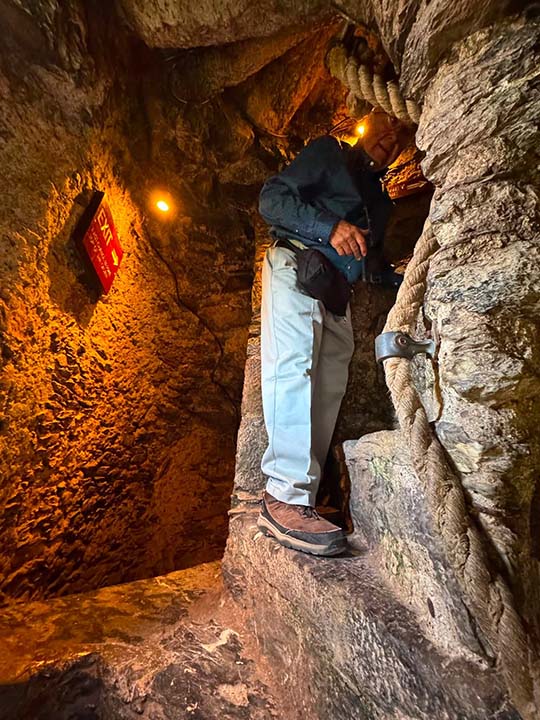
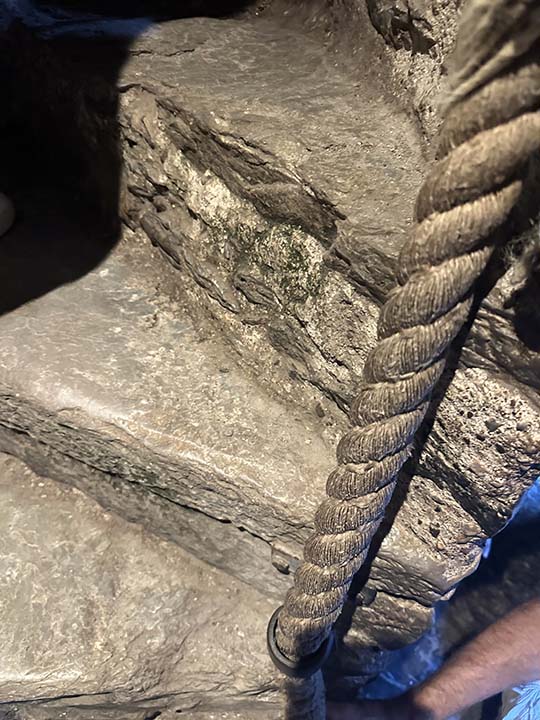
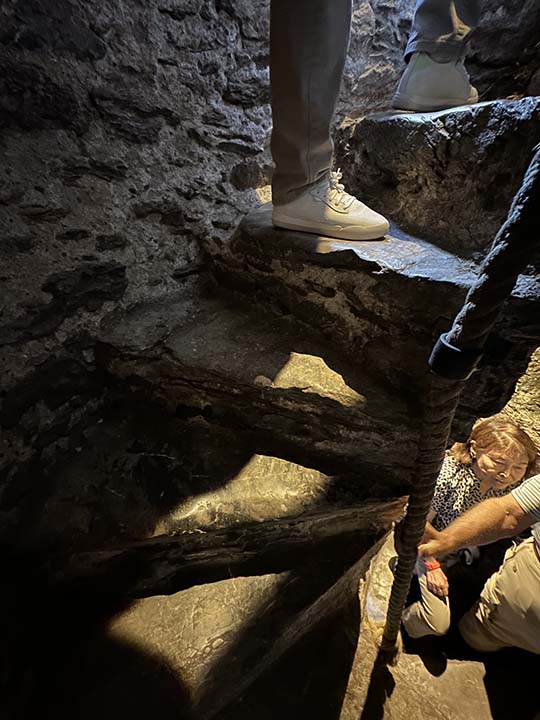
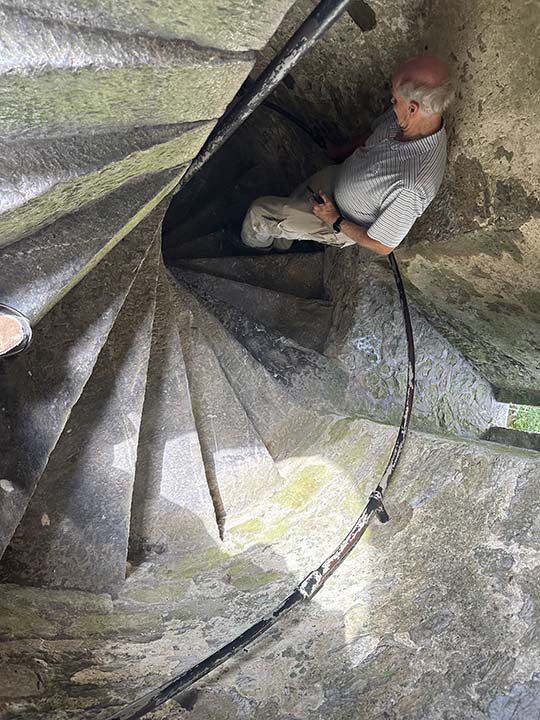
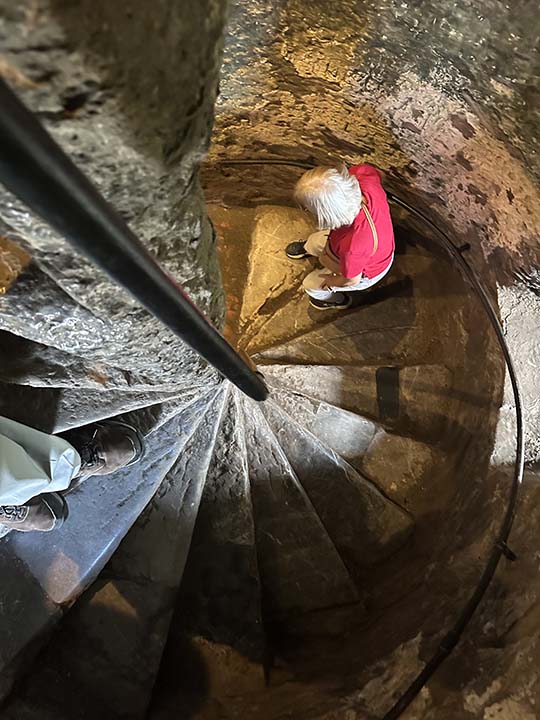
The rope gives you something to hand on to while navigating those twisty stairs.
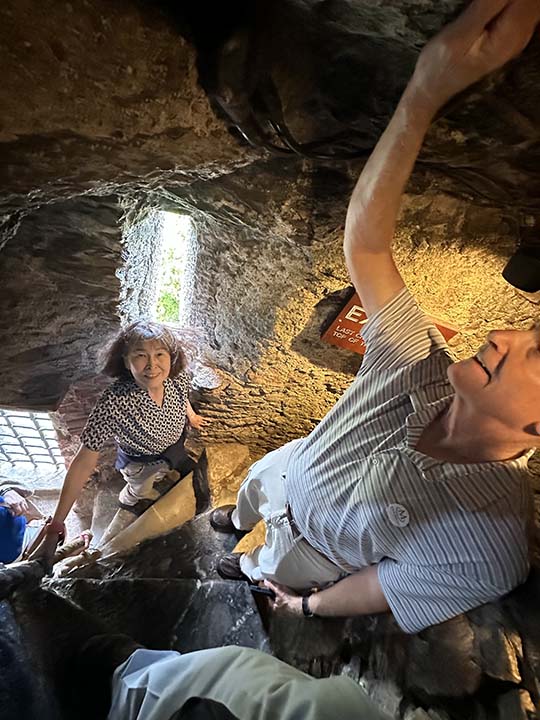
Karl is hanging on.
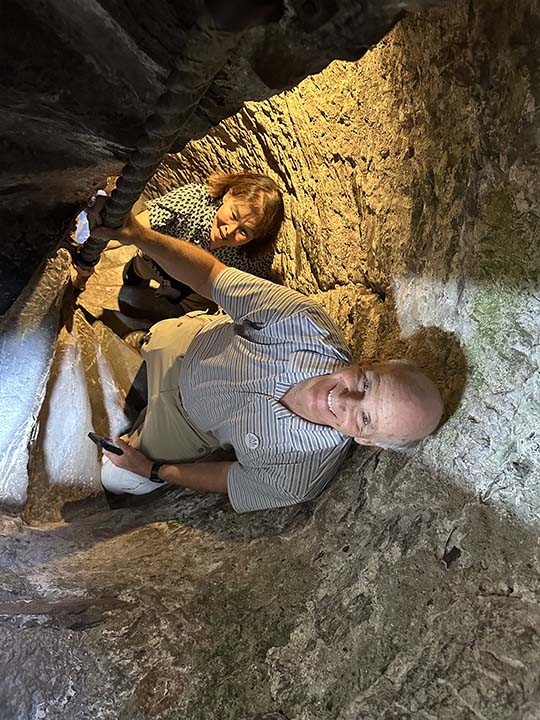
Bill, on the other hand, is taking his chances.
Grab the rope, Bill!
He seems to be doing OK.
And the twisty stairs keep going and going.
Each step is just about big enough for one foot.
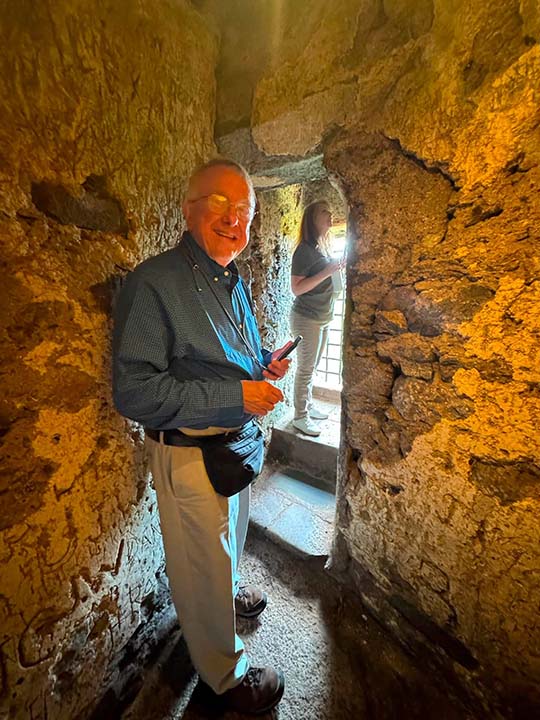
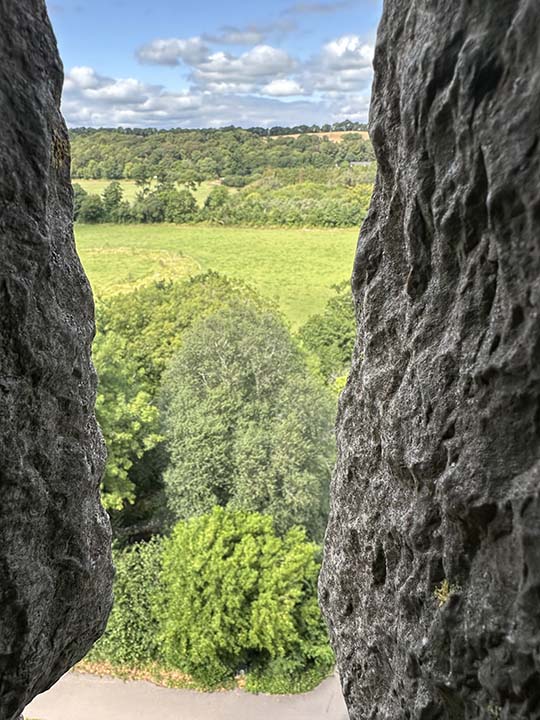
There are windows with nice views, but we're still not up at the top.
At least we're having fun.
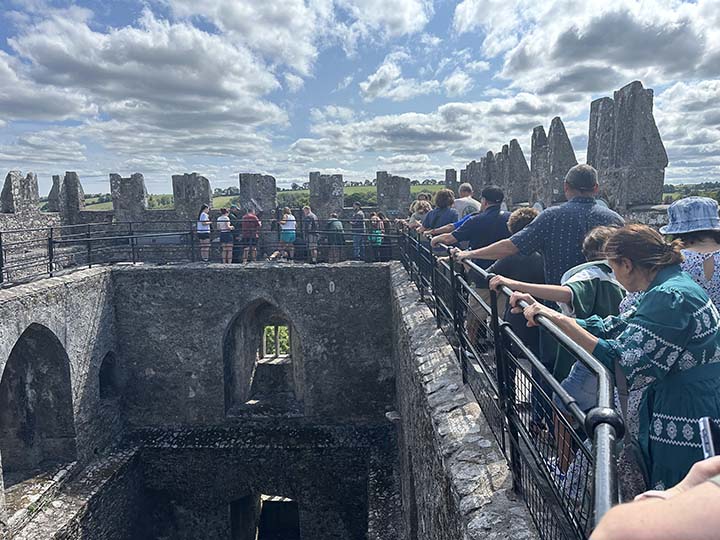
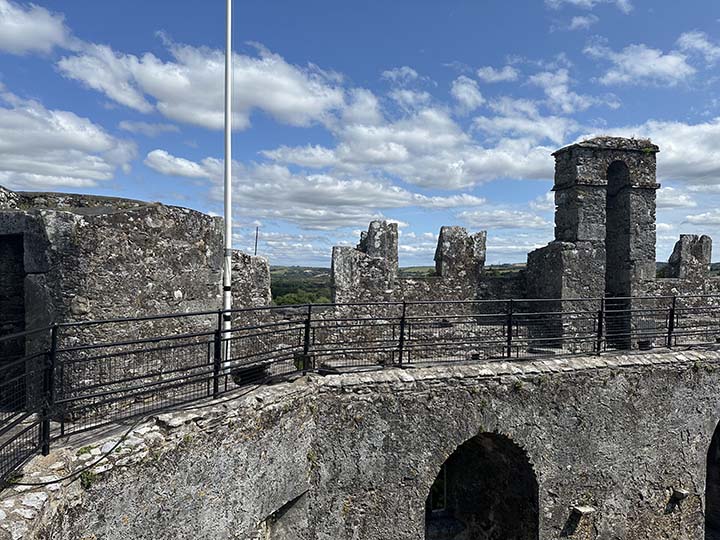
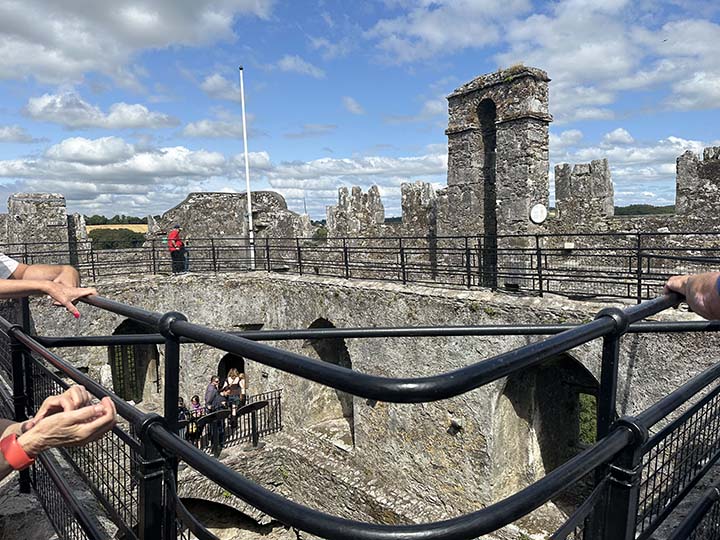
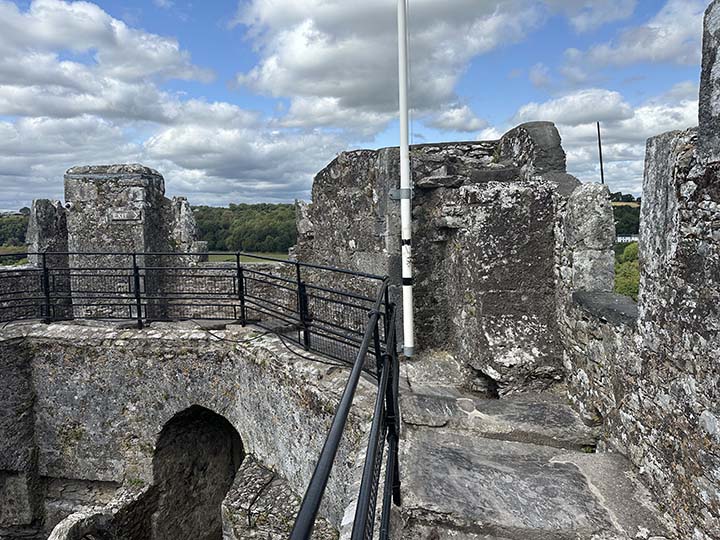
Ah! The top of the castle at last.
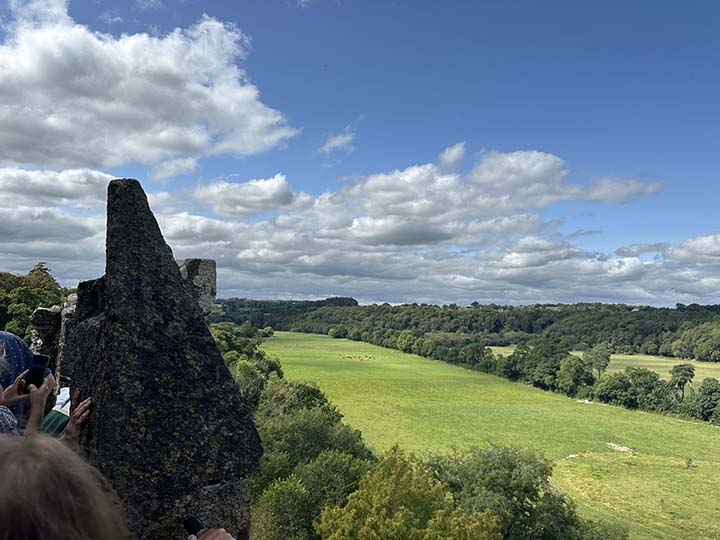
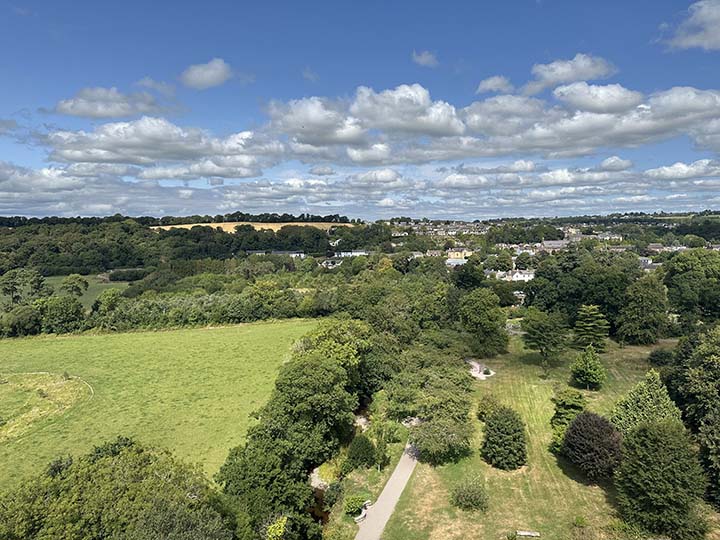
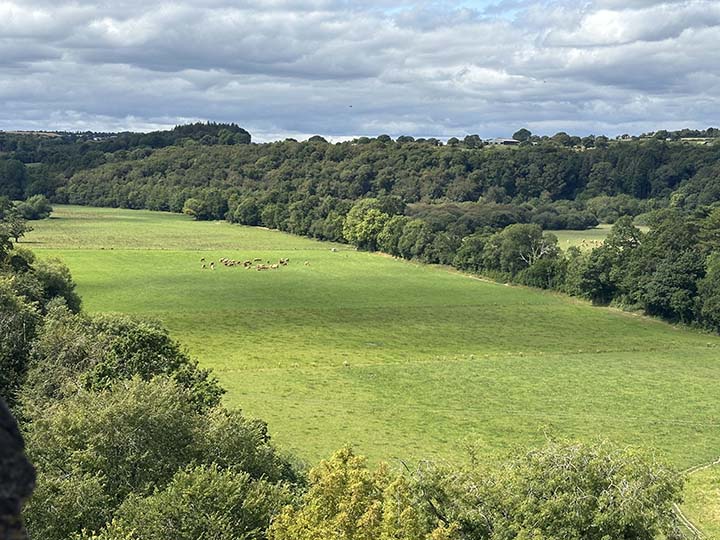
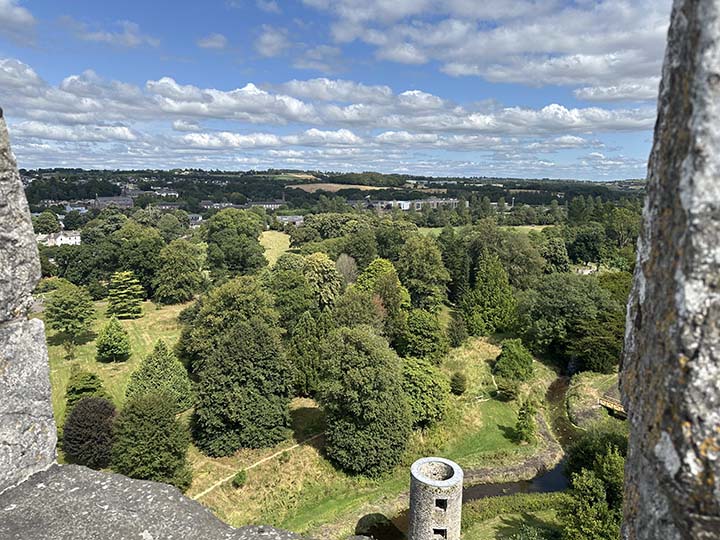
And there's a nice view from up here.
Those clouds aren't gathering to rain. No siree.
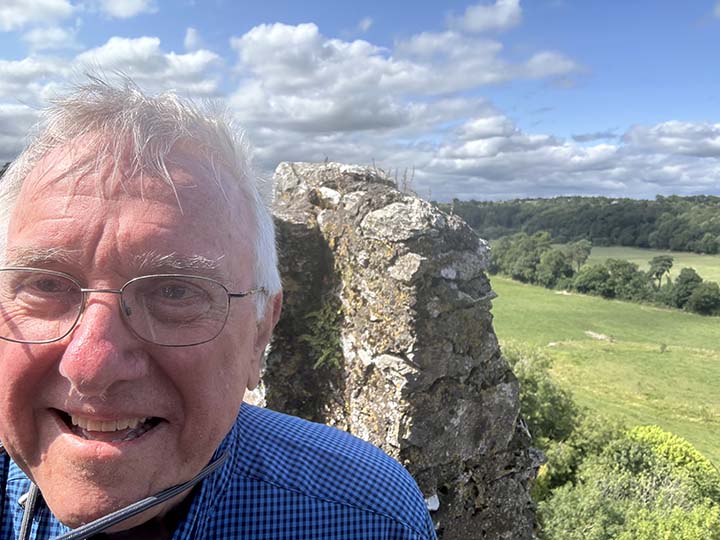
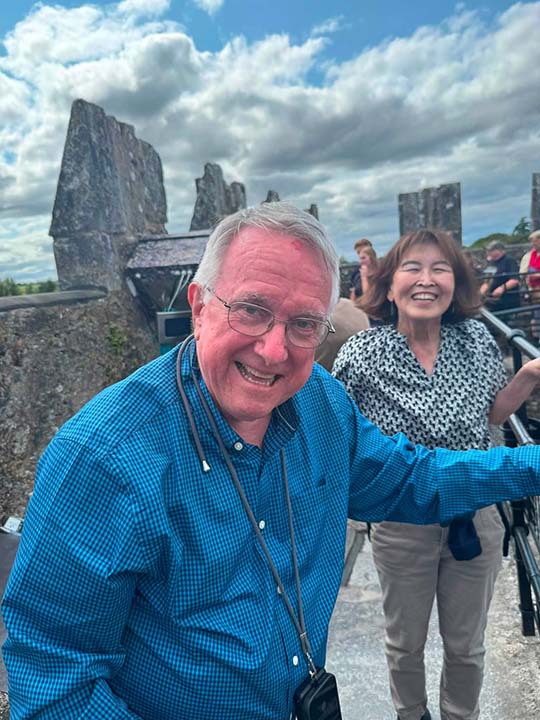
Bill enjoys the view.
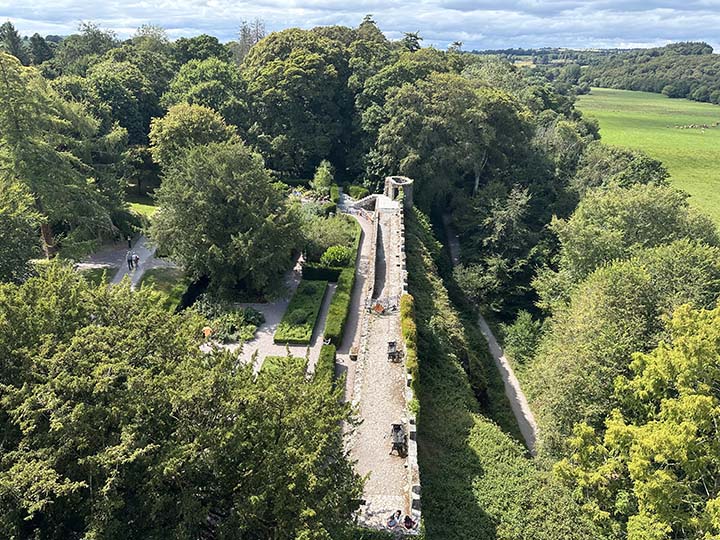
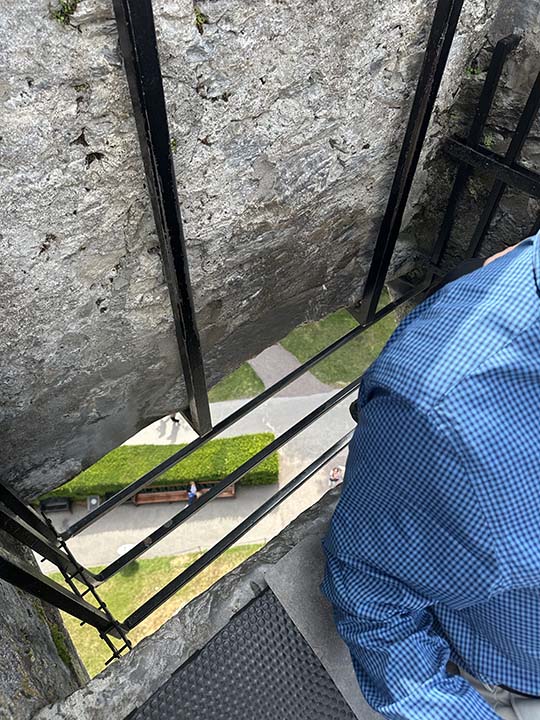
And he notices it's a long way down.
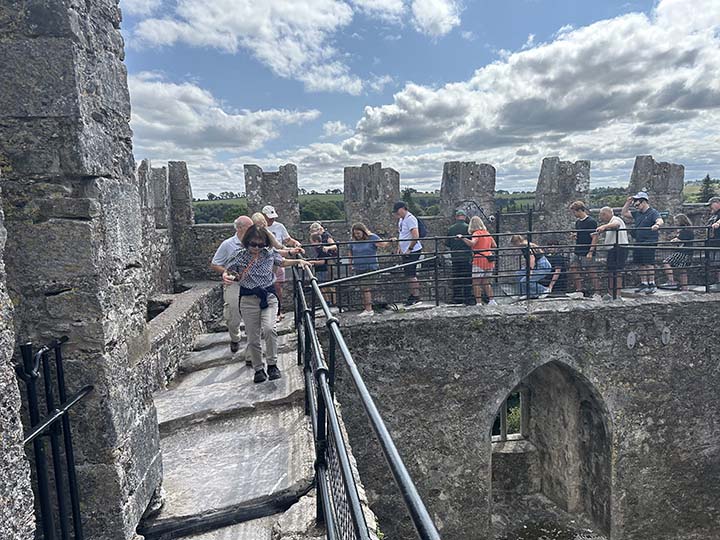
But where are all the people that were in that line?
Over this way.
This is the most fun I've had on the trip. Anne's having a good time too.
That's reassuring.
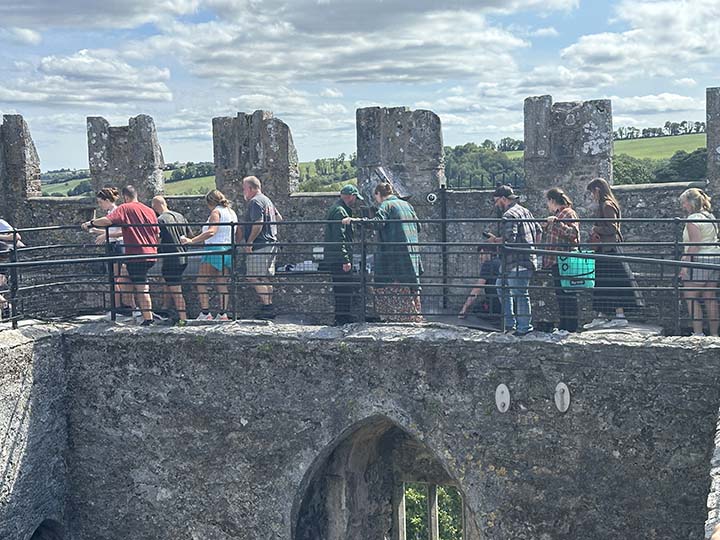
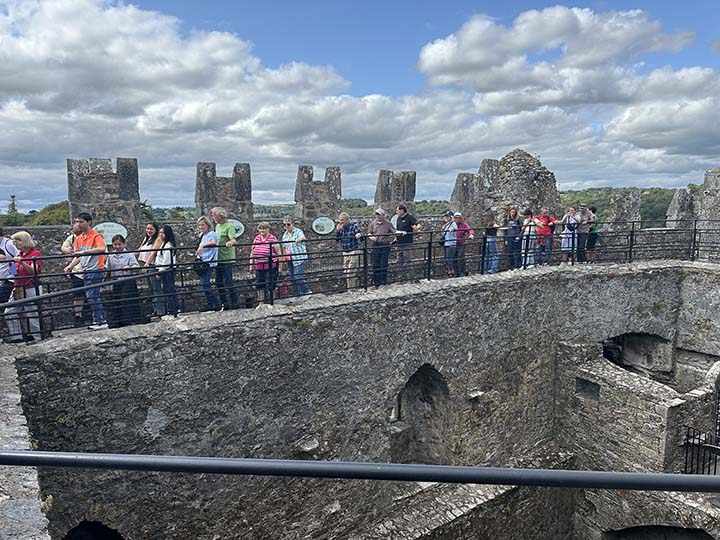
This is the backup of tourists waiting to kiss the Blarney Stone.
And this is the line of people who have already kissed the Blarney Stone. Going back will take less time than coming up.
The guy in the red shirt is heading back down.
But we are patient.
The tourists get ready to kiss the Blarney Stone
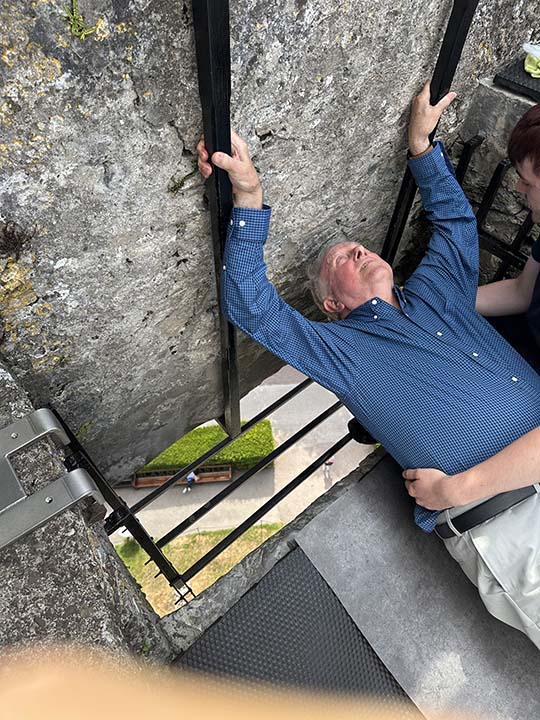
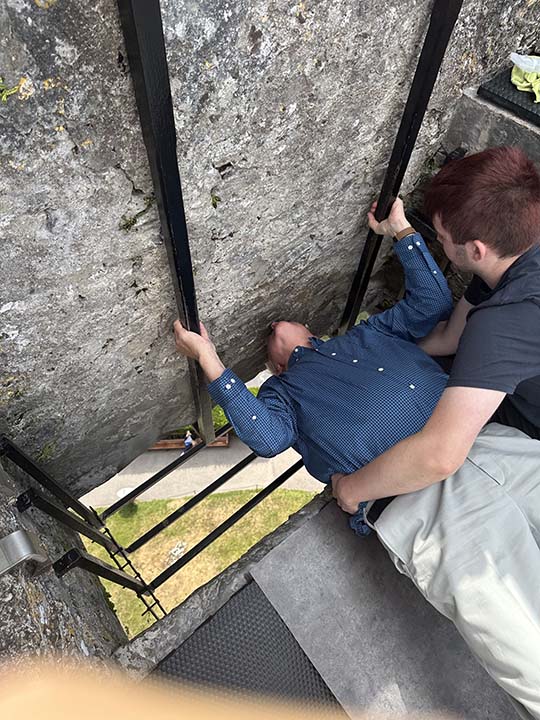
And now it's my turn. It's a good thing there are bars to prevent tourists like me from taking a smooch and falling to their doom.
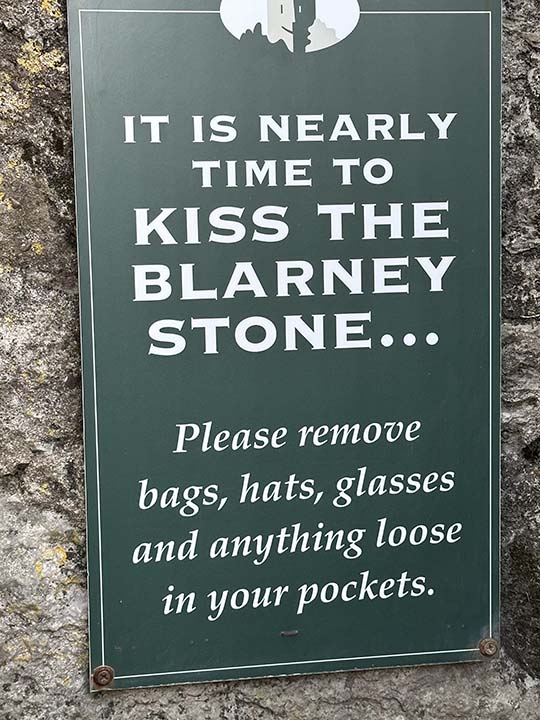
Since the Blarney Stone is down there in the hole, you can't just walk up to it. No, the only way to press lips to rock is to lie down and lean way back.
Like that. SMACK! I did it! And it must have bestowed the gift of gab upon me because I haven't stopped talking about it since. Special shout out to Anne for holding my glasses and my hearing aids and anything else I could think of that might fall down that hole. I enjoyed many things on this trip, but I do think kissing this Blarney Stone, for all the silliness, just might have been the highlight. And now you know what it takes to entertain me.
Bye poor tourists standing in line.
We're headed back down.
Here we come.
The view going down is as pretty as the view coming up.
And the ancient stairs are just as treacherous.
That was fun!
Now just watch your step.
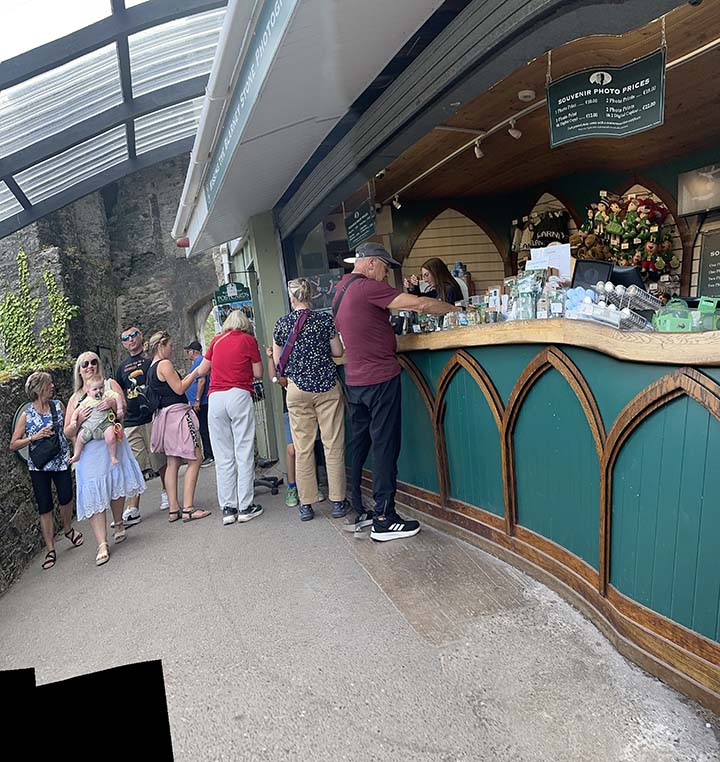
Of course I bought the official picture of me kissing the Blarney Stone. You've seen it.
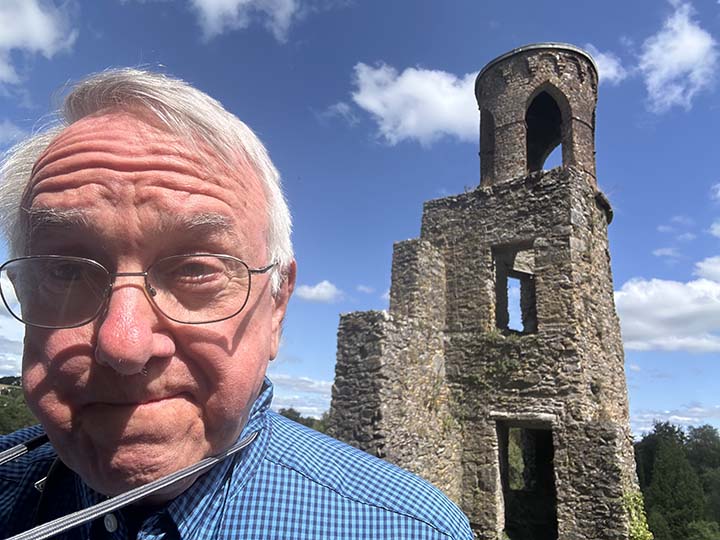
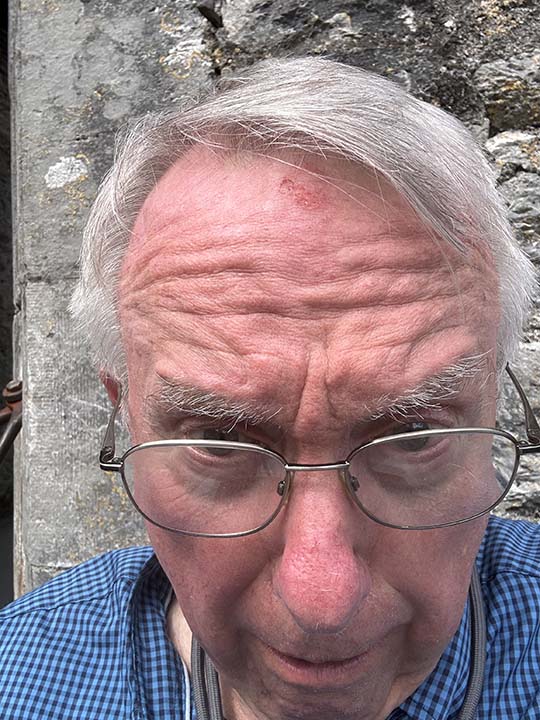
But you haven't seen what the Blarney Stone did to my head when I tried to get closer to it.
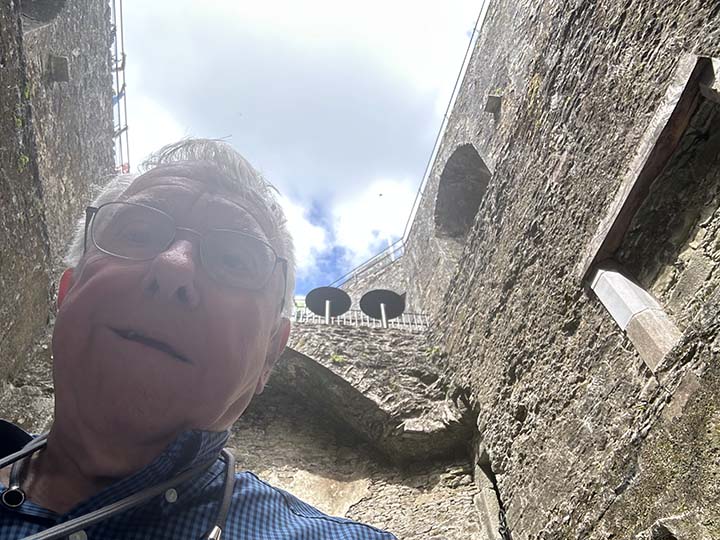
It was up there, and now I am safely back down here. See the hole with bars at the top of the castle? That's the Blarney Stone.
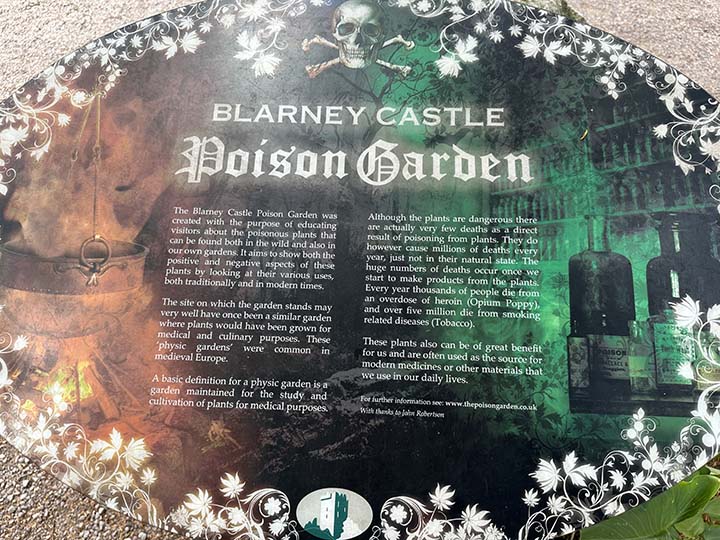
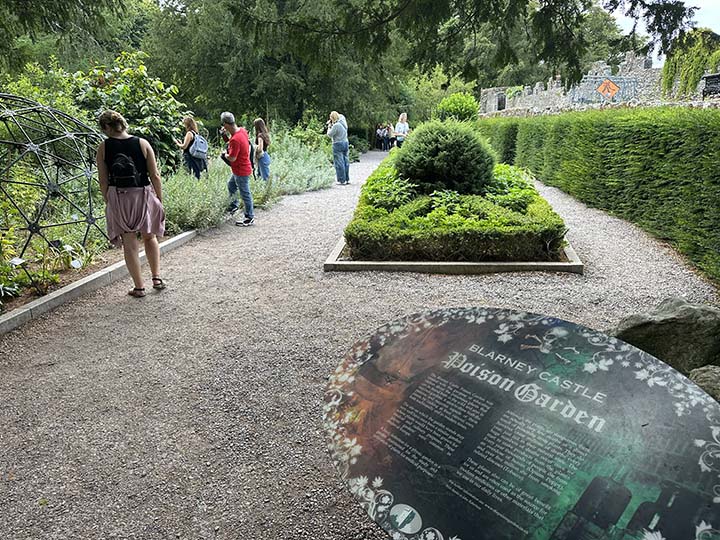
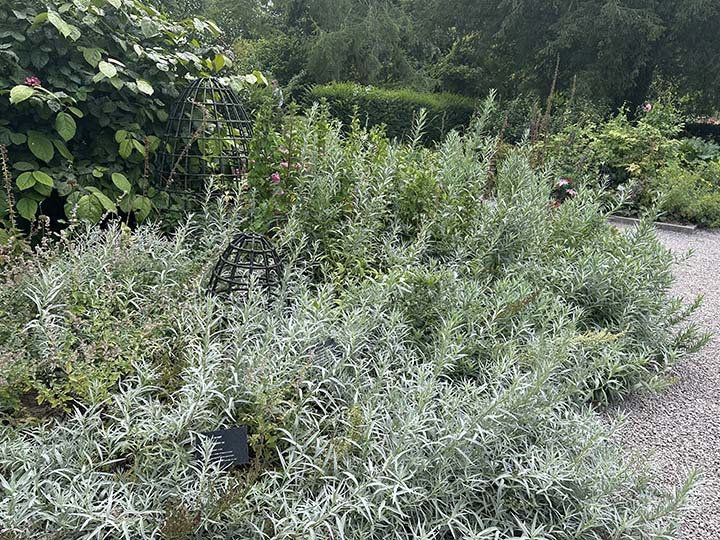
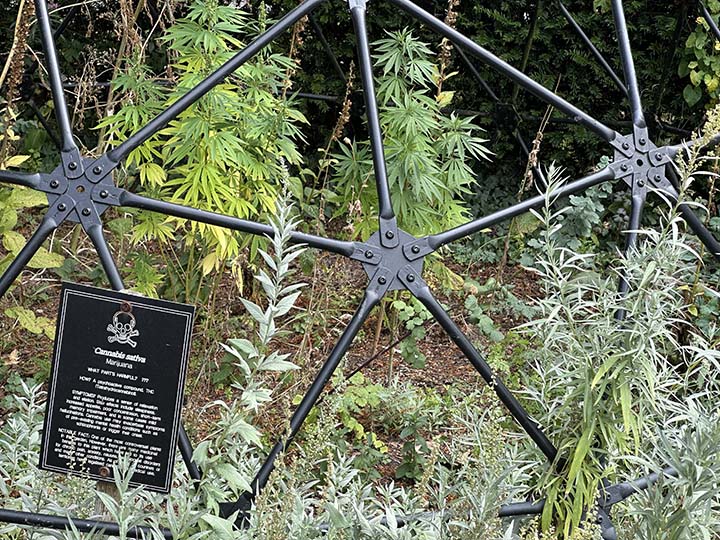
Blarney Castle's garden has a special section where you don't want to touch anything.
Yes, look but don't touch.
It's like one of those gardens Agatha Christie wrote about.
Scary.
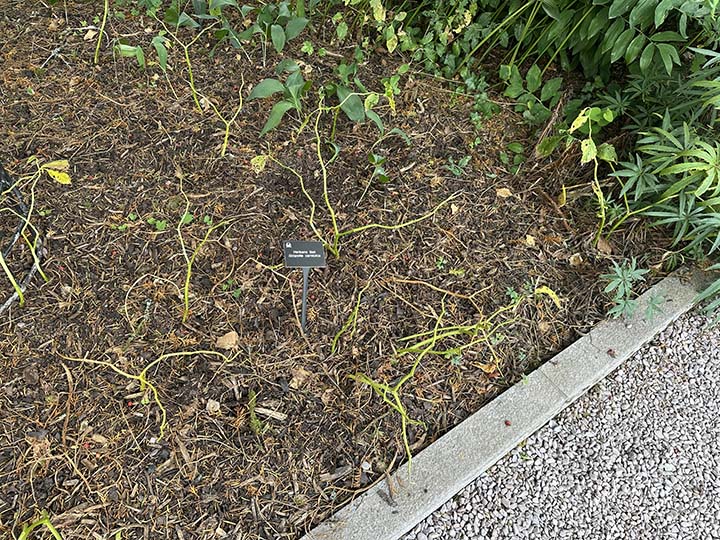
I think they were trying to reach out and grab my ankles.
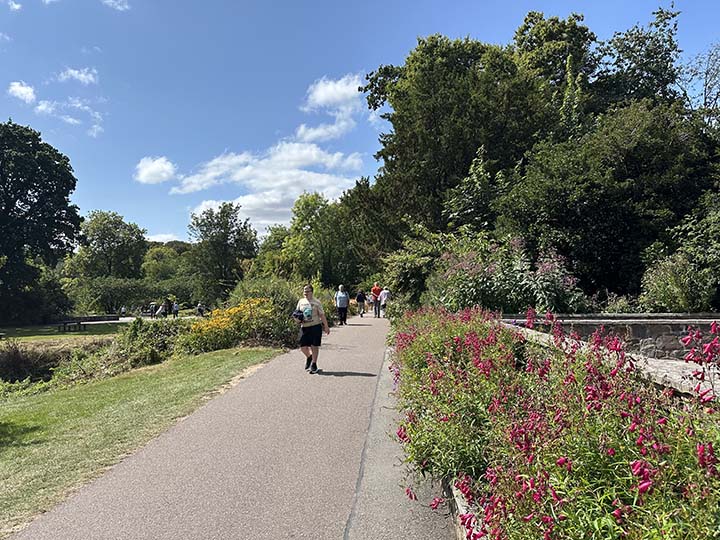
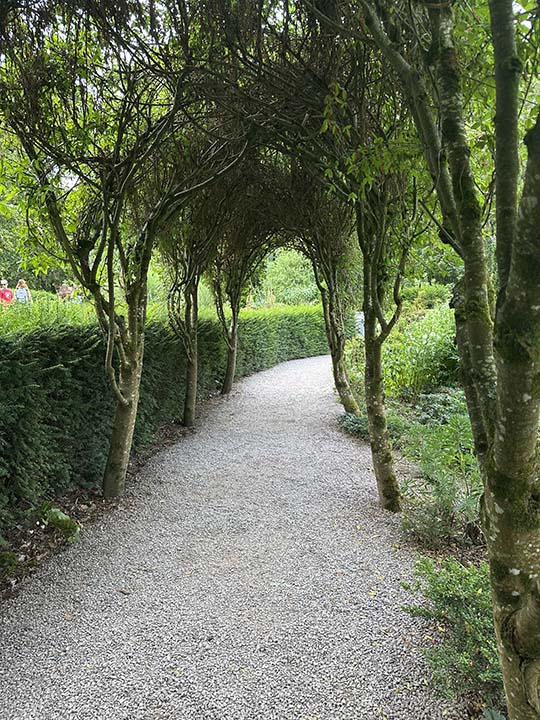
Here's a more pleasant walkway.
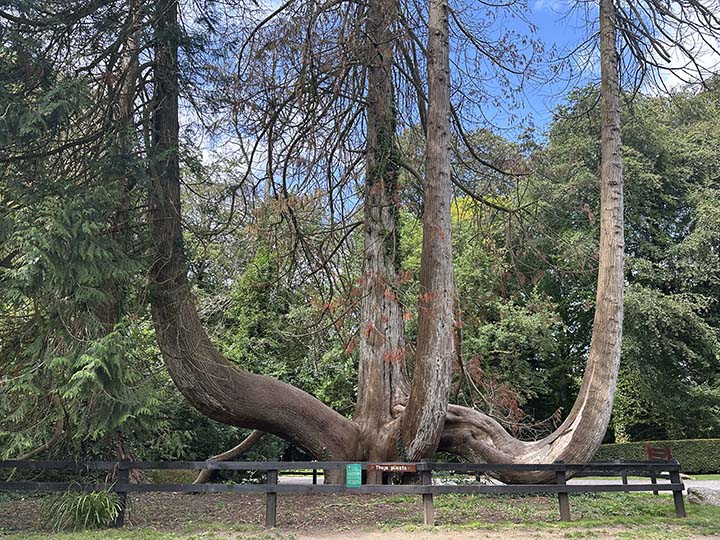
It’s a thuja plicata. Well, that’s what the sign said.
And now we say goodbye to Blarney Castle.
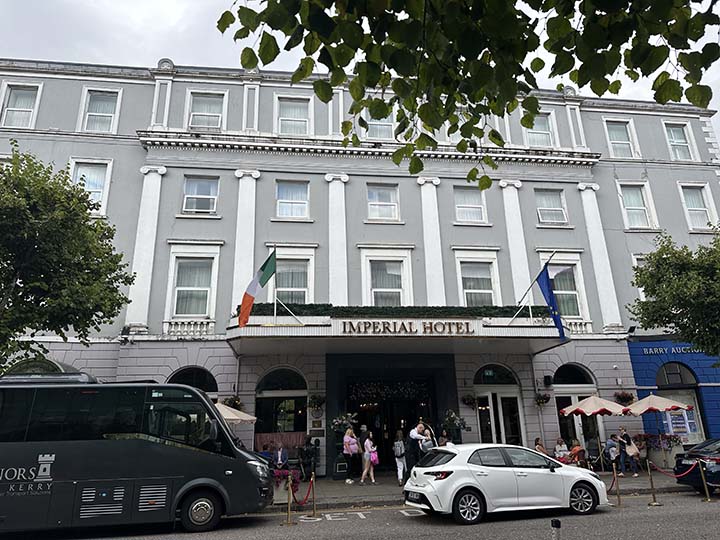
And head back to the Imperial Hotel in Cork.
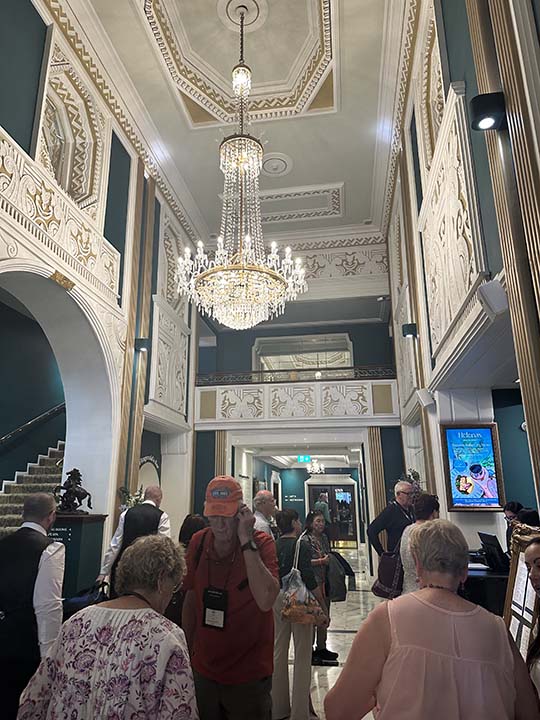
It was one of our finer hotels.
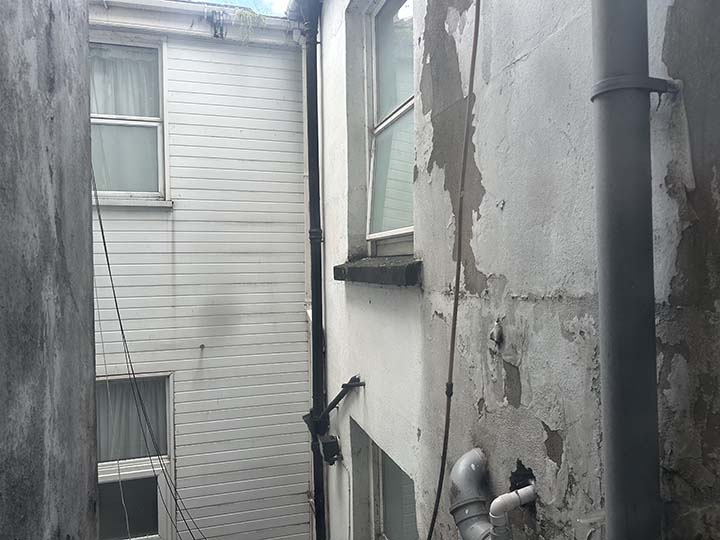
Though the view from my window could use some improvement
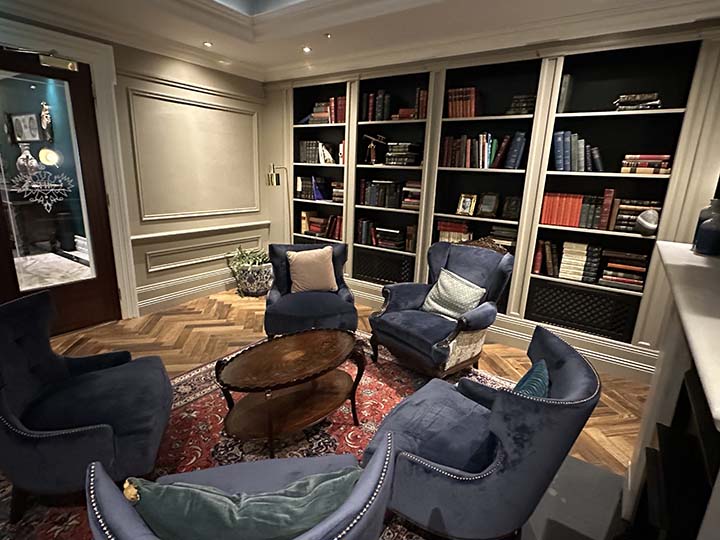
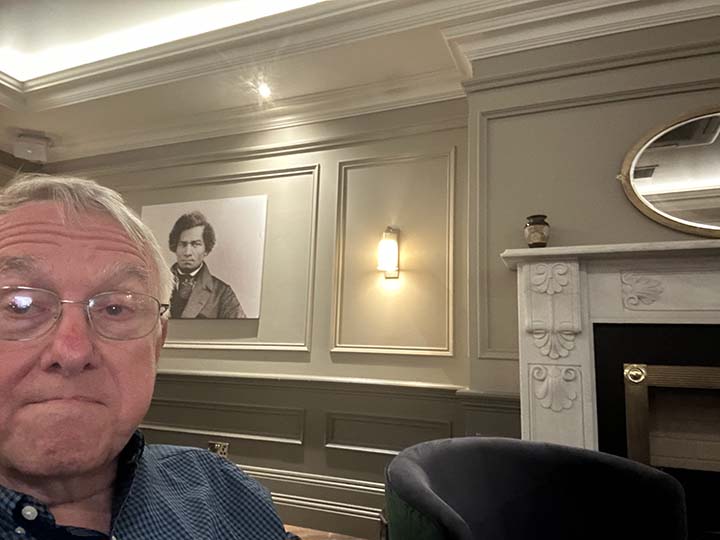
The great American abolitionist Frederick Douglass stayed here for a while back in the 19th Century, and they have established a quiet sitting room in his honor.
And I was honored to enjoy some peace and quiet in his sitting room.
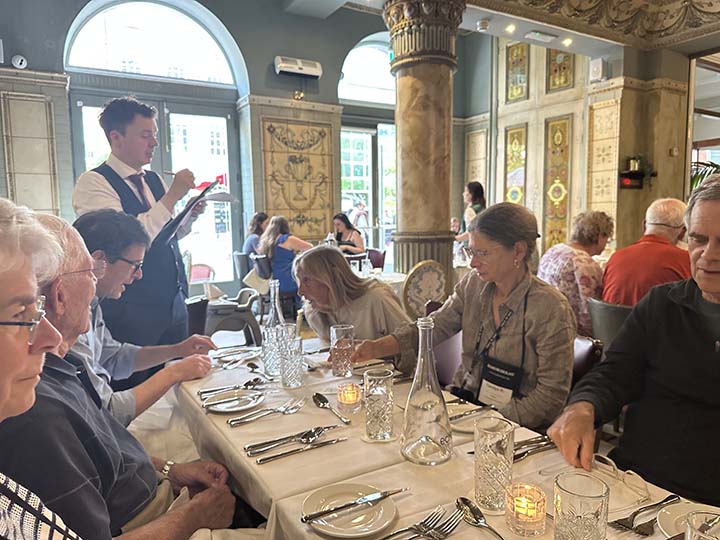
The Road Scholars never miss a meal.
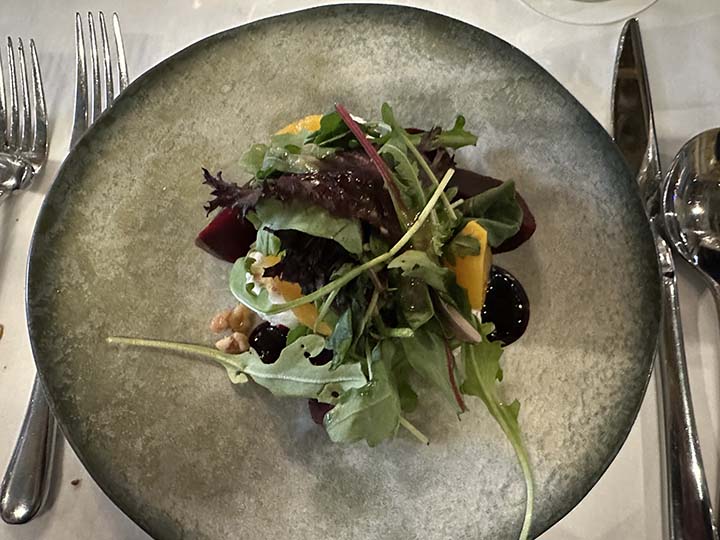
And this was one of the good ones.
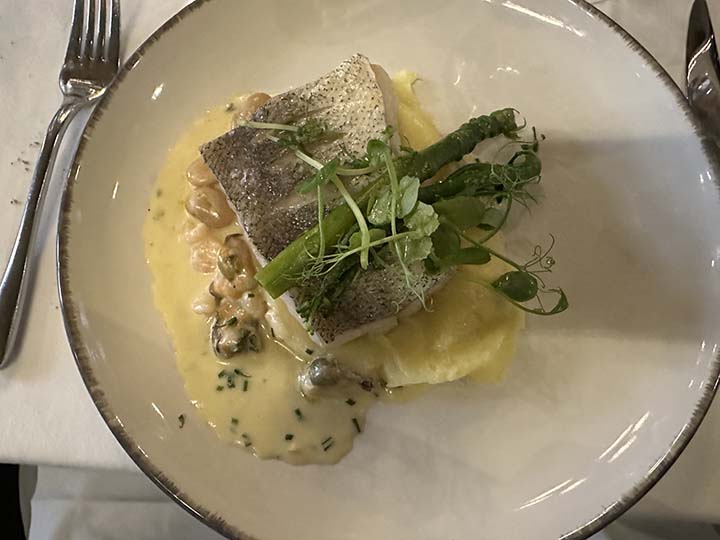
The fish was delish.
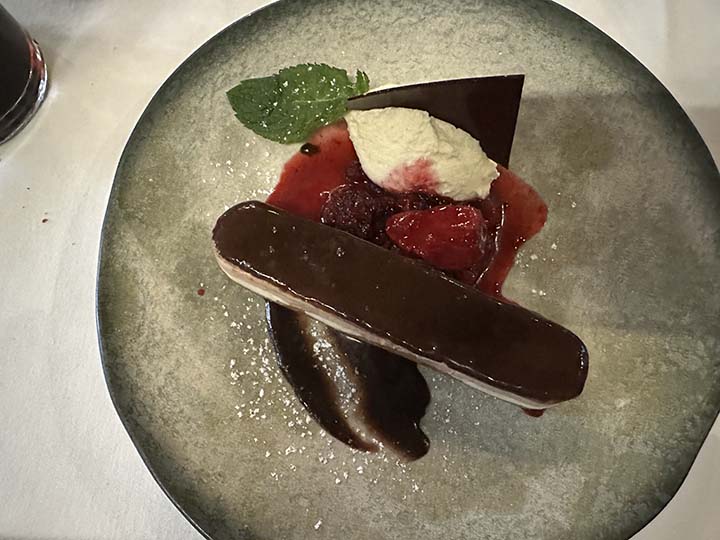
And the sweets were a treat.
|